In a review of David Nirenberg’s Anti-Judaism, Michael Walzer observes that the author “insists, rightly, that real Jews have remarkably little to do with anti-Judaism.” Elaborating on how “imaginary Jews” came to capture the minds of thinkers who had little experience with actual Jewish people, Walzer draws on Nirenberg’s discussion of Shakespeare’s The Merchant of Venice “to illustrate the difference between his anti-Judaism and the anti-Semitism that is the subject of more conventional, but equally depressing, histories”:
Shylock himself is the classic Jew: he hates Christians and desires to tyrannize over
them; he loves money, more than his own daughter; he is a creature of law rather than of love. He isn’t, indeed, a clever Jew; in his attempt to use the law against his Christian enemy, he is unintelligent and inept. (A modern commentator, Kenneth Gross, asks: “What could [he] have been thinking?”) But in every other way, he is stereotypical, and so he merits the defeat and humiliation he receives—which are meant to delight the Elizabethan audience. …
Nirenberg’s question [is]: What put so many Jews (like Shylock or Marlowe’s Jew of Malta) on the new London stage, in “a city that had sheltered fewer ‘real Jews’ than perhaps any other major one in Europe”? His answer—I can’t reproduce his long and nuanced discussion—is that London was becoming a city of merchants, hence a “Jewish” city, and Shakespeare’s play is a creative response to that development, an effort to address the allegedly Judaizing features of all commercial relationships, and then to save the Christian merchants by distinguishing them from an extreme version of the Jew.
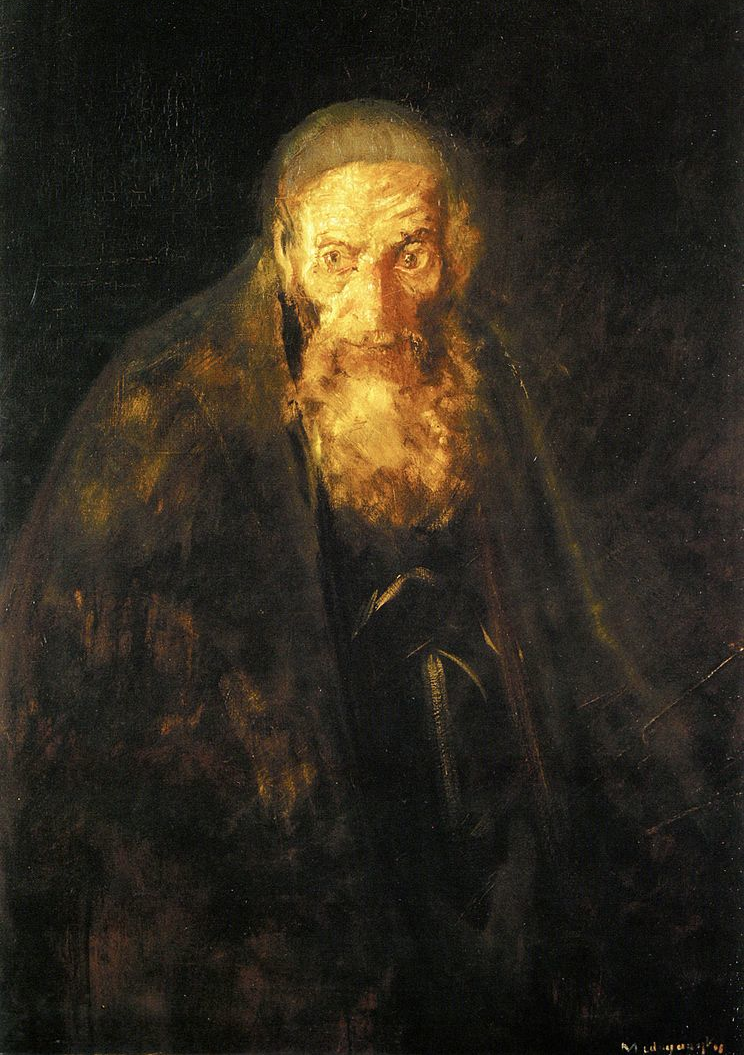
But the distinction is open to question, and so the point of the play is best summed up when Portia asks, “Which is the merchant here, and which the Jew?” The play is about law and property, contracts, oaths, pledges, and promises. Shylock is the Jew of the gospels: “I stand here for law.” But he is defeated by a better lawyer and a more literal reading of the law: Portia out-Jews the Jew—which is surely an ironical version of Christian supersession.
So Shakespeare understands the arrival of modern commerce with the help of Judaism, though he knew no Jews and had never read a page of the Talmud. He knew the Bible, though, as Shylock’s speech about Jacob multiplying Laban’s sheep (Act 1, scene 3; Genesis 30) makes clear. And Paul and the gospels were a central part of his intellectual inheritance. Shylock emerges from those latter texts, much like, though the lineage is more complicated, Burke’s “Jew brokers” and Marx’s “emancipated Jews.” The line is continuous.
Previous Dish on Nirenberg’s book here and here.
(Image of Shylock by László Mednyánszky, circa 1900, via Wikimedia Commons)
 The Dish
