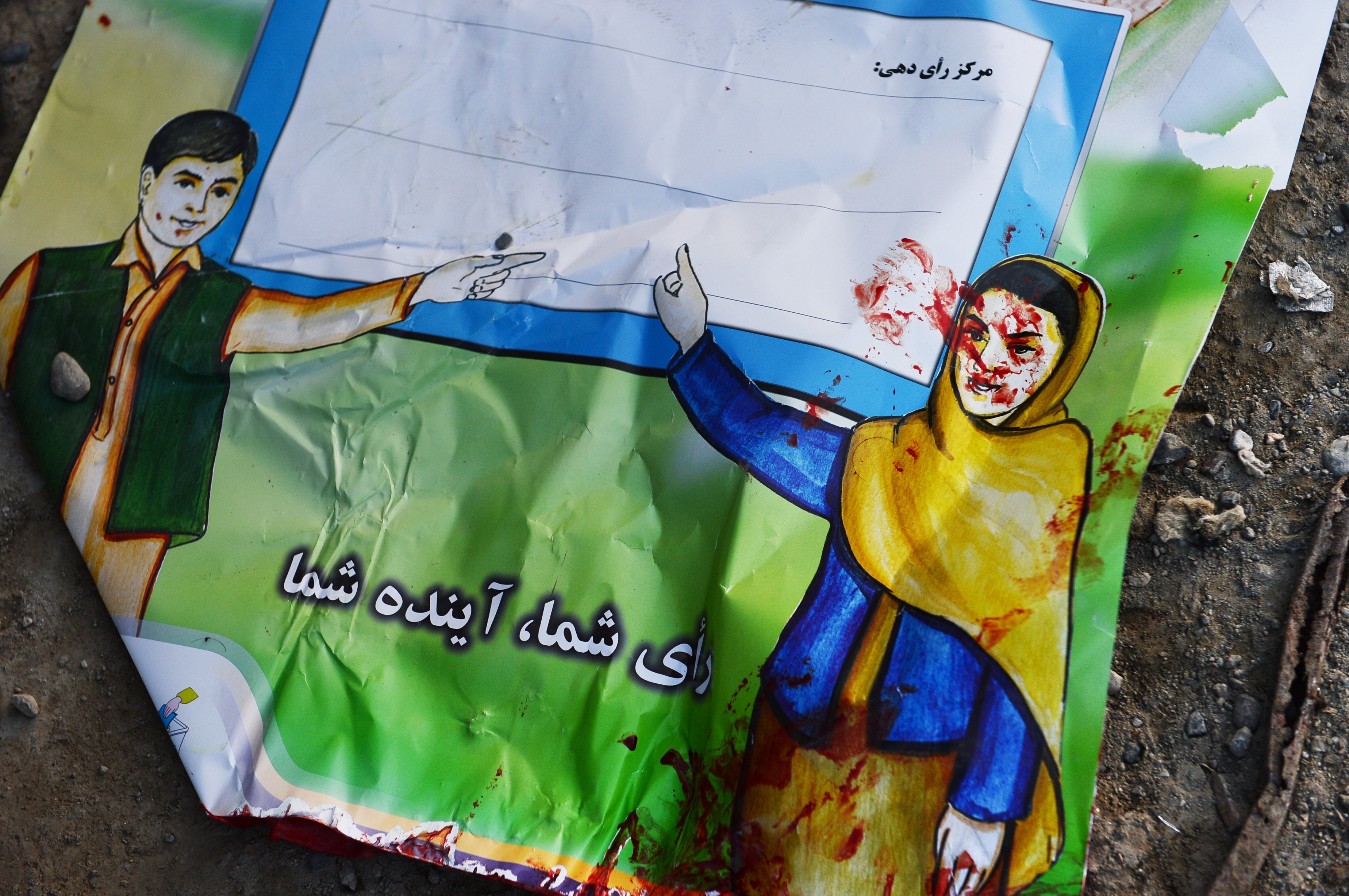
With the country’s presidential elections some two weeks away, Dov Zekheim offers his endorsement:
It is critical not only for Afghanistan, but for the United States and the West, that his successor be a man – all remaining candidates of the original 27 who put their names forward are men – who appreciates not only Western values, but actually lives by them. That man clearly is the current front runner by the slightest of margins, Ashraf Ghani. The former finance minister, advisor to Karzai (though his advice was invariably ignored), and World Bank official is a genuine friend of the West in general and of the United States in particular.
I had the distinct pleasure of working alongside him when, as Under Secretary of Defense, I also was DoD’s civilian coordinator for Afghanistan. Ashraf was finance minister at the time, and he was doing his utmost to employ such power that his office afforded him to regularize Kabul’s intake of resources and its budgets. He tried to professionalize those civil servants who worked for him. He sought not to confront the warlords – he knew that was a losing battle – but rather to pursue a strategy of co-opting them even as he worked around them.
However, just yesterday Taliban militants attacked an election office next to Ashraf Ghani’s home. As Sean Carberry notes, during the Afghan election season, “the candidates are busy campaigning – and the Taliban are busy attacking”:
The latest attack came Tuesday morning in Kabul when two suicide bombers detonated themselves outside one of the offices of the Independent Election Commission. Moments later, several gunmen ran inside and waged a three-hour gun battle with dozens of Afghan police. … Last week, four teenage gunmen smuggled pistols through several checkpoints at a highly secure five-star hotel in Kabul and shot diners in the restaurant. They killed a highly regarded Afghan journalist, his wife and two of his children. They also killed four foreigners, including an international election monitor staying at the hotel.
As a result of that attack, two out of the three international election monitoring organizations that were planning to observe the elections have pulled their people out of Afghanistan, raising further questions about the integrity of the April 5 vote for a successor to President Hamid Karzai. There’s no clear-cut favorite in the race, and it’s quite likely that no candidate will get 50 percent of the vote, which will necessitate a runoff between the two top vote-getters. That would mean an extended campaign and the prospect of additional violence.
(Photo: A bloodied election poster that reads ‘Your vote is your future’ lies on the ground at the site of a suicide attack on an election commission office in Kabul on March 25. Fifteen people died in violence around Afghanistan less than a fortnight before the country’s presidential poll. Insurgents have vowed a campaign of violence to disrupt the ballot on April 5, urging their fighters to attack polling staff, voters, and security forces in the run-up to election day. By Wakil Kohsar/AFP/Getty Images)
 The Dish