A Hard Read

Screen Shot 2014-03-24 at 1.44.57 PM

Alexis Madrigal praises Porn Studies, a new academic publication:

Porn is always two clicks away, and, hovers at the edge of so many conversations from analyses of Girls to sending messages on phones to the NSA. The problem, however, is that there are costs to even talking about pornography. This is true even in our supposed bastions of intellectual freedom, as several of the articles make clear. “I have been told ‘You don’t want to be ‘the porn guy’” and ‘you will have to deal with the content issue of your work,’” writes Nathaniel Burke in his essay Positionality and Pornography. I’d heard similar things from journalists, male and female alike. Very few people want to be “the porn guy.” And so researchers and critics choose to do work on less fraught, less important topics. Perhaps having a publication that serves as a gathering place will create some strength in academic numbers.

Lauren Davis was impressed by the first issue:

[T]he topics are quite intriguing: “Porn and sex education, porn as sex education, Revisiting Dirty Looks (an interview with Pamela Church Gibson about her collection of feminist essays about pornography), a study of emerging niches in US pornography consumption, and one on the nature and implications of sexual fantasies. On the other hand, many of the papers are about the challenges of actually researching pornography and the role of the pornography researcher, though even those can be entertaining; one involves a visit to the Adult Entertainment Expo in Las Vegas.

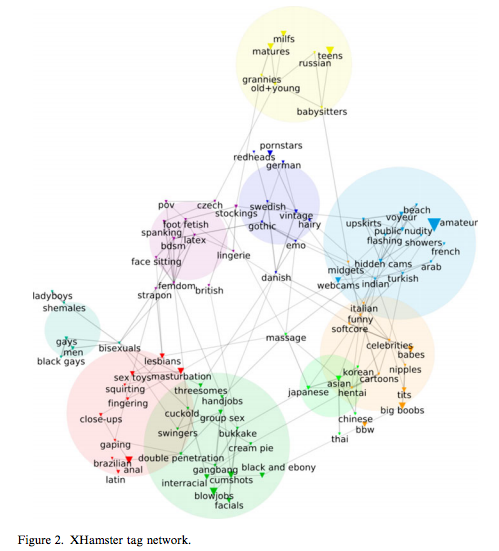
(Graphic from “Deep Tags: Toward a Quantitative Analysis of Online Pornography,” by Antoine Mazièresad, Mathieu Trachmanb, Jean-Philippe Cointeta, Baptiste Coulmontc, and Christophe Prieur)

Faces Of The Day

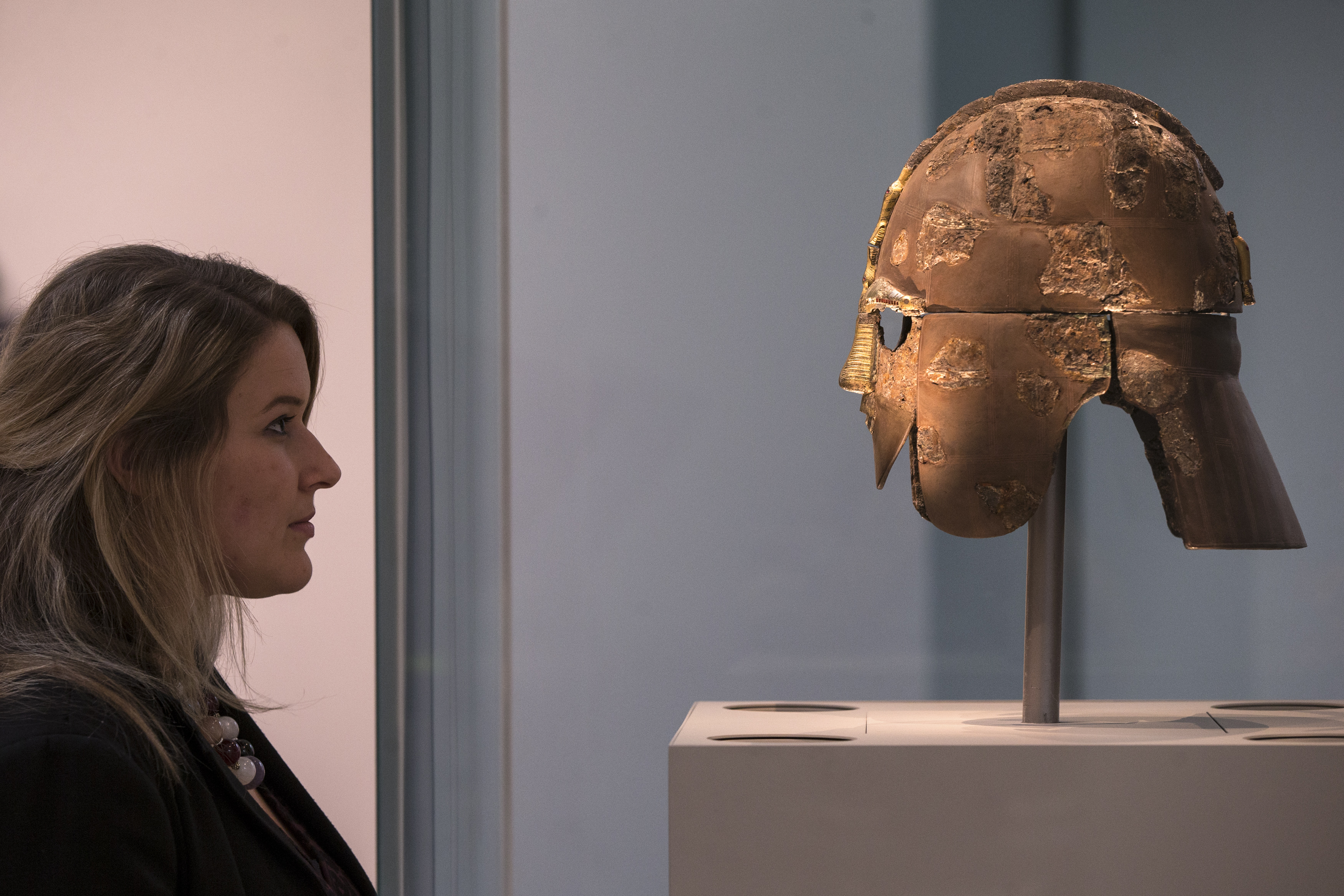
Sutton Hoo Treasure Displayed At The British Museum

A woman views the Sutton Hoo Helmet on display in the new gallery “Sutton Hoo and Europe AD 300-1100” in the British Museum in London on March 25, 2014. The exhibition in the museum’s early medieval collections marks 75 years since the discovery of the Sutton Hoo treasure, one of Britain’s most spectacular and important discoveries. The exhibition opens to the general public on March 27. By Oli Scarff/Getty Images.

Russia’s Neocon-In-Chief

He has contempt for soft power; he believes in manly military priorities; he seeks to spread the Russian model to the near-abroad; he longs for another clarifying, nation-mobilizing cold war; he’s paranoid; he’s incompetent; he despises “appeasement”; in over-reaching, he undermines himself. Is he Cheney or Putin? Or, apart from the constitutions which constrain American leaders, one and the same?

Vino In Vodka Country

As Crimean winemakers consider new options, Joy Neumeyer traces “Russia’s rocky history with wine”:

[It] started with Francophile Tsar Alexander II, who established the alcjcountry’s first vineyard in the late 19th century. Considered a drink for aristocrats, wine was a distant second to the everyman’s constant companion, vodka. A famous Russian saying goes, “There cannot be too much vodka. There can only be not enough vodka.”

After World War II, Stalin sought to make wine available to the masses, and charged scientists with developing hardy new types of grapes that could survive the winter and be produced in bulk. For decades, Soviet vineyards churned out sickly sweet swill, with grape sugar and concentrate added to disguise bad quality. While enjoyed by Russians on holidays, it would have made the average Frenchman faint.

But in the post-Soviet era, a flood of imports from Europe and South America made dry wine widely accessible, and it’s catching on with the growing urban middle class. Russia has seen the highest growth in wine consumption in the world, more than doubling, from around 3 to almost 8 liters per capita since 2000 (compared to a 67 percent growth in China, another emerging market). Meanwhile, production of Russian wine has also boomed, from 238.5 million liters of still wine produced in 2000 compared to 478 million in 2011.

Update from a reader:

Your post on Crimean wines reminded me that, a few years ago, I visited the famous “Valley of Death” from Tennyson’s poem “The Charge of the Light Brigade” and was surprised to find that it’s now one big vineyard:

Valley-of-Death-Panorama

Very likely there are still cannonballs and other debris of battle still buried under the vines, but it goes to show that despite wars and transient political dramas, wine springs eternal.

Another from a history professor in California wine country:

Joy Neumeyer’s piece on Crimean wine contains a significant factual error.

The first Russian wine vineyard was planted at least two hundred years earlier than Neumeyer indicates, when German merchants, on their way to and from Persia, cultivated Vitis vinifera in the vicinity of present-day Astrakhan (which was incorporated into the Russian Empire in 1556). Moreover, at the time of its annexation by Russia in the 1780s, viticulture in Crimea, where Greeks, Tatars, and Jews had long lived, was at least two millennia old. Similarly long pedigrees characterize viticulture and winemaking in Georgia and Bessarabia (Moldova), which were incorporated into the Russian Empire at roughly the same moment as Crimea.

Russian elites were not unaware that Tsarist imperialism along the Black Sea brought them into contact with deeply entrenched wine cultures and economies. At a nationwide viticultural congress in Moscow in 1902, Russia’s most celebrated vintner, Prince Lev Sergeevich Golitsyn, stretched the truth only a little when he claimed that Russia’s first winemaker was Noah, who reputedly planted grapes on the slopes of Mt. Ararat.

(Image of Russian wines via RealUSSR; “Valley of Death” shot via Wiki)

What’s A Bisexual Anyway? Ctd

A reader goes all TMI on us:

I was the last writer in this installment of your bisexuality thread. I figured with the on-going thread and as a counter-point to your perspective, I should share.

First, I was total chicken shit and cheated on my wife with a man. I met him through Craigslist, a visitor staying at a local hotel. Then I didn’t tell her about it for four months. In the meantime, I went through the whole emotional roller coaster, self-loathing, self-doubt and self-analysis, needing to get tested for everything, being a perfect husband from that point forward, etc. The experience itself was one thing. The after effects on myself and my best friend and partner were something I had never really considered. And for that I’m an idiot.

I have to say, whoa. The experience itself was hot, passionate, and masculine, something unlike I’ve felt before in my sex life.

But again, I wasn’t all that experienced when I met my wife at age 20. Kissing this man was more forceful, fucking him certainly was, and just grabbing and pulling at his body in a way that would have felt borderline too much to my petite wife. Heck, even showering with him was far more aggressive than any shower I’ve ever shared with my wife. I came away more than anything convinced of the spectrum of sexual needs and desires.

I realized I really enjoy forceful, borderline dominating sex, and yet for my petite wife it’s just too much for her. So for most of our relationship and sexual relations I’ve held back. I’ve easily hurt her in the past. With this man, sure the anonymity helped, but the underlying aggression and power and masculinity was itself a turn on.

And yet, I wasn’t all that aroused. The feelings felt more alluring than the actual actions. Rubbing, grabbing, stroking, sucking, kissing, fucking, pushing, pulling – it all felt very primal. That was hot! But my equipment was barely cooperative. I enjoyed the physicality but not so much the sex itself, if that makes any sense.

In the weeks that followed, the emotions were a torrent. I kept asking myself what it meant. I struggled to tell my wife of 16 years. I had to get tested fast and hold off on any sex with her. After four months, and one morning of her telling me what a great husband I am, I finally broke. I looked over in bed and said “I fucked a dude”. Her response? “That’s okay”. All my fears of having destroyed my marriage were met with a shrug and, moments later, her being almost proud.

Searching my feelings with her, I felt I understood my humanity better. Searching her own feelings, she soon found herself hurt and wounded. And so we talked and talked some more. I knew I was being very selfish. I needed to try this for myself, by myself. But leaving her out of the exploration was itself a wound that may never heal. That hurts me and of course I’m an idiot.

Now six months later, I haven’t repeated the experience but I want to. And she wants to join in. We’ve watched gay porn together and separately. She says she watches to better understand my experience. I watch because I still fantasize about it. And I’ve started to explore more kinks. Trannies seem hot and fun to play with. She wants a moresome and I want to see her with lots of cocks.

I come away convinced there’s no right or natural path. I totally understand your need for an identity but I think you’re making a big mistake in ascribing yours to any one else, regardless of the historical vestiges of bisexuality. In fact, having used marijuana regularly for over 20 years, male bisexuality seems like just another closet. Society isn’t ready yet, so we partake in silence. Swinging would too, I suppose. Why not a Swingers’ Closet?

Honestly, searching my feelings, this new sexual experience turned on a new button that had I been younger and not committed I could see myself exploring more. But I’m not younger and I am married. I simply didn’t feel these things when I was younger. Growing up I recognized the attractiveness of other boys and men, but I was never drawn to it, nor am I now. I can see how sex with another man is something different than I have known and that I enjoyed. I’m approaching midlife and I’m still finding myself. Isn’t that the point?

Yes it is. I repeat that I believe that bisexuality is real, that people should be able to choose to identify themselves the way they want to be identified, and that my own identity says very little about anyone else’s. Heck, I find the term “homosexualities” to be more accurate than mere homosexuality. We’re complicated sexual and emotional creatures. We owe each other forgiveness, honesty and respect.

The Gig Economy

Sarah Kessler tested it out:

The gig economy (a phrase which encompasses both the related collaborative economy and sharing economy) represents a theory of the future of work that’s a viable alternative to laboring for corporate America. Instead of selling your soul to the Man, it goes, you are empowered to work for yourself on a project-by-project basis. One day it might be delivering milk, but the next it’s building Ikea furniture, driving someone to the airport, hosting a stranger from out of town in your spare bedroom, or teaching a class on a topic in which you’re an expert. The best part? The work will come to you, via apps on your smartphone, making the process of finding work as easy as checking your Twitter feed.

She was underwhelmed:

I can easily find dozens of people like Sharon in San Diego, who has a goal of making $300 a week on TaskRabbit to help pay her bills, but hasn’t hit it yet. Or Kristen in New York City, who bids on tasks when she’s working full-time as a receptionist. Or Stacie, who works full-time as a software engineer in Boston, but always keeps the TaskRabbit website open so she can complete tasks on her lunch hour, after work, on weekends, or without leaving her desk. Stacie made about $6,000 on TaskRabbit last year, earning her “elite TaskRabbit” status. She likes helping people out, but she would never work on TaskRabbit just for the money. “If I wasn’t working full time, I could do more tasks,” she tells me, “but even if I doubled that, that’s still poverty–$12,000 a year. And there are no benefits. You don’t know what you’re going to wake up to. You could wake up one day, and be like, oh my god, I made $300 today, and then have three days where you’re making $12.” …

I have come to realize that one of the cruel ironies of the gig economy is that even though it’s geared almost exclusively to serve urban markets, the kind of densely packed cities where space is at a premium, one needs a car to have a shot at the cream of the work that’s available. Even worse, the universe of gig economy startups is mostly relying on young people and others who are underemployed–exactly the people whom are least likely to be able to afford a car in a city. Or have an extra bedroom. Or a parking space. Or designer clothes. Or handyman skills.

“Apology” Of The Day

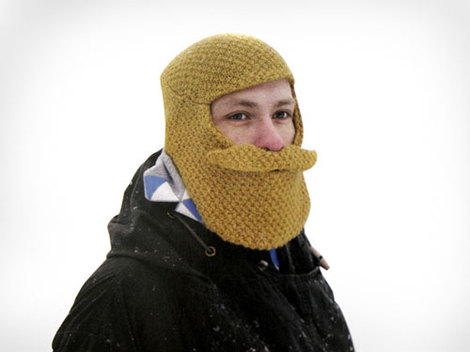
A lone female blogger, Nicki Daniels, wrote a piece about how hipsters are ruining beards by making it harder for her to find a truly manly man (rather than a poseur who can’t change tires/got me there). I’m way late to this, but the apology she wrote to her countless detractors, is an anti-p.c. blog classic that a reader just sent me. Money quote:

Since I wrote this post, I have been introduced to an amazing group of people called “feminists”. They told me that we are living in something called a “patriarchal society” and apparently it’s guys like you that have been keeping us women down for centuries. My mind is blown! Apparently, by me wishing for a more old fashioned guy, I am encouraging the perpetuation of this nefarious beardcap.jpgsystem. I have gotten a library card and plan to read more about this. As a side note, I also learned that no means no.

These awesome feminists also told me that by calling a man a “pussy”, I am equating female genitalia with weakness. I’m still on the fence about that one. Honestly, I just thought it sounds funny. Plus I am always bragging about my own freakishly strong vagina, so by that logic if I call a guy a pussy I am actually calling him “amazing”. Hmmm. Food for thought, friends …

I’m deeply sorry for being sexist, or practicing “reverse sexism”. Honestly, I didn’t know that was a thing. I mean, didn’t we just get the right to vote? You’re right, how would I feel if the situation were reversed, and men were telling me what is a sexy way to dress and look. I have never experienced that before, but I can only imagine it would be profoundly hurtful.

For those of you who said I am perpetuating violence, and stuff like this can actually cause hate crimes, I am actually weeping with remorse. I didn’t realize that people don’t think for themselves. People could read that open letter, and since their minds are as malleable as Play Doh, they might actually hurt someone for having a hipster beard. Please don’t hurt anyone, people. I already feel bad enough. I simply cannot have that on my conscience.

Update from a reader:

Here was my favorite comment and her reply:

From: BEARDBRAIN February 6, 2014 at 11:41 pm

Fuck this article. I don’t go around writing open letters about women’s body hair, appearance, and how it’s inappropriate for them to wear a dress and do taxidermy cause it’s un feminine. If i said anything like this it’d be on jezebel faster than people are willing to dish out the word hipster to any person who doesn’t look like they are from the adult equivalent of the highschool football team. My masculinity and beard is up to me, not to any woman. Fuck off and eat kale.

Reply from: Nicki Daniels February 7, 2014 at 12:23 am

Who’s Kale?

Sticks And Stones And “Homosexual”

The NYT just ran a piece on the apparent disfavor the word now has among some homosexuals. I have a pretty good guide to figuring out what to do with such a question which is to check out what GLAAD is saying and believe the opposite. As a writer, there are few things that piss me off more than being told which words I can and cannot use. Fuck that shit. (See? It’s good to have a blog.)

The impulse, sigh, is political:

The Gay and Lesbian Alliance Against Defamation, or Glaad, has put “homosexual” on its list of offensive terms and in 2006 persuaded The Associated Press, whose stylebook is the widely used by many news organizations, to restrict use of the word. George P. Lakoff, a professor of cognitive science and linguistics at the University of California, Berkeley, has looked at the way the term is used by those who try to portray gays and lesbians as deviant. What is most telling about substituting it for gay or lesbian are the images that homosexual tends to activate in the brain, he said. “Gay doesn’t use the word sex,” he said. “Lesbian doesn’t use the word sex. Homosexual does.”

“It also contains ‘homo,’ which is an old derogatory,” he added.

But I like the term “homo”! I use it all the time – about myself and others, although I also often use “fag” as well. The gay thought-police would be aghast, but the intent is what matters. Mine is mostly benign. Mostly. But mainly, one great legacy of the gay community has been our love of freedom, especially of speech. For centuries and decades, the right to free speech was our only truly secure constitutional right. We were always about enlarging what was sayable, rather than restricting it. Banning “homosexual” also reeks of insecurity. We are not so tender we cannot handle a clinical, neutral term, or even a slur or the re-appropriation of a slur. “Queer” was one such reclamation, although that’s much more pointed than “homosexual” and certainly doesn’t reflect how I feel about my orientation. There’s nothing queer about being horny and falling in love or lust or getting married. They’re among the most common activities known to humankind. But I sure don’t mind others using it – and more and more heteros want to call themselves “queer” too. But my main objection to getting rid of “homosexual” is that we would lose a not-too-easily replaced non-euphemism.

We have too many euphemisms about our orientation and they bespeak the weak-kneed lameness that’s the real thing that should be fading away:

While the Times article notes that “scholars expect the use of the term to eventually fall away entirely,” it doesn’t really consider the problems that loss could cause. It’s worth noting that gay has contested meanings as well, and by my definition of that word—which, very generally, has far more to do with a historically and geographically specific constellation of aesthetic tastes, artistic styles and modes of relating than with genitals—there are far fewer gay people around these days than there are homosexuals.

One of Slate’s commenters went all Stoppard on us:

AE Housman: “Homosexuals”? Who is responsible for this barbarity?

Chamberlain: What’s wrong with it?

AE Housman: It’s half Greek and half Latin!

Chamberlain: That sounds about right.

When I wrote Virtually Normal, I had to decide on a unifying adjective. “Homosexual” seemed to me to be a way of reaching those who would read and hear the term as an indicator that I was not rigging the argument with pro-gay rhetoric. I’m fine with “gay”, and use it all the time. But persuasion is best done on neutral ground. Maybe the word has become less neutral since 1995. But I cannot think of a better one.

Still, while I’m at it, there is a “word” that seems to me worth retiring. Not by fiat, just by trying to avoid or ignore it. It’s the unpronounceable p.c. acronym: LGBT. God I hate that “word”. It describes no single person; it cannot be spoken easily; it reeks of bullshit.  No one started using that word of their own accord as a way to describe herself. It was created by leftists who believe that all oppressed groups are primarily defined by their oppression and that the very different lives and identities of gay men, lesbians, bisexuals and transgender are somehow all one. I know it’s an effort at inclusion. I appreciate the good intent. And if it had any wit or originality, instead of sounding like a town in Croatia, I could live with it. But it doesn’t.

So fuck that shit.
The Down’s Spectrum, Ctd

The discussion thread deepens:

Yes, there is a spectrum. My 16-year-old son, James, has Down’s. We knew that before he was born. We also knew that there was a problem with his esophagus. As it turned out, he was born with no esophagus at all. After several months in the NICU, he was operated on and the surgeons created an esophagus. We have to be very careful about what he eats. Happily, he is devoted to yogurt and hot cereals, which do not get stuck.

He is also very developmentally delayed and has some autistic tendencies. He has a few words but knows how to communicate his needs. He is very social and his receptive language is very good. He is the happiest person I know.

He has two older siblings, now 20 and 23. My wife and I recently talked to them about the decision that we made, including for them, when we decided to have James. They acknowledged that at some point they will be his care givers, at least to some extent. But, when we started to essentially apologize to them, they looked at us like we were crazy. “What are you talking about? He’s our brother.”

It has been hard, but none of us regret the decision we made. The commenters who are looking in at families like ours from the outside should think twice, because they have not experienced firsthand the joys that come with the difficulties.

Another mother of a disabled son shares her story:

Parental care of a medically and developmentally disabled child is sufficiently stressful that it has been found to inflict damage on the parents’ own DNA. This leaves the main caregiver (usually the mother) vulnerable to lethal diseases, shortening her genetically determined lifespan by an average of 13 years.

I am the mother of one such child, now in his thirties, whom my husband and I care for at home. Our son functions at a two-year-old level. He requires frequent surgery (over 20 major operations since his premature birth). He has been diagnosed with autism, cerebral palsy, severe vision loss, hydrocephalus, and retardation. He has had to endure horrible pain throughout his life. Most recently, he has become oxygen dependent again, much as he was following his preterm birth.

I am in my mid-sixties and nearing the end of my “three-year life expectancy” following a cancer diagnosis. Both literally and figuratively, we are asking parents to sacrifice their lives when abortion is banned in afflicted pregnancies or when sick, disabled newborns are medically “rescued” and handed over to their family for life-long care.

Another reader:

My brother, born in 1966, had Down Syndrome and was profoundly disabled, so he was in that 3% to 12% of children with Down’s who are unable to be without assistance. When he was born, his stomach was not attached to his intestines, and his heart had a “hole” in it. My parents were counseled to leave him at the hospital after his birth. They did not, and they chose surgery for his stomach, but not for his heart. When he died at age 17 months, he had never even lifted his head himself. He had not spoken, or crawled. He did not recognize his name, or respond much to others.

I’ve often wondered how I would be different if he had lived; I was raised as an only child. I do know, though, that were he still alive, and as disabled, I would be responsible for his care, as my parents are both deceased. I certainly wouldn’t have been able to care for him at home, and I truly wonder what kind of life he would have had.

After my brother died, my parents didn’t talk much about him – it was too painful, I assume – but my dad did tell me once that a friend of his was so moved that he, the friend, donated a substantial sum to research that led to amniocentesis. So maybe, because of my brother’s life, other parents can have vital information about their own children. Had abortion been an option, I have no idea what my parents would have done, but when I was pregnant, my father was adamant that I be tested. And my perfectly healthy son is named for my brother.