
The Best Of The Dish This Weekend

Crimea Prepares For Referendum On Secession

I’m writing this looking at palm trees. It’s ten years since Aaron and I met and we’re taking some time in the sun by ourselves to celebrate. The Dish crew will take care of the joint while I’m away, as they take care of the joint while I’m not. You know what I most crave? Not having to have an opinion about the world every day.

I remember an enchanting dude I had a fling with in Miami Beach about twenty years ago. One morning, as we were rousing and I was drinking some coffee and reading the paper (yes, it was a paper back then), I asked him something about Clinton’s healthcare reform proposal. He looked at me non-plussed, as he might. “Oh,” he said matter-of-factly. “I don’t have an opinion about that.” There wasn’t a scintilla of apology or a smidgen of embarrassment. He just had opinions about more pressing personal matters. Like where to go for breakfast. No wonder I fell for him. For a few days.

This weekend, we featured some core faves of mine: the inexpressible beauty of Allegri’s Miserere, which I was first lucky enough to hear live in the chapel of Magdalen College, Oxford, on Ash Wednesday. You don’t expect to be shocked by choral music. But those high treble notes are almost erotically charged with the divine. Then we excerpted a passage from one of my beloved theologians, James Alison, whose writing about Jesus manages to cut so often to the core of the Christian revelation, and makes it shocking and new again.

Crimea, it helps to understand, has a deep role in the arrival of Orthodox Christianity in Russia, making it an almost sacred space, along with Ukraine, for the Russian nation, broadly understood. Today’s rigged referendum is just another example of a political event that cannot be understood without a grasp of religious history. Which is why the Dish weekends are not an alternative to our political debate; they’re a foundation of it.

More on enchantment, secularism and the debate over Charles Taylor here. And if you’ve never seen Catherine Tate’s classic sketch as a know-nothing translator, do yourselves a politically incorrect favor.

The most popular post of the weekend was The Smearing of Ryan As A Racist, followed by The Way We Live Now.

See you in about a week. Be good.

(Post photo: A girl holds a flag during a Pro Russian supporters rally in Lenin Square on March 15, 2014 in Simferopol, Ukraine. As the standoff between the Russian military and Ukrainian forces continues in Ukraine’s Crimean peninsula, world leaders are pushing for a diplomatic solution to the escalating situation. Crimean citizens will vote in a referendum tomorrow on whether to become part of the Russian federation. By Dan Kitwood/Getty Images. Thumbnail photo: Andrew Hart)
Falling In Love With Art

dish_cezanne

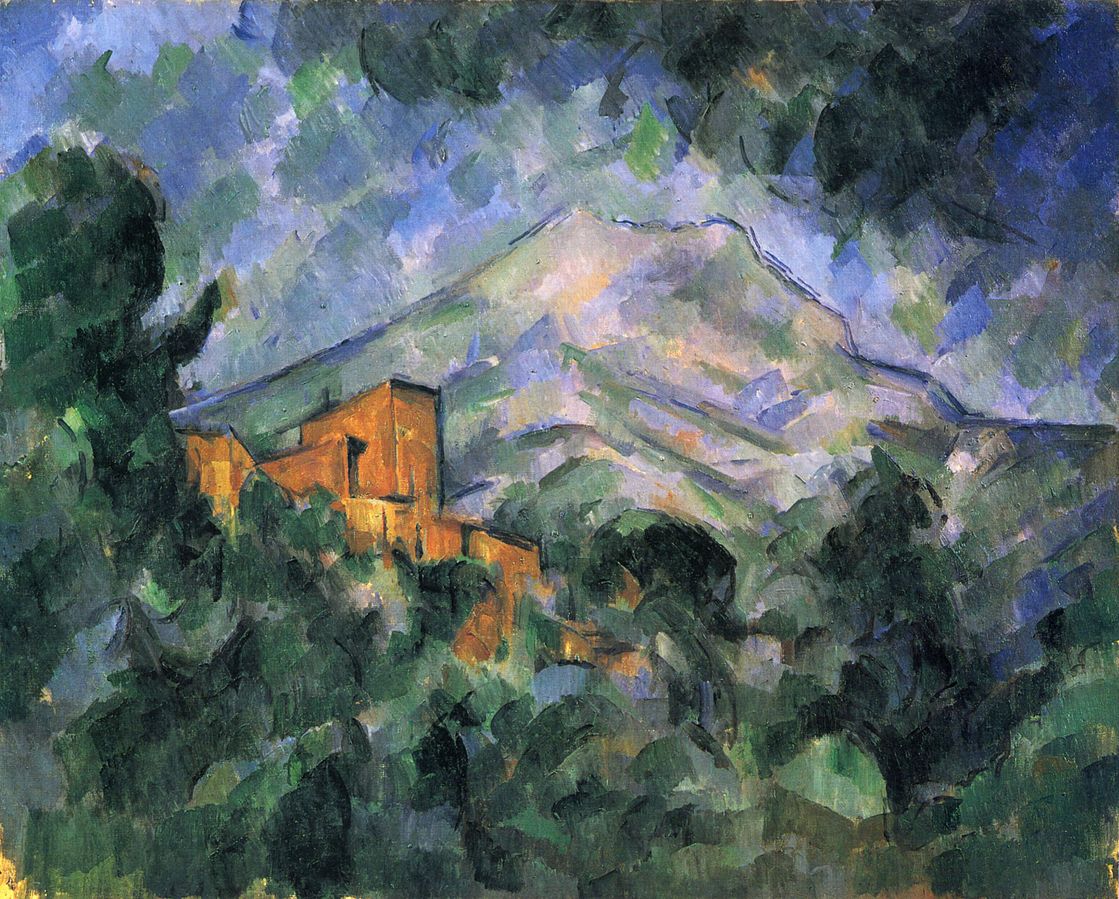
Robert Krulwich, a deep admirer of Cezanne, marvels that his affinity for the painter began when he was only eight years old:

To this day I cannot explain what happened to me. The fact that it kept happening — keeps happening, all these (almost) 60 years since — is one of the mysteries of my life. Cezanne produced precarious little worlds that almost, almost, almost lose their balance, but somehow hold themselves together, creating tension, beauty and danger all at once. But why would these crazy dares thrill an 8-year-old? What was it about me that was ready for Cezanne? Because I was so ready. Even in the second grade.

Here’s all I can think: that when we are born, we are born with a sort of mood in us, a mood that comes to us through our genes, that will be seasoned by experience, but deep down, it’s already there, looking for company, for someone to share itself with, and when we happen on the right piece of music, the right person, or, in this case the right artist, then, with a muscle that is as deep as ourselves, with the force of someone grabbing for a life preserver, we attach.

(Image of Montagne Sainte-Victoire and Château Noir, 1904-1906, via Wikimedia Commons)

Taking Classes In Living

After discovering a “spiritual program” that helped lift him out of “an acute psychological crisis,” Marshall Poe advocates for colleges and universities to offer classes in religious practice to their students:

Upon reflection, it occurred to me that all religions, if seriously practiced, do precisely what this “religion” had done for me: They teach you how to live. It is true, of course, that clerics often tell their flocks to believe things that are frankly unbelievable. And some even tell the faithful that if they don’t believe these incredible things they will suffer some harsh penalty, like going to hell. But most clerics of my acquaintance are not very interested in fire and brimstone. Rather, they are interested in making sure those in their care are spiritually fit. The way they do this—and, so far as I know, always have—is to give people a higher purpose and a set of guidelines necessary to pursue that purpose. They bring order to the thoughts and actions of people whose thoughts and actions are naturally disordered. They give people a way of life.

It was in this way that I became convinced that college classes in religious practice might help suffering undergraduates learn to live successfully. The classes would at the very least introduce undergraduates to the idea that there were practical ways to alleviate their suffering. They would plant the seed. Even if the students chose not to follow the practice they had learned, their recollection of it would remain in store for the day they would need it. The day would inevitably come and when it did, they would have someplace to turn for help.

Related Dish on studying theology at university here.

Quote For The Day II

James_Madison

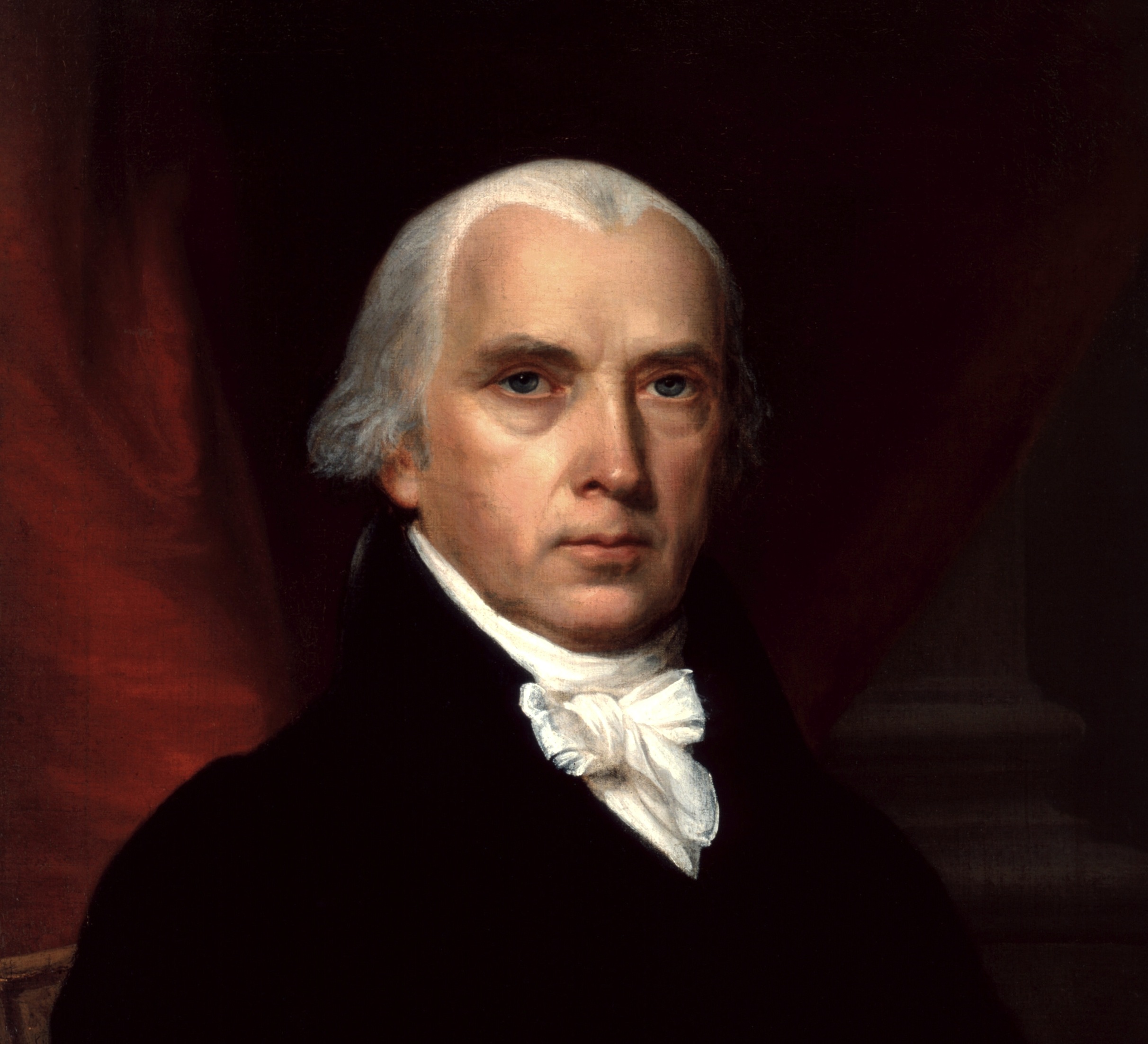
“Of all the enemies to public liberty war is, perhaps, the most to be dreaded, because it comprises and develops the germ of every other. War is the parent of armies; from these proceed debts and taxes; and armies, and debts, and taxes are the known instruments for bringing the many under the domination of the few. In war, too, the discretionary power of the Executive is extended; its influence in dealing out offices, honors, and emoluments is multiplied; and all the means of seducing the minds, are added to those of subduing the force, of the people. The same malignant aspect in republicanism may be traced in the inequality of fortunes, and the opportunities of fraud, growing out of a state of war, and in the degeneracy of manners and of morals engendered by both. No nation could preserve its freedom in the midst of continual warfare,” – James Madison, “Political Observations” from Letters and Other Writings. Madison was born on this day in 1751.

(Portrait of Madison by John Vanderlyn, 1816, via Wikimedia Commons)

Breaking The Spell Of Stone-Age Beliefs

Last July, Brendan Borrell attended the James Randi Educational Foundation’s 15th annual “Amaz!ng Meeting,” which he describes as “perhaps the world’s preeminent gathering of self-proclaimed skeptics, people dedicated to debunking and demystifying anything that smacks of the supernatural.” Borrell profiles Leo Igwe, a speaker at the convention who campaigns against witchcraft in Africa:

If any attendees know anything about Igwe, it is for his “Manifesto for a Skeptical Africa,” published on the foundation’s website in October of 2012. In it, he criticizes African societies for their inability to think critically about the traditional beliefs he calls “Stone-Age spiritual abracadabra.” He is in Las Vegas to talk about the resurgence of literal witch-hunts in Sub-Saharan Africa, and the rise of accusations lobbed at children, particularly in countries ravaged by conflict and where levels of education are low. While sorcery has always been a part of traditional belief systems in Africa, the stigmatization of children as witches seems to be a recent invention. In two Niger Delta states alone, Akwa Ibom and Cross River, there have been hundreds of documented cases of children being beaten, burned, beheaded, doused in acid or boiling water, poisoned, or buried alive. Like his self-righteous colleagues in the Western world, Igwe can be mocking and sarcastic, but he also knows he is on a deadly serious crusade.

During his talk, Igwe displays a picture of a Ghanaian man inside a thatch-roofed hut performing a traditional soothsaying ritual with seashells. As he pauses on the image Igwe declares, “Friends, these are the fakers. He uses cowries and throws them on the ground and is staring at them as if there is something he is seeing.” Igwe’s voice rises in pitch, volume, and tempo, and he continues in an exasperated tone: “He is seeing nothing! It’s fake!” There are a few chuckles in the audience, but mostly silence, as if no one is quite sure how to balance their skeptical instincts against their cross-cultural sensitivities. The soothsayer may well be a charlatan, but only Igwe had the right to ridicule him.

Returning To The Cosmos, Ctd

The Neil deGrasse Tyson reboot of Cosmos premiered last Sunday. Audra Wolfe counters claims that the show will revolutionize popular support for science, writing dismissively of “Cold War-era fantasies that confuse the public understanding of science with its appreciation”:

It’s a wonderful sentiment, this idea that exposure to the wonders of science will allow people to transcend social, political, and cultural differences. But it’s also obviously wrong, given how much 20th-century warfare depended directly on the products of science. (Historian of technology Patrick McCray has compiled a helpful list of some of the ways that scientists have, in fact, “led armies into battle.”) …

Looking back on the 1980s, it’s hard to say how much public support for scientific research, including the planetary exploration missions so dear to Sagan’s heart, can be credited directly to programs like Cosmos, and how much depended on Congressional support for a space industry that might play some yet-to-be-determined role in World War III. Today, the federal government continues to invest in R&D, but those funds skew toward defense projects, health research, and technology-oriented innovation. Instead of space war, defense R&D focuses on cybersecurity, remote-sensing technologies, and neurowarfare. NASA, meanwhile, limps along. That seems unlikely to change, whether Cosmos scores 5 or 500 million viewers.

But Chris Mooney maintains that “scientific knowledge, and wanting to do something about the problems that science reveals, are inseparable”:

And as soon as you want to change something in the world because of science, you inevitably run up against interests, emotions, and denial. Global warming is the case in point: Just as Carl Sagan worried about nuclear holocaust because of science, so we today worry about the planet’s steady warming. Indeed, that kind of thinking is central to the Cosmos legacy. Asked … about the warming of the planet, Tyson explained the ultimate message of Cosmos: “You are equipped and empowered with this cosmic perspective, achieved by the methods and tools of science, applied to the universe. And are you going to be a good shepherd, or a bad shepherd? Are you going to use your wisdom to protect civilization, or will you go at it in a shortsighted enough way to either destroy it, or be complicit in its destruction? If you can’t bring your scientific knowledge to bear on those kinds of decisions, then why even waste your time?”

So in the end, we should all thank Tyson—as well as Fox, National Geographic, and the show’s many writers and producers—for making the new Cosmos happen. It will contribute immeasurably to the appreciation of science in America and beyond. It will make kids think harder about pursuing science careers by showing them that the cosmos is intensely awesome, and the act of understanding it is downright heroic.

Previous Dish on the series here and here.

(Video: The Verge interviews Tyson about the new Cosmos)

Life And Death In The Wild

Eva Saulitis describes hiking “streams and bear trails and muskegs and mountains” in Prince William Sound, Alaska. The environment has taken on a different meaning for her since she learned she has an incurable form of breast cancer:

In “King Of The River,” a poem by Stanley Kunitz, he … watches salmon battling up a stream, and the parallel he draws with human life and striving and passion and aging is tight and explicit and maybe even a little overwrought—at least I saw it that way when I first read the poem. I was in my thirties then, and my health was a given. Now the poem reads more like a biblical truth. The great clock of your life / is slowing down, / and the small clocks run wild. These great clocks and small clocks are the very texture of our days on earth.

Yet for most of us, most of the time, they tick on unheard. In the society in which I live, in that other world, across the mountains—far from this wild place where death is explicit and occurs in plain sight, where it is ordinary and everyday and unremarkable—people don’t talk about dying.

People rarely witness the dying of their fellow humans (much less the animals they eat). Special people minister to the dying. Sometimes people in their travail fly overseas and pay strangers to hasten their dying. We have no charnel grounds, only cemeteries shaded by big trees, mowed and tended by groundskeepers. Or we’re handed the ashes of our loved ones, in sealed urns or handsome boxes, to disperse at sea or from mountain peaks.

Facing death in a death-phobic culture is lonely. But in wild places like Prince William Sound or the woods and sloughs behind my house, it is different. The salmon dying in their stream tell me I am not alone. The evidence is everywhere: in the skull of an immature eagle I found in the woods; in the bones of a moose in the gully below my house; in the corpse of a wasp on the windowsill; in the fall of a birch leaf from its branch. These things tell me death is true, right, graceful; not tragic, not failure, not defeat. For this you were born, writes Stanley Kunitz. For this you were born, say the salmon. A tough, gritty fisherman friend I knew in my twenties called Prince William Sound “God’s country.” It still is, and I am in good company here.

Against Reluctant Atheism

In a long riff on Nietzsche and the “death of God,” Terry Eagleton encourages us to follow the German philosopher in recognizing that you can’t ditch the divine “while still clinging to religious values”:

Reluctant atheism has a long history. Machiavelli thought that religious ideas, however vacuous, were a useful means of terrorizing and pacifying the mob. Voltaire feared infecting his own domestic servants with his impiety. Gibbon, one of the most notorious skeptics of all time, considered that the religious doctrines he despised could nonetheless prove socially useful. There is something unpleasantly disingenuous about this entire legacy. “I don’t happen to believe myself, but it is politically expedient that you should” is the catchphrase of thinkers supposedly devoted to the integrity of the intellect. One can imagine how they might react to being informed that their own most cherished convictions—civil rights, freedom of speech, democratic government and the like—were of course all nonsense, but politically convenient nonsense, and so not to be scrapped. It took the barefaced audacity of Friedrich Nietzsche to point out that the problem was less the death of God than the bad faith of Man, who in an astonishing act of cognitive dissonance had murdered his Maker but continued to protest that he was still alive. It was thus that men and women failed to see in the divine obsequies an opportunity to remake themselves.

Meanwhile, Peter Watson, author of the recently published The Age of Atheists: How We Have Sought to Live Since the Death of God, explains why he chose to begin his account of atheism with Nietzsche:

In 1882 Nietzsche declared, roundly, in strikingly clear language, that “God is dead”, adding that we had killed him. And this was a mere twenty years after Darwin’s Origin of Species, which is rightly understood as the greatest blow to Christianity. But Nietzsche’s work deserves recognition as a near-second. Darwinism was assimilated more quickly in Germany than in Britain, because the idea of evolution was especially prevalent there. Darwin remarks in one of his letters that his ideas had gone down better in Germany than anywhere else. And the history of Kulturkampf in Germany – the battle between Protestantism and Catholicism – meant that religion was under attack anyway, by its own adherents.  Other people responded to Nietzsche more than to anyone else – Ibsen, for example, W. B. Yeats, Robert Graves, James Joyce. In Germany there was the phenomenon of the Nietzschean generations – young people who lived his philosophy in specially-created communities. And people responded to Nietzsche because, his writing style was so pithy, to the point, memorable, and crystal clear. It is Nietzsche who tells us plainly, eloquently, that there is nothing external to, or higher than, life itself, no “beyond” or “above”, no transcendence and nothing metaphysical. This was dangerous thinking at the time, and has remained threatening for many people.

The Dish’s recent thread on atheism is here.