Is Religious Experience Irrational? Ctd

Damon Linker continues the debate the Dish featured the past two weekends about the nature of religious experience in a secular age, arguing that “[r]eligious experience — in modernity no less than in premodern contexts — transcends intellect and reason”:

God can call at any time, at any place, overturning a lifetime of thinking and acting and living — including a lifetime of thinking and acting and living within established, settled religious traditions. The call requires and demands an act of surrender to an externally issued, absolute, unrelativizable command.

Read in the light of [philosopher Leo] Strauss’ description of primal religious experience, [David] Sessions’ insistence that the potential convert not abandon “intellectual rigor” appears to be an example of how one can foreclose the possibility of religious experience by refusing it pre-emptively. Accepting the authority of critical biblical scholarship and academic theology (among other modern intellectual pursuits) may guarantee that the authoritative call of God will never be heard, rendering genuine religious experience impossible.

Dreher nods:

How can you hear the voice of the authentic prophet if you have decided in advance that a prophet must fit certain narrow criteria to be listened to. Who wants to pay attention to a wild man of the desert who ears animal skins and eats locusts and honey? That rural carpenter of Nazareth claims to be the Messiah of Israel, but everybody knows when moshiach comes, he will be a warrior king, so pay that loon no mind. If you rule out ahead of time the possibility of theophany (God breaking into the natural world and showing Himself), you won’t see it when it happens. Linker says that we are responsible for our own disenchantment.

James K.A. Smith, author of a forthcoming book on the philosopher Charles Taylor, the figure whose work spurred much of this debate, tries to clarify the terms involved:

I think this conversation has over-identified “the secular” with the phenomenon of “disenchantment”—the sense that we live in a world unhooked from transcendence, devoid of the divine, no longer enchanted by spirits or the Spirit. If a “secular” age is a disenchanted age, then it raises the sorts of questions Linker and Sessions are asking: Can one still experience enchantment in a secular age?  Indeed, if disenchantment is just synonymous with modernity, then it would seem like religious belief is precluded: To live in a secular age is a matter of growing up and refusing to believe in sprites and fairies and gods and God. Get over it. Wake up and smell the disenchantment. …

But that notion of “secularization” is precisely what Taylor is calling into question. So it’s odd to see people railing against Taylor as if his account of disenchantment rules out religious experience. Taylor has his own account of disenchantment, but disenchantment is not what he sees as the kernel of secularization.  Instead, for Taylor, ours is a “secular” age because it is an age in which all of our beliefs are contestable. It is a shift, not in what we can believe (or “experience”), but in what is believable. Ours is a “secular” age, not because we’re all doomed to inhabit the world as disenchanted, but because even those who experience it as enchanted have to realize that not everyone does. Taylor never suggests that belief, conversion, and religious experience are impossible in a secular age. Instead he emphasizes that they are “fragilized”—undertaken and experienced with a sense that our neighbors don’t share our convictions.

Face Of The Day

prison

After finding out that a friend had been sentenced to 36 years in prison, Trent Bell began to photograph inmates at Maine State Prison:

The project was to capture and print large, almost life-sized photographs of inmates from within Maine State Prison, have them write a letter to their younger selves and superimpose those handwritten letters as vignettes around the inmate. The idea behind it being to display these images in a gallery for public viewing, in hopes that it brought a much more human element to individuals we often look at only as convicts living in a cell.

Leon Watson quotes from some of the letters:

[One inmate], named Peter, starts off his letter saying: ‘It’s great to be able to talk to you, I’m 55 years old, and living in prison for the last six years. Let me tell ya kid, it’s no way to live.’

Jack told himself: ‘Much more will be expected of you from these so-called friends. However impressing them won’t be worth it because in the end it’s you sitting in a cold cell.’

In another heart-wrenching letter, a prisoner, who did not leave his name, said: ‘I want to reach out to you and hopefully help save you from becoming me.’ On a similar note, Wes said: ‘Dear Wes, I’m reaching out to you today and I pray that the words of my heart are encouraging enough to keep you from making bad choices that could change your life forever.’

More about Bell’s work here, here, and here.

Religion With No Guarantees

In an interview, the philosopher John Caputo draws on the work of Jacques Derrida to explain what it means to approach religion through “deconstruction” – a way of thinking that “involves questioning and undermining the sorts of sharp distinctions traditionally so important for philosophy,” including the distinctions between atheists, agnostics, and believers:

Maybe [the suggestion that God’s promises might not be reliable] disturbs what “most people” think religion is — assuming they are thinking about it — but maybe a lot of these people wake up in the middle of the night feeling the same disturbance, disturbed by a more religionless religion going on in the religion meant to give them comfort. Even for people who are content with the contents of the traditions they inherit, deconstruction is a life-giving force, forcing them to reinvent what has been inherited and to give it a future. But religion for Derrida is not a way to link up with saving supernatural powers; it is a mode of being-in-the-world, of being faithful to the promise of the world.

The comparison with Augustine is telling.

Unlike Augustine, he does not think a thing has to last forever to be worthy of our unconditional love. Still, he says he has been asking himself all his life Augustine’s question, “What do I love when I love my God?” But where Augustine thinks that there is a supernaturally revealed answer to this question, Derrida does not. He describes himself as a man of prayer, but where Augustine thinks he knows to whom he is praying, Derrida does not. When I asked him this question once he responded, “If I knew that, I would know everything” — he would be omniscient, God!

This not-knowing does not defeat his religion or his prayer. It is constitutive of them, constituting a faith that cannot be kept safe from doubt, a hope that cannot be kept safe from despair. We live in the distance between these pairs.

For more, check out Caputo’s book on the matter, The Prayers and Tears of Jacques Derrida: Religion without Religion.

A Poem For Sunday

st paul sky

From “Trying to Leave Saint Paul” by Jim Moore:

Little streets of Saint Paul

that lead nowhere. One of them
ends where quiet drunks sit
in the old September grass
on top of a hill.
Street cars used to run here,
through a tunnel cut into the hill.
The sun rides so low
in the cloud-filled western sky,
it makes the empty bottles glow.

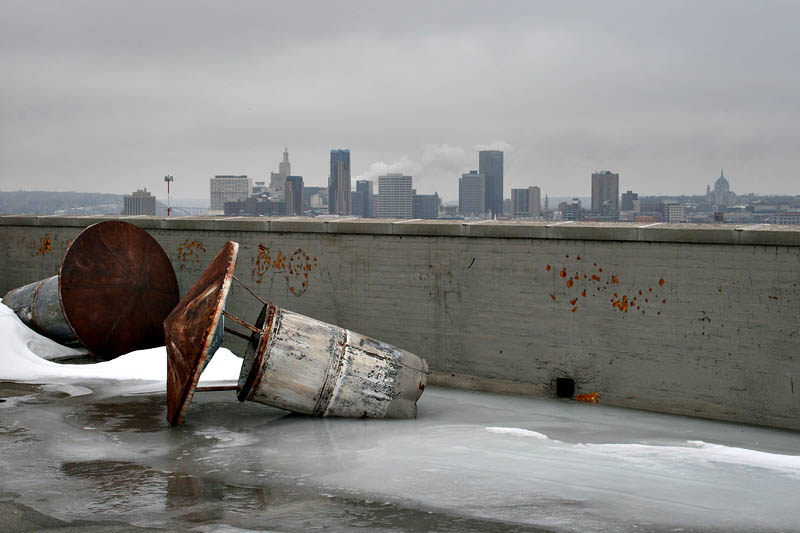
(From Invisible Strings © 2011 by Jim Moore. Used by kind permission of Graywolf Press. Photo of the St. Paul skyline by Flickr user Jeremiah)

Quote For The Day

“[I]t is not only the power and deathlessness of God that is made visible, manifest, three-dimensionsal, if you like, in Jesus’ going to his death. For us death is also inseparable from the reality of shame, powerlessness, pain, failure and loss. Jesus didn’t go only to occupy a space of death in some abstract, hygienic sense. He went to occupy the space of being the sort of human who is thrown out in order that others can Bronzino-Christ-Nicesurvive. In other words, he went to death as a victim, the sort of person whom others gang up against. And the reason that this is important is that it catches us at our worst, as it were. The space of the victim is the kind of place none of us at all ever wants to occupy, and if we find ourselves occupying it, it is kicking and screaming. More to the point, we spend a great deal of time pointing fingers and making sure that other people get to occupy that space, not us.

Now by Jesus going into, and occupying that space, deliberately, without any attraction to it, he is not only proving that we needn’t be afraid of death, but also we needn’t be afraid of shame, disgrace, or of the fact that we have treated others to shame and disgrace. It is as if he were saying, ‘Yes, you did this to me, as you do it to each other, and here I am undergoing this, occupying the space of it happening, but I’m doing so without being embittered or resentful. In fact, I was keen to occupy this space so as to try to get across to you that I am not only utterly alive, but that I am utterly loving. There is nothing you can do, no amount of evil that you can do to each other, that will be able to stop my loving you, nothing you can do to separate yourselves from me. The moment you perceive me, just here, on the cross, occupying this space for you and detoxifying it, the moment you perceive that, then you know that I am determined to show you that I love you, and am in your midst as your forgiving victim. This is how I prove my love to you: by taking you at your very lowest and worst point and saying ‘Yes you do this to me, but I’m not concerned about that, let’s see whether we can’t learn a new way of being together,'” – James Alison, Jesus the Forgiving Victim: Listening for the Unheard Voice.

Faith That Makes Mountains

dish_salvationmtn

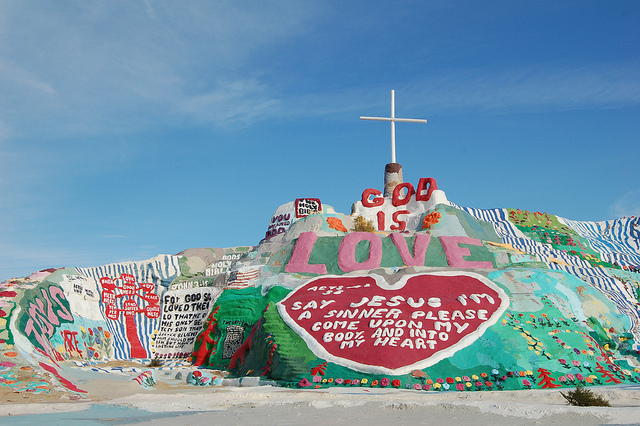
David Berry describes a visit to Salvation Mountain in southern California, a “folk art project made by Leonard Knight, a Korean War vet who had a religious epiphany, which led him to park a truck in the desert and make a hill out of adobe clay and old house paint”:

[T]he mountain itself, a handmade version of Calvary, complete with cross, looks like a child’s furious scribblings blown into life. … The technicolour mountain is maybe 40 feet from its blue base (“the sea of Galilee”) to its peak, leftover clay piled on top of pushed-out dirt. Most of the paint has gotten another layer of religious sloganeering, from the GOD IS LOVE, each letter five or six feet on its own, to scaling down tributes to JESUS and THE HOLY BIBLE and FIRE and a frequently repeated screed to let Jesus into your heart. Near the base of the mountain is a half-completed hay-bale-and-telephone-pole “museum,” slathered with more paint, littered with twisted limbs, repurposed religious refuse and more slogans. The climate and grit and taupe clay surfaces make it feel something like a Holy Land cave, or anyway what I imagine they feel like from repeated viewings of Jesus Christ Superstar.

Inside, one tattooed twentysomething lay on an outcropping of plastered-over hay bales staring into a knotted mess of branches. Outside, a breathing H&M advertisement of a foursome, wafting hints of pot, took a group selfie in front of the mountain. A woman who claimed to be from Ohio, with a drawl I thought only came out of the South, explained that she was on the upkeep crew, Knight having passed away about a year ago.

(Photo of Salvation Mountain by Flickr user bdearth)

Holy Crimea

Mara Kozelsky reminds us of Crimea’s significance in the history of the Russian Orthodox church:

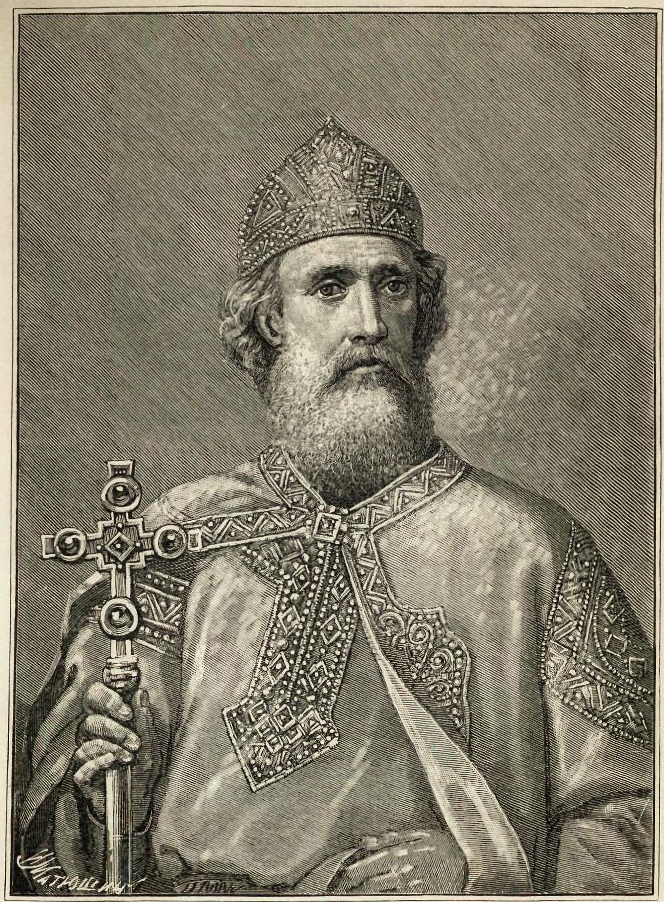
Crimea sits at the heart of both the Third Rome idea and Nicholas I’s nationality platform, because it was on the peninsula that Byzantium Vladimirpassed the mantle of Orthodoxy to Russia. In the ancient Greek colonial city of Chersonesos, the Byzantine emperor baptized the Kyivan Rus Prince Vladimir. Prince Vladimir’s conversion has been described by an early Russian nationalist as “the most important event in the history of all Russian lands,” because the conversion “began a new period of our existence in every respect: our enlightenment, customs, judiciary and building of our nation, our religious faith  and our morality.”

Beyond Prince Vladimir’s conversion, Crimea gave Russia a first century Christian pedigree.  Roman Emperor Trajan exiled the first century pope Clement to Crimea, where he founded an early Christian community that hid among neolithic caves. Some biblical scholars also believe St. Andrew the Apostle passed through Crimea en route to his mission field in Scythia.  Until the communists imposed an official policy of atheism, Russian archaeologists, historians and biblical scholars combed over the peninsula looking for the exact location of Prince Vladimir’s conversion and evidence supporting the first century legends. The Russian Orthodox Church, meanwhile, established a network of monasteries on the peninsula and promoted pilgrimages to “Russian or Crimean Athos.” Crimea became Russia’s very own holy place.

Boris Barkanov stresses the symbolic value of Ukraine writ large:

Ukraine (Kiev especially) is at the very heart of the origin myth of the Russian nation and civilization.  An analogous case is the significance of the Temple Mount and the Dome of the Rock (al-Aqsa Mosque) in Jerusalem to Jews and Muslims respectively.  This means that for Russian and Ukrainian nationalists, Ukraine is what UC Berkeley political scientist Ron Hassner has called a “sacred space.”  It appears indivisible, but has to be shared to avoid conflict and violence.  The same is true for Tatar, Ukrainian, and Russian nationalists regarding Crimea.  Defusing such conflicts requires thoughtful, innovative solutions that empower moderate, rather than radical, political forces on all sides.

Alexander Motyl, responding to an op-ed by Henry Kissinger from last week, pushes back on parts of this narrative:

Pace Kissinger, the Russian religion did not spread from “what was called Kievan-Rus.” What spread was Orthodox Christianity and it spread from Constantinople, thanks in no small measure due to the proselyting efforts of Ss. Cyril and Methodius, both Greeks. True, Ukraine “has been part of Russia for centuries,” but it’s been no less a part of the Mongol empire, the Grand Duchy of Lithuania, the Polish Commonwealth, the Habsburg Empire, and the Ottoman Empire.

(Illustration of Vladimir I of Kiev via Wikimedia Commons)

“Better Sung Than Said” Ctd

A reader writes:

Choral music is a rich source of deeply expressed faith, as Giles Fraser notes, and music based on Lent offers particularly striking examples. The most famous such piece may be the Allegri Miserere [seen above]. Backstory here. The score of the piece was a closely guarded Vatican secret for more than a century, until the church made the mistake of inviting a 12-year-old boy named Wolfgang Amadeus Mozart to hear it. He listened twice and transcribed it from memory, and the score was published shortly thereafter.

Update from a reader:

“Choral music is a rich source of deeply expressed faith” – while this is undoubtedly true, I’m convinced there is another aspect that is being missed in this discussion.

I am from a Scottish Presbyterian background and started singing in my secondary school choir. At a Scottish university I auditioned with two choirs in freshers week and much to my surprise was invited to join one of them. I was exposed to the English choral (Anglican) tradition: with one of many highlights being learning psalm singing reading pointing at choral evensong services. Now based in Silicon Valley, I’m again a long-term member of a choir singing broadly sacred music, this time specializing in late mediaeval and renaissance times. Our repertoire spans 400 years: the diversity of styles is immense. Rehearsing, learning and performing roughly 10 news pieces for each concert is a great diversion from everyday life in high-tech.

Now to my point: I don’t believe in God, despite regularly singing some of the most exquisite sacred music you could ever hear. Which prompts me to think about how many of the composers of the music were believers? The bulk of surviving manuscripts of music from renaissance times are sacred – not a huge surprise as the church in those times was the seat of learning. If you were a talented singer or composer in those times, what were your options if your talents (like mine) are consonant with sacred music? Which gets me thinking, how many of the giants of the sacred music were atheists: Byrd, Tallis, Palestrina, Victoria, Josquin, Dufay?

The Rise Of The “Reverse-Missionaries”

Adedamola Osinulu argues that dramatic growth of African Pentecostal churches in the US “demands a change in how we, in both secular and religious America, understand our relationship to African Christians and Christianity as a whole”:

Africans’ interest in Pentecostalism was fueled by literature emanating from North America in the 1970s and ’80s. But, as one example of how they re-shaped Pentecostal theology to be more responsive to local practitioners’ material conditions, they presented a God who is deeply invested in believers’ fiscal and physical well-being in the present, not just the fate of their souls in the after-life. Amidst the swirling political and economic crises of the postcolonial state, this was an immensely attractive proposition.

Conceiving themselves as part of a global religious community, they began to export their brand of Christianity around the globe. As a result, we find that the largest single congregation in Europe, the 25,000-member Embassy of God, is a Pentecostal church founded by a Nigerian man. Today the largest African Pentecostal organizations are sending so-called “reverse-missionaries” to North America and Europe. One of those groups, the Redeemed Christian Church of God (RCCG), founded in Nigeria, has 15,000 parishes around the globe including at least one in every major North American city.

Last month, Jason Margolis reported on the RCCG’s efforts in America. Keating’s take-away from the piece:

American missionaries played an important part of spreading the faith around the world, but one question posed by researchers is whether the transmission would reverse: Would any of the hundreds of new denominations sprouting up in Africa cross the Atlantic and gain adherents in the United States? The decentralized structure of Pentecostalism leads to new branches and churches being created more quickly than in other forms of Christianity.

Margolis’ reporting on the Redeemed Christian Church of God seems to indicate we haven’t hit that point yet. The church’s members are nearly all Nigerian or African immigrants, and it has had a hard time expanding beyond those communities. But the Catholic Church certainly isn’t the only Christian denomination whose geographical center of gravity is shifting.

Previous Dish on the rise of African Pentecostalism here.

Nothing To See Here

An oddly compelling supercut:

It’s called “Nothing”, by LJ Frezza, who stitched together scenes from Seinfeld in which nothing happens – no dialogue, just shots of buildings and a bass line. Nathaniel Smith elaborates:

Seinfeld was the award-winning, best-ever show on television that broke the traditional situation comedy mold with producer Larry David’s emphasis on it being “the show about nothing”. Of course, it was about something, four friends and their misadventures in New York City. But a recently prominent super-edit of the series takes the program’s motto to its natural conclusion, by piecing together every cut-scene and still-shots which gave the audience scene establishing, and oddly, never showed any people. The results are disorienting, a bit existential, and completely nostalgic for fans of the show.

(A fair warning, the sound of slap bass might be a bit much at first, but if you are a fan of the show, you heard that familiar 90′s-tinge sound enough times to make finishing the video worth it).