Ukraine’s Nuclear Mistake? Ctd

Millman doesn’t see how the country could have kept its nukes:

Was it even plausible that Ukraine could have held on to an independent nuclear deterrent after the collapse of the Soviet Union? The answer is almost certainly, “no.” Indeed, it’s hard to imagine any action that would more greatly have imperiled the stabilization of the post-Soviet order than such a determination on Ukraine’s part. Western and Russian interests were aligned in wanting to see Ukraine denuclearized; an independent nuclear Ukraine would have been treated as a dangerous rogue state. Russia’s ability to project power in the immediate aftermath of the collapse of the Soviet Union was extremely limited, but Ukraine’s ability to defend itself was even more ephemeral. The best evidence that Ukraine had no real choice but to denuclearize is precisely that Ukraine got almost nothing in exchange for agreeing to hand over its Soviet nuclear weapons.

Earlier Dish on Ukraine’s nuclear disarmament here.

Francis On Civil Unions

mary-knots-SD-thumb

The knots begin to be untied:

On the question of marriage and civil unions, the Pope reaffirmed that “marriage is between a man and a woman”. States seek to justify civil unions “to regularize different situations of living together”, pushed by the need to regularize the economic aspects between people, such as, for example, to ensure health care, he said. “We have to look at the different cases and evaluate them in their variety”.

On this, as on contraception, the Pope is not calling for a change in doctrine about the sacrament of marriage. What he is clearly saying, I think, is that you don’t have to change doctrine to respect the civil society’s and secular state’s decision to accommodate gay couples and families within its existing arrangements for heterosexual households. This was his position in the internal church struggle in Argentina, reflecting his understandable concern that a Benedict-style counter-revolution against gay couples would not only be counter to the spirit of the Gospels, but deeply divisive for the church as a whole and damaging to its broader goal of evangelization. A 21st Century bishop of Rome might well accede to civil unions for gay couples and “not judge” the sincere consciences of gay couples seeking civil protections and rights under the law. That would end a misguided cultural war against an entire younger generation in the West, while not abandoning core doctrinal teachings on the family.

It’s a pragmatic and humane position – whereas Benedict’s was both a loser among most Western Catholics and clearly inhumane, and even callous, at times. I expect to see it nudged forward at the Synods this year and next.

I expect mercy to be primary in grappling with the questions of divorced Catholics, contraception and gay lives. Less judgment, more mercy. You know: like Jesus. And look at the stark difference between Francis’ approach to doctrinal and theological debate and Benedict’s relentless imposition of total orthodoxy:

Pope Francis praised Cardinal Walter Kasper’s keynote talk on the family to the assembly of cardinals (the Consistory) on 20-21 February which the interviewer said had sparked divisions among them. “It was a most beautiful and profound presentation, which will soon be published in German.  It dealt with five points, the fifth of which was the question of second marriages”, Francis commented. He said he would have been “worried” if there had not been “intense discussion” and, moreover, the cardinals knew they could speak freely. Indeed, “the fraternal and open confrontations make the theological and pastoral theology develop.  I do not fear this; on the contrary I seek it.”

In my view, it is this new and overdue opening of the Catholic mind for which Francis may one day be remembered most of all.

No, We Can’t Wreck Russia’s Economy

Russia Exports

Danny Vinik uses charts on Russian exports and imports to explain why American sanctions against Russia pack little punch:

The little blue areas in each graph is the United States. The purple is Europe. Without the E.U.’s cooperation in implementing sanctions, American sanctions won’t hurt Russia very much. Of course, because the the E.U. economy is so interconnected with Russia’s, it means any economic sanctions will also hurt the E.U. That’s the reason that countries like Germany and the Nertherlands are withholding support for sanctions and instead pushing for a diplomatic solution. That may make sense for those countries, but it makes the U.S. threat of sanctions very weak.

Vinik also looks at what Russia sanctions would mean for US companies:

The U.S. Chamber of Commerce estimated that U.S. exports of goods and services to Russia in 2011 was more than $10 billion. That’s not much compared to the $2.1 trillion in total exports that American companies did that year. Nevertheless, Russia is an emerging market with growing incomes, and U.S. companies have been actively looking to increase their investment there in recent years. Companies like Pepsi, Coke, and Ford will be reluctant to support any economic sanctions that dig into their bottom line, especially if the European Union refuses to implement their own sanctions. Since the U.S. and Russia do very little business together (only $30 billion in 2013), any unilateral sanctions from the U.S. will only have a marginal economic effect, although they may offer symbolic value as well.

Peter Feaver wonders what Putin’s counter-counter-move will be:

The commentary has rightly focused on the immediate A-B-C moves: (a) what Russia has done in Crimea, (b) what the West should do in response to that, (c) what Russia would do in Crimea and Ukraine after the West has acted. Less attention has been paid to the things we will all be talking about once those preliminary moves have taken place: how Putin will seek to impose costs on the West for the sanctions and other diplomatic steps we take in move “b.” Germany appears to be quite concerned about this, though much of that concern may just be about lost business opportunities. Of greater importance will be the cost-imposing strategies available to Putin elsewhere on the geopolitical chess board, especially Syria, Iran, and perhaps even Afghanistan.

The Tidal Wave For Marriage Equality

US-JUSTICE-GAY-MARRIAGE

Yes, I have to keep pinching myself. For the longest time, in my marriage equality stump speech from the 1990s, I would end by citing Hannah Arendt’s classic case for ending the anti-miscegenation laws:

Even political rights, like the right to vote, and nearly all other rights enumerated in the Constitution, are secondary to the inalienable human rights to ‘life, liberty and the pursuit of happiness’ proclaimed in the Declaration of Independence; and to this category the right to home and marriage unquestionably belongs.

What I was trying to do was to get (at that point) mainly gay people to see how the denial of the right to marry was effectively a nullification of the Declaration of Independence for gay Americans. The right of gay people to marry was more profound in truth and in law than the right of gay people to vote. “So why aren’t you fighting for it?” I’d declare. Until they did. Getting straight people to see this was actually easier over the years (tell a straight person he doesn’t have the right to marry the woman he loves and you’ll get some powerful pushback). But now look:

Americans think the equal protection clause of the U.S. Constitution gives gays the legal right to marry. In a closer but still significant division, 50 percent say it does, while 41 percent say not, with the rest undecided.

So a Supreme Court ruling that did not find civil marriage as a core constitutional right for gay couples would now be against public opinion. Ross and Rod are surely more right than they might imagine. This is becoming not a victory for gay equality but a rout. The new Post/ABC poll, for example, finds for the first time that there is a plurality in favor of marriage equality in every age group. Even the over-65s are now in favor, by 47 – 43 percent. The next generation (under 40s) sees the issue as a no-brainer with a massive 72 – 22 percent in favor.  40 percent of Republicans are now supportive, with 23 percent strongly supportive. And, in fact, the intensity factor – long on the side of fundamentalists – now operates in favor of gays and their friends and families.

By the end of the Obama presidency, gay Americans may well achieve a near-total victory in their quest for equality.

And the backlash, as we saw with the Arizona debacle, is likely to be ferocious but also, at this point, self-defeating. I’m honestly staggered by the swiftness and totality of this victory in public opinion. But also, of course, incredibly heartened. Our gamble was correct: if we speak our truth, others will listen; if we explain our pain, others will salve it; if we are guided by our consciences, and make our arguments sincerely, Americans will come around. I wish more Christians would see this for what it really is: a huge moral achievement, an expansion of human consciousness and compassion, an extension of mercy and of dignity to many long shunned and excluded for irrational and often hateful reasons, and, above all, the alleviation of  profound and ancient and unnecessary human pain and suffering.

I wish more Christians could see that this movement has been and remains God’s work on earth. But that wish, every day, becomes more and more of a reality. The long, dark Lent of gay history is slowly inching toward Easter.

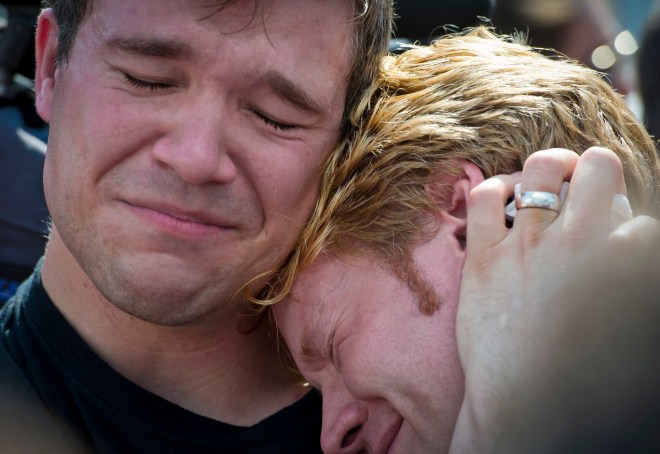
(Photo: Michael Knaapen and his husband John Becker react outside the Supreme Court on June 26, 2013, after DOMA was struck down. By Mladen Antonov/AFP/Getty Images.)
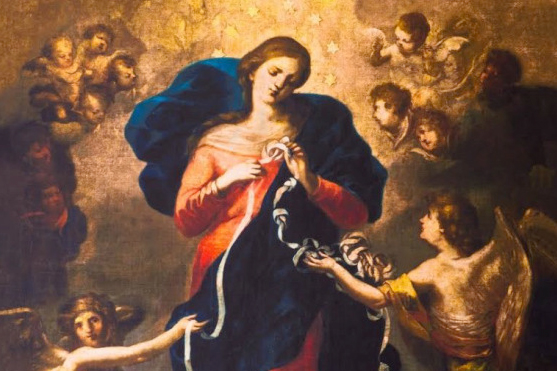

Chart Of The Day

Pizza Cost

Quoctrung Bui explains why you should always order the largest pizza:

The math of why bigger pizzas are such a good deal is simple: A pizza is a circle, and the area of a circle increases with the square of the radius. So, for example, a 16-inch pizza is actually four times as big as an 8-inch pizza. And when you look at thousands of pizza prices from around the U.S., you see that you almost always get a much, much better deal when you buy a bigger pizza.

Update from a reader:

As a real New Yorker, I feel it is important to share the information on the other reason to buy the largest pizza you can.

In “real” pizza places (not chains), they pre-make the dough ahead of time and save it out into dough-balls.  When you order your pizza, the pizza maker stretches the dough into the appropriate size for the pan, puts the sauce, cheese and toppings on, and shoves it in the oven.  What he does not do, is say, “hmmm, they have ordered a medium pizza as opposed to the standard large pizza, let me take a portion of this dough off of my dough ball.” What you actually get is a pizza with a tougher, thicker, less-good crust because the dough is the right amount for the standard size pizza.  And the standard sized pizza is a large.

On an unrelated note, I just renewed today.  I upped my renewal from the standard rate ($19.99) to one dollar for every year I have been alive ($42).  I think this will be my go-to going forward.  I was going to just renew, but I found out yesterday I am getting a promotion, so my good fortune is your good fortune.

Damn, now I am hungry for pizza for lunch.

Quote For The Day II

“Overall this needed to be a lot better than it was. The document has almost no vision, only a marginal command of the scholarly literature, and it is a good example of how the conservative movement is still allowing the poverty issue to defeat it and tie it up in knots,” – Tyler Cowen, on Paul Ryan’s attempted use of mainstream social science in his new budget proposal.

Chait piles on merrily and mercilessly, as is tradition.

Will Pot Shops Be Kind To Patients?

Sullum is concerned over how the legalization of recreational pot in Washington state actually limits options for those who use it medically:

The cannabis strains that best meet patients’ needs may not appeal to recreational consumers. They may be low in psychoactive THC, for example, but high in cannabidiol (CBD), which shows promise as a treatment for a wide range of disorders, including epilepsy and multiple sclerosis. … H.B. 2149 and S.B. 5887 both would offer “medical marijuana endorsements” to pot stores that choose to serve patients, either exclusively or in addition to recreational users. The endorsements would allow registered patients to benefit from a higher purchase limit (three ounces rather than one) and an exemption from the standard sales tax. But patients worry that they will still be treated as an afterthought and may have trouble obtaining the specific varieties that are tailored to their symptoms.

Meanwhile, Nora Caplan-Bricker notes that the feds are still prosecuting pot-shop workers in states where medical marijuana is legal:

Obama’s administration brought 153 medical marijuana cases in its first four years, according to a June 2013 study from the National Organization for the Reform of Marijuana Laws (NORML). Bush brought 163 in eight years. At the time of the study, Obama had not granted a single pardon or clemency petition to a medical marijuana defendant. Over 335 defendants had been charged with federal medical marijuana crimes in states where its sale was legal, and 158 had gone to jail.

But support for cannabis continues to grow – now in New York, set to become the 21st state to permit pot for patients:

State Senator Tom O’Mara, a conservative Republican from Western New York, is the fourth Republican lawmaker to come out publicly in support of a plan to legalize medical marijuana. “I have carefully considered the facts, and after meeting with patients and their families I have come to the conclusion it’s time for New York to offer a highly restrictive, tightly regulated network to provide patients access to treatment that will improve their quality of life,” O’Mara said in a statement released today.

1914, 2014, And Putin

A reader writes:

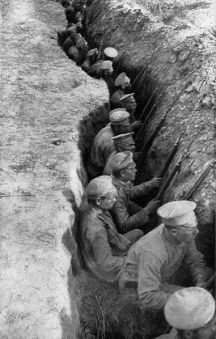
I am really struck this morning with the difference between 381px-Russian_Troops_NGM-v31-p379US and German newspapers in their handling of the situation in Ukraine. The reporting of the facts is the same, essentially. But the editorial voice couldn’t be more distinct. Echoing through the German papers is an admonition, during the centennial of the beginning of the Great War, to be mindful of the conditions that led to its launch: hysteria, rabid nationalism, thoughts of the pride and glory of great nations, elements of personal vanity, militarism. These are forces that have historically led to great misery for humanity and that have clouded the history of Europe. They are all also things that can be found in some measure in the current controversy.

The Germans find much frightening in Putin, and in particular they see in his dealings unpleasant echoes of the predatory practices of the Hitler regime. But they are also sharply critical of the US, of the hyperventilation coming out of the Beltway, and even of Kerry’s desire to push promptly to isolate Russia, when they sense that post-Putin Russia is more likely to be a responsible part of Europe and relaunching a Cold War would only tend to strengthen the reactionary elements in Russian society.

They favor a response that is more incremental, cautious, measured, and one that avoids absolutely demonizing Russia. They prefer one that will bolster over time the more positive elements in Russian society. They are focused on extending a strong helping hand to Ukraine.

But beyond this, there is both a lack of a clear prescription of what to do next and a strong distrust of America. Obama is a big improvement over his predecessor, they reason, but he is still far too beholden to the toxic voices of neo-conservatism that sound so loudly within the Beltway.

It says a lot that Germans see this current moment as redolent of the folly of 1914, while Americans see it through the prism of the 1930s. The Germans, it seems to me, are more on point. Yes, there are some tactics that Putin is using with respect to diaspora Russians the way Hitler did with diaspora Germans, but the parallel, like all such Godwin-like parallels, can be dangerously misleading. Putin does not have a massive, modern industrial state behind him, and a unified mobilized citizenry; he has a faltering petro-oligarchy, atop a fragile Potemkin “democracy”; Putin claims no global ideology except the preservation of Russian power in its sphere of influence; Putin could only fight or occupy Ukraine at huge costs to his own power and the stability of his regime. When you consider all this, he is a problem to be contained or, so far as is possible, ignored.

What worries me about some of the signals coming from the White House is that they are repeating some of the errors of the past. They seem to have a solid grip on a realist and sober foreign policy, and then they have a spasm of relapse: intervening in Libya, declaring a “red line” in Syria. Putin needs to be contained and there need to be costs if he doesn’t retreat from Crimea. But grandiose threats and polarizing rhetoric can be deeply counter-productive. He’s made a huge blunder. The core task right now is to ensure we don’t make an even bigger one.

(Photo: Russian troops awaiting a German attack, 1917)

Quote For The Day

“We were supposed to bring POW’s back to the base. But instead we gave them a cigarette to calm them down, and told them to get on their knees. One of our guys was 240 lbs, and he’d taken this shovel we’d been issued, and he’d sharpened one of the sides until it was like an axe, and he could take off somebody’s head with two hits,” – a “human of New York“.

“The Likeliest Republican Nominee”

Cillizza thinks it’s Rand Paul because “the establishment conservative field is packed with potential candidates while the movement conservative field is relatively sparse”:

Simply put, Paul is more likely to emerge victorious from the movement conservative primary than any of the potential candidates seeking the establishment conservative banner. At the start of the year, we would have said Christie would have had a leg up in that establishment primary — and hence an edge to be the nominee since the party’s pick traditionally comes from the establishment wing. But Christie’s struggles to get out from under the lane closures scandal that reaches high into his administration has reduced him to just another member of the pack. Walker and Kasich both have the potential to break out but first need to get by real reelection races this fall. Jeb Bush would quite clearly be the establishment frontrunner if he ran but no one has any idea if he wants to or will. Ditto Paul Ryan. And, while Jindal seems to be gaining a bit of steam, he remains second tier in this group.

But Weigel thinks the senator is overrated as a candidate:

As long as Paul’s in the Senate, as long as he’s a fascinating, quotable, and potentially successful libertarian iconoclast, stories about his associations and his movement will be relegated to the think-piece pile. If he’s a credible presidential candidate? The jackals run loose, and they know where to hunt. Years of experience and evidence tell us that Paul can be rattled by that. His potential opponents know this.

Henry Olsen points out that movement conservative candidates usually don’t appeal to the crucial “somewhat conservative” subset of Republicans:

This group is the most numerous nationally and in most states, comprising 35–40 percent of the national GOP electorate. While the numbers of moderates, very conservative and evangelical voters vary significantly by state, somewhat conservative voters are found in similar proportions in every state. They are not very vocal, but they form the bedrock base of the Republican Party.

They also have a significant distinction: they always back the winner. The candidate who garners their favor has won each of the last four open races. This tendency runs down to the state level as well. Look at the exit polls from virtually any state caucus or primary since 1996 and you will find that the winner received a plurality of or ran roughly even among the somewhat conservative voters.