The Quintessential American Word: “Hi!” Ctd

The following quote from British comedian Tom Cowell’s pros and cons of Americans is a great complement to this mega-popular Dish post from last year:

Americans are so wonderfully, sincerely down-to-earth, we have trouble believing it. To the cynical British mind, any genuine pleasure in meeting a new person is a sign of potential mental illness. But Americans actually want to make new friends. They want to get along with you, stranger. It makes one’s like infinitely more interesting to have an American around, because you meet EVERYONE. It’s like permanently going through life with a puppy, or the latest iPhone.

Beyond The Love Of The Game

Jonathan Mahler says “an earthquake has just rocked the shaky edifice of the NCAA”:

Peter Sung Ohr, a regional director of the National Labor Relations Board, ruled that Northwestern University’s football team can unionize. This is a big, big deal.

If the ruling is upheld by the NLRB in Washington, and the various courts to which the university and NCAA would then appeal, it will be a revolution. As members of a union, the Wildcat players could, for example, insist on having independent concussion experts on the sidelines during games. They could demand that Northwestern cover medical expenses related to sports injuries, as well as pay the full costs, including expenses, of attending college. And now that the NLRB has certified Northwestern’s union, you can expect plenty of other college athletes to follow suit. The ruling might already apply to all private FBS schools, including major ones such as Notre Dame and Stanford. The logical next step would be for college athletes at such schools to join together to form a single players union — much like those for professional athletes.

McArdle weighs in:

It’s long been an open secret that football players at schools with major sports programs are something closer to an employee of the athletic department than to a member of the student body. Many of them aren’t capable of college work, and those who are aren’t necessarily encouraged to do any. The fiction that they’re students is maintained only by NCAA rules that forbid outright compensation of players, and “gifts” that are just compensation in disguise. You can argue, and I would, that these rules mostly benefit the colleges, not the “students.” I understand that the players get something out of the deal. But they would get a lot more if it weren’t for a legalized cartel that’s actively suppressing their wages. Given these realities, it’s hard not to cheer the NLRB. But it isn’t clear how much allowing football players to unionize will accomplish, as long as the NCAA is still allowed to make rules against paying them.

Erik Loomis takes the long view:

Now, this is far from the end of the road. Northwestern is going to appeal and the NCAA is going to back them up all the way. After all, the free labor they take from athletes is at stake. So who knows what is going to happen. But a couple of quick key takeaways. First is the speed of the decision. Usually, these cases are a long, drawn-out process (often a problem of the NLRB, making it an increasingly ineffective agency for workers operating in real time with house payments and such). This case began only two months ago. This means that for the regional director, it was an obvious and easy decision. He declared these athletes workers because they received compensation, even if did not receive a paycheck Second, this continues to chip away at the NCAA. Every time players sue or argue for rights, the NCAA cartel weakens. Every time they win or even gain a partial victory, NCAA power declines even more.

But in the short term, questions remain:

Ivan Maisel, of ESPN, raises a smart series of concerns. There is, for example, a potential problem of scope. Ohr’s decision covers only scholarship players on the football team. What about athletes who play other sports? “The workload of the college athletes in non-revenue sports is also extreme,” he writes. “They also sign that contract to perform services. They are subject to the control of the coaches, and in return for payment. By these criteria, they deserve to join the union, too.” And the decision covers only men. Women’s sports often lose money. Does that mean that the female athletes in these sports are students, rather than employees, and thus undeserving of union protection?

Meanwhile, Bloomberg editors urge schools to give their athletes “union-busting scholarships”:

[T]he ruling was based on the fact that an athletic scholarship can be withdrawn if a player opts to quit a team. This gives the school too much leverage – whether or not courts ever decide that it makes the student an employee.

The NCAA should solve this by making a simple change that would be good for students and schools alike: Require that all athletic scholarships be granted for four years. Then, if a student-athlete lost interest in a sport, or decided the team requirements were too demanding, he or she could quit and still finish college on scholarship. Incredibly, the NCAA began allowing such multiyear awards just two years ago, and while some schools have begun offering them, few do – and only to a small number of high-level prospects.

Alyssa mulls over commercialism and sports more generally:

The idea that elite college athletes are amateurs who devote their college careers to playing sports for nothing but love is of a piece with a larger contradiction in the way American audiences approach athletic competition. Professional sports are an absolutely giant business. In 2012, Major League Baseball signed three television deals covering eight years of broadcasts for $12.4 billion, bragging that the figure represented “more than a 100-percent increase in annual rights fees to MLB over the current arrangements.” But when athletes themselves dare to follow the examples of their owners and their leagues and prioritize their contracts over loyalty to any given city, fans can go ballistic: Witness the frustration vented at Robinson Cano when he left the New York Yankees for the Seattle Mariners.

If we make sports the embodiment of American ideals, it makes a certain amount of sense, however irrational it is, that we want athletes to focus on something other than money. It would be too uncomfortable to acknowledge that the games we set up as objects of worship are really just a way for us to venerate a few talented people for extracting the highest possible compensation in exchange for their gifts.

Ask Jennifer Michael Hecht Anything: Do We Have A Right To Die?

The author of Stay: A History of Suicide and the Philosophies Against It addresses the question:

A reader responds to our first video from JMH:

Thanks for your brief video of Hecht talking about suicide contagion. Many years ago I went through a period of serious depression and came quite close to killing myself. With the help of several people (and one friend in particular) I pulled through, and now I lead a regular life with episodes of normal misery but nothing like what I once experienced.

When I was at my lowest ebb, I definitely knew that if I ended my life I would hurt others around me – my family, my friends. But in the two or so years I struggled with those feelings, I can tell you it never once occurred to me that killing myself might lead someone else to end their life. Such a thought would have been abhorrent to me, and I couldn’t help wondering after I wanted Hecht’s video whether suicide prevention counsellors make that point to those at risk of harming themselves. I think if they did, some of those people would step back from the brink. It’s one thing to hurt yourself and rationalize that your pain is greater than the pain you’ll cause others through your death; it’s quite another to think you might be compelling some of those who knew you to step into that abyss themselves.

Many thanks for that video. I will now read her book.

You’re Even Less Alone In The City Than You Thought

metro-area-population-growth

America’s urban populations are on the rise:

New Census data released Thursday further suggests that within the last year (from July 1, 2012, to July 1, 2013), virtually all of the country’s population growth took place in metropolitan areas, with a significant chunk of it even further clustered in and around the largest cities. Over that year, the number of people living in metropolitan America increased by 2.3 million, a figure that reflects both natural growth and in-migration. The population in what the Census calls “micropolitan statistical areas” – smaller population centers with a core of fewer than 50,000 people – grew by a mere 8,000 souls. As for the rest of the mostly rural country, the population there dropped between 2012 and 2013 by 35,000 people. Those areas are neither attracting new residents nor producing many of their own, a sign of the exodus of young adults who might be having their own children now.

But, as Ben Casselman notes, some cities have been more fortunate than others:

Eighteen US metro areas had unemployment rates of 12 percent or higher in 2012, according to the Bureau of Labor Statistics, and all but three of them saw a net decline in migration – that is, they saw more people move out than move in. These cities are overwhelmingly in inland California, where the collapse of the housing bubble left deep and lasting scars. … Meanwhile, at the opposite end of the spectrum, cities in regions with strong job markets are gaining residents. Oil and gas states dominated the list of fastest-growing cities: Six of the top 10 were in Texas, North Dakota or Wyoming, where an oil and gas boom has brought unemployment rates below 5 percent.

Meanwhile, geographer Jim Russell reminds readers that population decline doesn’t have to signal doom:

[The conventional wisdom is that] negative net migration is bad, always bad. To say otherwise makes you a blind civic cheerleader guilty of moving the goalposts in order to gild a turd. Pittsburgh is dying. Seriously, how could outmigration be a good thing? That means 10,000 more people left than arrived. Almost certainly, people did move to a dying city. In this case, 20,000 young adults with college degrees moved into the urban core. Meanwhile, 30,000 suburban residents without a high school diploma retired and moved to Phoenix. The workforce grows and gets younger. The workforce gets smarter and per capita income increases. … Just because the net migration number is negative doesn’t mean there is brain drain. A shrinking population doesn’t always indicate a dying city.

The Christianists Strike Back

Earlier this week, we gave an Yglesias Award nomination to Richard Stearns, president of World Vision U.S., one of the largest evangelical aid organizations in the world. He had taken a stand that a married gay person could be employed by the organization as long as they followed the same guidelines for fidelity as heterosexuals. The decision lasted two days:

The initial decision faced heavy backlash from the evangelical community—including Al Mohler, Russell Moore, John Piper, and Franklin Graham—with few voicing open support for the decision. The day after the initial policy change was made, the Assemblies of God, one of America’s largest and fastest-growing denominations, urged its members to consider dropping their financial support from World Vision and instead “gradually shifting” it to “Pentecostal and evangelical charities that maintain biblical standards of sexual morality.”

And so Stearns reversed his position. The dispute is really about what is central to Christianity:

“They were not taking a position supporting same-sex marriage or homosexuality,” said Tim Dearborn, director of Fuller Seminary’s Lloyd John Ogilvie Institute of Preaching, who previously oversaw how World Vision’s Christian commitments were implemented across its international partners. Instead, he said World Vision, which has a “deep commitment to live and serve in ways that are consistent with Scripture,” was attempting to do three things.

“First, to focus on the aspects of the biblical mandate that are non-negotiable: caring for the poor, victims of injustice, and especially children,” said Dearborn. “Second, to contribute to the unity of the church around those things, at a time when the church is fractured. And third, to contribute as a result of that to the credibility of the gospel and the church in the eyes of American society.”

It was a calm and beautiful moment. While it lasted.

An Autism Epidemic?

Diagnoses of autism spectrum disorders (ASD) have spiked recently:

One in 68 children in the US are identified with autism spectrum disorders, according to the latest estimates from the Centers for Disease Control. This estimate is 30 percent higher than the prevalence reported in 2012. CDC says that since the previous estimate of 1 in 88 children identified with ASD, the criteria used to diagnose, treat, and provide services have not changed. …

The latest report confirmed many of the previous findings, including the fact that ASD is almost five times as common in boys than as girls: 1 in 42 boys versus 1 in 189 girls were diagnosed. Also, white children are more likely to be diagnosed with ASD than black and Hispanic children. Experts credit that racial disparity to a difference in access to health care resources and well-trained experts, which they also believe explains why ASD prevalence ranges from 1 in 45 in New Jersey to 1 in 175 in Alabama.

Charlotte Howard digs deeper into the racial aspects:

White children were about 30 percent more likely to be autistic than black children and nearly 50 percent more likely than Hispanics. Interestingly, across children of all ethnicities, as many children were identified as autistic without intellectual disability as with it – the share of autistic children with average or superior IQs rose from one-third in 2002 to nearly half in 2010. But it was mostly white children, not black or Hispanic ones, who were identified as having both autism and normal or lofty intelligence.

These figures raise perplexing questions. Why the 120 percent jump [over the past eight years]? Why are rates so much higher among white children? The simplest answers (though not necessarily the correct ones) are that it has become easier to diagnose the problem and that white children are more likely to have access to such services.

Aaron Carroll says that he’s “officially become skeptical” of the growing autism scare:

I’d be panicked about this, if it didn’t seem improbable.  I’m a pediatrician, and I see lots of kids. I swear to you, the vast, vast majority of them don’t have autism. My three kids are in public school, and know tons of kids. Very few of them have autism. My many acquaintances have many kids. Some of them have autism, but the prevalence does not feel like 1 in 68. Nor does it feel like the prevalence has been doubling like seen here. And I acknowledge that my experience is not “data.” I’m totally open to the fact that I could be wrong. But these numbers don’t seem to gel with experience.

A Big Weekend For Turkey

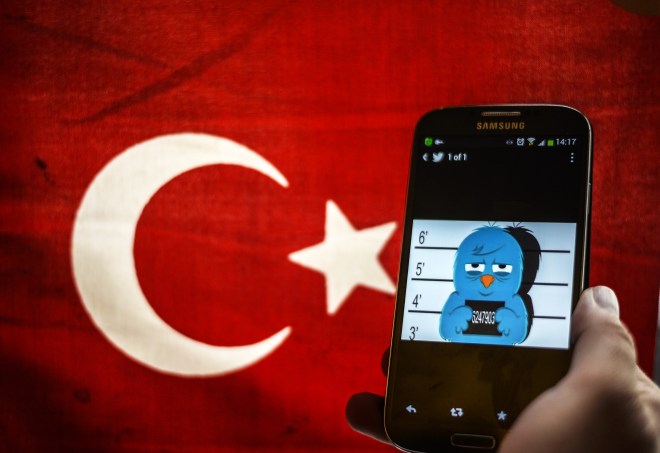
TURKEY-POLITICS-COURT-TWITTER

Tim Arango and Ceylan Yeginsu discuss what’s at stake for Turkish voters:

The nationwide municipal elections on Sunday, the first time Turks will vote since last summer’s antigovernment demonstrations, are seen as both a referendum on Mr. Erdogan’s tenure and a test of his support as he struggles to survive the corruption scandal with authoritarian countermeasures, including purges of the police and the judiciary; a crackdown on the press; and a new law that gives the government more control over the courts and blocks access to Twitter and YouTube, where most of the damaging leaks have first appeared.

The outcome of the elections could determine Mr. Erdogan’s political future. While many analysts, as well as polling data, predict that the AKP. will win a plurality nationwide, the percentage is most important. Anything substantially less than 40 percent – roughly what the party won in the last local elections, in 2009 – would be considered weak. The effects could intensify dissatisfaction within the party toward Mr. Erdogan that could ultimately lead to his exit from politics. A strong showing, though, could embolden Mr. Erdogan to seek the presidency in an election later this year or, alternatively, seek to alter his party’s term-limit rules and run for a fourth term as prime minister.

Oray Egin explains why the ruling AKP appears to be doing well:

One reason is the ruling government’s relatively liberal attitude toward aid. One of the landmark features of the AKP’s local governing system is the party’s continuous offer of free gas, coal, provisions and even financial aid to voters in rural areas. “They’ve first made the people poorer and now dependent on government aid,” says Mustafa Sarıgül, the opposition party’s mayoral candidate in Istanbul. “They’re using scare tactics and spreading false rumors that we’ll cut their aid. Their campaign budget is 1.5 billion dollars.”

Another reason is that for less well-off voters, corruption just doesn’t rank as a primary issue. “Poorer voters,” posits Bülent Gültekin, former governor of Turkey’s Central Bank and now a professor of finance at Wharton, “don’t regard corruption allegations as sin.” Corruption, he says, “always existed in Turkey, especially in local governments.” But Erdogan, he allows, “made it more organized.”

A Kadir Yildirim details the opposition strategy:

The AKP’s infatuation with its successive electoral victories and popularity has created an aura of invincibility and infallibility. It is this feeling of invincibility that must be brought down first, if judicial accountability is to materialise at all. Hence, the opposition’s primary goal is to hold the AKP democratically accountable. Yet, chronically weak opposition parties like the center-left CHP (Republican People’s Party) and the nationalist MHP (Nationalist Movement Party) offer little hope in the way of taking on the seemingly invincible AKP.

The opposition has devised an original solution to this apparent conundrum: strategic voting. Voters in each locality would support the strongest non-AKP candidate in the hope of defeating the AKP in most municipalities.

Michael Koplow considers what would happen if the AKP falters:

Should Erdogan and the AKP do worse than expected, and somehow lose Istanbul – which to them is the worst possible thing that could happen given its symbolic importance to the AKP, its role as a political bellwether for the rest of the country, and Erdogan’s view of the city as his own personal fiefdom – they will not take it as a humbling warning. They will go into panic mode, and lash out at everything and anything. Expect to hear claims of election fraud, efforts to obstruct AKP voters, and Gülenist plots. Social media will become an even bigger target, protestors will be dealt with even more harshly, and Turkish cities will become even more frequent sites of confrontations between police and civilians. The hyper nationalist rhetoric will get turned up, and I wouldn’t even put it past the realm of possibility that Erdogan would seek to create a distraction, such as military escalation with Syria, to change the subject and try to regain his footing.

Dan Berman believes “the worst is yet to come”:

For Turkey is not just on the verge of elections; it is also on the verge of major civil unrest, unrest that promises to have serious geopolitical consequences, as well as domestic ones in Europe and America. And Erdogan has done more than anyone else to provoke the current climate. If the local elections next week, which will be the electorates first real chance to pass judgement on Erdogan’s recent actions, are close, or wracked with fraud, it is almost certain that mass protest will break out, and past experience indicates that Erdogan and his government will not refrain from using deadly force against them. And given that the opposition are already warning of fraud, and the government indicating it may not recognize an defeat, a clash seems almost certain.

Meanwhile, Victoria Turk notes that YouTube, in addition to Twitter, is now blocked in Turkey:

The video site went down just hours after an anonymous Youtube account posted an audio recording of what they alleged was Turkey’s intelligence chief discussing military operations in Syria with other high-ranking officials. Reuters said they were unable to authenticate the recording but said it was “potentially the most damaging purported leak so far as it appeared to have originated from the bugging of a highly confidential and sensitive conversation.”

Zeynep Tufekci analyzes Erdogan’s social media “strategy”

This is what Erdogan is now doing to social media: portray it as a place from which only ugly things come from, and which poses a danger to family and to unity. … [T]he content is not blockable, and this is quite obvious to the Turkish government which has many technologically competent people, including the minister of foreign affairs who was a frequent twitter user and I have once watched discuss the power of social media with “Arab Spring” youth where it was clear he knew what he was talking about (and quite smooth about it). These blocks are meant to demonize social media content, and dissuade Erdogan supporters from seeking them, knowing what to seek, and being motivated to seek.

(Photo: A picture representing a mugshot of the twitter bird is seen on a smart phone with a Turkish flag on March 26, 2014 in Istanbul. By Ozan Kose/AFP/Getty Images)