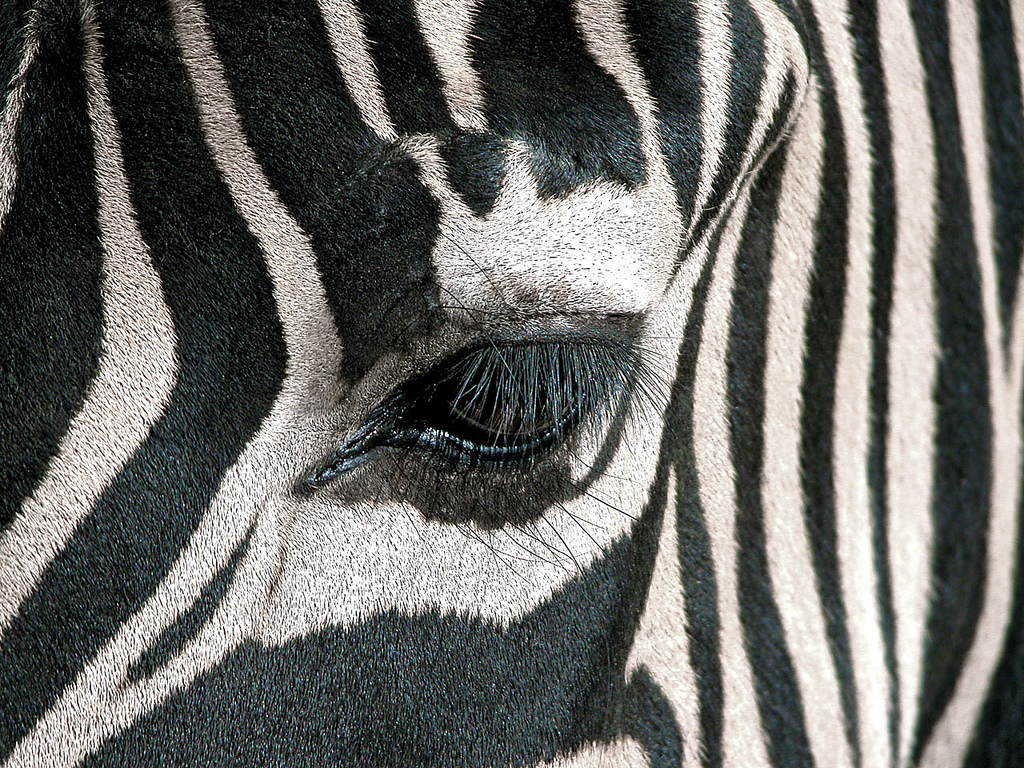
One of the main theories:
It is called the “motion dazzle hypothesis”, and it suggests predators are confused by zebras’ stripes and cannot understand their movement. Research published in the journal Zoology in 2013 used a simulated visual system to show that zebra stripes do interfere with visual perception. But this is a difficult hypothesis to test in the field.
Derek Mead flags a paper that finds evidence for a different theory:
Biting flies don’t like to land on stripes. The study team, led by Tim Caro of UC Davis, compared the habitats, predators, and other factors that might potentially make stripes useful for the seven extant equid species in Africa and Asia. Two things stood out: The three species with stripes are the only ones located in the same spot as blood-sucking, disease-carrying tsetse flies, and their width of their stripes match previous models showing the optimal stripe size for deterring flies. And to be clear, biting flies can be a huge problem: studies have shown that cattle in the US can lose 200-500cc of blood per day if biting flies aren’t controlled with pesticides, and they can also be serious disease vectors.
(Photo by Flickr user Tobias)
 The Dish