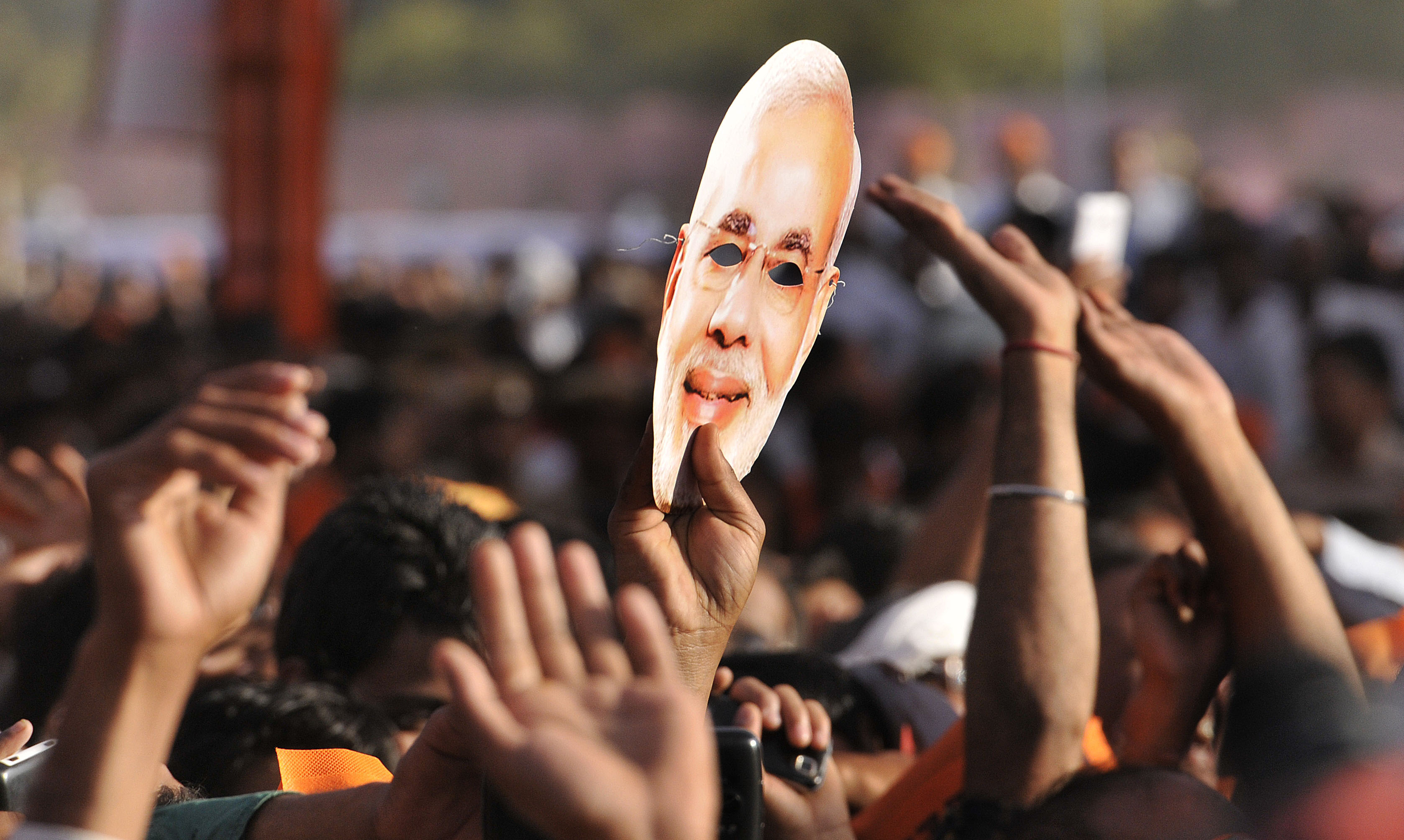
A useful NYT video reviews the troubling record of Narendra Modi, who is likely to be India’s next prime minister. The Economist is against Modi because he never addressed the slaughter of Muslims that happened under his watch:
By refusing to put Muslim fears to rest, Mr Modi feeds them. By clinging to the anti-Muslim vote, he nurtures it. India at its finest is a joyous cacophony of peoples and faiths, of holy men and rebels. The best of them, such as the late columnist Khushwant Singh (see article) are painfully aware of the damage caused by communal hatred. Mr Modi might start well in Delhi but sooner or later he will have to cope with a sectarian slaughter or a crisis with Pakistan—and nobody, least of all the modernisers praising him now, knows what he will do nor how Muslims, in turn, will react to such a divisive man.
If Mr Modi were to explain his role in the violence and show genuine remorse, we would consider backing him, but he never has; it would be wrong for a man who has thrived on division to become prime minister of a country as fissile as India. We do not find the prospect of a government led by Congress under Mr Gandhi an inspiring one. But we have to recommend it to Indians as the less disturbing option.
Vaibhav Vats reports that officials from Modi’s party are stoking anti-Muslim sentiment:
“This election is the election of honor and revenge,” Mr. [Amit] Shah [general secretary of Modi’s Bharatiya Janata Party ] said to Hindus in the sensitive district where clashes between Muslims and Jats, a caste group within Hinduism, claimed more than 60 lives in September. “This is the time to avenge,” Mr. Shah continued. “A man can sleep hungry but not humiliated. This is the time to take revenge by voting for Modi.”
Regardless, Amy Kazmin finds strong support for Modi:
[N]ot since the days of Indira Gandhi – whose landslide 1971 election was followed by her 1975 suspension of democratic freedoms during the Emergency – has India seen such a personality cult created around a single national leader. “If you look at all the symbolism of brand Modi, it’s about him as a personality – a decisive personality that has so much force that it is going to break the incapacity of the last 10 years,” says Dheeraj Sinha, chief strategy officer for South Asia for Grey, the advertising agency.
Earlier Dish on the Indian elections here.
(Photo: BJP supporters gather during an election campaign rally of its prime ministerial candidate Narender Modi in Gurgaon, India on April 3, 2014. India has begun its 9-phase general elections. The results are announced in mid-May. By Sunil Saxena/Hindustan Times via Getty Images)
 The Dish