Timothy George explains why 17th century poet and priest John Donne “continues to attract readers, especially among Christians, and especially during the season of Lent”:
Above all, Donne is the poet of embodiment. He writes about things we can see and feel: fleas, ants, bearbaiting, the sudden blush of a young girl, a long voyage at sea, theatres
that “are filled with emptiness,” and wartime in an “age of rusty iron.” He also writes a lot about himself and his torturous relationship with God. After he died, Donne was called “a second St. Augustine.” The Doctor of Grace is quoted more than seven hundred times in Donne’s surviving sermons. There is no doubt that he read and lived out the Confessions over and over again. The Augustinian themes of restlessness, original sin, repentance, forgiveness, pilgrimage, predestination, the resurrection of the body, and the overarching hope of salvation born of pain—these are all present in a language that still dazzles in both poetry and prose.
[Literary critic Stanley] Fish considers Donne a self-aggrandizing poet, one who feigns devotion to God as a pretext for abusing and lording it over others, especially women—his mother, his many lovers, his poor wife Ann. Donne is a spiritual sado-masochist, Fish thinks, in verba if not in res. Such a gendered, ultramodernist reading, however, ignores the much more subtle dialectic between religion and sex (Augustine again) that pervades Donne’s work—both his earlier “secular” love poems and his post-conversion sermons and devotional verse.
David L. Edwards, in his superb study, John Donne: Man of Flesh and Spirit, gets it right: “Here is a man who is thoroughly human, and energetically masculine, as well as being highly intelligent, yet he cannot stop talking about religion when he is supposed to be talking about sex, anymore than he can stop talking about sex when we expect him to be pious.”
Previous Dish on Donne here and here.
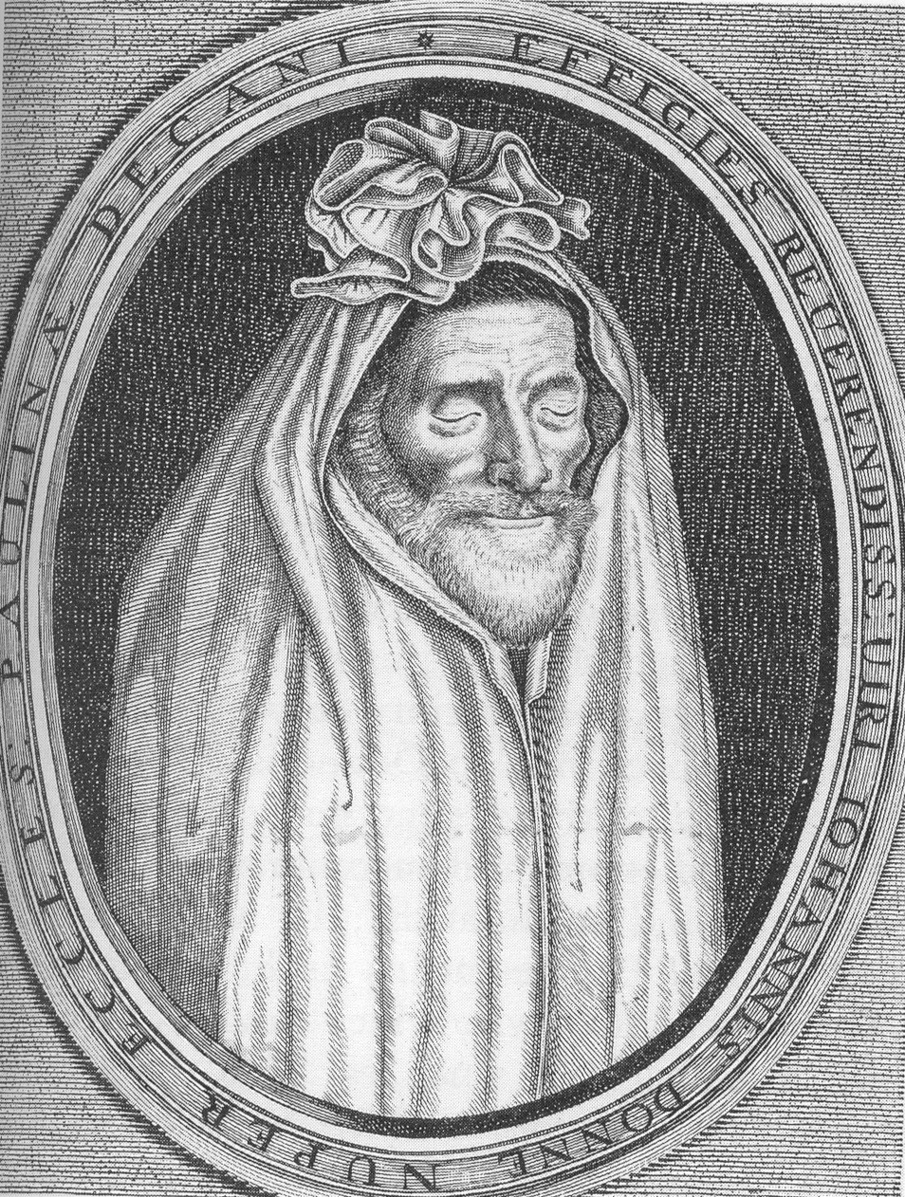
(Image of Donne in his shroud, c. 1631, via Wikimedia Commons. Donne commissioned the portrait shortly before his death and hung it on his wall as a reminder of the transience of life.)
 The Dish
