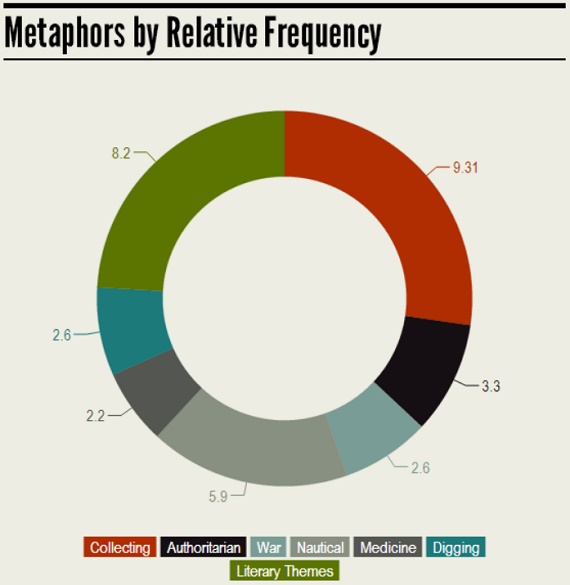
In a study of how news media talks about surveillance, PEN found evidence of “rich thematic diversity in the types of metaphors that are used, but … also a failure of imagination in using literature to describe surveillance”:
[S]cholars and activists have observed that relating U.S. government surveillance regimes to Big Brother overstates the case, because the U.S. is a more open society than the one 1984 describes and, despite the NSA’s overreach, the country should not be labeled authoritarian. Scholar Daniel J. Solove, for example, pointed out in a seminal article that Kafka’s novella The Trial is probably better suited:
We are not heading toward a world of Big Brother or one composed of Little Brothers, but toward a more mindless process — of bureaucratic indifference, arbitrary errors, and dehumanization — a world that is beginning to resemble Kafka’s vision in The Trial.
Other activists prefer to use Jeremy Bentham’s notion of the panopticon, an institution that allows those with power to create the perception that their subjects are under surveillance at all times. But for journalists and bloggers, the rich variety of literature that has tackled surveillance — from science fiction to modern novels — is rarely invoked. Orwell is the reigning king of the surveillance state.
What do these results mean? The fact that 91 percent of articles contain metaphors suggest that writers will continue to use metaphors to help us understand advances in technology. They also use a diverse range of metaphors. However, as advocates develop new messaging on surveillance and look to literature for inspiration, they should not stop at Orwell: there are many more literary treasures to be explored. … Aaron Santesso and David Rosen, for example, have shown that the Eye of Sauron in J.R.R. Tolkien’s Lord of the Rings better captures the current surveillance state, but so too do plays by Shakespeare, such as The Tempest.
 The Dish