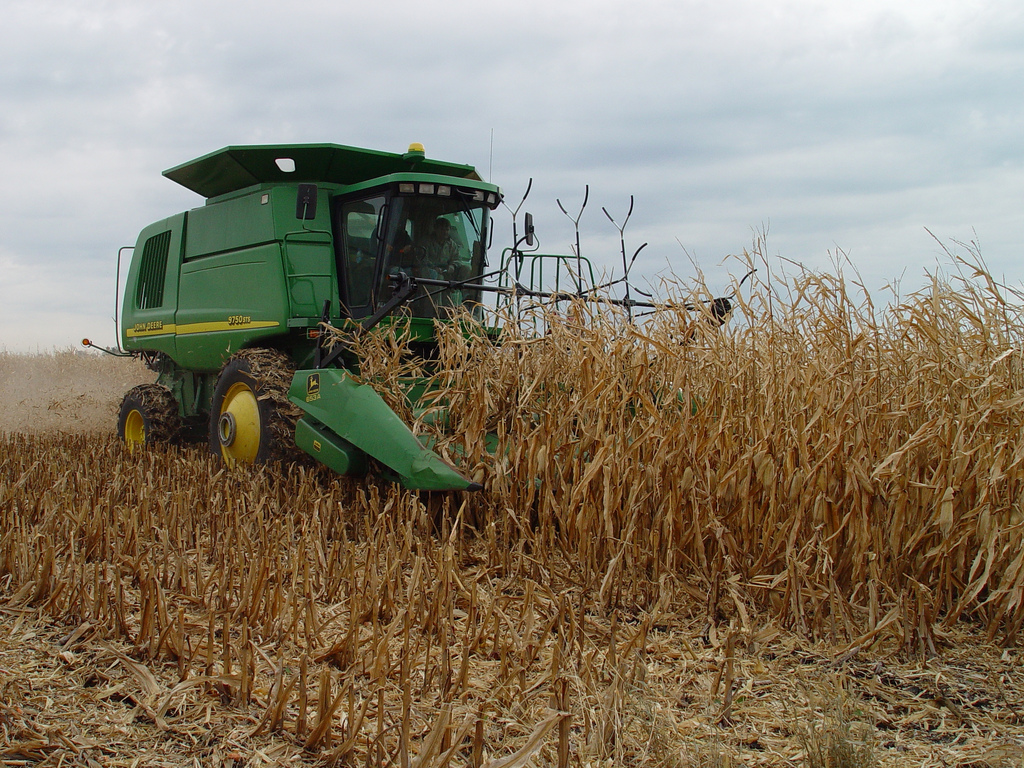
Corn stover, or the stuff left over when a corn crop is harvested, has become a popular source of biofuel, partly because it doesn’t affect the food supply the way that corn or sugar-based ethanol does. Unfortunately, this type of fuel may actually have a bigger carbon footprint than gasoline:
It used to be that the stalks, leaves, and detrital cobs would be left on fields to prevent soil erosion and to allow the next crop to feast on the organic goodness of its late brethren. Increasingly, though, these leftovers are being sent to cellulosic ethanol biorefineries. Millions of gallons of biofuels are expected to be produced from such waste this year — a figure could rise to more than 10 billion gallons in 2022 to satisfy federal requirements.
But a new study suggests this approach may be worse for the climate, at least in the short term, than drilling for oil and burning the refined gasoline. The benefits of cellulosic biofuel made from corn waste improve over the longer term, but the study, published online Sunday in Nature Climate Change, suggests that the fuel could never hit the benchmark set in the 2007 U.S. Energy Independence and Security Act, which requires that cellulosic ethanol be 60 percent better for the climate than traditional gasoline.
Michael Byrne explains what the problem is:
The problem comes in a trade-off: while the actual fuel burning is cleaner, the process of removing the stover from a field releases carbon dioxide from the soil to the tune of 50 to 70 grams per one megajoule (about a BTU) of energy produced. … There’s more to it than just carbon dioxide. Corn stover doesn’t just go to waste if left on a field post-harvest. It helps protect against erosion and it keeps nutrients in the soil. Removing the stuff means soil loss (you know, Dust Bowl) and an increased need for fertilizer. Lead researcher Adam Liska, a professor at the University of Nebraska, notes that his team made numerous attempts to poke holes in their study, only to come up with the same disappointing results. There’s no such thing as free energy.
Jon Terbush chimes in:
That finding puts some hard numbers behind an interesting note in the U.N.’s latest climate change report, which said “indirect emissions” from biofuels “can lead to greater total emissions than when using petroleum products.”
That said, the EPA dismissed the study because it assumed all of a corn field’s waste would be used for ethanol production, an assumption the EPA said was “an extremely unlikely scenario that is inconsistent with recommended agricultural practices.” And the study did note that emissions could be offset by planting cover crops, so it’s not guaranteed that cellulosic ethanol production using corn would have to be more harmful to the planet than gasoline.
(Image courtesy of Idaho National Laboratory (INL) Bioenergy Program, via Flickr)
 The Dish