In an excerpt from A Sting in the Tale: My Adventures with Bumblebees, Dave Goulson describes their gory genesis:
The first bees evolved from wasps, which were and remain predators today. The word ‘wasp’ conjures up an image of the yellow-and-black insects that often build large
nests in lofts and garden sheds and which can be exceedingly annoying in late summer when their booming populations and declining food supplies force them into houses and on to our picnic tables. Actually, there are enormous numbers of wasp species, most of whom are nothing like this. A great many are parasitoids, with a gruesome lifestyle from which the sci-fi film Alien surely took its inspiration. The female of these wasps lays her eggs inside other insects, injecting them through a sharply pointed egg-laying tube. Once hatched, the grubs consume their hosts from the inside out, eventually bursting out of the dying bodies to form their pupae. Other wasp species catch prey and feed them to their grubs in small nests, and it is from one such wasp family, the Sphecidae, that bees evolved.
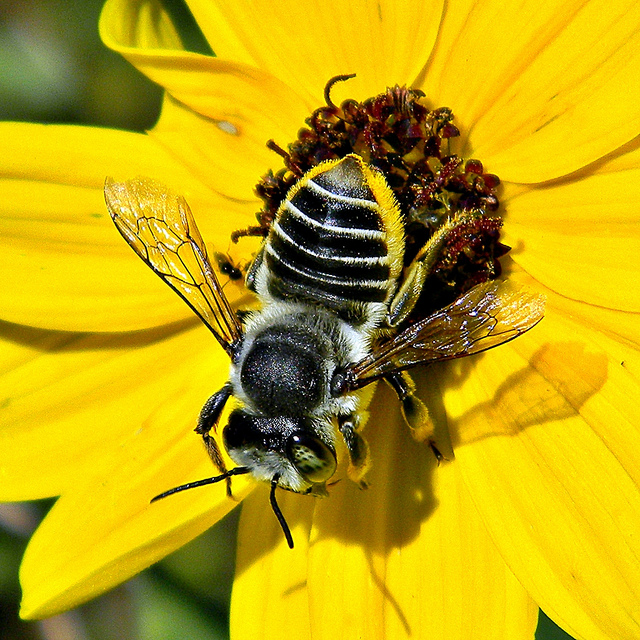
In the Sphecidae the female wasps stock a nest, usually an underground burrow, with the corpses, or the paralysed but still living bodies, of their preferred prey. They attack a broad range of insects and spiders, with different wasp species preferring aphids, grasshoppers or beetles. At some point a species of sphecid wasp experimented with stocking its nest with pollen instead of dead insects. This could have been a gradual process, with the wasp initially adding just a little pollen to the nest provisions. As pollen is rich in protein, it would have provided a good nutritional supplement, particularly at times when prey was scarce. When the wasp eventually evolved to feed its offspring purely on pollen, it had become the first bee.
Update from a reader:
Check out the Cicada Killer Wasps. These beauties are so large they can be mistaken for hummingbirds. I had an infestation for several years and tried to use a tennis racket against them. It worked well when you actually hit them, but I became embarrassed about my antics being watched by neighbors. To watch these bees carrying a big, green cicadas back to their nest was to watch something that seemed to be physically impossible to do. I finally took care of the problem by simply pouring boiling water into each burrow.
Video of a wasp viciously attacking a cicada after the jump:
Another reader:
The guy killing the wasps with boiling water is foolishly panic stricken. Sure they’re huge, but the males, who are bigger than the females, don’t even have a stinger. I have a 50-year-old flagstone patio in which they burrow, and when they show up usually at the end of July there’s never been a problem with them ever. They’re just huge and fun to watch.
An entomologist from the in-tray backs this up:
Precisely. Aside from a somewhat similar appearance, they aren’t the least bit like hornets (a group that includes the yellow jackets that mess with your Labor Day picnics) or paper wasps that are so vigorously defensive and aggressively hostile to even little disturbances. Cicada killers nest communally (in patches of soil that have the right characteristics for them to dig their annual nests), but each nest is one tunnel built by one female. Unlike with hornets and paper wasps, each adult female cicada killer is on her own.
In my experience, it’s the social stinging insects (or pretty much just the honey and bumblebees, ants, hornets, and paper wasps – where there is one fertile queen and an army of sterile daughter “workers” defending and caring for the eggs she lays) that are really unpleasant to deal with. The solitary stinging species are far, far less likely to sting people, even when people are near their nests. Mostly they hardly even notice you’re there.
(Photo of a Leafcutter bee by Bob Peterson)
 The Dish