An Overblown Problem

Kevin Drum is fed up with misinformation about the danger wind turbines pose to birds:

Wind turbines can be noisy and they periodically kill some birds. We should be careful with them. But the damage they do sure strikes me as routinely overblown. It’s bad enough that we have to fight conservatives on this stuff, all of whom seem to believe that America is doomed to decay unless every toaster in the country is powered with virile, manly fossil fuels. But when environmentalists join the cause with trumped-up wildlife fears, it just makes things worse. Enough.

Tom Randall looks into the stats:

The estimates above are used in promotional videos by Vestas Wind Systems, the world’s biggest turbine maker. However, they originally came from a study by the U.S. Forest Service and are similar to numbers used by the U.S. Fish and Wildlife Service and the Wildlife Society — earnest defenders of birds and bats. No matter whose estimates you use, deaths by turbine don’t compare to cats, cars, power lines or buildings. It’s almost as if there’s been a concerted effort to make people think wind turbines are more menacing than they actually are.

This perception can delay project permitting. An expansion of the world’s largest offshore wind farm was recently scrapped after the U.K. would have required a three-year bird study. Only recently did the U.S. Interior Department loosen restrictions on wind farms, which according to the Wildlife Society kill dozens of federally protected eagles and about 573,000 birds a year. Other manmade killers take out almost a billion.

Update from a reader, who summarizes this pdf on the subject:

Just to be clear, the problem isn’t total bird deaths with turbines, but the fact that they tend to disproportionately kill soaring birds, think eagles, hawks, and falcons, which are rarely killed by your other techniques in the chart, and which are much smaller in numbers than pigeons and sparrows.

What’s Fair Is Fair

But who can say what “fair” means? Nicholas Hune-Brown wonders whether cross-cultural standards of fairness exist, drawing on a study of the Pahari Korwa tribe in central India. Anthropologists asked participants to play the “ultimatum game,” in which two players decide how to split up a given sum. The first player proposes a division, and if the second player disagrees, neither player receives anything:

The researchers visited 21 villages, inviting 340 people to play the game (each person could only play once, as either “proposer” or “responder”). The [sum to be divided], in this case, was 100 rupees, equivalent to about two days of work in the region. If fairness is a cultural norm, you’d expect there to be some consistency across a culture; bargainers playing the ultimatum game should act similarly. With the Pahari Korwa, researchers found that responders across each of the villages indeed reacted the same way: they took the money. Whether the offer was five percent of the pot or 80, in all but five cases the responders took what was available. The proposers, however, varied substantially in their suggested splits. The modal offer across all villages was 50 percent, but there was no consistency. Some villages offered around 30 percent, while others, bafflingly, went as high as 70 percent.

The Pahari Korwa were all over the map. There was no single idea of fairness, no cultural conformity. The researchers argue that this could be because fairness isn’t a cultural norm, or at least not one that is shared across an entire ethno-linguistic group. They write that “the variation in cooperative and bargaining behaviour across human populations that is currently ascribed to culturally transmitted fairness norms may, in fact, be driven by individuals’ sensitivity to local environmental conditions.” That is, maybe a sense of fairness isn’t something that exists in something as large as a “culture.” Maybe it’s only shared between neighbours—the people you’ve chosen to live next to, presumably because you’re able to cooperate and share the same sense of what is fair.

“The Power Of Weakness”

Morgan Meis considers Hitler’s aesthetic sensibilities in a review of the Neue Galerie’s “Degenerate Art” exhibition. He singles out a work by Emil Nolde, whose work was condemned by the Nazis even though the artist joined the party in the early 1920s:

Nolde’s art simply did not look right to Hitler and Goebbels and Ziegler. Looking at dish_nolde his famous woodcut, “The Prophet” (1912), one can see why. It is a stark woodcut, with thick and harsh lines. The prophet’s face droops downward, sallow and a step away from complete defeat. Nolde’s prophet does not bear a message of triumph. He has a sadder tale to tell. This isn’t to say that the prophet lacks strength. He has learned something, Nolde’s prophet. He knows that life is made richer by the trials of pain and suffering. Nolde’s prophet wants everyone to know that our greatest strength can be found, paradoxically, in our weakness. This was a spiritual insight utterly intolerable to Hitler. Hitler had emerged from his own pain and suffering with a different idea: Strength comes from strength, power from power.

Nolde was compelled to make art that expressed the power of weakness even while he professed Nazi doctrine that strength comes from strength. This proves how thin and sometimes imperceptible is the line between these two thoughts. The latter is so much more compelling. It is an idea we tell ourselves every day; that we must ever be strong.

(Image of The Prophet by Emil Nolde, 1912, via Wikipedia)

Setting Softer Standards

Eric Hoover reports on college admissions programs that increasingly eschew standardized test scores in favor of evaluating potential students for “soft skills” like curiosity and optimism:

DePaul is implementing their own tests for non-cognitive skills, with a series of essay questions. For the entering class of 2012, about 10 percent of applicants (or about 5 percent of the freshman class) chose not to send ACT or SAT scores. Instead they completed four short-answer questions, designed to measure their leadership skills and their ability to meet long-term goals. Systematically scoring the responses to those questions, DePaul reported that the freshman-to-sophomore retention rate was almost identical for those who submitted standardized test scores (85 percent) and those who did not (84 percent). [DePaul University’s associate vice president for enrollment management Jon] Boeckenstedt is encouraged by these preliminary results.

However, even as schools make progress in quantifying non-cognitive skills, there is also worry about the assessments they are building. Non-cognitive skills are often measured through self-ratings, which means respondents can fake their answers. This is partly why Brandeis University did not add non-cognitive assessments when it dropped its testing requirements recently. “Once you introduce these measurements into your system, you introduce the ability to game those measurements, especially if students know they are being tested for an opportunity,” says Andrew Flagel, senior vice president for students and enrollment at Brandeis. “With most of these questions, it’s awfully hard to frame them in a way where one couldn’t intuit the best answer.”

The Best Of The Dish This Weekend

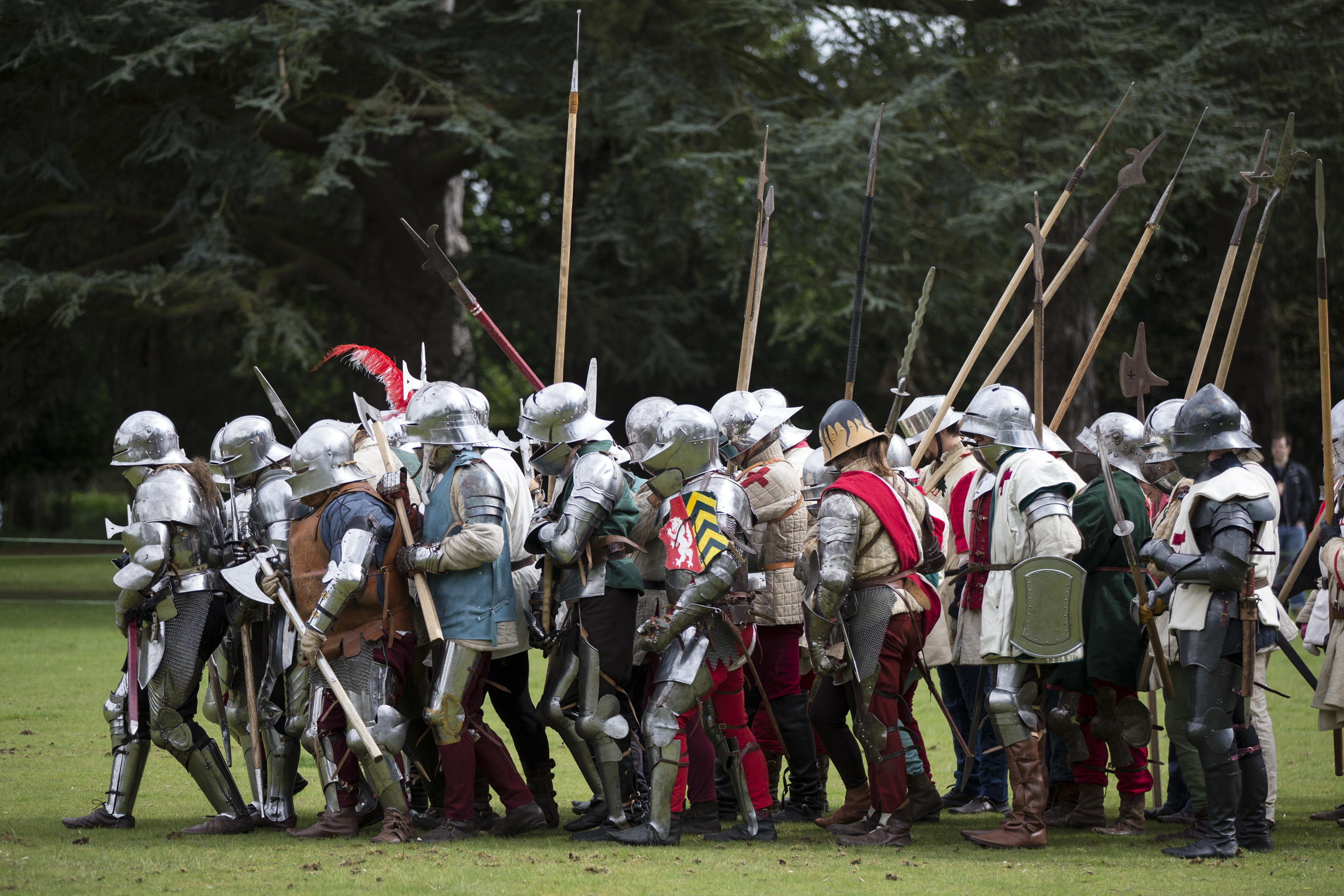
Re-enactors Take Part in St George's Festival at English Heritage's Wrest Park Estate

A brief round-up: two new batches of Book Club emails – one lacerating me for clinging to faith, the other providing some back-up. I’ll do my best to respond tomorrow.

Four more: the voguers of Baltimore; two poems by Nina Cassian; C.S. Lewis on the need for old books; and a peak into the actual – love-drenched – life of Michael Oakeshott.

The most popular post of the weekend remained my takedown of the Becker book on the marriage equality movement.

See you in the morning.

(Photo: Re-enactors take part in a display as part of the ‘St George’s Festival’ at the English Heritage’s Wrest Park estate on April 26, 2014 near Bedford, England. ‘St George’s Festival’ at Wrest Park takes place on April 26 and 27, 2014 and features reenactments of various eras of British history from medieval times to the First World War. By Oli Scarff/Getty Images.)

The Pernicious Poison Of Palin

She represents an absurdist nadir in the history of presidential campaigns. But in case you ever doubted just how callous and toxic she can be, I give you the following:

“Well, if I were in charge …. They would know that waterboarding is how we baptize terrorists.”

A Christian who can equate the sacrament of baptism with a barbaric form of torture is not a Christian, whatever self-righteous blather she emits. And a former vice-presidential candidate who talks of “baptizing” Muslim terror suspects through waterboarding is handing al Qaeda a propaganda coup on a platter. She disgusts me. And what disgusts me even more is the rank cowardice of so many sane Republicans who for far too long have failed to take her on.

Why We Can’t Leave Beauty Behind

800px-Sandro_Botticelli_-_La_nascita_di_Venere_-_Google_Art_Project

In an interview, the writer and editor Gregory Wolfe, who helms the journal Image, explains why so much of his work grapples with beauty rather than ideology:

One of the key dimensions of beauty that theologians and philosophers consistently refer to is beauty’s disinterestedness. The very nature of beauty is that it escapes our attempts to turn it into an instrument for the benefit of the group or tribe to which we belong. There’s something both gratuitous, elusive, and yet attractive about beauty. That paradox is essential as a kind of leavening or balancing force in a world where there are always people with axes to grind, cases to make, and interests to promote. The theologian Hans Urs von Balthasar says that in a fallen world questions of truth and goodness will always be heavily debated, and people will always invest these debates with their interestedness, their parties, and their political leanings. He argues that beauty has the capacity to sail right under the radar of those interested parties. So, while truth and goodness are also “transcendentals,” beauty has the possibility of coming at us with a purer ray from the beatific vision itself.

(Image of Botticelli’s The Birth of Venus, 1483, depicting the classical personification of beauty, via Wikimedia Commons)

The Horny Tory

oakeshott

If you want to read one brief essay on the work of Michael Oakeshott, my old friend Jesse Norman offers the best short account I’ve ever read. It’s gorgeously written and betrays, with light erudition, a profound understanding of the most original political thinker of the last century. Its only flaw is a somewhat too-brief summary of something quite astounding in the exploding area of Oakeshott studies: the publication of Oakeshott’s decades of private writing, Notebooks, 1922-1986:

The present volume has been culled from a vast array of journals written by Oakeshott between 1922 and 1986. These include his own reflections, quotations and passages transcribed from other writers, as well as mini-essays and purely personal cris de coeur. They were not written for publication, and have not now been assembled into anything remotely resembling a single line of thought (how could they be? Oakeshott described them as “a Zibaldone – a written chaos”). Their editor, Luke O’Sullivan, has worked wonders to bring them to book.

The result is a treasury of apothegm, ideas and wisdom. Nearly every one of its more than 500 pages contains some pungent and arresting thought: “Citizenship is a spiritual experience, not a legal relationship.” “To lose youth, vitality, power, love, a friend – all are deaths & they are felt & suffered as deaths . . . these lesser deaths, the mortal material of our life – are the worst.” “In love is our existence made intelligible. For in love are all contraries reconciled.” And, no less in character, “In pretty girls moral qualities are not so awfully relevant.”

Olive Letwin finds that while the journals don’t offer any revelations about Oakeshott’s philosophy, they do “reveal quite a lot about the man”:

Oakeshott’s philosophical eccentricity was matched by eccentricity in many other aspects of his life. He played mah-jong with enthusiasm but refused the winds (or was it the dragons?) because he idiosyncratically conceived them to be inferior. In the same vein, he refused all honours (including the very highest) on the grounds that honours should be awarded to those who want them most. He was as shrewd as the shrewdest street-trader when it came to things like running his beloved department at the LSE; but his private life was notably quixotic. In short, much of his charm lay in his capacity for unexpected romance.

The Notebooks bring out this quality, letting us into some of the smouldering passions that lay behind the extreme delicacy of his conversational manner. There is much reflection on God, and on the history of man’s relation to the numinous in nature. In 1923, we find Oakeshott pondering (over successive days) on the ‘experience of the Red Sea in the history of the Jews’ and on the sea as the symbol of the ‘mightiness of God’. ‘The stars have lost much of their mystery — but who would dare to say that he had discovered the secret of the sea?’

I just bought the Kindle edition of the book – and recommend it to anyone with a curious and open mind who is interested in a conservative thinker far removed from the deranged ideology of the American right.

When I wrote my doctoral dissertation on his thought, Intimations Pursued, in 1989, it was only the second dissertation ever written about him. The philosophical work – in particular his bookend masterpieces, Experience And Its Modes, and On Human Conduct – is so rigorous, unique and penetrating that it sometimes obscures those moments of aphorism, wit, asides and humor that punctuate them. I learned to examine all the footnotes, if only because they took my breath away with their aphoristic, almost Nietzschean, surprise and wit. But they also hinted at a brilliant conversationalist, with a chaotic but always serendipitous life of love and loss and adventure, whose unscripted thoughts might be even more revelatory than the exquisitely composed published work.

I spent one long winter’s afternoon with him months before he died and all that wit and humor and gentleness and mischief was undimmed in his late eighties. But I always knew that for him, life was as important as thought, love far surpassing philosophy in making life worth living, and sex an endlessly fascinating series of adventures and exploits and passions and love. Yes, this was a conservative committed to eros. He was pathological about love. Jesse Norman again:

For the truth is that Oakeshott was not merely an Apollonian, but a Dionysian. He was married three times and had an extensive but often unsuccessful and rackety love life. A man of enormous charm, brilliant conversation and few pretensions, he admired and respected many women, yet had periods in which he behaved with great cruelty to those who loved and depended on him.

The Notebooks include a remarkable sequence, dating from 1928-34, named after “La Belle Dame Sans Merci” by Keats, in which the thirtysomething Oakeshott veers from profound observations on love and loss to obsessional grumbling about his principal girlfriend, Céline (his diaries attest to an interest then in at least nine further women), interspersed with melodramatic screams of sexual frustration. He said of himself, “I am like the River Jordan, my course has ended in a Dead Sea.” And of his first wife, “To know is to lose.”

No wonder the theocons and the neocons regard this Don Juan of a deep thinker with such deep suspicion. But he towers above all of them – in work and in life.

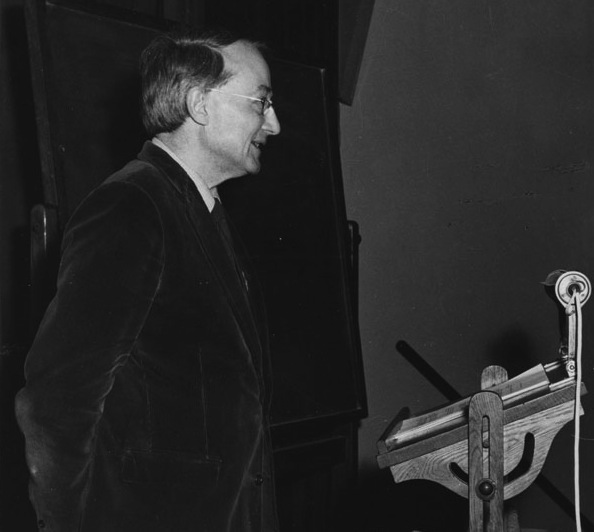
(Photo of Oakeshott lecturing in 1964 via the archives of the London School of Economics)

Sizing Up The Ark

dish_ark

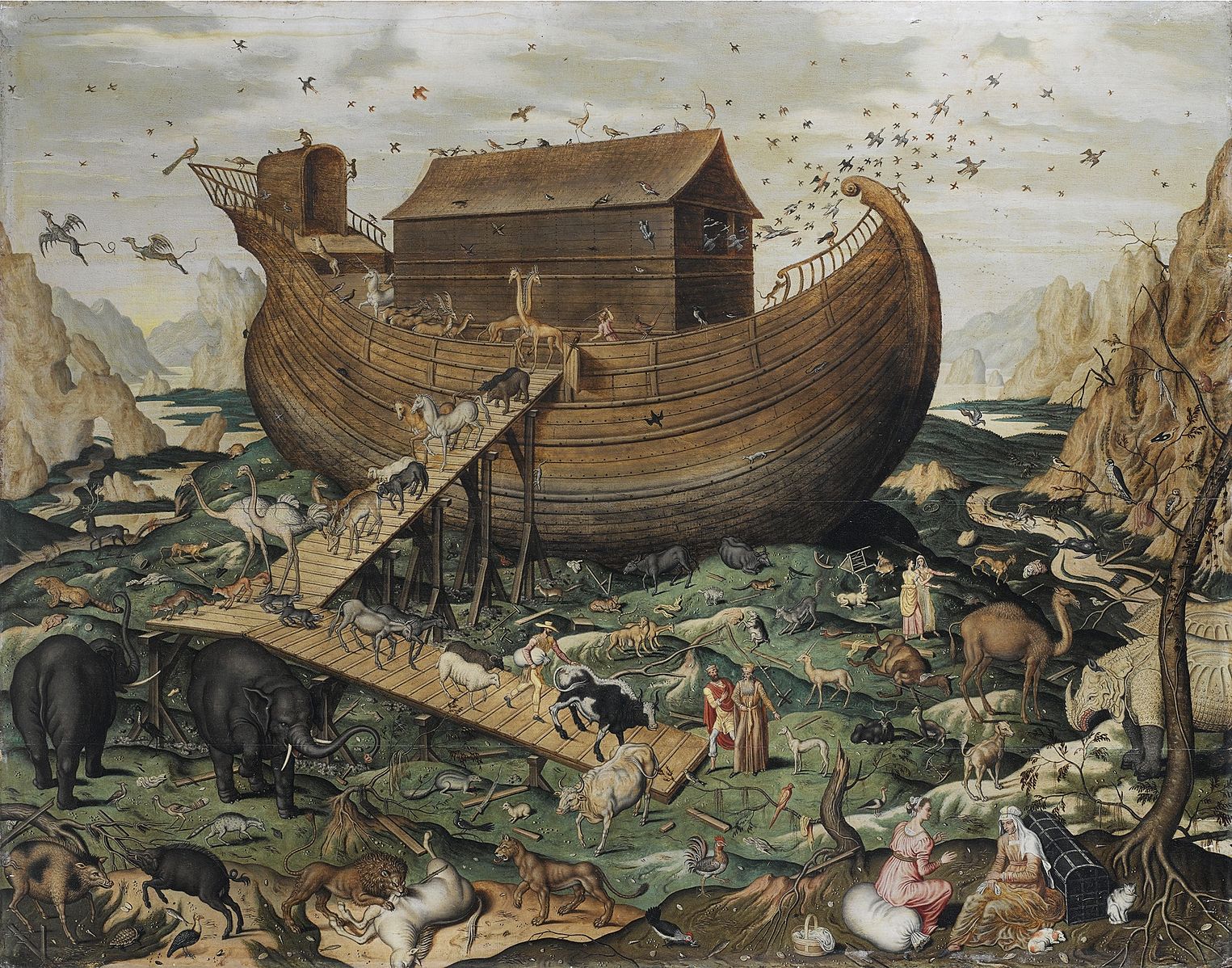
Avi Steinberg compares the biblical story of Noah’s ark with the earliest known accounts of the narrative, traced to Mesopotamian cuneiform tablets. Though the theology of the accounts differs, “in both traditions, the introduction of realistic technology, including detailed specs, is a key element of the story”:

As Irving Finkel, a British scholar, has shown, the attention to technical detail in the various Mesopotamian flood sagas is impressive. In his gem of a book, “The Ark Before Noah,” Finkel … recounts his own shock and delight upon determining that the boat measurements given in some of the Babylonian flood sagas were not fanciful—even if they were incredibly odd—and that these blueprint dimensions were, indeed, intended to be plausible. Finkel reveals that the life-saving vessel in some of the Babylonian flood sagas was a coracle, a bowl made of coiled palm-fibre rope and coated with bitumen for waterproofing—in other words, an oversized basket used as a light paddle boat. … Regarding the length of rope necessary for constructing the Mesopotamian ark, Finkel, after many steps … leaves us with the following equation:

Length of Rope = 31,639,880 fingers cubed / 1 finger squared = 31,639,880 fingers = 527km

In other words, the length of rope that Atrahasis, Noah’s precursor, needed to coil in order to make his coracle-style ark was roughly a half marathon longer than the distance between Philadelphia and Boston. And then he needed to weave this rope into a coil and waterproof it. It was undoubtedly a gigantic ship—and easily the world’s biggest basket ever—but, as Finkel writes, it does appear that “real data and proper calculation have been injected into the Atrahasis story.” To its earliest readers, plausibility was key to the story’s meaning.

(Image of Noah’s Ark on Mount Ararat by Simon de Myle, 1570, via Wikimedia Commons)