The Dating Lives Of Porn Stars

Vox talked to some:

Danny Wylde: While in the industry, I’ve only dated people in the industry. My sexual experiences while in the industry with people outside of it often felt like I was a novelty, or something like, “Well, you better be really great in the sack because you fuck for a living.” …

Jesse Flores: I don’t date anyone in the industry. I prefer outside of it only. But being in the industry adds to the struggle. Once I tell the guys I’m in the industry, their creep factor goes into overdrive. They think it’s okay to say or ask whatever, with no respect.

It’s like, “Would you ask that to someone you met at the store or coffee shop?” No! So why is it okay to ask me that just because I do porn?

Michael Lucas: I always went for people who would not have an issue with it. I’ve had four relationships. My second boyfriend’s family never knew what I do. They knew that I was doing business, but not exactly what kind of business. They were older people and there was no point in telling them. But other than that, everybody knows, and everyone is fine. I would never change my job for anybody; that’s ridiculous. It would never be a healthy relationship if you sacrifice something big for another person. I know people that do sacrifice their adult careers for their boyfriends. They always use it as a reminder whenever something goes wrong. They always say, well, I sacrificed my career for you. That’s not healthy. …

Shy Love: My husband and I started dating when I was in porn. I told him, “I’m never going to give up my business for some guy.” He never was forceful, but he said, “I cannot be serious with a girl who’s in front of the camera.” One day I quit. He asked, “Why?” Was I not popular anymore? I said, “I didn’t do it for you.” Next thing you know, I’m engaged, and married, and have kids. You do have to stop performing to have that normal life.

Pick-ups To Put Down

Leah Green filmed men’s reactions to her sexist comments:

The Everyday Sexism project catalogs women’s experiences of unwanted sexual advances. One example:

I was grabbed from behind at a club and force kissed by a guy that I’d never even seen before let alone spoken to. When I pushed him off and turned to see who it was there was a whole group of guys cheering and laughing. I still couldn’t even tell which one it was.

Last week, David Foster inspired a storm of Internet invective when he wrote critically of the project, warning that “there is a risk of comparing offensive and clumsy sexual remarks with respectful, courteous sexual advances”:

We can all agree that aggressive, lewd behaviour is deplorable. But what lies behind some of the crude and boorish conduct catalogued by the Everyday Sexism project is repressed sexuality. It is only by becoming more sexually liberated that those energies might come to be expressed in a respectful way. To promote the outright condemnation of any and all direct sexual propositions would be a disastrously regressive step for the feminist movement. It is a clear indication of how much ground the left has ceded in recent decades that any of this needs restating at all. Whatever happened to the sexual revolution?

Kat Stoeffel challenges Foster’s concerns:

To Foster … one woman’s sexual abuse is another woman’s “direct, unambiguous sexual advance.” But the harassment Everyday Sexism actually chronicles and mocks could not be further from a sincere, good-faith proposition. (If it were, why do men recoil when the tables are turned?) Most of the time catcalls seem designed for the entertainment of other men; the rest of the time, they seem like man’s saddest reminder that even if women are fish, bicycles still rule the street. Workplace sexual overtures (though potentially more legitimate) have a similar effect: Making an environment less welcoming for a woman by highlighting her status as a sexual object.

Mychal Denzel Smith adds:

If we’re still conflating harassment with attraction, then the point has not been made clear enough: harassment is about power, not about sex. When making lewd comments to a woman he doesn’t know on the street, a man is not flirting. He’s asserting his dominance. He’s reminding that woman of her “place.” He’s performing a masculinity based on control. This isn’t sexual liberation.

Alana Massey furthers the ongoing debate:

Let’s compare a man saying “I want to fuck you” to his saying “Hello, may I talk to you?” The first approach simply asserts a male desire, while the other invites female consent. If the first expression is unwelcome, but the person expressing it proceeds anyway, this moves toward being a criminal act. If the second is unwelcome, though, it’s nothing but an annoyance. The latter can ultimately lead to a sexual proposition, as well, but only after mutual interest and attraction are verified.

This may seem like a long, onerous process, but really, this encounter can take only a few minutes. And hey Foster, it’s a long life. So do women a favor and give them this time, space, and agency. If she declines, it’s not because her feminism has failed her. It’s just your bad game.

“The Key To Making Art”

In her Byliner original, “The Getaway Car: A Practical Memoir About Writing and Life,” Ann Patchett describes the process of putting a story on the page. She claims every writer must cultivate a certain capacity:

Forgiveness.

The ability to forgive oneself. Stop here for a few breaths and think about this, because it is the key to making art and very possibly the key to finding any semblance of happiness in life. Every time I have set out to translate the book (or story, or hopelessly long essay) that exists in such brilliant detail on the big screen of my limbic system onto a piece of paper (which, let’s face it, was once a towering tree crowned with leaves and a home to birds), I grieve for my own lack of talent and intelligence. Every. Single. Time. Were I smarter, more gifted, I could pin down a closer facsimile of the wonders I see. I believe that, more than anything else, this grief of constantly having to face down our own inadequacies is what keeps people from being writers. Forgiveness, therefore, is key. I can’t write the book I want to write, but I can and will write the book I am capable of writing. Again and again throughout the course of my life I will forgive myself.

Read the rest, ungated for the weekend, here. You can purchase it as a Kindle single here.

So You Think You Can Write

When Jenni Diski was just a teenager in 1964, Doris Lessing – who had then just published The Golden Notebook – invited her to live at her home. Diski recalls what she learned about writing from the future Nobel winner:

Doris taught me how to be a writer. I don’t mean she gave me lessons, or talked about writing. I can’t remember her ever talking about writing, except to mumble occasionally that she was on a very difficult bit at the moment, meaning she was preoccupied, or to bellow as I thumped down the stairs past her closed door “Be quiet. I’m working”. I was very impressed with the idea that writing was work. Even now, I always say, “I’m working”, rather than “I’m writing”, if anyone asks. … I learned what it was to be a writer from being around, in the house, day by day, observing her being one. …

To sum it up, being a writer meant:

getting on with it. To Doris, it wasn’t a vanity project, but work that she had to do to earn a living and to fulfil her need to be what she was. Being a writer wasn’t glamorous and she had no patience with the notion of waiting for inspiration or writer’s block. It was all about the act of writing, beginning and finishing and then getting on with the next book, and nothing else. I don’t remember her going to launch parties, or giving many interviews, and she never did public readings back then. She wasn’t overly interested in reviews, either. She just wrote. Really, I think of her being herself only when she was behind her closed door, working the keys on the typewriter.

Diski’s takeaway:

How you go about the writing is not the main thing, nor even what you write. Knowing that you are a writer and getting on with it, is what has to happen before anything else. Focus is the point. And I will always be grateful to Doris for giving me that insight.

Meanwhile, Phyllis Rose sticks to simple writing advice for her students:

[I]f they stall, I tell them, “When in doubt, begin your piece with ‘when.’ This will push you into narrative.” That advice has helped many. The other advice I often have to give is “Bash it out.” I urge people to get something on paper and then work it. I tell them “Writers need words on a page to edit the way sculptors need stone, clay, or wood to carve or mold. You have to spew out your own material before you can shape it. So bash it out.”

Library Love, Ctd

dish_library

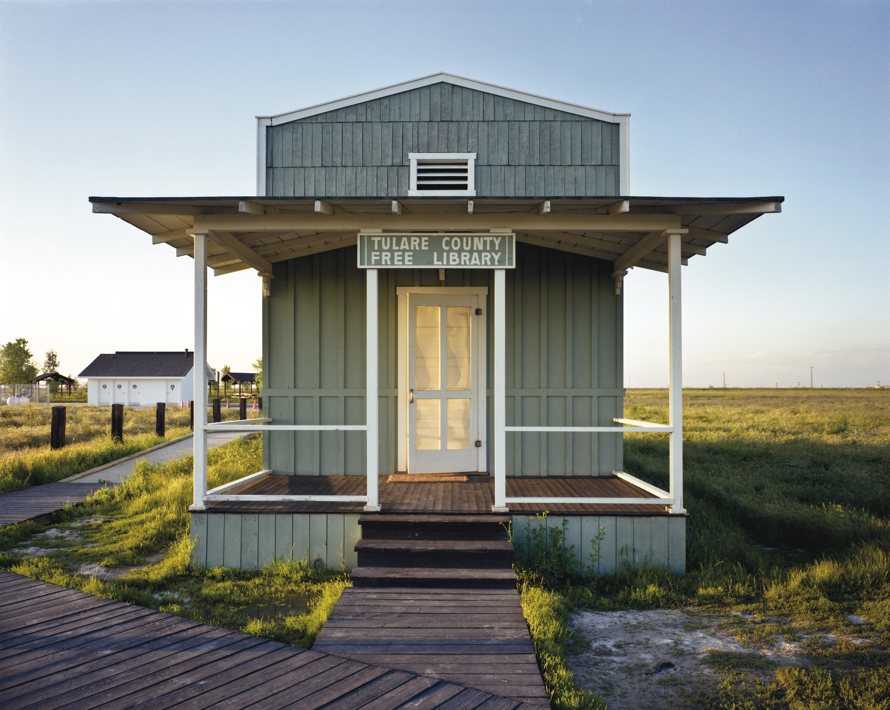
Today marks the final day of National Library Week. In an essay adapted from The Public Library: A Photographic Essay by Robert Dawson, Charles Simic celebrates the democratic draw of the institution:

Like many other Americans of my generation, I owe much of my knowledge to thousands of books I withdrew from public libraries over a lifetime. I remember the sense of awe I felt as a teenager when I realized I could roam among the shelves, take down any book I wanted, examine it at my leisure at one of the library tables, and if it struck my fancy, bring it home. …

Wherever I found a library, I immediately felt at home. Empty or full, it pleased me just as much. A boy and a girl doing their homework and flirting; an old woman in obvious need of a pair of glasses squinting at a dog-eared issue of the New Yorker; a prematurely gray-haired man writing furiously on a yellow pad surrounded by pages of notes and several open books with some kind of graphs in them; and, the oddest among the lot, a balding elderly man in an elegant blue pinstripe suit with a carefully tied red bow tie, holding up and perusing a slim, antique-looking volume with black covers that could have been poetry, a religious tract, or something having to do with the occult. It’s the certainty that such mysteries lie in wait beyond its doors that still draws me to every library I come across.

Previous Dish on libraries here, here, and here.

(Photo by Robert Dawson from The Public Library)

Who Needs World Literature?

Michael Cronin presents the central argument of Emily Apter’s provocative Against World Literature: On The Politics of Untranslatability:

In the anglophone world, where less than 3 percent of all published titles are translations, the idea of world literature would appear to be an urgent and necessary corrective to the political and linguistic hubris of the speakers of a dominant global language. Apter, however, is not so sure. This is not because she does not believe translation to be valuable or important. In fact, it is precisely because she does believe it to be so crucial that she wants it to be taken seriously. Her concerns lie with a notion of world literature that erases difference or sifts out the foreign or the unsettling in the name of easy consumption. In this way world literature mimics a free-market fantasy of the endless, frictionless circulation of goods and information. In this McDonaldization of the written word, there is no room for difficulty or opacity.

Gloria Fisk finds herself unconvinced:

What does a critic oppose, exactly, when she takes a stand “against world literature”? Emily Apter takes that polemic as the title of her latest book, but she uses it to advance a thesis that requires no argument at all: Something always gets lost in translation.

Apter argues that the truth in that cliché is overlooked by contemporary critics, with their “entrepreneurial, bulimic drive to anthologize and curricularize the world’s cultural resources.” Valuing efficiency over exactitude, these antagonists read The Divine Comedy as a perfect replica of Divina Commedia, and they teach others to repeat their error. To slow their progress, Apter proposes the idea of “the Untranslatable,” and she assembles a list of words that illustrate it – fado, for example, Cyclopedia, checkpoint. She traces the meanings that get lost when these words are conveyed to rough synonyms in other languages, testifying to the “quality of militant semiotic intransigence” that inheres in language more generally.

But she leaves unnamed the critics who fly too swiftly to worry over such subtle things. And names seem necessary, because the scholars most closely associated with world literature – Pascale Casanova, David Damrosch, Djelal Kadir, Franco Moretti, Rebecca Walkowitz – have written substantially on the interpretive problems translation poses.

Meanwhile, Sal Robinson weighs in on the related debate over whether the Anglophone literary world needs more translations or just more publicity for works that have already been translated. He argues that “different literatures may, in the end, just be in need of different types of advocacy”:

If, for instance, I was publishing a French book in translation, though this would still pose numerous challenges when it came to getting it reviewed and in front of readers, there would be a basic familiarity and context that would make the whole process easier. I wouldn’t expect to have to explain the history of French literature to reviewers. I wouldn’t have to start from virtually from zero.

But this is the situation that Arabic literature faces in English-language markets. Of five recent Arabic novels in translation that Qualey mentions in her post, only one got any kind of English-language media attention: Hassan Blasim’s collection of short stories, The Corpse Exhibition (and even then, David Kipen’s NYT review is astonishingly patronizing – I don’t know if any review that ends by saying that if the author wrote the stories in the order they appeared in the book, then he could be said to be developing as a writer and might eventually go “who knows who far” can really count as a win).

This is an acute critical drought, and the kind of seeding of the conversation Qualey proposes seems absolutely necessary here. It’s not accurate, in short, to assume that all books in translation have it equally hard: some have it much harder than others, at every stage of the game. The idea that a Great Translated Book will just emerge and find its readers, no matter what, has rarely been borne out by literary history, and it has a nasty flipside: if a Great Translated Book hasn’t emerged from your language or country yet, the suspicion grows in the metropole that maybe there’s nothing there worth reading in the first place.

Previous Dish on translation hereherehere, and here.

Face Of The Day

triburgo

Lorenzo Triburgo explores the conflict between the real and fabricated in portraiture through his photographs of transgender people:

“I wanted to make a genuine, proud portrait while at the same time calling attention to the fallacy of portraiture,” [Triburgo] said in an interview. The Portland photographer sought to use the medium of photography and the theme of portraiture to explore both American masculinity and transgender identity. When he started the endeavor in 2008, Triburgo was going through his own transition so the project allowed him to navigate personal issues through professional interests.

See more of Triburgo’s work here and here.

A Short Story For Saturday

The opening passage of Zadie Smith’s “Miss Adele Amidst the Corsets,” from the latest issue of The Paris Review:

“Well, that’s that,” Miss Dee Pendency said, and Miss Adele, looking back over her shoulder, saw that it was. The strip of hooks had separated entirely from the rest of the corset. Dee held up the two halves, her big red slash mouth pulling in opposite directions.

“Least you can say it died in battle. Doing its duty.”

“Bitch, I’m on in ten minutes.”

When an irresistible force like your ass . . .

“Don’t sing.”

“Meets an old immovable corset like this . . . You can bet as sure as you liiiiiive!

“It’s your fault. You pulled too hard.”

“Something’s gotta give, something’s gotta give, SOMETHING’S GOTTA GIVE.”

“You pulled too hard.”

“Pulling’s not your problem.” Dee lifted her bony, white Midwestern leg up onto the counter, in preparation to put on a thigh-high. With a heel she indicated Miss Adele’s mountainous box of chicken and rice: “Real talk, baby.”

Keep reading here. Smith’s most recent novel is NW. Previous SSFSs here.

The View From Your Window Contest

vfwy_4-19

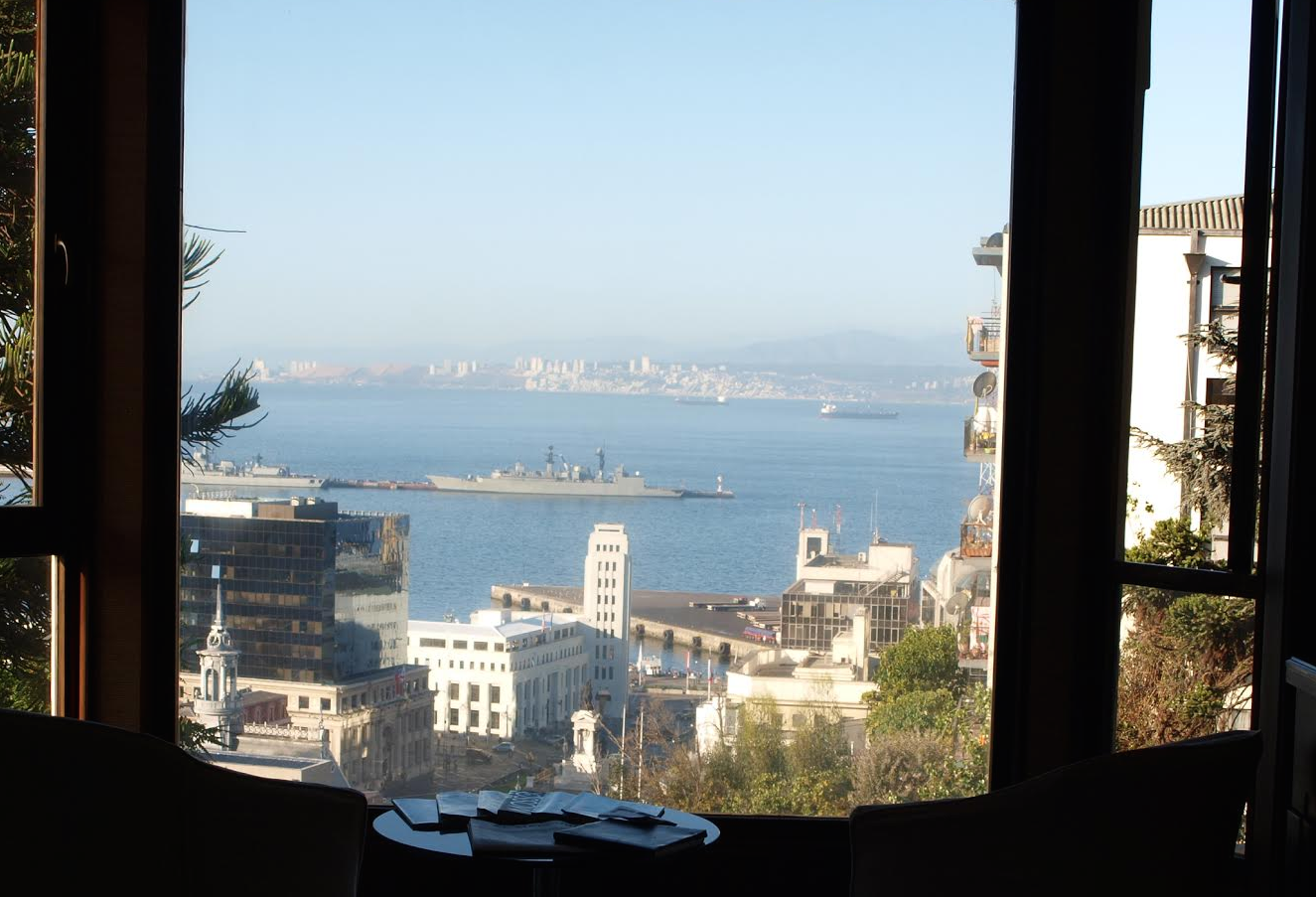
You have until noon on Tuesday to guess it. City and/or state first, then country. Please put the location in the subject heading, along with any description within the email. If no one guesses the exact location, proximity counts.  Be sure to email entries to contest@andrewsullivan.com. Winner gets a free The View From Your Window book or two free gift subscriptions to the Dish. Have at it.