While touring the harvest season in Ethiopia, David Farley learned the basics:
Coffee, it turns out, touches a lot of hands. “It’s a very finicky process,” [coffee buyer Geoff] Watts said of coffee’s march to the market. “There are so many little things that could go wrong to change or taint the flavor of the coffee.” He spelled it out for me: There’s the farmer who plucks the (ideally ripe) cherry from the tree. The washing station manager who (also, ideally) removes any unripe cherry before processing. The many workers who, after the cherry has been stripped and soaked in water for 24 to 48 hours, push the beans around on long tables to make sure each one dries properly. Then there are the workers who load the dried beans into jute sacks, and the driver who transports the coffee to Addis Ababa to be sold or shipped off. Eventually, there’s the roaster who, if all goes well, treats the bean with respect and doesn’t overroast it. Finally, there’s the person sitting in front of a cup of coffee, not complaining (ideally) that it costs too much.
(Photo of Ethiopian coffee by Flickr user furtwangl)
Marc Fisher reports on the government’s attempts to collect old debts:
A few weeks ago, with no notice, the U.S. government intercepted Mary Grice’s tax refunds from both the IRS and the state of Maryland. Grice had no idea that Uncle Sam had seized her money until some days later, when she got a letter saying that her refund had gone to satisfy an old debt to the government — a very old debt.
When Grice was 4, back in 1960, her father died, leaving her mother with five children to raise. Until the kids turned 18, Sadie Grice got survivor benefits from Social Security to help feed and clothe them.
Now, Social Security claims it overpaid someone in the Grice family — it’s not sure who — in 1977.
Even if a whole family benefited from a Social Security check, the idea of seizing money from a child to pay the debts of a parent would probably make most a bit queasy. (There are good reasons we don’t let the private sector do it.) What I find simply befuddling, though, is the cost-benefit analysis behind pursuing these cases at all.
On the one hand, Social Security is expected to be watchful about waste and fraud—the sort of things that Congress members get exercised about. On the other, $714 million is an essentially negligible amount of money, considering it covers debts dating back decades. Nor does there seem to be particularly good documentation of who owes what here. So on the one hand, the government is trying to balance the rights of the taxpayers, who stand to gain relatively little. On the other hand, the government is intruding, violently, into the financial lives of people who may have done nothing wrong, while provoking a court fight (Grice, for instance, has lawyered up) and some bad PR in the process. It seems like a no-win to me.
How do you collect a debt that you can’t prove exists? Through the sheer grinding weight of the state, of course. Going after the next generation—which never made the decision to incur a debt to begin with—really is a massive break from previous policy.
Most financial websites advise heirs that they are responsible for parents’ debt only if they cosigned loans, held joint accounts, or shared community property with the deceased. Beyond that, the debt adheres to the debtor’s estate and may devour any inheritance. The estate belonged to the debtor and passes to heirs only after bills are paid. But the debt stops there.
It is at most a minor ironic consolation that taxpayers are likely to react to these outrageous tactic[s] by scaling back hard on the widespread practice of voluntary over-withholding, reasoning that it is unsafe to build up a big refund if authorities can snatch it away for unpredictable reasons with little hope of recourse.
Update: The Social Security Administration is calling off the dogs:
The Social Security Administration announced Monday that it will immediately cease efforts to collect on taxpayers’ debts to the government that are more than 10 years old … “I have directed an immediate halt to further referrals under the Treasury Offset Program to recover debts owed to the agency that are 10 years old and older pending a thorough review of our responsibility and discretion under the current law,” the acting Social Security commissioner, Carolyn Colvin, said in a statement.
Well it’s good to know, I guess, that the Clintons still have a talent for driving right-wingers completely nuts. (And, yes, I consider myself in partial recovery from Clinton Derangement Syndrome, but it’s one day at a time. And the dynasty – Chelsea is ready! – isn’t running yet. So give me time.)
I’m also discovering that reading our Book Club selection – How Jesus Became God – may not be the most spiritually sustaining text for Holy Week, but it sure is riveting. If you’re a non-believer and thought this book would be a Christian apologetic, well, you need to read it. Buy it through this link to join the club and help support the Dish with a little affiliate revenue. We have more than a week to complete it before we start the discussion. So there’s plenty of time to jump in.
Then another meep-meeplet as the ACA’s total cost got shrunk by the CBO today. I had my first doctor’s visit on Obamacare today – scheduling a colonoscopy. Probably not the best way to greet universal healthcare, but I’m probably more able to take it than most.
The most popular post of the day was one on buttsex. We should have seen that one coming. Next up: the tumblr devoted to pooping on blue-bonnets. Congrats, Dishheads. You’re as depraved as we are.
16 more of you subscribed today. Thanks for your support. And see you in the morning.
(Photo: Early beach goers lay on the sand at Coney Island on April 12, 2014 in New York City. After one of the harshest winters in years, New Yorkers are enjoying the Spring with plenty of sun and temperatures in the high 60s. By Spencer Platt/Getty Images.)
Last week’s observations of the 50th anniversary of the Civil Rights Act have rekindled debate over just how LBJ and his presidency ought to be remembered. Albert Hunt argues that the architect of the Great Society is under-appreciated, due in large part to the shadow of the Vietnam War:
In a Gallup poll, only 20 percent of Americans rated LBJ an above-average president, a lower ranking than George W. Bush or Jimmy Carter. Yet the 36th president affected the lives of most Americans and changed the fabric of today’s society more than any president since Franklin D. Roosevelt. …
It is especially appropriate to spotlight these civil rights measures now, as state legislatures, and even the U.S. Supreme Court, are rolling back some of those protections. Likewise, the conventional wisdom is that Johnson’s Great Society and War on Poverty failed. The centerpiece was the 1965 enactment of Medicare and Medicaid. Despite worries about future financing and occasional scams, Medicare is central to the contemporary American experience. Last year, 52 million Americans were on Medicare and 57 million were on Medicaid.
But, to Michael Kazin, the horror of Vietnam trumps LBJ’s civil rights record:
Of course, to remember what the United States, during LBJ’s tenure, did to Vietnam and to the young Americans who served there does not cancel out his domestic achievements. But to portray him solely as a paragon of empathy, a liberal hero with a minor flaw or two, is not merely a feat of willful amnesia. It is deeply immoral.
In 1965, as Johnson was pushing Congress to enact the Voting Rights Act and Medicare, he was also initiating the bombing of North Vietnam and signing the orders which eventually sent over 500,000 U.S. troops to occupy and fight to “pacify” the Southern half of that country. At the time, liberal Democrats who opposed the war condemned the hypocrisy of a President who could help millions of Americans win their rights and a degree of medical security while he oversaw the destruction of what he called “a raggedy ass little third rate country.” Fifty years later, powerful Democrats in search of a usable past would just prefer to ignore the contradiction.
Jonathan Bernstein disputes the conventional wisdom that Obama would be a more effective president if only he were willing to push people around like LBJ did:
Once we get past the fairy tales and look at the limited effects of Johnson’s bullying style, we understand that intimidation might work in the short run, but has important long-term costs. For one thing, presidents need information, and intimidation isn’t always the best way to get it. Even the most careful presidents find it hard to get people to tell them bad news. Wouldn’t it be harder if bullying and humiliation are added to the price? …
There’s a tendency among Johnson supporters to see the war as separate from the good parts of his presidency. At its worst, that thinking comes close to a claim that Vietnam was something that happened to Johnson, while historic legislation is something that he made happen. But even if Johnson is assigned proper blame for the war, it’s still separated out. That probably is wrong; the traits that helped Johnson do well in some contexts were poisonous in others, and it’s not clear that one could have the good without the bad.
And Serwer points out that the Texan wasn’t exactly a paragon of racial sensitivity:
Lyndon Johnson said the word “nigger” a lot.
In Senate cloakrooms and staff meetings, Johnson was practically a connoisseur of the word. According to Johnson biographer Robert Caro, Johnson would calibrate his pronunciations by region, using “nigra” with some southern legislators and “negra” with others. Discussing civil rights legislation with men like Mississippi Democrat James Eastland, who committed most of his life to defending white supremacy, he’d simply call it “the nigger bill.” …
Even as president, Johnson’s interpersonal relationships with blacks were marred by his prejudice. As longtime Jet correspondent Simeon Booker wrote in his memoir Shocks the Conscience, early in his presidency, Johnson once lectured Booker after he authored a critical article for Jet Magazine, telling Booker he should “thank” Johnson for all he’d done for black people. In Flawed Giant, Johnson biographer Robert Dallek writes that Johnson explained his decision to nominate Thurgood Marshall to the Supreme Court rather than a less famous black judge by saying, “when I appoint a nigger to the bench, I want everybody to know he’s a nigger.”
Rebecca Schwarzlose considers why it can be difficult to distinguish real from imagined memories:
Why is reality monitoring a challenge? To illustrate, let’s say you’re at the Louvre standing before the Mona Lisa. As you look at the painting, visual areas of your brain are busy representing the image with specific patterns of activity. So far, so good. But problems emerge if we rewind to a time before you saw the Mona Lisa at the Louvre. Let’s say you were about to head over to the museum and you imagined the special moment when you would gaze upon Da Vinci’s masterwork. When you imagined seeing the picture, you were activating the same visual areas of the brain in a similar pattern to when you would look at the masterpiece itself.
When you finally return home from Paris and try to remember that magical moment at the Louvre, how will you be able to distinguish your memories of seeing the Mona Lisa from imagining her? Reality monitoring studies have asked this very question (minus the Mona Lisa). Their findings suggest that you’ll probably use additional details associated with the memory to ferret out the mnemonic wheat from the chaff. You might use memory of perceptual details, like how the lights reflected off the brushstrokes, or you might use details of what you thought or felt, like your surprise at the painting’s actual size. Studies find that people activate both visual areas (like the fusiform gyrus) and self-monitoring regions of the brain (like the medial prefrontal cortex) when they are deciding whether they saw or just imagined seeing a picture.
Graham Denyer Willis reports on a Brazilian crime ring that operates “a kind of gun library … to help members get back on their feet after being released from prison”:
The “assistance bank” offers a gun and a cash loan of up to 5,000 Reais ($2,500 USD), an amount roughly eight times the monthly minimum wage. Borrowers have their choice of an impressive array of weapons for a 30-day loan. … In some cases the guns are available to members in prison, too. If a member on the outside seeks a gun that has already been borrowed, he must track down the borrower himself. For those on the inside, the process is more complex:
In the necessity that guns are needed to assist with a prison break, the brother making the request will be responsible for the return (whether he is on the street or in prison). This person should make direct contact with the assistance bank to clarify what type of weapons are needed, if the request is coming from inside, we ask that the brother responsible send a written note to the bank in a manner secure for both sides.
Even if the guns may be used in the commission of crimes – from street corner stickups to prison breaks – their loan comes with unequivocal regulations and stipulations. One does not just borrow an AK-47, even though they are available. Borrowers must demonstrate a reasonable need and show they have experience commensurate with the guns they request. As the document says, “no one requests a machine gun to stick up a car.”
Masked faithfuls dressed as a devil, popularly known as ‘Talciguin’, while taking part in the celebration of an ancient local tradition marking the start of Holy Week on April 14 in Texistepeque, some 84 km west of San Salvador, El Salvador. Talciguines lash Catholic faithfuls to cleanse their sins. By Jose Cabezas/AFP/Getty Images.
Dara Lind defends her claim, which came under fire last week, that “Obama is deporting more immigrants than any president in history”:
[T]he dispute here hinges on the fact that there’s no longer any official definition of “deportation.” The terminology has changed as policy has changed, and that’s creating some confusion today as to what should count as a deportation.
Why she is sticking to her guns:
The story of the Obama administration on immigration enforcement is that more people than ever are being expelled from the country in a way that prevents them from returning to the US legally or illegally — even though netunauthorized migration has been low and the unauthorized population of the country is down from its 2006 peak.
That’s a perfectly suitable definition of “deportation.”
The government simply can’t return more people than are trying to come in to begin with — so returns are partly dependent on the state of the economy. Removals, on the other hand, tell the story of the deliberate policy choices made over the last decade that are having lasting consequences for the people being expelled.
Why do fewer than a quarter of deportees ever get to see a judge? In part, because it’s the only way for ICE to reach its goal of deporting somewhere in the ballpark of 400,000 people a year. While funding for ICE and the Border Patrol swelled in the Bush years, funding for the system of immigration courts, which handle removal hearings, remained low—and it has in the Obama years, too. As a result, there are 363,239 immigration cases pending nationwide, according to the latest count by TRAC, a data analysis project at Syracuse University. The only way for ICE stay on schedule is to bypass the courts.
[I]f Rossellini, Mizoguchi, and Buñuel made three films apiece in a single year, on the backs of comparable numbers the years before and after, that means that production itself was relatively cheap and unfettered. Artists were experimenting, and had permission to fail. The point was not to show astronomical profits, but to make an indelible impression on the world mind, to shape a generation’s vision of itself. That alone was considered a good investment. …
What of this applies today? The rise of the money men, and the gutting of funds for more experimental and cerebral films, has led to a collapse in aesthetic standards. Artists are, on pain of financial blacklisting, not permitted to fail.
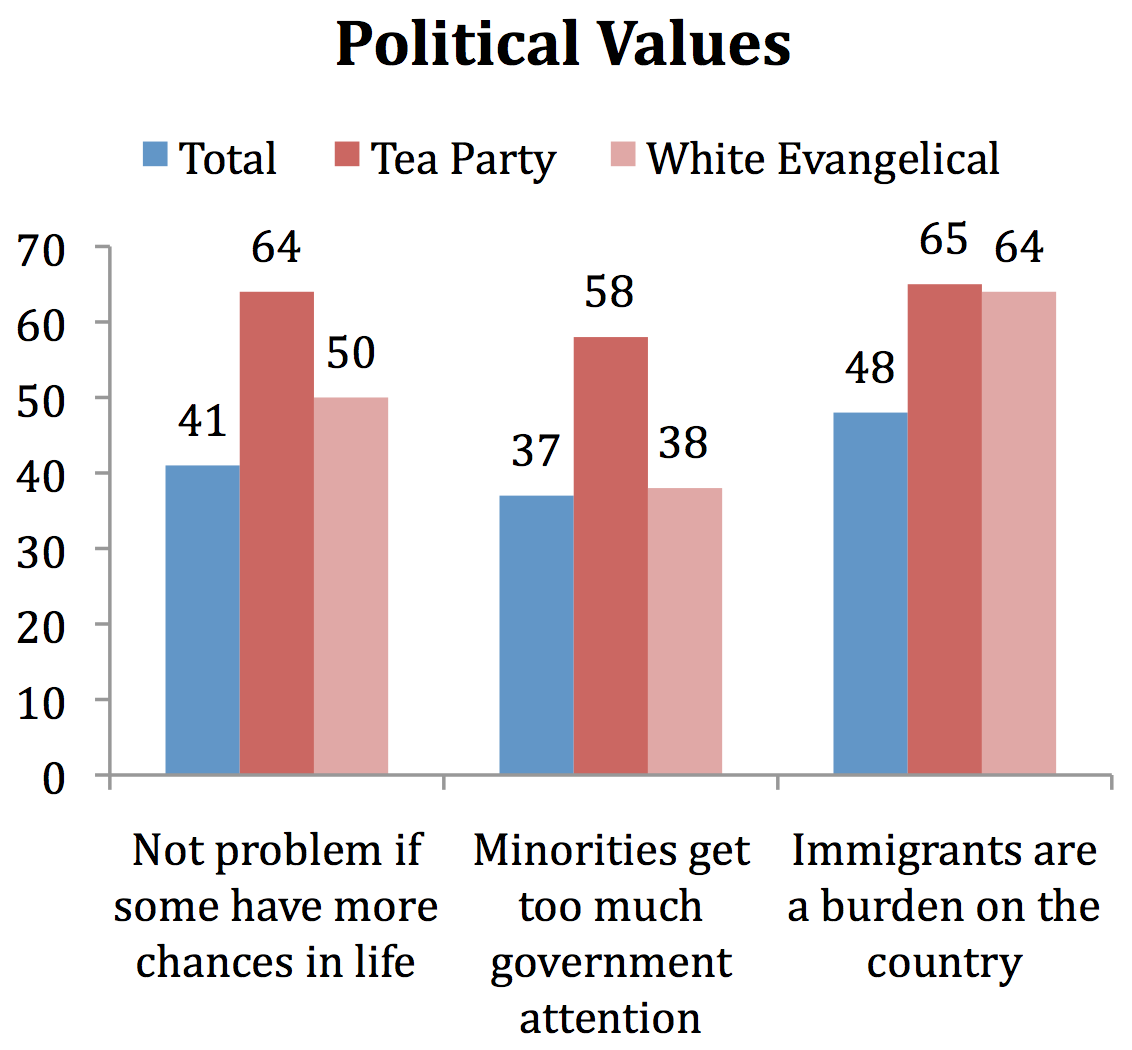
Here’s a really fascinating discussion of what once united the Tea Party and Euroskeptic, and what now divides them. The financial crisis spawned them both, but culture on both sides of the Atlantic now offers two different phenomena:
The initial impulses driving the Tea Party movement and the growth of eurosceptic parties had a great deal in common: anger at economic disasters rooted in collusion between governments and the financial sector, fear of large-scale expansions of the powers of distant governments (Washington or Brussels), antipathy to immigration. But the political cultures and circumstances of Europe and America have routed the reactions in very different directions. Indeed, for all the ways in which the Tea Party has come to stand for the “party of ‘no'”, there is a fundamental American-style optimism at its heart: a faith in God and self; a belief in the general fairness of the order of things; a trust in hard work, etc. It’s an optimism that may be naive, but it’s optimism all the same.
Meanwhile, eurosceptics are motivated by a more dramatic version of European pessimism: a distrust in top-down schemes, a preference for secular pleasures over spiritual pursuits, etc. The financial crisis was a tremendous shock that scattered all the world’s marbles. But which way those marbles roll, wherever you are, depends on how the ground slopes.



 The Dish