A Subversive Songster

In a lengthy retrospective, Ben Smith and Anita Badejo explore Tom Lehrer’s brief career, larger-than-life legacy, and resolute resistance to stardom:

Lehrer had been a sensation in the late 1950s, the era’s musical nerd god: a wryly confident Harvard-educated math prodigy who turned his bone-dry wit to satirical musical comedy. His sound looked further back, to Broadway of the ‘20s and ‘30s — a man and a piano, crisp and clever — but his lyrics were funny and sharp to the point of drawing blood, and sometimes appalling. One famous ditty celebrates an afternoon spent “Poisoning Pigeons in the Park.” Another cheerful number, “So Long Mom,” dwells on the details of nuclear holocaust. “I Got It from Agnes” is an extended joke about sexually transmitted disease. …

[W]hile his work was widely enjoyed at the time, it was also something of a scandal — the clever songs about math and language were for everyone, but Lehrer’s clear-eyed contemplation of nuclear apocalypse was straightforwardly disturbing. And amid the clever songs about math and language, and confrontational politics, a distinct lack of prudishness:

There’s BDSM, promiscuity, gay Boy Scouts. “If you’re out behind the woodshed doing what you’d like to do, just be sure that your companion is a Boy Scout too,” Lehrer advised in “Be Prepared.” … Lehrer’s father, whose New York circle included figures like the lyricist Irving Caesar, had connected him with every prominent record producer in town. But though he drew their interest, he had too much edge. “They were all afraid of the sick humor,” [Lehrer’s friend David] Robinson said.

Smith goes on to suggest that Lehrer’s “sick comedy was, in retrospect, a sign of artistic life in a conformist era”:

“Done right, social criticism set to a catchy tune always makes politics easier to digest,” said Lizz Winstead, creator of The Daily Show and a women’s rights activist. “You add a layer of humor and you can break down two barriers: One, singing a song over and over leads to repetition of a message, and two, humor creates likability. The more polarizing the issue, no matter what you say, you will have people who do not think you should use humor. He went for the jugular when it was desperately needed [yet] was always hilarious and poignant.”

(Video: Lehrer performs “The Vatican Rag” in 1967)

How The Sacred Is Sensuous

Jenna Weissman Joselit praises S. Brent Plate’s A History of Religion in 5 1/2 Objects as an “erudite and lyrical account of the role of objects in religious expression”:

In its insistence on seeing religion as a material phenomenon, the book goes global, making room within its pages for Eastern as well as Western traditions. In less supple dish_incense hands, this perspective could fall flat, subjecting its author to charges of superficiality. What saves the text from that unfortunate fate is Plate’s control of his material, the firm and steady way in which he builds his case, guiding the reader through quicksilver transitions from one part of the world to another. …

[W]e learn that drums are a “vital source of sonic sacrality” for some, the voice of the devil for others; that bread not only “connects with creation itself,” but that “Christianity would not exist without [it],” and that the “sacred geometry” of two crossed lines can be found among the symbols of ancient China, within Navajo weavings as well as high up in the cathedral nave. Plate’s interpretations, his reading of material culture, are often downright revelatory. I, for one, was surprised to discover that The Old Testament was unusually sensitive to the power of smell. “Not all people through history,” he observes in connection with the ancient Israelites, “have delighted in smoke and scents the way the God of the Torah did.” Although I pride myself on my familiarity with the Torah, I had never thought about its multiple references to frankincense and myrrh in quite this way.

In a blog post offering “a history of religion in 11 objects” last month, Plate contemplated the human need for material things:

Humans are needy. We need things: keepsakes, stuff, tokens, tchotchkes, knickknacks, bits and pieces, junk and treasure. We carry special objects in our pockets and purses, or place them on shelves and desks in our homes and offices. As profane and ordinary as the objects may be, they can also be extraordinary. Some things even become objects of transcendence.

Devout people of faith, across religious traditions, often denigrate material goods, suggesting the really real is beyond what can be seen, felt, and heard. Yet a closer look at religious histories reveals a heart-felt, enduring love for things. Objects large and small, valuable and worthless are there from the beginning of traditions, creating memories and meanings for the devotees who pray and worship, love and share, make pilgrimage and make music.

(Photo of monk lighting incense by Flickr user Wonderlane)

The Devil’s Music In Dhaka

http://youtu.be/vK-UHnrILfk&start=27

Marco Ferrarese investigates how heavy metal performers in Bangladesh navigate the religious tensions posed by their music:

The Muslim concept of Satan (Shaytan in the Koran) is a little different than in Christianity, but playing the devil’s music in a Muslim country is still complicated. [Guitarist for the metal band Jahiliyyah Asif] Adnan, however, says his music and his faith are compatible. “I’m a Muslim and I follow the rules of my religion,” Adnan says. “But that doesn’t stop me from living with a passion for metal, and keep an open mind. Don’t you think that metal is universal by now?” Adnan says Bengali black metallers do not reject the Koran. Rather they use it as a basis upon which to develop their passion for extreme metal, giving it a unique sonic dimension powerfully rooted in Islam. …

Perhaps the best example of a local touch to Bengali metal comes from Severe Dementia and their curious concept album Epitaph of Plassey, which retraces the 1757 defeat of the last independent Nawab of Bengal at the hands of the British East India Company. Hasan Shahriar of Abominable Carnivore, another death/black metal band, also doesn’t see a conflict between Islam and metal. “I grew up listening to my brother’s records, and my mother pushed me even further by buying me a guitar. She asked me to commit, and to do well in what I believed in, according to the will of Allah.

(Hat tip: The Browser)

Medical Miracle Of The Day

Liat Clark reports that four paralyzed people have “voluntarily and independently moved their legs” for the first time since their injuries, thanks to an experimental spinal implant:

Each of the four men received an epidural implant that delivers currents that mimic signals from the brain. They work in a similar way to myoelectric prostheses, which are grafted on to remaining nerves in the muscles and stimulate these to control movement. In these cases, those wearing the prosthetic can actually move the artificial limb voluntarily, just by thinking about it, because those salvaged nerves are still receiving information from the brain. In this latest study, the candidates could voluntarily move their limbs immediately. This has led to knock-on improvements in their health, from an increase in muscle mass to a reduction in fatigue and stabilizing of blood pressure levels. …

Each recovered and managed to make use of the system so rapidly, it’s speculated that more parts of the nervous system remained intact than previously thought. Not only this, but as the four candidates continued through their training, they needed lower and lower electrical frequencies to instigate movement – the neural pathways were improving and building off of that stimulus to create better routes. They are retraining the spinal cord to think differently.

Sam Maddox offers an account of how it played out for one man:

Kent had the stimulator implanted. A few days later they turned it on. No one expected it to do anything. Researchers were only looking for a baseline measurement to compare Kent’s function later, after several weeks of intense Locomotor Training (guided weight supported stepping on a treadmill). Kent tells the story: “The first time they turned the stim on I felt a charge in my back. I was told to try pull my left leg back, something I had tried without success many times before. So I called it out loud, ‘left leg up.’ This time it worked! My leg pulled back toward me. I was in shock; my mom was in the room and was in tears. Words can’t describe the feeling – it was an overwhelming happiness.”

Beyond Our Wildest Hypotheses

Barbara Ehrenreich – a trained biologist who, in her latest book, reveals her own brushes with mystical experiences – argues (NYT) that scientists should take such matters seriously:

If mystical experiences represent some sort of an encounter, as they have commonly been described, is it possible to find out what they are encounters with? Science could continue to dismiss mystical experiences as mental phenomena, internal to ourselves, but the merest chance that they may represent some sort of contact or encounter justifies investigation. We need more data and more subjective accounts. But we also need a neuroscience bold enough to go beyond the observation that we are “wired” for transcendent experience; the real challenge is to figure out what happens when those wires connect. Is science ready to take on the search for the source of our most uncanny experiences?

Fortunately, science itself has been changing. It was simply overwhelmed by the empirical evidence, starting with quantum mechanics and the realization that even the most austere vacuum is a happening place, bursting with possibility and giving birth to bits of something, even if they’re only fleeting particles of matter and antimatter. Without invoking anything supernatural, we may be ready to acknowledge that we are not, after all, alone in the universe. There is no evidence for a God or gods, least of all caring ones, but our mystical experiences give us tantalizing glimpses of other forms of consciousness, which may be beings of some kind, ordinarily invisible to us and our instruments. Or it could be that the universe is itself pulsing with a kind of life, and capable of bursting into something that looks to us momentarily like the flame.

Robert McLuhan responds:

It’s always heartening to see someone with a scientific education talking sense about these things.

Most scientists think they absolutely should discard anomalous results. But then we remember that it requires an actual experience to make this shift. If it had been someone else’s experience Ehrenreich would doubtless be using exactly the same reductionist terms as other atheists and scientists. It wouldn’t be an experience at all – just something that a person says who hasn’t had a proper scientific education and doesn’t know any better.

In the end, though, Ehrenreich’s expanded thinking is not just a response to her own experience, it’s also limited by it. It permits her to make a tentative step outside the confines of reductionist science, which to her is daring enough. But it doesn’t stop her being dismissive of the idea of a ‘caring’ God.

This is surprising in a way. I assume she’s read the literature of mystical experience, in which case she will have read of many, many cases of people who had a sudden revelation every bit as powerful as hers, but who, unlike her, felt swept up in the loving embrace of a God of love, that permeated every cell of their being, and convinced them for the rest of their days that love is the real stuff of the universe. Why does she think that the meaning she derives from her experience is valid, when the meaning that others have derived from theirs – clearly in the same class as hers – is not?

Meanwhile, Ross doubts (NYT) the numinous would benefit from more scientific scrutiny:

The trouble is that in its current state, cognitive science has a great deal of difficulty explaining “what happens” when “those wires connect” for non-numinous experience, which is why mysterian views of consciousness remain so potent even among thinkers whose fundamental commitments are atheistic and materialistic. (I’m going to link to the Internet’s sharpest far-left scold for a good recent polemic on this front.) That is to say, even in contexts where it’s very easy to identify the physical correlative to a given mental state, and to get the kind of basic repeatability that the scientific method requires – show someone an apple, ask them to describe it; tell them to bite into it, ask them to describe the taste; etc. – there is no kind of scientific or philosophical agreement on what is actually happening to produce the conscious experience of the color “red,” the conscious experience of the crisp McIntosh taste, etc. So if we can’t say how this ”normal” conscious experience works, even when we can easily identify the physical stimulii that produce it, it seems exponentially harder to scientifically investigate the invisible, maybe-they-exist and maybe-they-don’t stimulii – be they divine, alien, or panpsychic – that Ehrenreich hypothesizes might produce more exotic forms of conscious experience.

A Poem For Sunday

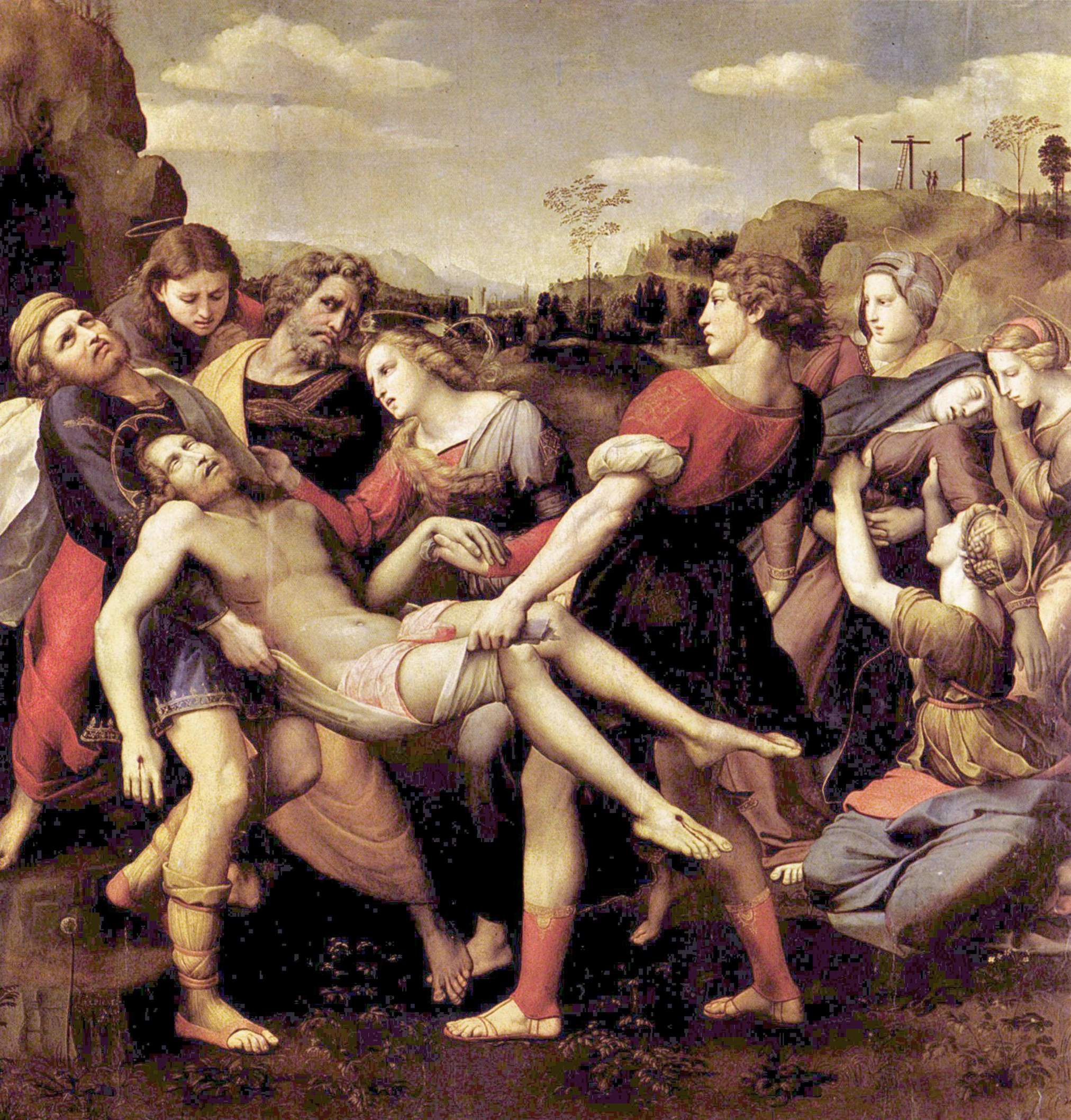
Raffael_004

Dish poetry editor Alice Quinn writes:

Ron Padgett’s Collected Poems is the recipient of this year’s Poetry Society of America William Carlos Williams Award for a book of poetry published by a small press, non-profit, or university press in a standard edition in 2012. The citation by poet Tom Lux reads in part: “I can think of no other poet I’ve read over the past forty years who embodies Williams’ spirit and his great heart’s aesthetic. Ron Padgett loves life so much, he finds the stuff of poetry everywhere. I mean everywhere. His most serious poems are playful, and his most playful poems are serious. He’s mischievous!”

“Nails” by Ron Padgett:

How did people trim their toenails in ancient times?
The Virgin Mary’s toenails look fine
in the paintings of the Italian Renaissance,
and it’s a good thing, too, for it would be hard
to worship a figure with very long toenails.
Perugino scoffed at a religion aimed
toward God but whose real attention
was on Mary, but he gave her nice toenails.
I’ve never looked at Jesus’ toenails, even
though they’re near the holes
in his feet, where the other nails were.
Cruelty is so graphic and hard to understand,
whereas beauty, even the beauty of a toe,
makes perfect sense. To me, anyway.

(From Collected Poems © 2013 by Ron Padgett. Used by permission of Coffee House Press. Image: The Deposition by Raphael, 1507, via Wikimedia Commons)

Islam At America’s Beginnings

Decatur_Boarding_the_Tripolitan_Gunboat

Juliane Hammer reviews Denise A. Spellberg’s Thomas Jefferson’s Qur’an, which uses Jefferson’s ownership of a two-volume English translation of the text as an entry point into understanding the Founders’ complicated views on Islam:

Spellberg lays out how Jefferson came to acquire a copy of the [George] Sale translation of the Qur’an, which significantly contained an introduction, written by Sale, to Muslim history and law. She juxtaposes Jefferson’s negative views of Islam with his early arguments for Muslim civil rights and presents the tension between this latter argument and the presence of West African Muslim slaves which, by virtue of their racial classification and their status as unfree members of society, would not have been included in Jefferson’s consideration of Muslims as potential citizens. Jefferson and John Adams appear as political rivals in negotiations over North African piracy—talks which Jefferson carried out in part with the Tunisian ambassador in London. Spellberg emphasizes that Jefferson wanted to define the piracy problem and the ensuing conflict with North African states in explicitly political and economic terms and avoided reference to religion at all cost.

Around 1788, in the discussions leading up to the final form of the U.S. Constitution, Muslims, or at least imagined Muslim citizens, became a point of debate in regards to the religious oaths required of political office holders. Those opposed to Protestantism as the de-facto state religion argued for the inclusion of Catholics, Jews, and Muslims as political leaders; some even pushed for full religious inclusion and political equality for religious minorities.

In an interview about the book last year, Spellberg argued that Jefferson was “theorizing for a future that included Muslims — not in spite of their religion, but because of it and because of his notion of universal civil rights”:

Jefferson was unique in many ways. He criticized Islam as he did Christianity and Judaism. He talked about Islam as a religion that repressed scientific inquiry — a strange idea he got from Voltaire that wasn’t right — but … was able to separate his principles about Muslim religious liberty and civil rights from these inherited European prejudices about Islam.

He did the same thing when arguing for the inclusion of Catholics and Jews, actually. He had not very good things to say about either Catholicism or Judaism, but he insisted that these individual practitioners should have equal civil rights. … [Jefferson] resisted the notion, for example, that Catholics were a threat to the United States because of their allegiance to the pope as a foreign power. There were many Protestants who would have disagreed with him about Catholics, and many who would have disagreed with him about Muslims.

They were the outsiders, whose inclusion represented the furthest reach of toleration and rights. So for Jefferson and others — and he was not alone in this, although it was a minority — for him to include Muslims meant to include everyone of every faith: Jews, Catholics and all others. And to exclude Muslims meant that there would be no universal principle of civil rights for all believers in America.

(Image via Wiki: “Oil painting of Decatur Boarding the Tripolitan Gunboat during the bombardment of Tripoli, 3 August 1804. Lieutenant Stephen Decatur (lower right center) in mortal combat with the Tripolitan Captain.” Dennis Malone Carter’s painting is located at the Naval Historical Center, Department of the Navy.)

Face Of The Day

walkisle3

Photographer Lindsey Villatoro put together a mock wedding for an 11-year-old whose dad is dying of pancreatic cancer:

Why not give her something every little girl deserves? After speaking to Josie’s mom, the plan began to take shape: they would create a surprise wedding for Josie so that she could have her father walk her down the aisle.

In 72 hours, Villatoro was able to bring together a wedding dress from L.A. Fashion Week, catering, flowers, tux, hair, makeup and more, all donated by her local vendors. There was even a wedding cake and promise ring. In all, Villatoro tells us, “she received over $2,000 in birthday presents from my clients,” and not a cent was spent to bring the event together.

See more of Villatoro’s work here or follow her here. A video of the day’s highlights can be found here.

A Common Purpose

Archbishop Thomas Cranmer presented the Book of Common Prayer (BCP) to the Church of England in 1549, introducing the phrases “earth to earth, ashes to ashes, dust to dust,” “till death do us part,” and “speak now or forever hold your peace,” among others, to the cultural lexicon. In an interview about his new “biography” of the BCP, Alan Jacobs discusses how different Christian traditions perceive the book:

What about some of the problems that evangelicals have had with the BCP over the years? For instance, you show in your book how some evangelicals have viewed the prayer book as a kind of rote formalism that quenches revival and the free movement of the Spirit.

The evangelical suspicions of the prayer book have been varied over the years. Some of them are linguistic: Why do you call that table an “altar”? Why do you call that minister dish_BCP a “priest”? Some involve gestures and objects, even those that are not prescribed by the BCP but are not forbidden by it: Why do you light all those candles? Why do you ask people to kneel to receive Communion? The general suspicion seems to be that if it looks like Papistry and sounds like Papistry and smells like Papistry (e.g., incense), then it must be Papistry. …

What would you say are the strengths of the historic prayer book tradition? More specifically, speaking as an evangelical Anglican yourself, what do you think evangelicals can learn from it?

In making his prayer book, Thomas Cranmer wanted to make sure that the people of England were constantly exposed to Holy Scripture in a language they understood, working through the whole of the Bible regularly and the Psalms every month, while following a calendar that rehearsed in every church year the whole story of salvation starting with the Fall and culminating in Christ’s unique sacrifice of himself on the Cross and his glorious resurrection, the benefits of which we are not worthy to receive on any merits of ours—”we are not worthy so much as to gather up the crumbs from under Thy table”—but only through the purest grace extended on the basis of Christ’s unique status as Lord and Savior.

How can you get any more evangelical than that?

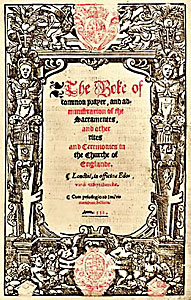
(Image of title page from Cranmer’s Prayer book of 1552 via Wikipedia)