When you don’t have a circus tent, an abandoned warehouse will do:
Month: April 2014
Are Toy Preferences Innate?
Cordelia Fine challenges the notion:
Newborn boys and girls, untouched by the forces of gender socialization, supposedly show stereotypical preferences for looking at hanging mobiles versus faces, respectively. And, we are told, girls with congenital adrenal hyperplasia, who are exposed to unusually high levels of testosterone in the womb, prefer “boy toys.”
But these findings are far less compelling than they appear. For instance, if the preference of female Rhesus monkeys for stuffed animals shows that love of dolls is “innate” in girls, what do we make of the fact that the favorite toy of male vervet monkeys was a stuffed dog, which they played with more than a third longer than a toy car?
Recent experiments, more methodologically rigorous than the much-cited mobiles versus faces newborn study, found no sex differences in the preferences of babies for looking at objects versus faces. Both preferred the latter to an equal extent. And girls with CAH—born with atypical or masculinized genitalia who undergo intensive medical and psychiatric intervention and have physical characteristics inconsistent with cultural ideals of feminine attractiveness—may be more willing to play with “boy toys” because of unconsidered effects of the condition on their psychosexual development, rather than because their brains have been “wired for wheels.”
Previous Dish on gendered toys here.
Ask Jennifer Michael Hecht Anything: The Impulsivity Of Suicide
And because it’s very contingent on convenience, suicide can be easily prevented in many circumstances:
A reader writes:
Regarding this video from Jennifer Michael Hecht, it’s the most useful encouragement I’ve heard to keep your life. I have mild depression, and I think about dying or going away fairly constantly. I haven’t attempted suicide, but the idea of not wanting to live is compelling. So thanks for continuing this thread.
Another reader was in a much darker place:
I suffered from soul-crushing clinical depression that started in my mid-teens and only lifted in my mid-30s. Twenty years of suicidal ideation literally every day. I would lie in bed, staring at the ceiling, unable to summon the energy to do anything, just utterly overwhelmed by the sick, pulsing pit of anxiety I felt in my belly, the pit that just sucked all of my life force and left me spent. I would fantasise about getting a shotgun, laying it next to me on the bed, pointing it at my stomach, and blasting my stomach away, just to replace that awful psychological pain with something real and physical.
I even fantasised about taking out some others with me.
No-one in particular, but maybe some of those smug rugby playing jocks who were so dumbly happy and fun-loving and got all the girls. I’ll show you what real pain feels like before I take myself out, motherfuckers.
So yeah, when I was feeling that way, I wasn’t thinking about what I would leave behind when I went. My life was so dark and full of pain, so if my death dished out some of that pain to other people, well good. They could share in some of the darkness that I had to deal with every fucking day.
Most people had no clue. I was clever enough to get a degree without ever opening a book, and this dark intensity I had going attracted some girls like moths to a flame. I was dissociated enough to be able to talk to people like nothing was wrong. I was very good at hiding this inner devastation. You know, out of consideration for those around me. So no-one really knew.
So I agree with the idea that suicide is selfish – of course it is! You are ending your own life: what could be more selfish? But I also cannot in any way endorse the folks who generate moral outrage out of this – “how can this person have not thought of the people they left behind?” People who think this way have never experienced real depression. They have no idea of the utter nihilism that drives the act. If they were granted one day of staring into that abyss, I do believe their moral outrage would vanish and be replaced with a profound sadness and sorrow for the suffering that those people had to endure, day in a day out, before they made the choice to just fucking end it once and for all.
For the record, I made it through. I was lucky. A chance prescription to an anti-depressant 10 years ago (one of the few I had never tried before) actually worked, and lifted the darkness for the first time in decades. After a few weeks, I started seeing colours brighter, seeing the good in people, not the ugly. I used this new energy to get into therapy, where I stayed for years, after I had dropped the prescription and worked to understand what the hell had happened to me.
I’m still on that road – I’m not immune to feeling low and anxious – but I have a pretty good marriage, two wonderful kids and a business of my own. I do community work and employ people whom I treat well. I never suffer suicidal ideation anymore; I fear death now, sometimes with more anxiety that is healthy I guess. But man, this is a life I never expect to be able to live. And it is good.
Jennifer’s previous Ask Anything videos here. Update from a reader:
As much as I applaud your in-depth look at suicide, I wish you would mention Friends for Survival, who, for more than three decades, provide support for those who have lost a friend or relative to suicide. They have scores of materials to help people through what is often the darkest time of their life. They even have crisis counseling for those for whom the event is recent (and I greatly admire those counselors – I accidentally picked up one of those calls when volunteering there and spoke to a women who had three hours earlier found her 16-year-old son hanging from a belt in his closet; I was simply devastated). They also have a lending library, skill forums, and host of other tools to help make a difference. For anyone who is feeling the pain of a suicide death, these are THE folks to go to.
Update from that reader on 4/10:
I’ve heard from the phone counselors and they’ve already sent out five new family packets of materials to callers who saw the item on The Dish. God bless you, thank you.
(Archive)
A Bad Sign For Deficit Reduction
Earlier this week, the Obama administration reversed cuts to Medicare Advantage. Philip Klein puts the decision in context:
Medicare Advantage is an early test for Obamacare. The program gives beneficiaries the ability to gain private coverage that offers benefits beyond traditional Medicare and currently has nearly 16 million enrollees. A 2012 CBO report finding that that Obamacare reduced deficits by $109 billion over 10 years also found that the bill produced $156 billion in Medicare Advantage savings from cutting payment rates. In other words, under that CBO estimate, doing away with Medicare Advantage savings – with all else being equal – would mean that Obamacare would go from reducing deficits to increasing them.
Waldman is candid about the political calculations involved:
The administration had proposed at 1.9 percent cut to the program in 2015, but now they’re actually going to increase it by .4 percent. I’m not defending the administration’s reversal. I’m sure officials will come up with a justification (“strengthening the program” is the standard one), but the truth is that this is about politics.
Democrats in both houses who are vulnerable in this year’s elections joined with the insurance companies to pressure the administration, because they could already see those ads in the fall: “Senator X did nothing while the Obama administration cut your Medicare!” In a political campaign, you aren’t going to get far trying to explain the details of why it would be smart policy. So the administration gave in.
Suderman notes that this has happened before:
This is not the first time that Medicare Advantage cuts have conveniently transformed into increases. Last year, CMS initially proposed a 2.2 percent cut—which, over the course of a few months, evolved into a 3.3 percent hike. In both years, what happened between the initial proposal and the final was the same: an intense lobbying campaign by insurers who get paid by the program, as well as heavy political pressure from both sides of the aisle.
Edwin Park urges Congress to allow Obamacare’s Medicare Advantage cuts go into effect:
In response to yesterday’s announcements, leading Senate and House Republicans immediately called for scaling back or repealing health reform’s Medicare Advantage savings as well, warning of substantial harm to enrollees. But, as my colleague Paul Van de Water told Congress last month, claims that Medicare enrollees will face much higher costs and lose their choice of plans are highly exaggerated. Moreover, curbing overpayments is sound policy, lowering premiums for all beneficiaries and extending the solvency of Medicare’s trust fund.
Policymakers should thus reject any attempts to undermine health reform’s Medicare Advantage savings.
Quote For The Day

“To me, progress hinges on our ability to discriminate knowledge from belief, fact from fantasy, on the basis of evidence. It’s not the known unknown from the known known, or the unknown unknown from the known unknown, that is crucial to progress. It’s what evidence do you have for X, Y or Z? What is the justification for your beliefs? When confronted with such a question, Rumsfeld was never, ever able to come up with an answer.
The history of the Iraq war is replete with false assumptions, misinterpreted evidence, errors in judgment. Mistakes can be made. We all make them. But Rumsfeld created a climate where mistakes could be made with little or no way to correct them. Basic questions about evidence for W.M.D. were replaced with equivocations and obfuscations. A hall of mirrors. An infinite regress to nowhere. What do I know I know? What do I know I know I know? What do I know I don’t know I don’t know? Ad infinitum. Absence of evidence could be evidence of absence or evidence of presence. Take your pick. An obscurantist’s dream,” – Errol Morris.
(Photo: US Secretary of Defense Donald Rumsfeld speaks to the media with Ahmed Chalabi, leader of the Iraqi National Congress, and Paul Bremer, top US civilian administrator in Iraq, prior to a meeting of the new Governing Council in Baghdad on September 6, 2003. By Rabih Moghrabi/AFP/Getty Images.)
Peace Talks Fail, Blame Game Begins
Juan Cole catches John Kerry publicly pinning the failure of the Mideast peace process on Israel:
Note that actually Kerry attributed the breakdown to two separate Israeli moves. One was to decline to release the remaining 25 or so Palestinian prisoners jailed before 1993, whose release had been agreed to in the Oslo Peace Accords (a pledge on which Israel reneged, as it did on the whole Oslo process), and which Israel had undertaken to free last August. The second was the announcement of 700 new squatter homes in Palestinian East Jerusalem by fanatical Israeli expansionist, Housing Minister Uri Ariel.
The State Department rushed to affirm that Kerry blamed both sides for the collapse of his talks, but he was pretty plain about what he thought actually happened.
An apoplectic Jonathan Tobin asks why Kerry would make such a “disingenuous” and “mendacious” statement:
Kerry doesn’t want to blame the Palestinians for walking out because to do so would be a tacit admission that his critics were right when they suggested last year that he was embarking on a fool’s errand.
The division between the Fatah-run West Bank and Hamas-ruled Gaza has created a dynamic which makes it almost impossible for Abbas to negotiate a deal that would recognize the legitimacy of a Jewish state no matter where its borders were drawn even if he wanted to. Since Kerry hopes to entice the Palestinians back to the talks at some point, blaming Israel also gives him leverage to demand more concessions from the Jewish state to bribe Abbas to negotiate.
In a thoughtful, pessimistic reflection on the peace process last week, Matt Steinglass doubted that the US would ever force Israel to cut a deal:
The standard blog-post turn at this point would be to say that Americans will eventually have to decide whether they can support a state that dispossesses, disenfranchises and exploits millions of people in territories it has conquered on the basis of their ethnicity and religion. …
But I think this standard blog-post turn is too optimistic. I’m not confident that Americans will ever have to face such a decision. The human capacity for tolerating cognitive dissonance is immense. While some American Jews are starting to demand that Jerusalem reach a peace deal with the Palestinians or lose their allegiance, others will stick with Israel regardless of its policies, elaborating ever more baroque arguments to justify their position. Most American evangelicals and conservatives remain staunch supporters of Israel, and have little trouble blaming the conflict on Islamic extremism. It’s entirely possible that most Americans could continue backing Israel indefinitely, as the prospect of a peaceful solution to the Israeli-Palestinian conflict recedes into the mist. Maybe we won’t force a solution for Israel’s treatment of its non-citizens any more than we’ve forced a solution for our treatment of our own non-citizens.
Zbigniew Brzezinski and several other senior advisors to the US/Middle East Project urge Kerry to stand firm on clearly stated American positions:
The terms for a peace accord advanced by Netanyahu’s government, whether regarding territory, borders, security, resources, refugees or the location of the Palestinian state’s capital, require compromises of Palestinian territory and sovereignty on the Palestinian side of the June 6, 1967, line. They do not reflect any Israeli compromises, much less the “painful compromises” Netanyahu promised in his May 2011 speech before a joint meeting of Congress. Every one of them is on the Palestinian side of that line. Although Palestinians have conceded fully half of the territory assigned to them in the U.N.’s Partition Plan of 1947, a move Israel’s president, Shimon Peres, has hailed as unprecedented, they are not demanding a single square foot of Israeli territory beyond the June 6, 1967, line.
Netanyahu’s unrelenting efforts to establish equivalence between Israeli and Palestinian demands, insisting that the parties split the difference and that Israel be granted much of its expansive territorial agenda beyond the 78 percent of Palestine it already possesses, are politically and morally unacceptable. The United States should not be party to such efforts, not in Crimea nor in the Palestinian territories.
Michael Crowley wonders whether the process has any future:
The question now is whether this is just pantomime. Are the two sides still meeting for purely public relations purposes—to demonstrate a faux good faith to the world? Or are they still capable of cutting a deal?
It wouldn’t be surprising to see Obama conclude that the process is hopeless, at least for now. Many others in Washington have. Last week’s effort by Kerry to secure Israeli concessions through the release of Jonathan Pollard, convicted of spying for Israel, had carried a whiff of desperation that suggested Washington wants a deal more than the Israelis do.
But it’s also possible that Israeli Prime Minister Benjamin Netanyahu and Palestinian Authority leader Mahmoud Abbas are engaging in brinksmanship to maximize their leverage.
The Annexation of Eastern Ukraine, Ctd

Adam Taylor uses these maps to explain why Donetsk won’t be such an easy grab for Russia as Crimea was:
That first map is one good reason to doubt the popular support of the “Donetsk People’s Republic,” but the other shows you something else: why Ukraine would care so much about it. The oblast, and in particular its namesake city, are renowned as the economic backbone of Ukraine for their coal mines and steel production (even if the truth about Donetsk’s economic strength may not be so rosy).
Combined, these two maps paint a good picture of why the Ukrainian government seems willing to take a stricter line on Donetsk than it did with Crimea. But they also paint a picture of why Russia’s tactic could be different, too: Less a simple act of annexation, and more an act of provocation.
Ambinder credits Moscow for stirring up resistance in Ukraine’s eastern provinces:
The “resistance” is artificial, of course.
People power in the late 20th and early 21st centuries has been generated more often than not by foreign governments that have their own agendas, and not by indigenous forces. The U.S. national security establishment understands this, because they designed the template the Russians are using. From the first CIA officers who toppled Mohammed Mossagdeh in 1953, to clandestine efforts to prop up and then discredit Asian governments during the Kennedy administration, to the Cuban exiles trained by the CIA to overthrow Fidel Castro, to efforts to overthrow the Taliban in Afghanistan after the September 11th terrorist attacks, to the “indigenous” American-backed Iraqis who took control after the war — the playbook is very familiar. …
The hallmarks of non-linear warfare are operational confusion, mistaken identity, and a sense of brittleness and crisis. Eventually, the combination of agents provocateurs and real protesters blend together. In Ukraine, Putin has already won that war.
Ioffe marvels at Putin’s ability to make his meddling appear local in origin:
One strange by-product of Russia’s tactics is the Kremlin’s deftness in completely reappropriating certain terms, of inverting and perverting them. Just look at the images of the protests in Luhansk and Kharkiv, and you’d be forgiven for thinking you were looking at images of Kiev’s EuroMaidan. Yet the former were whipped up [by] Russia, whereas the latter was a largely grassroots movement. As a result, because the hand of Moscow is so obvious in east Ukraine’s protests, the independence of the protesters in Kiev comes under suspicion: were they too organized externally, perhaps in the West? More simply, it gives the two movements equal moral weight, which Russian journalist Oleg Kashin called a “mocking parody of the Maidan.”
Bershidsky thinks Ukrainian oligarch Rinat Akhmetov might be the best hope for averting a crisis:
The Russian-speaking industrialist, who many Ukrainians think is unofficially behind the pro-Russian protests in Donetsk, has actually played a complex role. In the wee hours of Tuesday, the usually reclusive Akhmetov came out to speak with protesters in Donetsk, cursing in Russian and explaining to protesters that he felt for them but that “Donbass is Ukraine.” Akhmetov promised government forces would not storm the administration building and took some activists for talks with a deputy prime minister sent from Kiev. …
The billionaire, who is still a member of the Regions Party, until recently headed by deposed President Viktor Yanukovych, wants broader autonomy for his home region, something in which Russia supports him and something the Ukrainian government is loath to grant. “Federalization” is a curse word in Kiev, because it would allow Moscow to keep the political situation unstable by making separate deals with corrupt local elites. Making concessions to people like Akhmetov, however, might be the only way to avoid the much less desirable outcome of outright war.
Recent Dish on the developments in Eastern Ukraine here and here.
The Opinions That Shape Law
A recent study (pdf) found that elite opinion, but not popular opinion, influences policy. Larry Bartels unpacks the research:
In their primary statistical analysis, the collective preferences of ordinary citizens had only a negligible estimated effect on policy outcomes, while the collective preferences of “economic elites” (roughly proxied by citizens at the 90th percentile of the income distribution) were 15 times as important. “Mass-based interest groups” mattered, too, but only about half as much as business interest groups — and the preferences of those public interest groups were only weakly correlated (.12) with the preferences of the public as measured in opinion surveys.
Drum adds his analysis:
When the preferences of interest groups and the affluent are held constant, it just doesn’t matter what average folks think about a policy proposal. When average citizens are opposed, there’s a 30 percent chance of passage. When average citizens are wildly in favor, there’s still only a 30 percent chance of passage. Conversely, the odds of passage go from zero when most of the affluent are opposed to more than 50 percent when most of the affluent are in favor.
Sizing Up The Pay Gap, Ctd
Women around the blogosphere are throwing their two cents into the debate over pay equity. Elizabeth Nolan Brown opposes chalking the wage gap up to mere sexism:
As The Washington Post‘s Nia-Malika Henderson points out, ”It’s hard to find a study that finds no pay disparity in what men and women make,”—several studies place it closer to 84 cents on the dollar. But the gap is neither as wide nor as easily reduced as many would make it out to be. Though there are surely some occupations and companies where women get paid less out of plain old sexism, the wage gap overall seems a product of large but less nefarious structural and cultural forces.
These forces are certainly worth talking about. Why do women still flock to lower paying fields and positions? How can women, men, and companies make having children less detrimental to women’s careers? Why does the wage gap widen for older women even when they don’t have children? Etcetera. But trotting out misleading statistics about women’s wages not only fails to address these issues adequately, it actively works against addressing them. It makes things too simplistic, and thus given to simplistic solutions.
McArdle sees both sides of the argument:
Childless women who work the same hours as men make very close to what men do. Does that mean there is no discrimination against women? No.
The residual gap that’s left after you control for age, experience, work hours, choice of profession and so forth, is small. But it’s not zero. That residual most likely represents sexism. As a woman, I kind of take exception to that.
Most of the gap, however, seems to be driven by the fact that women work less, and that in many high-paying professions, how much you get paid is a function of how much you work … but not a linear function. There are outsized rewards to working the kinds of hours that make it very hard to care for a family.
And, in a sign of progress, Zara Kessler notes that her fellow millennial women experience less of a pay gap than their elders:
It seems that a pay gap basically doesn’t exist for millennial women, of which I am one. Pew Research Center analysis of census data, published in December, “shows that today’s young women are the first in modern history to start their work lives at near parity with men.”
The White House uses the disputed data point that, according to U.S. Census statistics, full-time working women earn on average only 77 cents to their male counterpart’s dollar. Pew’s analysis looks at median hourly earnings of full- and part-time workers (men tend to work more hours, and women are more likely to work part-time) to find that in 2012 women ages 16 and older made 84 percent of the earnings of their male counterparts. According to Pew, women’s median hourly earnings for those ages 25-34 — which, yes, doesn’t encompass all millennials and includes some Gen Xers (according to Pew’s definition of millennials being born after 1980) — were 93 percent of men’s in 2012.
A Poem For Wednesday
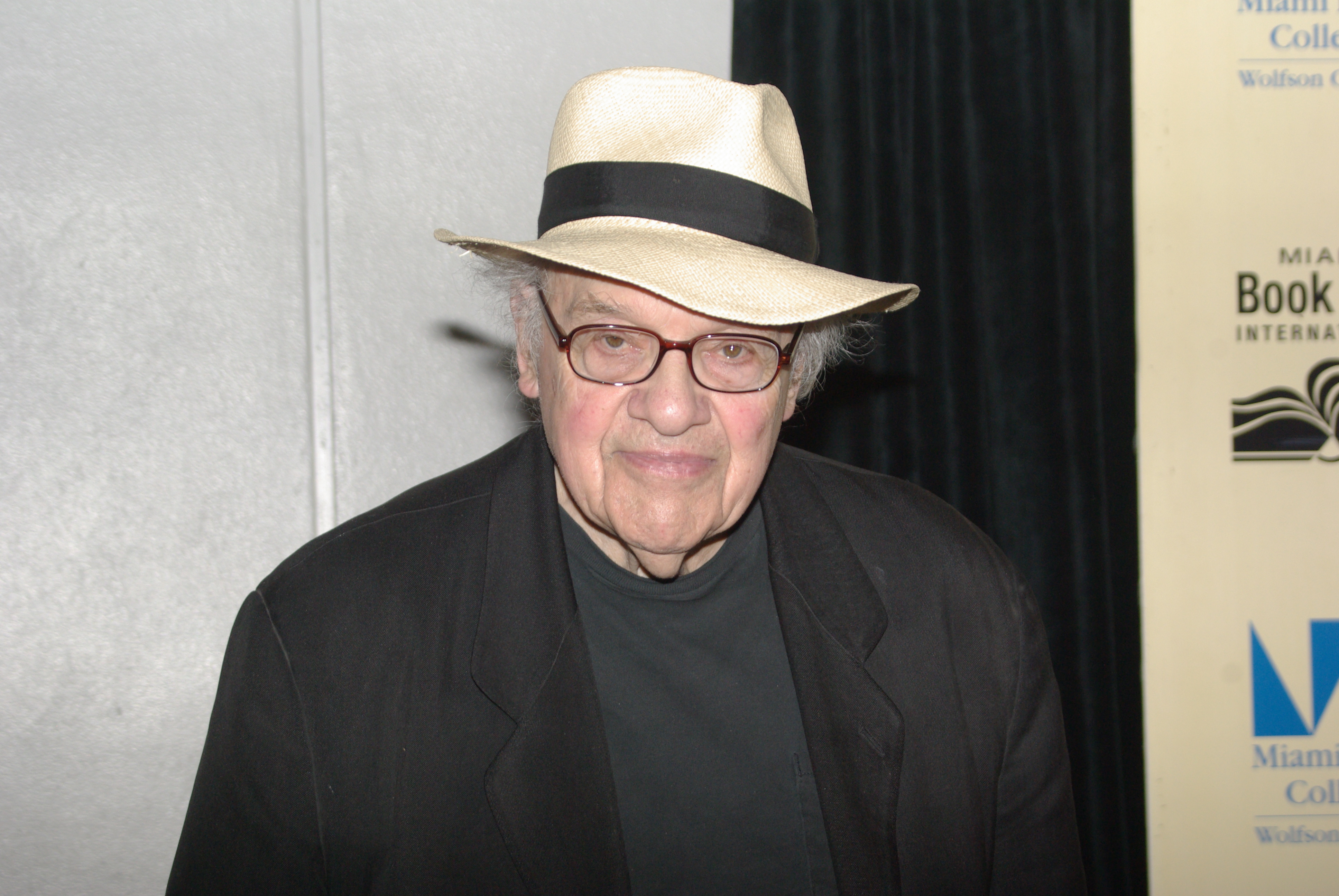
Dish poetry editor Alice Quinn writes:
Tonight, Wednesday, April 9th at 7pm, at the National Arts Club in New York City at 15 Gramercy Park, the Poetry Society of America’s annual awards ceremony will take place, offering emerging and established poets recognition at all stages of their careers. The event is free and open to the public, with details available here. The awards recognize everything from a single poem written by a high school student to the organization’s highest honor, the Frost Medal, which celebrates lifetime achievement in the art. This year’s recipient is Gerald Stern, who published his first book, Lucky Life, in 1977 at age fifty-one and who has since published more than a dozen collections of poems and two marvelous books of essays, receiving along the way the Ruth Lilly Poetry Prize, the Wallace Stevens Award, the National Book Award, and many other honors. The sonnet below is from his newest book, In Beauty Bright.
“Too Late” by Gerald Stern:
Too late now to look for houses
to give readings, to flirt, to eat blueberries,
to dance the polka—or just to be in the
Serbian-American club in Duquesne
near that horrible McKeesport, near
that horrible Kennywood Park, and take
a sip, a bite, and half fall off my
stool, and grab her and whirl for fifteen
straight, or just to feel her breasts
against me and to loosen my tie, or just to
drive home slowly, sometimes even
on the streetcar tracks themselves,
that 68 trolley I loved so much, the
love seats and the rattling glass windows.
(From In Beauty Bright © 2012 by Gerald Stern. Used by permission of W.W.Norton & Company. Photo of Stern at the Miami Book Fair International in 2011 by Rodrigo Fernández, via Wikimedia Commons)
 The Dish
