Down a hypnotic rabbit hole:
The Hope Of A Favourable Outcome by Carly Paradis from The Brothers Lynch on Vimeo.
Down a hypnotic rabbit hole:
The Hope Of A Favourable Outcome by Carly Paradis from The Brothers Lynch on Vimeo.
Bruce Clark provides some perspective:
In many European countries, exceptions on grounds of conscience have been regarded as a political necessity whenever legislation on touchstone moral issues has been liberalized. In Ireland, where conservative Catholic sentiment remains strong even now, the legal sale of contraceptives faced huge hurdles when it was introduced in 1979; and it was duly agreed that anybody who was asked to be involved at any stage in the sale or distribution of such items could avoid that duty on religious grounds. Britain’s pharmacists were allowed by their self-regulatory agency to opt out of selling the morning-after pill; this is controversial. …
The really unusual thing about the Obamacare case, from a European perspective, is the fact that corporations, rather than individual believers or health workers, are seeking a conscience-based opt out. First, the very idea that private firms have a wide margin of discretion over their employees’ health-care arrangements is relatively unfamiliar to some Europeans, accustomed to free medical care or compulsory insurance. And in Europe’s comparatively secular societies, the idea of corporations taking a conservative stance on touchstone ethical issues is harder to conceive—if only because being “branded” as religious might alienate quite a lot of godless consumers.
Thus the depressed person you might be right now can change:
Earlier “Ask Anything” videos from Jennifer Michael Hecht are here and here. A reader responds to the series:
Over the period of seven years that my two kids attended their public high school, there were six student suicides (make that seven suicides if you include the young adult son of my kids’ freshman English teacher). Two of those suicides were brothers whose oldest brother committed suicide in the years before. One of these suicides still haunt me, and I didn’t even know the boy, but I knew where he did it. I still can’t walk in that park’s wooded trails without thinking of him. So yes, suicides affect even those we don’t know personally.
I have absolutely no doubt that each suicide at my kids’ school contributed to the subsequent suicides. My son had a suicide scare as a sophomore. His girlfriend called us in a panic close to midnight and told us to check the garage because she thought our son might harm himself. Although it was a false alarm, we confronted him and he confessed to us that he had been thinking about suicide and making a plan. Obviously we got him counseling, but we also had several weeks where at night my husband and I alternated waking every hour for “suicide check”. Worst period of my life as a parent, hands down. But I still have my son.
I plan to read Hecht’s book. I have had my own fleeting thoughts on suicide, although I know I would never follow through. Your discussion thread on suicide is so helpful.
Another reader:
I think something is really being missed in all the discussion of suicide, which Lucinda William’s song that you posted crystallized for me:
When you are truly depressed, there is nothing to miss. You try to eat and enjoy food, but it is tasteless; you try to enjoy someone’s touch, but there is nothing there that you can feel. “This sweet old world” becomes like a mockery; you reach for it and simply bounce off, like off of some invisible force-field. Even the memory of enjoyment seems like some kind of mad dream.
And then Hecht comes and adds to the mockery by telling you to think of others, when you cannot even stir yourself to think of yourself because it is all so affect-less – “all” meaning the entire gestalt of sense and meaning we call the “world.” And the thought twirls in your mind and bites you because you know that theoretically you should care about others, but there is nothing left to care with. My first thought when reading Hecht was: “She really doesn’t get it – what it is like to be in such a state.” And I hasten to add: I’m glad she doesn’t. I would not wish it on anybody.
What did help me was someone taking me to a doctor and being given medications that literally saved my life. If your leg is broken, someone telling you to walk doesn’t help. You need to get the bone set and put in a cast.
Update from a reader:
On reading a couple of posts about suicide, I had what I thought were some valuable insights about the suicidal thought process, in particular the non-relevance of the otherwise lovely Lucinda Williams song. But I am not a writer, and I was sure that whatever I did try to write would be lost in the shuffle anyway. Then today, one of your readers put my thoughts into point-for-point perfect words (“When you are truly depressed, there is nothing to miss…. you cannot even stir yourself to think of yourself because it is all so affect-less”), and I felt a sense of connection and gratitude for such a diverse community, and that you give us voices. It’s why I love the Dish.
For readers new to Hecht, a recap of her bio:
Jennifer Michael Hecht is a poet, philosopher, historian and commentator. She is the author of the bestseller Doubt: A History, a history of religious and philosophical doubt all over the world, throughout history. Her new book is Stay: A History of Suicide and the Philosophies Against It, out from Yale University Press. Her The Happiness Myth brings a historical eye to modern wisdom about how to lead a good life. Hecht’s The End of the Soul: Scientific Modernity, Atheism, and Anthropology won Phi Beta Kappa’s 2004 Ralph Waldo Emerson Award “For scholarly studies that contribute significantly to interpretations of the intellectual and cultural condition of humanity.”
Popova called Stay “more than a must-read — it’s a cultural necessity.”
Does misery love company on Facebook? A recent study investigated the question:
The researchers created three distinct Facebook profiles of a fictitious person named Sara Thomas who had just experienced a break-up.
The three profiles were identical in all respects except for how much information was conveyed about the recent (fictitious) break-up. In their article, [researcher Andrew] High and colleagues use the expression “emotional bandwidth” to describe the extent of emotions conveyed in the Facebook profile.
In the low bandwidth scenario, the profile contained the following status update: “sad and depressed :(“. The medium bandwidth profile included a change in relationship status to “single” in the timeline, in addition to the low bandwidth profile update “sad and depressed :(“. Finally, the high emotional bandwidth profile not only contained the updates of the low and medium bandwidth profiles, but also included a picture of a crying woman (the other two profiles had no photo, just the standard Facebook shadow image). …
High and colleagues hypothesized that the high emotional bandwidth profiles would elicit greater support from the students. … To their surprise, the researchers found the opposite. The willingness to provide emotional or network support was significantly lower among students who viewed the high emotional bandwidth profile! For example, average emotional support scores were 7.8 among students who saw Sara entering the “sad and depressed:(” update (low bandwidth) but the scores were only 6.5 among students who also saw the image of Sara crying and updating her relationship status to single (high bandwidth). Interestingly, students who preferred online interactions over face-to-face interactions or those who felt that Facebook created a strong sense of community responded positively to the high bandwidth profile.
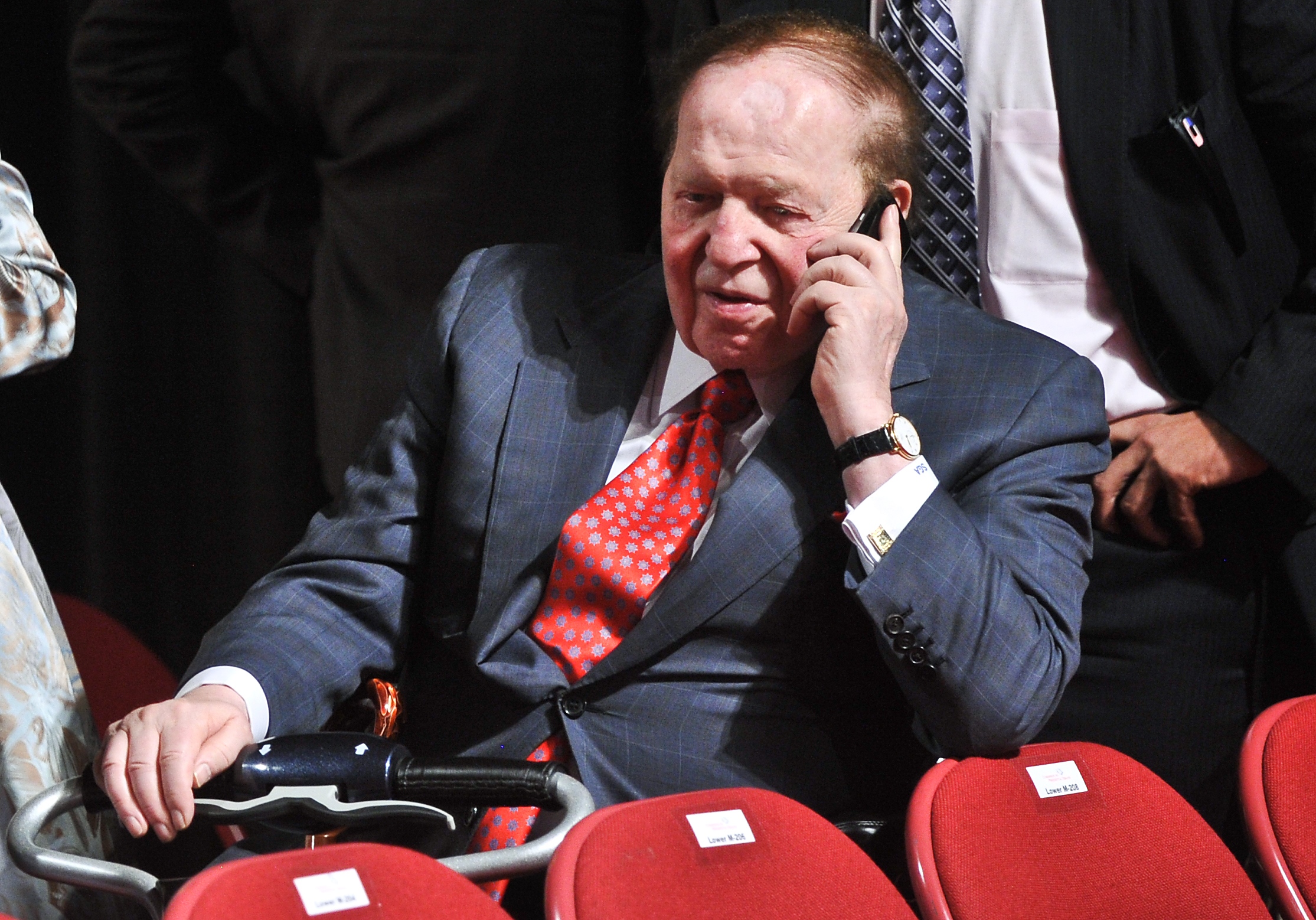
“Imagine this. Hillary Clinton, Andrew Cuomo, Elizabeth Warren and multiple lesser Democratic notables travel halfway across the country to kiss the ring of a Palestinian-American billionaire who has shown himself willing to spend tens of millions of dollars subsidizing presidential campaigns. The billionaire has some provocative views. Six months earlier, he suggested that if Israel does not end its nuclear weapons program, America should drop an “atomic weapon…in the middle of the [Negev] desert that doesn’t hurt a soul.” If that doesn’t work, America should drop “the next one…in the middle of” Tel Aviv. The billionaire insists that there is no such thing as the Jewish people. It’s a hoax; the Jews “have fooled the world very successfully.” And he declares that “There isn’t a” Jew “alive who wasn’t raised on a curriculum of hatred and hostility toward the” Palestinians.
Change the words “Democrat” to “Republican,” “Israel” to “Iran” and “Palestinian” to “Jewish,” and that’s exactly what just happened. Leading contenders for the 2016 GOP presidential nomination spent last weekend wooing and feting a billionaire, Sheldon Adelson, whose views – if directed at Jews—would put him in the company of Louis Farrakhan and Mahmoud Ahmadinejad,” – Peter Beinart, Haaretz.
(Photo: Getty Images)
Douthat pans the healthcare proposal announced last week by the Louisiana governor:
The Jindal theory, that the right shouldn’t bother competing with liberals on certain policy fronts because they’ll always be outbid, is generally problematic (why does his proposal have any coverage expansion, then?) but it’s a particularly odd idea to embrace in a case where the liberal program may not, as even its defenders allow, actually end up delivering the scale of coverage expansion that was expected.
By which I mean that if the current enrollment trends persist, there is a good chance that some version of a more catastrophic-focused reform could actually enroll somewhat more Americans in some kind of basic coverage than Obamacare, at a substantially lower cost. (A preliminary private score of the Senate Republican bill suggested it could get slightly higher coverage numbers, and that was — I believe — using the C.B.O. projections for Obamacare, which may turn out to have been too high.) Which in turn would offer Republicans an opportunity to effectively outbid the Democrats on enrollment while significantly underbidding them on spending.
Chait also tackles Jindal’s plan:
The only unique element of Jindal’s plan is a $100 billion grant program (over the next decade) to states to “come up with insurance reforms and other solutions that can stem the rising tide of health costs.”
Is $100 billion a lot of money? No, it is not. It’s 1/20th the size of the coverage provisions in Obamacare. It could finance coverage for no more than a token few. The role the $100 billion plays is a kind of magic wand that allows Jindal to pretend that states will come up with some kind of solution to all our problems at a cost of 0.2 percent of the federal budget (my figure, arrived at by dividing $100 billion by the projected $47 trillion in federal outlays over the next decade).
Jindal, trying to maintain his wonk credibility, presents his hand-waving, kill-’em-all-and-let-the-states-sort-’em-out gesture as a detailed proposal
 See that little word above the sponsored content piece, paid for by The Economist and written by the editors? It’s called “Advertisement.” And good for Josh for using that word in that context. No one’s confused; the labeling is very clear; and TPM gets some revenue. So why do you think this standard is not applied to Phrma? It couldn’t be because they pay extra for the chance of deceiving readers, could it?
Is “deception” the right word? Over to David Rodnitzky:
The FTC’s defines an action as deceptive:
“If it is likely to mislead consumers who are acting reasonably under the circumstances and if it would be material to their decision to buy or use the product.”
So is an ad that looks like editorial content “likely to mislead”? As far back as 1968, the FTC discussed a newspaper advertisement for a restaurant that “uses the format and general appearance of a news feature . . . [and] purports to give an independent, impartial, and unbiased view,” concluding:
“Since the column, in fact, consists of a series of commercial messages which are paid for by the advertisers, the Commission is of the opinion that it will be necessary to clearly and conspicuously disclose that it is an ad.”
Rodnitzky’s core point is that much of native advertizing is illegal but that the money is so overwhelming, the FTC so toothless, and the ad-gambits so new, that readers can only rely on themselves to sort out fake articles from real ones. Good luck with that. The publishing industry has much too much money riding on this to help you out.
By the way, my recent Harvard lecture on journalism, ethics and sponsored content can now be viewed here.
Euronews: Panic at TV station in #Donetsk as gunmen attempt to capture building -Video-> http://t.co/NN9iKyF81i
— The-Newstime.com (@The_Newstime) April 7, 2014
Pro-Russia demonstrators who seized a building in the Eastern Ukrainian city of Donetsk have declared a new “republic” and are seeking their own Crimean-style independence vote. The declaration came soon after the interim leaders in Kiev blamed Russia for spurring unrest in eastern Ukraine, where pro-Russian activists have been storming government offices in a number of cities. Interim Prime Minister Arseniy Yatsenyuk said during an emergency cabinet meeting on Monday that “the [Kremlin’s] plan is to destabilize the situation, the plan is for foreign troops to cross the border and seize the country’s territory, which we will not allow.” This morning, pro-Russia groups took control of state security buildings in Luhansk.
Stefan Wolff and Tatyana Malyarenko analyze the protests in Kharkiv, Luhansk, and Donetsk:
There is little doubt that these events are being orchestrated by Moscow to increase pressure on the interim government in Kyiv and its Western backers. With presidential elections scheduled for May 25 alongside 27 mayoral contests, the political situation is becoming ever more tense.
Anti-Russian sentiment in western and central Ukraine is likely to reach new heights; this will in turn raise the levels of unease among the more pro-Russian minded populations in eastern Ukraine. While anti-Russian protests have continued to demonstrate resistance to the Kremlin’s continued meddling, there is therefore also a genuine base of resentment into which Moscow can easily tap.
Linda Kinstler explains the significance of the protesters chanting “Novorossiya,” or “New Russia”:
Novorossiya is the name of the formerly Ottoman territory that Catherine the Great conquered in the Russo-Turkish Wars, which is now much of southern and eastern Ukraine. Led by Prince Grigory Potemkin, Russian forces colonized the land in the late 18th century and established the cities of Sevastopol, Simferopol, Tiraspol, and Odessa. …
If the Kremlin isn’t after re-establishing Novorossiya, it’s certainly looking to create something like it—and the first step in that direction is federalizing Ukraine. In an interview last week, Russian Foreign Minister Sergey Lavrov said that federalization is the only “absolutely correct way” to proceed, and that it’s “what the eastern and southern regions request.” If the Kremlin has its way, Ukraine might either become a federation of regional governments, each with wide-ranging authority to act virtually autonomously, or the “independent” southern and eastern regions would become Russian oblasts.
Morrissey considers the bind the Ukraine PM is in:
The problem for Yatsenyuk is that he can’t afford a military confrontation, which leaves his hands tied to a large extent in the eastern provinces. First, what forces he does have need to fortify the border rather than impose order in Donetsk and Lugansk. Even more to the point, the use of the military to suppress the Russian-speaking population would give Putin exactly the pretense he wants to send his far more powerful military into eastern Ukraine to protect the oppressed Russian minority.
But Adam Taylor points out that Donetsk is not Crimea:
While the city does have a slim Russian majority (48.15 percent vs. 46.65 percent Ukrainians, according to the 2001 census), it’s at the center of an Oblast with a clear Ukrainian majority (56.9 percent Ukrainians to 38.2 percent Russians, according to the same census).
The different circumstances here may well prompt a different response from Kiev, who offered little more than stern words when Crimea voted for annexation by Russia (it could certainly be argued that the anger over Crimea’s referendum wasn’t so much due to Crimea joining Russia, but rather the flawed way the referendum was held). The Ukrainian government has so far refused to contemplate letting Ukraine’s fifth-largest city and a major economic hub secede.
If Hillary Clinton runs for president in 2016, she will surely revisit her support for the Iraq War – and it may be a factor in the primaries if she does. But it’s not only on the Democratic side that the repercussions of that moral and strategic catastrophe will be aired. The Republican debate has been quashed for so long, but Rand Paul – peace be upon him – may help unquash it. David Corn passes along an old video in which Paul roundly accuses Cheney of going into Iraq because of his ties to Halliburton:
Of course, Paul has been a little more diplomatic of late – but YouTube is for ever. Meanwhile, as Sheldon Adelson literally buys politicians to advance his belief in Greater Israel, those Republicans willing to stand up against contracting out America’s foreign policy to West Bank fanatics are being targeted. Case in point:
Walter Jones is the first target. The ten-term North Carolina Republican has emerged as a leading antiwar voice in Congress. As a result, he faces a primary challenge from former George W. Bush aide Taylor Griffin—and a barrage of hostile spending from outside groups. The Emergency Committee for Israel has launched a six-figure ad campaign describing Jones as a convert to liberalism. “Once upon a time, Walter Jones was right for North Carolina but he’s changed,” says the narrator in the 30-second spot. “Isn’t it time your vote changed as well?”
It doesn’t matter, of course, that “Jones is pro-life, pro-traditional marriage, pro-gun, and has compiled one of the most reliable socially conservative records in Congress.” What matters is fealty to Jewish religious fundamentalists erecting a colonial state on the West Bank. The neocons may have lost most of the arguments. But they still have money and a willingness to lie. Expect them to use plenty of opportunities for both.
A fresh perspective on the Eich affair from David Link. My latest take here.
 The Dish