Are 12 Steps Necessary? Ctd

A reader slams the claim that AA’s benefits remain unproven:

[Dr. Lance] Dodes’ assertions are false. Keith Humphreys has previously addressed this claim here. I also address it in this post. While the Cochrane study has flaws that are addressed in my post, it’s worth noting that the study compared AA and twelve-step facilitation (TSF) to other treatments. They found that AA and TSF were no more effective than other treatments. Cochrane’s abstract was poorly worded, but it only takes a few minutes to discern this.

Another writes that Dodes “depicts a superstitious, vindictive, and ominous version of 12-step recovery completely unlike the one I’ve experienced”:

Dr. Dodes claims, “The notion that people with addictions suffer from a failure of morality to be indexed and removed is fundamental to Alcoholics Anonymous.” In my own experience, AA literature and members are clear in their belief that alcoholism is not a moral failing, but better understood as a disease. On page 18 of Alcoholics Anonymous, the authors clearly state their view of alcoholism: “We have come to believe it is an illness.” The disease model of addiction is so widely accepted by members of 12-step programs that even South Park saw it as a ripe target for satire.

Later, Dodes refers to “AA’s emphasis on proselytizing,” which he rather snidely defines as “a basic tool through which recognized religions and certain fringe religious groups spread their message.” Whatever AA activities he regards as proselytizing are more casual than any I have ever seen used by any religious group in the world (whether “recognized” or “fringe”). AA does not place advertisements, solicit donations, preach on street corners or go door-to-door.

AA is composed entirely of volunteers and has no top-down leadership hierarchy. What organization there is comes from the “12 Traditions of Alcoholics Anonymous,” first published in Twelve Steps and Twelve Traditions. Tradition Nine states, “AA, as such, ought never be organized,” and Tradition Ten is clear that “our public-relations policy is based on attraction rather than promotion.” If Dr. Dode does not believe that AA groups live up to these professed commitments, he should say as much and provide evidence. If he is unaware of them, then he is embarrassingly uninformed.

I’m confused by one claim of Dr. Dode’s in particular: “For now, I will simply say that there are indeed better treatments for addiction.” Besides the anecdote he provides about his work with Dominic, I found no further mention of such treatments. Presumably, I’ll have to buy one of his books or schedule an appointment to learn more. In the meantime, millions of recovering addicts worldwide will be sharing their experience, strength and time – for free  to anyone with a desire to stop drinking or using.

Another pleads for the Dish to wise up on AA:

You link over and over and over again to these critiques of AA that are so wrongheaded as to be laughable – if they weren’t so full of pernicious disinformation. By conflating AA and rehab, the authors have a whole article that elides the massive difference between the two. Rehabs have taken the 12 steps from AA – which are not copyrighted, because, you know, as above, the sixth tradition avoids problems of money, property, and prestige – and the failings of the system are those of rehabs. There’s almost nothing accurate about AA in that Salon article. A few points:

AA and rehab have even been codified into our legal system: court-mandated attendance, which began in the late 1980s, is today a staple of drug-crime policy. Every year, our state and federal governments spend over $15 billion on substance-abuse treatment for addicts, the vast majority of which are based on 12-step programs. There is only one problem: these programs almost always fail.

AA never costs money. Ever. The sixth tradition of AA is that “an AA group ought never endorse, finance or lend the AA name to any related facility or outside enterprise, lest problems of money, property and prestige divert us from our primary purpose.” And the court-mandated system is actually at odds with that same tradition. I have worked with many men trying to get sober in rehab and they have all relapsed because they were being forced to get sober. That doesn’t work and never will, because true alcoholics will look for any reason to keep drinking.

Another lie in the article:

AA has managed to survive, in part, because members who become and remain sober speak and write about it regularly. This is no accident: AA’s twelfth step expressly tells members to proselytize for the organization: “Having had a spiritual awakening as the result of these Steps, we tried to carry this message to alcoholics, and to practice these principles in all our affairs.”

This misinterpretation is completely counter to the eleventh tradition of AA, which expressly tells members not to proselytize: “Our public relations policy is based on attraction rather than promotion; we need always maintain personal anonymity at the level of press, radio, and films.”

And even writing you about this is not in the spirit of the tenth tradition: “Alcoholics Anonymous has no opinion on outside issues; hence the AA name ought never be drawn into public controversy.” And yet people seem to be completely set on running it down, even though I’ve seen it work miraculously in my life and again and again in others. To educate yourself, you might want to check out the traditions of AA here.
A Titan Of A Trailer

http://youtu.be/zyv19bg0scg

Jonathan Crow spotlights Orson Welles’ trailer for Citizen Kane, calling it “as innovative as the film itself”:

The trailer for Citizen Kane, which you can see above, has no actual footage from the movie – something of a rarity. Instead, the trailer serves as a curious four-minute long documentary featuring behind-the-scenes footage and short vignettes of characters reacting to the movie’s mysterious central character. … Compare Kane’s trailer with one that was more typical of its time like Casablanca. Amid the overwrought copy and some comically flashy transitions, that trailer all but tells you what is going to happen in the film. There’s violence! Danger! Romance! Kane’s trailer, on the other hand, is less a sales pitch than a mystery. It shows plenty about the people behind the making of the movie but it shows nothing from the actual film. Based solely on the trailer, you don’t know what Kane is about, short of being about a shadowy, complicated character called Kane.

Welles wasn’t just being cagey for the sake of building audience interest. He was trying to head off a fight. Though Welles publicly claimed that Kane was not about media barron William Randolph Hearst, you can hardly blame the tycoon for feeling otherwise. Hearst was a newspaper magnet with a showgirl mistress who built himself a preposterously opulent castle. Citizen Kane is about a newspaper magnet with a showgirl wife who built himself a preposterously opulent castle.

For a broader look at the development of the movie trailer, check out the short documentary below:


Joe Berkowitz captions:

“The History of the Movie Trailer” is a 15-minute video that traces the evolution of its subject matter from the silent film era through to the blockbusters of today. In doing so, the video positions movie trailers as a unique medium that is halfway between advertisement and cinematic artform that is occasionally as impressive as the film it’s promoting. Created by FilmmakerIQ.com with help from BlackMagicDesign.com, “The History” highlights some interesting trivia that even the most hardcore movie junkies among us might not have realized we wanted to know. For instance, it’s strange to think that trailers were initially produced by theaters themselves until the 1960s, when studios took over.

More here.

Secrets For Solitary Writing

After reading Mason Curry’s book Daily Rituals: How Artists Work, Sarah Green relates how famous creators designed their workspaces to minimize distractions:

Jane Austen asked that a certain squeaky hinge never be oiled, so that she always had a warning when someone was approaching the room where she wrote. William Faulkner, lacking a lock on his study door, just detached the doorknob and brought it into the room with him — something of which today’s cubicle worker can only dream.  Mark Twain’s family knew better than to breach his study door — if they needed him, they’d blow a horn to draw him out. Graham Greene went even further, renting a secret office; only his wife knew the address or telephone number. Distracted more by the view out his window than interruptions, if N.C. Wyeth was having trouble focusing, he’d tape a piece of cardboard to his glasses as a sort of blinder.

Update from a reader:

Curry misinterprets the reason for Jane Austen’s squeaky door. She certainly didn’t preserve herself from distraction, writing in the family’s common gathering place, with all the annoyance of visitors and a hypochondriac mother. The door hinge in question was on the door that the servants used: she was a secret author whose works were unsigned. She didn’t want it known beyond her family members that she wrote books.

A Graphic History Of WWI

World War Z author Max Brooks is out with a new, non-fiction graphic novel, The Harlem Hellfighters, about the 369th Regiment, the first African-American infantry unit to fight in World War I. Nick Romeo praises the way the book handles the moral complexity of the story:

Brooks doesn’t simply romanticize the men of the 369th; he’s aware of the ugly motives that may have prompted them to fight. The same soldier who delivers the subversive history lesson explains his enlistment like this: “White folks payin’ me to kill other white folks?!?! Glory, hallelujah!” To present the soldiers only as noble patriots persecuted by an evil system would have made them caricatures. Instead, Brooks makes them human, and as such they are subject to the same distorting rages as members of any other race. The soldier doesn’t seek revenge against particular white folks; he wants to kill them indiscriminately. No race, Brooks suggests, is immune to racism.

This moral complexity is just one of the novel’s many achievements. Dialogue and imagery are often richly juxtaposed; in one frame, the word “hero” hovers beside the image of a soldier vomiting over the side of the ship. Heroism isn’t all crisply snapping salutes and courageous charges at the enemy; it has a messy, unglamorous side as well.

Ben Mathis-Lilley interviews the author:

Why were these men, so badly treated in their own country, willing to fight for it?

They understood what it meant to be an American more than white Americans. We live in a country of really rare ideals and rights, and I think a lot of people take those for granted. I think these guys were aware of ideals because their country hadn’t lived up to them. This was the first war for ideals we’d ever fought. It wasn’t a revolution or a land grab. It was to “make the world safe for democracy.” You can’t appreciate democracy until you don’t have it. I could be wrong, but I think that resonated with them.

And yet it still took decades for the country to even begin to fully extend democracy to black Americans.

They came back to a tremendous backlash. You should google a newsreel of the KKK march in Washington, D.C. There’s an iconic image of thousands of Klan members marching with the Capitol in the background. That’s in the ’20s; that’s after the war. They endured a tremendous backlash. But even that backlash ultimately pushed the cause of freedom further. They didn’t benefit from it. But their children did.

The Big Picture On The Small Screen

Lara Zarum praises Saul Austerlitz’s Sitcom: A History in 24 Episodes from I Love Lucy to Community for illustrating “the beauty of TV: if you sit close enough, you can see a faint outline of your reflection in the screen”:

Unlike film or literature, Austerlitz observes, TV needs the active participation of an audience in order to keep showing up on our screens every week. There’s a reason it reflects our lives (Roseanne) or a fantasy of them (Leave it to Beaver). The sitcom’s cozy relationship with its audience verges on unhealthy codependence. Its basic structure may have varied little over the course of its history, but sitcoms have to be flexible in order to suit the desires and responses of the viewers: When All in the Family’s racist, bigoted Archie Bunker (Carroll O’Connor) received the surprising and overwhelming admiration of TV audiences, the show had to dance on the line between “approval and condemnation of its prime instigator.”

Emily Nussbaum zeroes in on how Bunker’s bigotry both influenced and reflected cultural divides:

In Season 8, there’s a trenchant sequence in which Archie, drunk and trapped in a storage room with Michael, talks about his childhood. Yes, his father said “nigger” while he was growing up, Archie says—everybody did—and when Michael tells him what his father said was wrong, Archie delivers a touching, confused defense of the man who raised him, who held his hand, but who also beat him and shoved him in a closet. It was all out of love, Archie insists.

“How could any man that loves you tell you anything that’s wrong?” he murmurs, just before he passes out. The scene should have been grotesquely manipulative and mawkish, but, strengthened by O’Connor’s affecting performance, it makes [series producer Norman] Lear’s point more strongly than any op-ed, even decades later: bigotry is resilient, because rejecting it often means rejecting your own family.

Civil-rights advocates, including the National Urban League and the Anti-Defamation League, tended to share [critic Laura Z.] Hobson’s distrust of the series. (In contrast, the A.C.L.U. awarded Lear the Freedom of the Press Award, in 1973.) Bill Cosby, who was a major TV star after “I Spy,” downright despised Archie Bunker. Even a decade later, on “The Phil Donahue Show,” Cosby was still expressing frustration that Bunker had never apologized for anything, making him “a hero to too many Americans for his shortsightedness, his tunnel vision.” He added, “And I’m really a believer that the show never taught or tried to teach anybody anything.”

To critics, the show wasn’t the real problem: its audience was. In 1974, the social psychologists Neil Vidmar and Milton Rokeach offered some evidence for this argument in a study published in the Journal of Communication, using two samples, one of teen-agers, the other of adults. Subjects, whether bigoted or not, found the show funny, but most bigoted viewers didn’t perceive the program as satirical. They identified with Archie’s perspective, saw him as winning arguments, and, “perhaps most disturbing, saw nothing wrong with Archie’s use of racial and ethnic slurs.” Lear’s series seemed to be even more appealing to those who shared Archie’s frustrations with the culture around him, a “silent majority” who got off on hearing taboo thoughts said aloud.

(Video: Archie and Mike in a scene from All in the Family, “Two’s a Crowd,” February 12, 1978)

The Great American Film Critic?

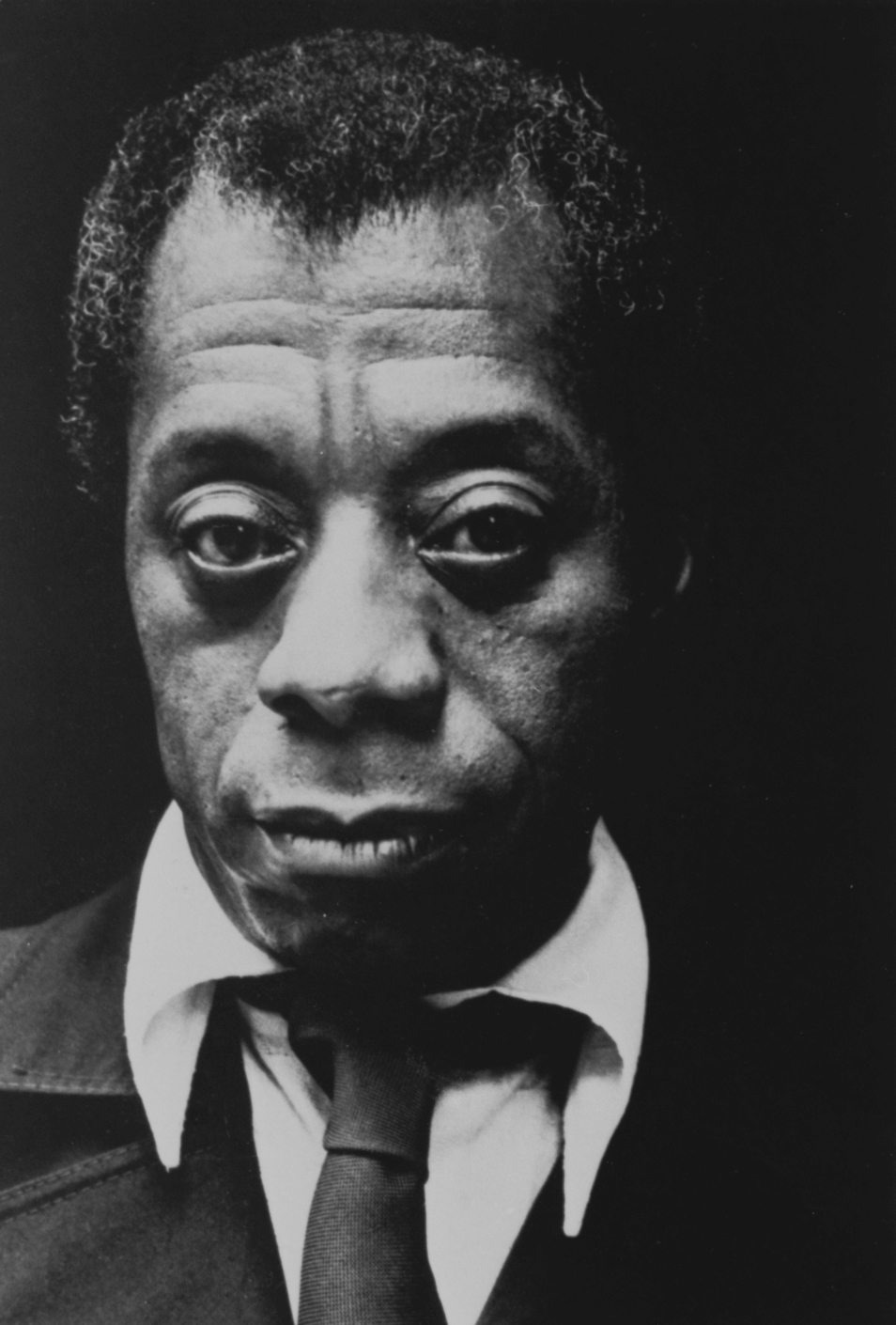
Noah Berlantsky nominates James Baldwin for his book-length essay, The Devil Finds Work:

Published in 1976, the piece can’t be categorized. It’s a memoir of Baldwin’s life watching, or influenced by, or next to cinema. It’s a critique of the racial politics of American (and European) film. And it’s a work of film theory, with Baldwin illuminating issues of gaze and identification in brief, lucid bursts. James Baldwin, Distinguished Visiting ProfessorThe dangerous appeal of cinema, he writes, can be to escape—”surrendering to the corroboration of one’s fantasies as they are thrown back from the screen” And “no one,” he acidly adds, “makes his escape personality black.”

The themes of race, film, and truth circle around one another throughout the essay’s hundred pages, as Baldwin attempts to reconcile the cinema he loves, which represents the country he loves, with its duplicity and faithlessness. In one memorable description of the McCarthy era midway through the essay, he marvels at “the slimy depths to which the bulk of white Americans allowed themselves to sink: noisily, gracelessly, flatulent and foul with patriotism.” It’s clear Baldwin believes that description can often be applied to American cinema as well—whether it’s the false self-congratulatory liberal Hollywood pap of The Heat of the Night or Guess Who’s Coming to Dinner or the travesty made of Billie Holiday’s life in Lady Sings the Blues, the script of which, Baldwin says, “Is as empty as a banana peel, and as treacherous.”

Yet, for all its pessimism, The Devil Finds Work doesn’t feel despairing or bleak. On the contrary, it’s one of the most inspirational pieces of writing I’ve read. In part, that’s because of the moments of value or meaning that Baldwin finds amid the dross—an image of Sidney Poitier’s face in the Defiant Ones, which in its dignity and beauty shatters the rest of the film, or “Joan Crawford’s straight, narrow, and lonely back,” in the first film Baldwin remembers, and how he is “fascinated by the movement on, and of, the screen, that movement which is something like the heaving and the swelling of the sea … and which is also something like the light which moves on, and especially beneath, the water.”

Recent Dish on Baldwin here, here, here, and here.

Face Of The Day

Screen shot 2014-04-03 at 7.36.21 PM

Susan Stellin talked to her boyfriend, Graham MacIndoe, about his struggle with heroin:

When you talk about wanting to quit, was it just a moment and then it would go away? Because I think that’s what people don’t understand: Why doesn’t this person want to quit, or if they do want to quit, why can’t they?

I wanted to quit a lot. I really wished I could’ve quit. And there’s nothing in my heart that I feel so bad about — not being able to quit when I first met you. ’Cause I would’ve saved myself and my family a lot of stress and pain and anger and money and humiliation.

But in a lot of cases with addiction you’re never ready to quit until you really hit rock bottom. They say that all the time in meetings. And it isn’t necessarily the case all the time — I see people who have quit, they’ve managed to nip it in the bud. And I don’t know how that happens. I don’t know how some people manage to drag themselves away from the cusp of going into that really dark place and some people don’t. I quit a bunch of times, but I always slipped back into it because it’s not the quitting — it’s the long-term thing. You don’t know how to function, because you’ve been so dysfunctional for so long that you find yourself going back to your comfort zone, and your comfort zone is being around people who enabled you and people who are in the same boat as you. You go to somebody’s house where other people are using, and it’s like you’re with your family again. They tell you it’s going to be all right, then you take a hit, then you think, Fuck it, I feel good. Cause it’s really hard to get your shit together when you don’t feel good. And when the reality of where you’ve been and how much you’ve done and the lies you’ve told all dawns on you, it’s really hard to face. It’s a really big emotional crisis that is very hard to face up to. And that’s why people say they want to get clean but just can’t do it.

View more of MacIndoe’s work here, or visit his gallery here.

A Short Story For Saturday

The haunting opening paragraphs of Kurt Vonnegut’s classic story, “Harrison Bergeron“:

THE YEAR WAS 2081, and everybody was finally equal. They weren’t only equal before God and the law. They were equal every which way. Nobody was smarter than anybody else. Nobody was better looking than anybody else. Nobody was stronger or quicker than anybody else. All this equality was due to the 211th, 212th, and 213th Amendments to the Constitution, and to the unceasing vigilance of agents of the United States Handicapper General.

Some things about living still weren’t quite right, though. April for instance, still drove people crazy by not being springtime. And it was in that clammy month that the H-G men took George and Hazel Bergeron’s fourteen-year-old son, Harrison, away.

It was tragic, all right, but George and Hazel couldn’t think about it very hard. Hazel had a perfectly average intelligence, which meant she couldn’t think about anything except in short bursts. And George, while his intelligence was way above normal, had a little mental handicap radio in his ear. He was required by law to wear it at all times. It was tuned to a government transmitter. Every twenty seconds or so, the transmitter would send out some sharp noise to keep people like George from taking unfair advantage of their brains.

George and Hazel were watching television. There were tears on Hazel’s cheeks, but she’d forgotten for the moment what they were about.

Read the rest here. Check out other Vonnegut short stories in his collection, Welcome to the Monkey House. Previous SSFSs here.

The View From Your Window Contest

vfyw_4-5

You have until noon on Tuesday to guess it. City and/or state first, then country. Please put the location in the subject heading, along with any description within the email. If no one guesses the exact location, proximity counts.  Be sure to email entries to contest@andrewsullivan.com. Winner gets a free The View From Your Window book or two free gift subscriptions to the Dish. Have at it.