Beard Transplants, Ctd

Alok Vaid-Menon considers the racial politics behind the apparent fad:

I grew up in a small Texas city, where my white peers called me a monkey. They told me that Indians grow our body hair earlier because we are closer to animals. I grew my first mustache at 11; I did not smile in photographs for years after. My desire to shave was not about wanting to become a man. It was about wanting to become white.

Now, at age 22, I sit in my Brooklyn apartment reading a New York Post story about how men in this city are paying up to $8,500 to obtain facial hair transplants to make their beards appear thicker. The article doesn’t mention race. But the first image that comes to mind is the white boys who taunted me growing up. Then, my dad told me, “One day they are going to be jealous of you.” I refused to believe him until now.

My generation inherited both our beards and our brownness in a post-9/11 era. We experienced a silent war – one that did not make it on the news – in the classrooms, the subways, the airports where we found ourselves under a new type of scrutiny. The brown on our skin: a new flavor of lethal. Its beard, even more of a threat. … Now white boys in Brooklyn are sewing hair onto their faces in the same city where brown boys still have scars from ripping it off.

A Poem For Saturday

3534527390_71abc3b0aa_o

Dish poetry editor Alice Quinn writes:

This coming Sunday, April 6th at two o’clock – to celebrate The New York Botanical Garden’s seasonal exhibit, The Orchid Show: Key West Contemporary – three distinguished contemporary poets, Henri Cole, David Yezzi, and Pulitzer Prize-winner Tracy K.Smith will read the work of great American poets who made their home in Key West at different points in the 20th Century: Elizabeth Bishop in the 1940s, Richard Wilbur in the 1960s, and James Merrill in the 1980s. The reading will be in Ross Hall. The address is Bronx-River Parkway at Fordham Road, 2900 Southern Boulevard. The poems – as those we’ll post today and over the weekend demonstrate – are exquisite. For more details, see the Poetry Society of America’s event page here.

“April 5, 1974” by Richard Wilbur:

The air was soft, the ground still cold.
In the dull pasture where I strolled
Was something I could not believe.
Dead grass appeared to slide and heave,
Though still too frozen-flat to stir,
And rocks to twitch, and all to blur.
What was this rippling of the land?
Was matter getting out of hand
And making free with natural law?
I stopped and blinked, and then I saw
A fact as eerie as a dream.
There was a subtle flood of steam
Moving upon the face of things.
It came from standing pools and springs
And what of snow was still around;
It came of winter’s giving ground
So that the freeze was coming out,
As when a set mind, blessed by doubt,
Relaxes into mother-wit.
Flowers, I said, will come of it.

(From The Mind-Reader by Richard Wilbur © 1976 by Richard Wilbur. Reproduced by permission of Houghton Mifflin Harcourt Publishing Company. All rights reserved. Photo by Penny Higgins)

Why Do Zebras Have Stripes?

Zebra

One of the main theories:

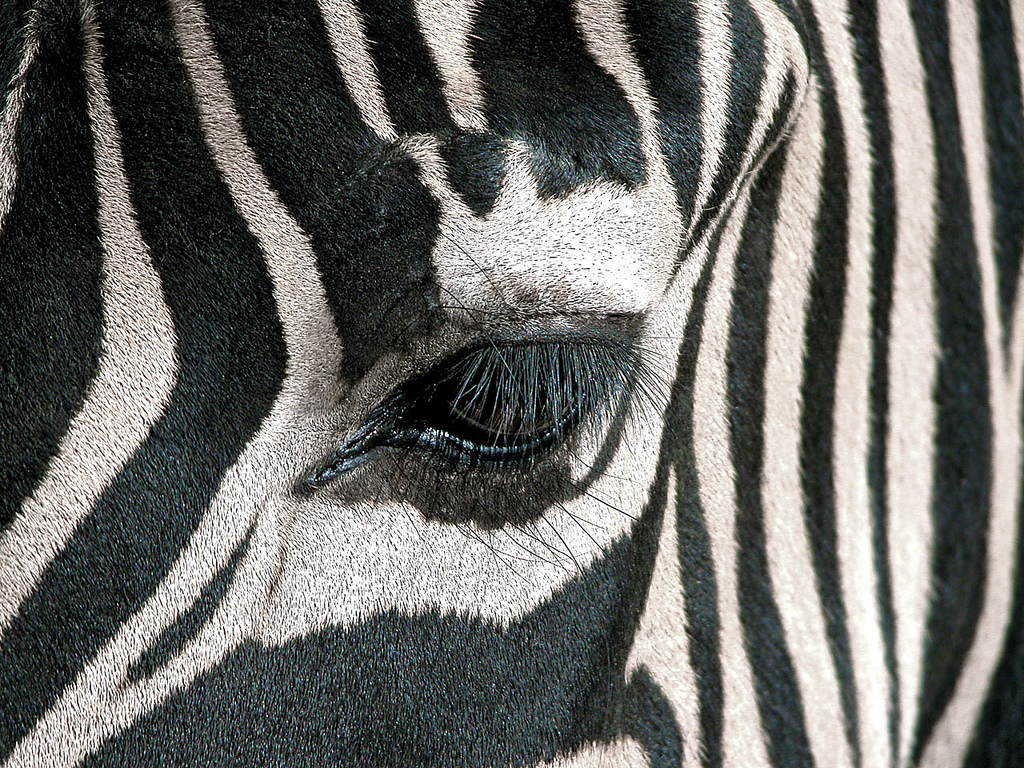
It is called the “motion dazzle hypothesis”, and it suggests predators are confused by zebras’ stripes and cannot understand their movement. Research published in the journal Zoology in 2013 used a simulated visual system to show that zebra stripes do interfere with visual perception. But this is a difficult hypothesis to test in the field.

Derek Mead flags a paper that finds evidence for a different theory:

Biting flies don’t like to land on stripes. The study team, led by Tim Caro of UC Davis, compared the habitats, predators, and other factors that might potentially make stripes useful for the seven extant equid species in Africa and Asia. Two things stood out: The three species with stripes are the only ones located in the same spot as blood-sucking, disease-carrying tsetse flies, and their width of their stripes match previous models showing the optimal stripe size for deterring flies. And to be clear, biting flies can be a huge problem: studies have shown that cattle in the US can lose 200-500cc of blood per day if biting flies aren’t controlled with pesticides, and they can also be serious disease vectors.

(Photo by Flickr user Tobias)

Your Cereal Is Watching You

General Mills In Talks To Purchase Yoplait Yogurt

But mostly your children:

The Cornell University Food and Brand Lab study first evaluated the placement of cereal boxes in a small number of grocery stores in New York and Connecticut. Unsurprisingly, children’s cereals were placed on the bottom two shelves, while adult cereals were higher. But the researchers also found that the stares of the cartoon characters on children’s cereal boxes were fixed down at an angle of nearly 10 degrees, on average. On adult cereals, the gazes were nearly straight ahead.

And in preliminary tests, the method seems somewhat effective. When shown one of two boxes of Trix – one with the rabbit looking straight ahead and one where he looks down – adults surveyed showed higher brand trust and loyalty for the one with the straight-ahead gaze. (There was no parallel study of whether kids react better to being looked down on.) The researchers suggest that healthier brands should take on some of these tactics – and that parents avoid taking their kids down cereal aisles all together.

(Photo by Justin Sullivan/Getty Images)

Fitting Feminism And Fashion

Amy Merrick considers the long and not-entirely-successful history of advertisers using feminist rhetoric to sell beauty products:

Almost as soon as images of women became prominent in the mass media, at the beginning of the twentieth century, marketers began trying to blend representations of women as independent and intelligent with traditional feminine notions of beauty. It was an awkward fit.

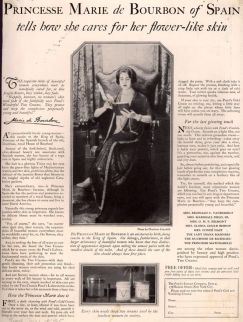
In 1924 – shortly after women got the right to l-52mfthnezpw66jvote, and long before Betabrand’s Ph.D.s – the Woman’s Copy Department at the J. Walter Thompson ad agency recruited distinguished women for a campaign for Pond’s cold cream, according to Kathy Peiss, a history professor at the University of Pennsylvania and the author of Hope in a Jar: The Making of America’s Beauty Culture. Women such as Alice Roosevelt Longworth, who were chosen for their cultural significance rather than primarily for their beauty, gave testimonials about the benefits of Pond’s.

But many people didn’t understand the point, and consumers reported that they most liked the photographs of Princess Marie de Bourbon, a young and conventionally pretty endorser. In the Pond’s ads, the marketers “maintained that beautifying and achievement need not be mutually exclusive: caring for appearance could be seen as an aspect of women’s self-expression and dignity,” Peiss writes. “But this was a subtle and difficult argument to make, easily submerged in the celebration of female beauty as an end in itself.” For the most part, advertisers reverted to a simpler, more conventional message.

A Bachelor’s Degree In Gettin’ Paid, Ctd

Alexander Aciman’s plea for colleges to stop hitting up indebted grads for donations hit a nerve with readers:

I told Chicago (“The U of C” in my time before their ungrammatical and inelegant rebranding as “UChicago”) they would never see another cent from me as long as the president, Robert Zimmer, was making such crazy, truly crazy, money: $3.4 million at last count, in 2011. I said the same to Harvard – zillions in hand and poor-mouthing all the time.

I have benefited greatly from my education and the opportunity that derives from my degrees from both institutions, but I end up giving my own modest philanthropic dollars to the small liberal arts college where I teach. We don’t have very many big government grants, much less DOD or DOE contracts, propping up the STEM fields. We instead have a relatively poor alumni base of public servants, teacher, preachers, and country doctors, not investment bankers and hedge funders and tycoons. We make do on less than our peers and we teach the students really well.

Also, we don’t require any students to take out loans. Whoever can get in can afford it because we guarantee full demonstrated need with no loans. That’s a huge monetary commitment to do the right thing and it’s coming out of the hides of lots of other things on campus, mainly faculty and staff salaries, academic programming, and delays in new, direly needed teaching and learning spaces.

Another writes:

As an Ivy League graduate who spent more than 10 years helping to raise money from my classmates after we graduated in the 1970s, here’s my theory:

the people like me, who struggled mightily for respect as young alumni, are now in charge of fundraising operations but have failed to understand the much larger impact loans have on current students than they did on earlier generations.

I am very fond of the Ivy League university I attended, but it wasn’t an automatic ticket to riches. I give when I can. But I wish there was a better way for young alumni to contribute to the success of the university other than being badgered for money when they have huge loans. I think strong career networking and strong career services would be a help, but as far as I can tell, the faculty don’t actually care about graduating students who can find jobs with bachelor’s degrees, and so the career office is run by a person with a counseling degree who has no actual hiring experience in the business world.

Another points out a “straightforward” reason alumni offices chase even the tiniest donations:

One of the criteria on which schools are ranked (by organizations like US News & World Report) is the percentage of graduates donating to the school. It’s why I give $5 per year to my alma; it’s a cheap way to do my part to ensure the future worth of my degree.

Announcing The Dish Book Club, Ctd

[Re-posted from earlier today]

In case you missed my announcement this week:

Well, it’s more like a resuscitation of the Book Club, since we had one more than a decade ago now. But the format will be the same. Each month, we’ll pick a book, and Dish readers are invited to read it alongside us. After three weeks, we’ll start debating it, through bookclub-beagle-trposts on the Dish and a reader thread fueled by your thoughts on the book. If the author is still alive, we’ll try and get him or her to do a podcast at the end (on Deep Dish) to answer some of the questions readers have raised and keep the conversation going.

If you’re like me, you find your time for book-reading increasingly constrained by our Googled minds and our overwhelmed lives. So think of this club, as I am, as an incentive to read alongside others the kind of book you might have passed on without the prompt of a Dish discussion.

Thus far, at least 450 readers have joined the book club by buying our first selection – Bart Ehrman’s How Jesus Became God – through the Dish affiliate link. One of them:

Thanks for this. I’m in. And thank God for Kindle! Read your re-opening of the book club, I clicked the link to the Amazon page, clicked once more to purchase Ehrman’s book (you’re welcome for the penny of affiliate reward) and tonight at dinner I’m reading the book. Before Kindle (or ebooks in general) it would have taken at least forty-eight hours to go from intention to read a book to reading it, rather than the four hours it took me.

Truth is, I got the Kindle for travel. But now, I find physical books insufferable and almost unreadable. I mean, just from a practical standpoint. I’ve read during meals as long as I can remember being able to read. Lately, though, I honestly cannot remember how I used to keep physical books open while I read. I recently started a hardcover nonfiction book from the library, and at meals I wind up using a stone coaster to hold it open while I use fork and knife in two hands, and half the time the book flies closed and flings the coaster across the table and into plates of food. Whereas when I read the Kindle at the table, it just sits there, advancing a page neatly every time I touch it.

But we don’t want to leave out any dead-tree lovers, so the link to the hardcover is here. Another:

Long-time reader and recent subscriber. I have a quick question about your Book Club selection: Will you also be recommending Harper Collins’ companion book, How God Became Jesus: The Real Origins of Belief in Jesus’ Divine Nature – A Response to Bart Ehrman?

Of course – we’re biased and balanced with all Dish content. Readers are encouraged to buy and discuss that book as well; the link is here. Another notes of Ehrman (who, by the way, has agreed to do a podcast with us):

Thanks for starting up the book club again, and for the selection. For agnostic/atheist/non-Christian readers who might be put off by the title, you might want to post this about Bart Ehrman:
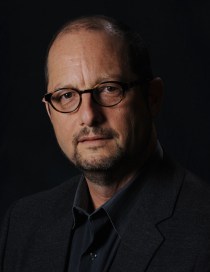
ehrman_bart_12_020Ehrman became an Evangelical Christian as a teenager. In his books, he recounts his youthful enthusiasm as a born-again, fundamentalist Christian, certain that God had inspired the wording of the Bible and protected its texts from all error. His desire to understand the original words of the Bible led him to the study of ancient languages and to textual criticism. During his graduate studies, however, he became convinced that there are contradictions and discrepancies in the biblical manuscripts that could not be harmonized or reconciled. He remained a liberal Christian for fifteen years but later became an agnostic after struggling with the philosophical problems of evil and suffering.

He’s a fascinating scholar, and his The Orthodox Corruption of Scripture is catnip for Bible geeks.

Another is skeptical of the new club:

Oh brother. I’ve done in-person book clubs before and, frankly, they drove me bananas.  Lots of people with prejudices getting in the way of, you know, the book. Hoping that a mediated online club will keep the dumbass quotient down.

During the week of Easter, after readers have had time to read the book, we will have a week-long discussion mediated and curated with just as much care as all of our reader threads. We will also provide a forum for unfiltered feedback and interaction between readers. Another:

Thank you very much for this feature. I was immediately excited when I read the title of the post, as I’ve been wanting to join a book how-jesus-became-godclub for awhile. My excitement diminished somewhat when I realized the first selection was a religious-themed title, as I am one of your atheist readers, but as usual you were very welcoming of the secular perspective. After reading more about the book‘s premise, I feel it will be very enlightening for non-believers as well, to see how belief movements are born and develop over time. We “nones” could no doubt learn a lot about how to steer our own community toward a brighter future. I regret that I will not be purchasing the book and contributing to the revenue stream (though I hope my above-the-minimum subscription makes up for that). Instead, I have requested the book from the library [others can do so here], and I’ll sadly have to put off starting The Bright Continent by Dayo Olopade, which I checked out after you first highlighted her work last month.

I understand you selecting the launch book, but I would love the opportunity to contribute to future book selections. Will you be soliciting nominations? Perhaps choosing a shortlist and posting a poll for Dishheads to vote on? Will the club be exclusively non-fiction or will you include fiction as well? If so what genres? Maybe there could be two clubs! Anyway, I look forward to participating.

In fact, we have already considered a reader poll of pre-selected titles, which we may do in the future. But for the second club next month, our guest-host Maria Popova will be making the book selection – and it’s a topic near and dear to most Dishheads, so stay tuned. Like every Dish feature, the book club will be an ever-evolving one, so your feedback is always welcome and appreciated.

Machines That Can Call Tech Support

Ryan Avent sees them on the horizon:

The world is now blanketed in sensors, most of which are connected to the internet. The machines of the future will be able to draw on that information (or a lot of it, anyway) and use it to inform themselves about their surroundings. They will be able to talk to, learn from, and add to a wealth of data on What Things Are and What To Do With Them. And if they get stuck, they’ll be able to talk to humans. The stray object in the path that might once have immobilised a robot won’t immobilise it if the robot can ring up tech support and informed that it’s just a stray object, go around dummy.

It’s very hard to design a machine that can improvise when confronted by the unfamiliar or reason its way through most difficulties—just as it’s rare to find a human who can seamlessly navigate his way across all of America’s public roads, large and small, without some sort of guide. But just as any regular joe with access to Wikipedia can do a passable impression of someone with enormous intellectual powers, the extended mind of the cloud could lead to impressive improvements in robot capabilities.