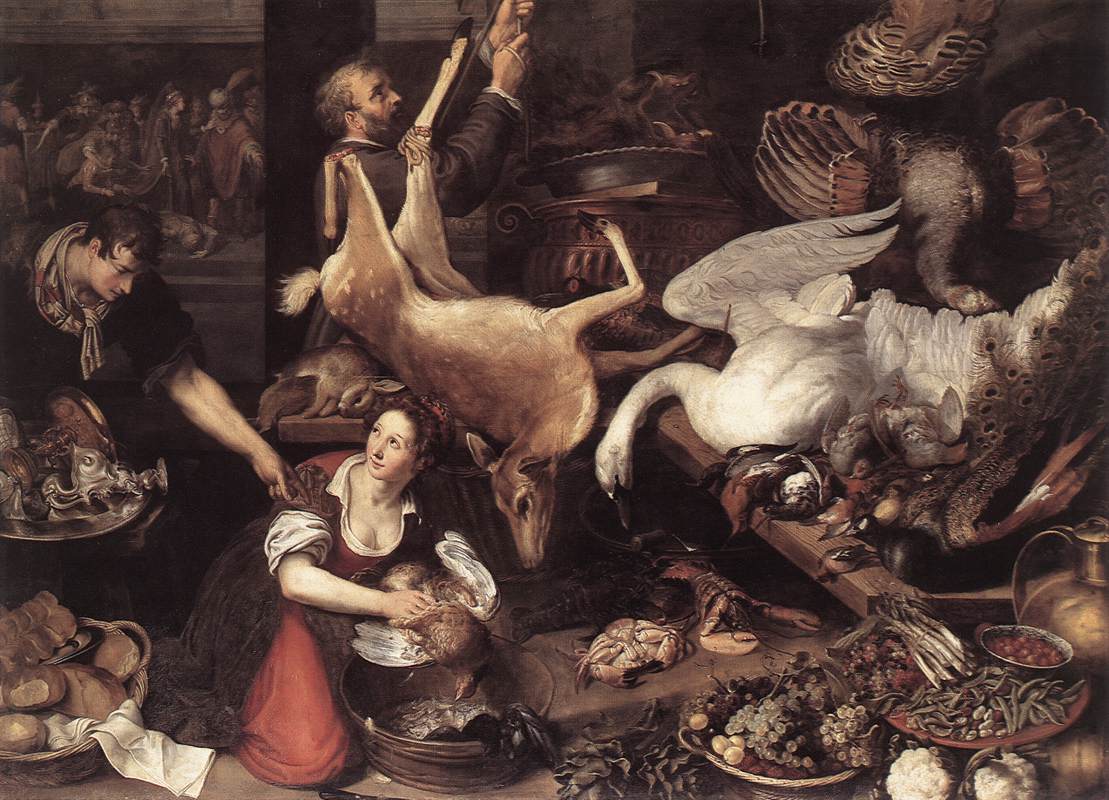
Monica Kim wonders if roast swan will ever make a comeback – particularly in Michigan, where the birds are nearly three times as common as they were a decade ago:
Often served at feasts, roast swan was a favored dish in the courts of Henry VIII and Elizabeth I, particularly when skinned and redressed in its feathers and served with a yellow pepper sauce; others preferred to stuff the bird with a series of increasingly smaller birds, in the style of a turducken. … Great Britain’s royals are still allowed to eat swan, as are the fellows of St. John’s College of Cambridge, but to the best of our knowledge, they no longer do. Thanks to stories like Leda and the Swan and Lohengrin, the birds appear almost mythical; a restaurant on the Baltic island of Ruegen had swan on their menu for a short time, before protests began and it was swiftly removed.
In Michigan, however, which has the highest population of mute swans in North America, the creatures are considered pests.
According to the Michigan Department of Natural Resources, the statewide breeding population increased from about 5,700 to more than 15,000 in just 10 years. The birds attack people in the water and on shore, particularly children that wander too close to their nests. … The cultural reluctance to hunt swan (let alone eat it) is powerful, but the government’s desire to control overpopulation is equally strong.
Update from a reader, who makes a distinction:
Mute Swans do not do anything to “other” native species in the US, as Ms. Kim suggests, because Mute Swans are not native to the US. They were deliberately introduced from the Old World to “grace the ponds of parks and estates” and are an invasive species here (like Starlings and English Sparrows). Our native swans include Tundra and Trumpeter Swans, and Mute Swans are not kind to them either. Mute Swans should be considered highly edible in the New World.
(Image: Adriaen van Nieulandt the Younger’s Kitchen Scene (1616) via Wikimedia Commons)
 The Dish
_-_Kitchen_Scene_-_WGA16570.jpg)