While flipping through Alain de Botton and John Armstrong’s book Art as Therapy, Teri Vlassopoulos rediscovers the curative power of Richard Serra’s sculptures:
I flipped first to the section on sorrow. “One of the unexpectedly important things that art can do for us is teach us how to suffer more successfully,” de Botton writes. I had the nagging suspicion that my current method of dealing with sorrow (crying in the car on my drives to work, playing endless rounds of Candy Crush in bed at 7 p.m.) was not the most dignified way to go about it. …
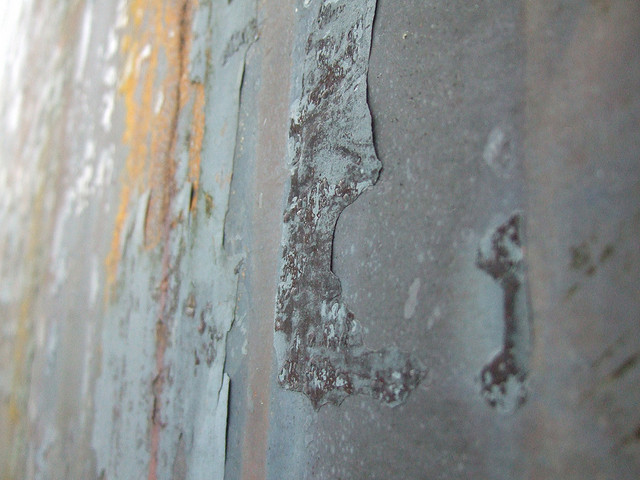
Serra’s sculpture Fernando Pessoa clarifies his point. “Serra’s work does not deny our troubles; it doesn’t tell us to cheer up. It tells us that sorrow is written in the contract of life. The large scale and overtly monumental character of the work constitute a declaration of the normality of sorrow.” Art, de Botton wants to demonstrate, helps prove the universality of emotions. It’s not so much that there’s a wrong or right way to suffer, but that when you’re deep in it, it’s useful to be reminded that what you’re feeling isn’t unique. Misery loves company, sure, but misery also loves representations of sadness sublimated in a way that gives dignity to the strangeness of the feeling. There’s certainly something somber and resolute about Serra’s sculptures, and about Fernando Pessoa in particular, which is composed of a single rectangular rigid steel plate. It makes sense that his work could be a visual stand-in for the towering, engulfing feelings of sorrow.
(Photo: Detail of Serra’s Fernando Pessoa via Flickr user GanMed64)
 The Dish