Dara Lind examines it:
When the Chinese government started the current wave of panda loans, [researcher Kathleen] Buckingham and her coauthors discovered a pattern: pandas were sent to trade partners shortly after major trade agreements were signed, as a way of expressing a desire to build a long-term trade relationship. …
The choice of which zoos get pandas within a country is important, too.
The pandas loaned to the United Kingdom, for example, don’t live in the London Zoo, which would be the logical place for them — they were sent to the Edinburgh Zoo, as an acknowledgment of $4 billion in trade deals for exporting Scottish salmon and Land Rovers to China.
But China also uses panda loans (as well as the trade deals themselves) to exert political pressure on countries. China turned to Scotland for its salmon imports, for example, as a replacement for longtime salmon supplier Norway. After the Nobel Peace Prize committee gave the award to Chinese dissident Liu Xiaobo, China took its salmon money somewhere else. Sometimes economics and politics intersect: the panda loan China and Denmark agreed to just last month could be seen as an expression of Chinese interest in Greenland’s natural resources, or as a reward for Denmark walking back its support of Tibetan independence five years ago.
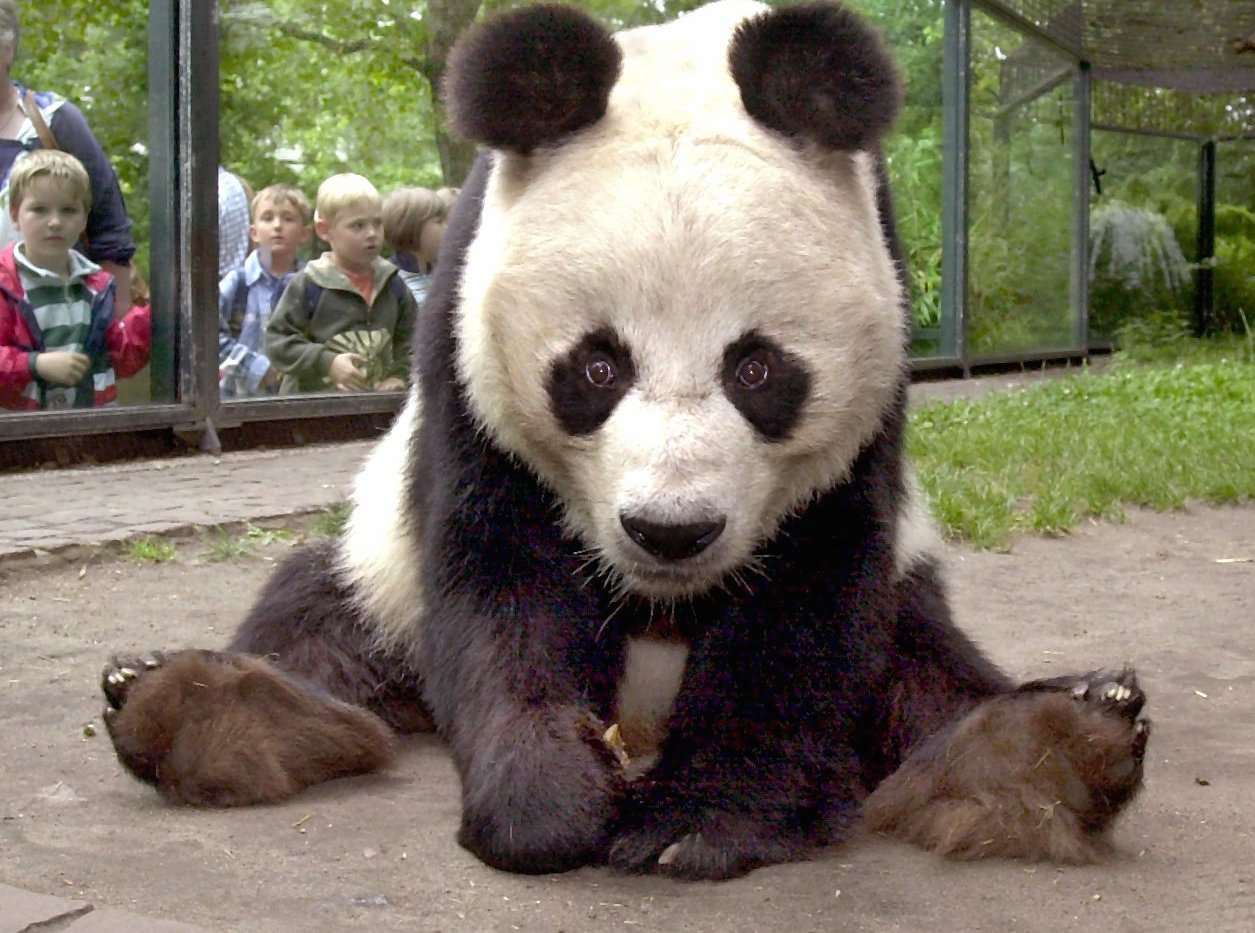
(Photo: Picture taken on July 5, 2000 shows Bao Bao, the oldest captive male panda in the world, in his enclosure at the Berlin zoo. A gift from China to former German chancellor Helmut Schmidt, Bao Bao died at the age of 34 on August 22, 2012. By Stephanie Pilick/AFP/Getty Images)
 The Dish