Better Not To Get HIV In America

HIV Chart

Last night saw the premiere of the HBO version of Larry Kramer’s The Normal Heart. It focuses on the very beginning of the epidemic. But in some ways, the American AIDS experience remains as different from the rest of the developed world now as it was back then. The world is transformed medically, of course, but the deeper pathologies of the American healthcare system have sustained more infections than in any other advanced country.

As Michael Hobbes explains in a must-read, America’s decentralized and haphazard patchwork of care is part of the problem:

In the United Kingdom and Germany, if you test positive for HIV, you’ll immediately be referred to an HIV clinic for tests to measure how much of the virus is in your blood and how well your immune system is holding up. Three-quarters of Brits diagnosed with HIV get to this next stage of care within two weeks, and 97 percent make it within three months.

This is not just some nationwide codification of English politeness. Clinics that provide testing are required to get HIV-positive people to the next round of tests or they don’t get fully reimbursed. If you screen positive and skip your viral-load test, you’ll get a call from the clinic asking why you didn’t show up. Some testing centers will walk you straight to the hospital to make an appointment.

In the United States, only 65 percent of people with HIV get linked to a hospital or clinic within three months. A survey in Philadelphia published in 2010 found that the median time between diagnosis and treatment was eight months. The effect of the wait can be devastating. A 2008 study found that gay men who had full-blown AIDS before they were diagnosed were 75 percent more likely to die within three years, even if they got on treatment. For people whose viral load is high and T-cell count is low, getting on HAART is like putting on sunscreen after they’ve already been at the beach for two hours.

(The above chart taken for an accompanying article)

The World’s Biggest Election Wraps Up

Exit polls from the last phase of India’s national election predict a major victory for the opposition Bharatiya Janata Party:

A poll by C-Voter, a research group, indicated the BJP and its allies could win 289 seats in Lok Sabha, India’s lower house of Parliament, giving the coalition the majority needed to oust the incumbent Congress Party and form the nation’s next government. A poll by ABP-Nielsen predicted the BJP-led coalition would secure 281 seats, according to Reuters. If the exit polls prove to be correct — which is no guarantee — they would put BJP leader Narendra Modi in pole position to become the next Prime Minister of India.

But Heather Timmons cautions that Indian exit polls are notoriously unreliable, and the final results could look very different when they come out on Friday:

Opinion and exit polls have been so inaccurate so often in the past that not only are they not taken seriously by analysts, but many in the general population believe they are wrong on purpose in an attempt to curry favor with politicians. Election opinion polls are viewed in India as “covert instruments used by media houses in collusion with political parties for falsely predicting their fortunes with the aim of influencing the electorate in India,” said Praveen Rai, a political analyst with New Delhi’s Centre for the Study of Developing Societies.

In the last national election in 2009, for example, television network NDTV, Hindi channel Aaj Tak, and media house Zee News predicted based on opinion and exit polls that the BJP and its allies could get between 230 and 250 seats, and Congress and its allies between 176 and 205. The actual number for the BJP group was 189, and Congress and its allies got 222.

Nonetheless, the commentariat is already talking about what a Modi premiership might look like. Harsh Pant explains why the BJP chief is such a big deal:

Modi’s rise has shaken the foundations of the Indian polity. You may not like his politics, but you cannot deny his impact. He has broken old norms, challenging the Gandhis openly, talking about them disparagingly, embellishing his record, sidelining the old guard within his own party, leading a tech-savvy campaign, reaching out directly to the people, and making a strong pitch for national leadership without inhibitions. He wants to be India’s next prime minister, he is telling his countrymen and women, and he is not ashamed to ask for their support. Modi’s ambition is his greatest asset in an increasingly ambitious India.

And it’s precisely because of this that Modi’s rise matters. The liberal intelligentsia continues to sound alarm bells, some even threatening to leave the country if Modi is elected. But they fail to comprehend how radically India has changed. Modi is a product of a contemporary India where the fault-lines of religion and caste, while important, are no longer the be all and end all of politics. An absence of leadership over the last decade has led to a craving for decisive leadership. Modi fills that vacuum.

Milan Vaishnav wonders if he can meet the public’s extremely high expectations, especially regarding the economy:

Yes, signs suggest the struggling Indian economy may be bottoming out. The International Monetary Fund recently announced that it expects India’s growth rate to recover from 4.4 percent in 2013 to 5.4 percent in 2014 and 6.4 percent in 2015. Consumer price inflation has come down from 11 percent in 2013 to 8 percent this March. The rupee, which experienced a free fall last summer after the Federal Reserve’s tapering talk, has since stabilized. Thus, with or without Modi, India may be able to muddle through.

But voter expectations are far greater; surveys suggest that they are flocking toward the BJP in the hopes that Modi can generate millions of new jobs, plug India’s infrastructure gap and attract the kinds of foreign money he has lured to Gujarat. Beyond voters, Modi is also moving stock markets: On the basis of pre-election polls projecting a BJP victory, India’s Sensex has risen more than 15 percent over the past six months. In meeting these expectations, Modi faces obstacles ranging from the difficult to the impossible.

William Inboden considers how the US should deal with Modi, who has been banned from visiting the US since 2005 over his role in a massacre of Muslims in Gujarat three years earlier:

Modi may not be the leader we want for India, but he will likely be the leader we get. Additionally, on the issue of religious toleration itself, the visa ban has outlived its effectiveness. Twelve years after the Gujarat massacres, there is little evidence that Modi’s continued blacklisting will do much to protect religious freedom in India.

But lifting the visa ban alone would be insufficient. The Obama administration should couple this with a series of other specific measures that show America’s willingness to work with Modi does not diminish our concern for religious freedom. While Modi has moderated some of his rhetoric, regrettably he seems to still embrace some of the more intolerant and toxic strains of Hindu nationalism. Many of India’s Muslims and Christians in particular fear that a Modi government could bring them increased discrimination and even persecution. The Obama administration should start communicating to India now its support for religious toleration, and should start developing specific policy initiatives to support religious freedom in India.

Previous Dish on Modi here and India’s elections here.

Quote For The Day III

jesus-QFTD

“Christianity is what we think it is; it has always been what we thought it was. But we almost unique among the Christian generations, have submitted it to the principle that Christianity is what someone else thought it was – what Jesus, the Apostles, Paul, Augustine, Luther, thought it was … What we must do now is to follow, like good conservatives, the generations before us & make our Christianity, as they made theirs. There is no external test – an external test of truth is a figment of false logic. A thing is what it develops into – & this development at this point is in our hands … It is a work of apologetic; but with a new principle of apology – i.e. to admit everything that must be admitted, but to enquire into its bearing. To reconstruct rather than to buttress; to rebuild rather than to reconstruct; to reform rather than to rebuild.

One of our problems – by what criterion are we to decide whether a certain growth belongs to the main stem, or whether it is parasitic? For all religions & moral ideas which have currency in Western Europe are somehow attached to or derived from Christianity: ours is a Christian civilization in that its formative conceptions, its atmosphere, etc are derived from Christianity. I do not mean that every idea we have can be traced to a definite source: I mean that the whole to which our ideas belong is dominated by the name Christianity. And those who have rejected the particular brand or phase of Christianity professed by their generation are not less influenced by it, than those who accept it.

But which is apple-tree & which is mistletoe?

The mistletoe feeds on the same sap – though it may modify it at the last moment – & is organically attached to the main stem.

Is Nietzsche mistletoe or apple-tree?” – Michael Oakeshott, unpublished Notebooks, (11, 11-14).

Love At A Distance

Maureen O’Connor questions the difficulties of long-distance relationships:

A Queen’s University study recently found relationship-­satisfaction levels for long-distance and “geographically close” couples to be virtually indistinguishable on nearly all measures, including sexual satisfaction. Oddly enough, digital communication may actually be more romantic than face-to-face interaction: A study from Cornell University found that confessions made via one-on-one web chat were consistently considered more intimate than identical confessions made in person. Call it the Manti Te’o phenomenon, the tendency some people have to ignore a campus full of suitable partners in favor of the one conjured digitally.

“In real dating, nobody waits,” my friend Holly observed, which means long-distance dating is “like all those sexy-time suburban-mom books about delaying sex for made-up reasons like vampire death so there can be sexual buildup.” Forbidden love is harder to come by than it once was; in the absence of blood feuds and imprisoned princesses, the doomed romances of our time are those conducted with lovers whose affections we imagine in the silence between text messages. The only stars that cross to keep modern lovers apart are those they willingly subject themselves to—like geography.

Helen Croydon, author of Screw the Fairytale: A Modern Girl’s Guide to Sex and Love, considers long-term relationships closer to home:

What, for example, is the obsession with living under the same roof?

In my last committed relationship the most common question I encountered was: “Do you have plans to move in together?” Why anyone would voluntarily give up a peaceful breakfast with John Humphrys, happily drinking anything in the fridge direct from the carton, and trade it for morning dramas of lost shirts and a daily telephone conference about meal-planning is something I can never understand.

There are now 3.5 million people over the age of 45 living alone in the UK, an increase of more than 50 percent since the mid-1990s. Domestic conveniences like vacuum cleaners, modern compact apartments and supermarket deliveries make it all very easy. In researching my book I interviewed married couples who live apart. One couple were on the verge of separating when they rented the house next door as a trial separation. Without the domestic minutiae overshadowing their “romantic” relationship, they thrived, so they made it permanent. The wife told me in glee: “I can invite people back and have parties. I could never do that before because he’s such a miserable anti-social thing.” So common is this new trend that the Office for National Statistics has created a term for it—LAT (living apart together). It estimates there are currently two million LAT couples in the UK. More people choose to live alone because they can.

Book Club #2: “On Looking,” Hosted By Maria Popova

When I asked Maria Popova of Brain Pickings which book she’d like to pick for our second book club, her eyes widened a little. They do that a lot. It didn’t take long for her to settle on Alexandra Horowitz’s On Looking: Eleven Walks with Expert Eyes (alternatively subtitled “A Walker’s Guide to the Art of Observation”). In her work as a professor of cognitive science at Barnard, Horowitz is “currently testing the olfactory acuity of the domestic dog, through experiments in natural settings, and examining dog-human dyadic play behavior.” From the publisher’s description of the book Maria chose:

From the author of the giant #1 New York Times bestseller Inside Of A Dog comes an equally smart, delightful, and startling exploration of how we perceive and discover our world. Alexandra horowitz-onlookingHorowitz’s On Looking: Eleven Walks with Expert Eyes shows us how to see the spectacle of the ordinary—to practice, as Sir Arthur Conan Doyle put it, “the observation of trifles.”

On Looking is structured around a series of eleven walks the author takes, mostly in her Manhattan neighborhood, with experts on a diverse range of subjects, including an urban sociologist, the artist Maira Kalman, a geologist, a physician, and a sound designer. She also walks with a child and a dog to see the world as they perceive it. What they see, how they see it, and why most of us do not see the same things reveal the startling power of human attention and the cognitive aspects of what it means to be an expert observer.

On Looking is nutrition for the considered life, serving as a provocative response to our relentlessly virtual consciousness. So turn off the phone and other electronic devices and be in the real world—where strangers communicate by geometry as they walk toward one another, where sounds reveal shadows, where posture can display humility, and the underside of a leaf unveils a Lilliputian universe—where, indeed, there are worlds within worlds within worlds.

From Maria’s extensively excerpted review:

[Horowitz’s] approach is based on two osmotic human tendencies: our shared capacity to truly see what is in front of us, despite our conditioned concentration that obscures it, and the power of individual bias in perception — or what we call “expertise,” acquired by passion or training or both — in bringing orwell-2attention to elements that elude the rest of us. What follows is a whirlwind of endlessly captivating exercises in attentive bias as Horowitz, with her archetypal New Yorker’s “special fascination with the humming life-form that is an urban street,” and her diverse companions take to the city. …

It is undoubtedly one of the most stimulating books of the year, if not the decade, and the most enchanting thing I’ve read in ages.  In a way, it’s the opposite but equally delightful mirror image of Christoph Niemann’s Abstract City — a concrete, immersive examination of urbanity — blending the mindfulness of Sherlock Holmes with the expansive sensitivity of Thoreau.

It struck all of us as a great book to enter summer with, as we get outside more and try to turn down the digital noise in our heads. Less dense than the Ehrman book, it also covers a whole variety of ways of looking at the world – geology, physics, and the genius of dogs – ways many readers might be interested in or knowledgeable about. And, yes, it’s not about religion. I know that’s a niche topic. This one is literally everything on your block.

We’ll do the second Book Club exactly as we did the first – beginning the reader discussion, guided by Maria, after Memorial Day weekend. As with the Erhman book on early Christianity, the author will also show up at the end of the discussion, like Marshall MacLuhan, to tell us that we know nothing of her work. So buy the book through this link and get cracking. We’ll start the conversation as summer begins.

The Use And Abuse Of Ukrainian Nationalism

In a long and deep look at the history of national identity, fascism, and Russian imperialism in Ukraine, Timothy Snyder examines the role of nationalist parties in Ukrainian politics today:

Of course, there is some basis for concern about the far right in Ukraine. Svoboda, which was Yanukovych’s house opposition, now holds three of 20 ministerial portfolios in the current government. This overstates its electoral support, which is down to about 2 percent. Some of the people who fought the police during the revolution, although by no means a majority, were from a new group called Right Sector, some of whose members are radical nationalists. Its presidential candidate is polling at below 1 percent, and the group itself has something like 300 members. There is support for the far right in Ukraine, although less than in most members of the European Union.

A revolutionary situation always favors extremists, and watchfulness is certainly in order. It is quite striking, however, that Kiev returned to order immediately after the revolution and that the new government has taken an almost unbelievably calm stance in the face of Russian invasion. There are very real political differences of opinion in Ukraine today, but violence occurs in areas that are under the control of pro-Russian separatists. The only scenario in which Ukrainian extremists actually come to the fore is one in which Russia actually tries to invade the rest of the country. If presidential elections proceed as planned in May, then the unpopularity and weakness of the Ukrainian far right will be revealed. This is one of the reasons that Moscow opposes those elections.

Anne Applebaum argues that Ukraine needs more nationalism, not less:

Ukraine’s oligarchs—the real beneficiaries of two decades of independence—don’t necessarily feel any loyalty to their countrymen either. Some have sided with “Ukraine” or “Europe” in the current conflict, but others will side with “Russia.” Their decisions have nothing to do with the welfare of ordinary Ukrainians at all.

The result can be seen right now in eastern Ukraine. For this—Donetsk, Slavyansk, Kramatorsk—is what a land without nationalism actually looks like: corrupt, anarchic, full of rent-a-mobs and mercenaries. For the most part, the men in balaclavas who have assaulted Ukrainian state institutions under the leadership of Russian commandos are not nationalists; they are people who will do the bidding of whichever political force pays best or promises most. And although they are a small minority, the majority does not oppose them. On the contrary, the majority is watching the battle passively and seems prepared to take whichever government they get. Like my friends in L’viv, these are people who live where they do by accident, whose parents or grandparents arrived by the whim of a Soviet bureaucrat, who have no attachment to any nation or any state at all.

Thus do the tiny group of nationalists in Ukraine, whom perhaps we can now agree to call patriots, represent the country’s only hope of escaping apathy, rapacious corruption, and, eventually, dismemberment.

The View From Your Window Contest: Winner #204

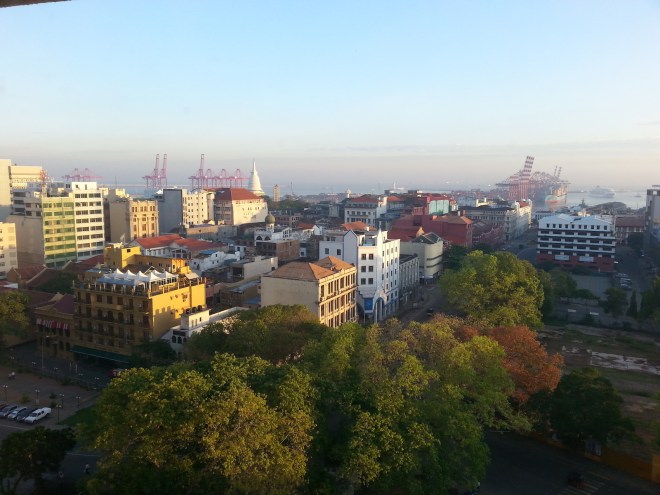
VFYWC-204

A reader writes:

I am certain someone else will win and get closer, but I just saw something familiar and wanted to at least get the city right with Oakland, CA. I see the San Francisco Ferry in the background, so I have to at least be within 5 miles of the window, right?

Give or take 9,023 miles. Another US guess:

I’m pretty sure that this week’s entry is the Port of Galveston, Texas. The combination of the cruise-ship, cranes, pick up trucks in the foreground and urban/spanish roofs lead me there.

Western Europe?

Reminds me of pictures from my mother’s cruise several years ago of the Hanseatic League ports. Hamburg looks about right, but it has blue tower cranes instead of red.

Or North Africa?

In all the years I’ve been following the contest, I’ve only known two locations correctly and never guessed because I questioned myself. I’m going with my gut – for a third time: Casablanca, Morocco. Something about it looks very familiar, although don’t even ask me where in the city the picture was taken from – I’m clueless.

Another runs through several clues:

The architecture, to me, looks so much like Amsterdam or Rotterdam, and the presence of the single sikh (?) temple in the middle wouldn’t necessarily sway that belief. However, the architecture of the white building near the water with domed corners throws me for a loop. I can understand one such example in a pic of this scope in Europe, but two in such close proximity seemed unlikely. And the deciduous trees in the foreground suggest it could not be the Middle East. I’ve not been there, so maybe they’re as plentiful as sand.

Then I think I have the temples wrong to begin with, and they’re actually Russian Orthodox. Ugh. And I searched for busy ports of course, but then realized I was assuming the port kept going for miles outside the pic. But it could be a small port. Ugh 2x.

Bottom line is I had a choice: (1) look through G-Earth for days scrolling through pics of all of Europe, Russia, and northern Middle East searching, or (2) succumb to the beckon of the 78 degree day outside.

Samsun, Turkey.

If any readers feel like they need a VFYWC support group, give this guy a call:

Lately, my guesses have fallen into two categories: (1) the guesses I have not e-mailed in to you because I was sure they were wrong, but which turned out to be correct (Bangkok; Orlando); and (2) the guesses I have e-mailed to you because I was sure they were right, but which turned out to be the most popular incorrect guess (Gibraltar; Oman). So this week I’m entering a guess I’m sure is wrong: Vancouver, Canada. Let’s see if I’m right.

Another gets closer:

Port Louis, Mauritius. I’m not sure why I thought immediately of a port city in Africa. Somewhere with a sizable Muslim population, because I do see a small masjid in the picture. It doesn’t look particularly prosperous, but there is a large cruise ship in the bay. The gantries at the port are loading or offloading a ship piled high with containers, and I rather suspect these are being imported as opposed to exported. First time participating in this contest, I really hope I’m at least somewhere in the right latitude …

Almost. Another gets on the right continent:

Penang, Malaysia. Probably wrong, but I least I guessed this week.

The following reader nails the right city and country, and he also points out the coincidental significance of today’s date:

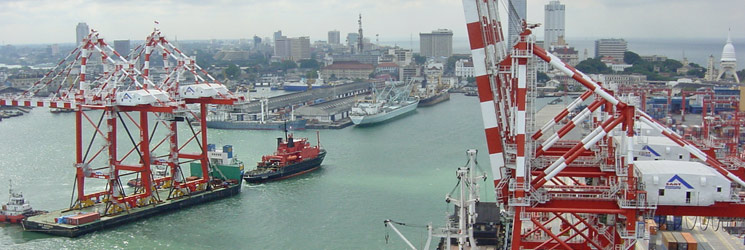
This appears to be a northwesterly view of the Buddha Jayanthi Stupa in Colombo, Sri Lanka, also known as the Harbour Stupa, probably taken from one of the high rises along Lotus Road – 10th floor? My guess would be near the intersection of Lotus Road and York Street.

My guess for choosing this view to run this week is because Tuesday 13 May is Vesak Day in the Buddhist world, a day on which we celebrate the Buddha’s birth, awakening and passing into Nibbāna/Nirvana. This also marks the beginning of the Buddhist New Year 2558. The stupa’s construction began in 1956, the year marking the 2500th year of Buddhism.

Here are this week’s guesses as an OpenHeatMap (zoom in by double-clicking an area of interest, or drag your cursor up and down the slide):

This embed is invalid

Shown another way, a whopping 86.4% of contestants guessed correctly this week:
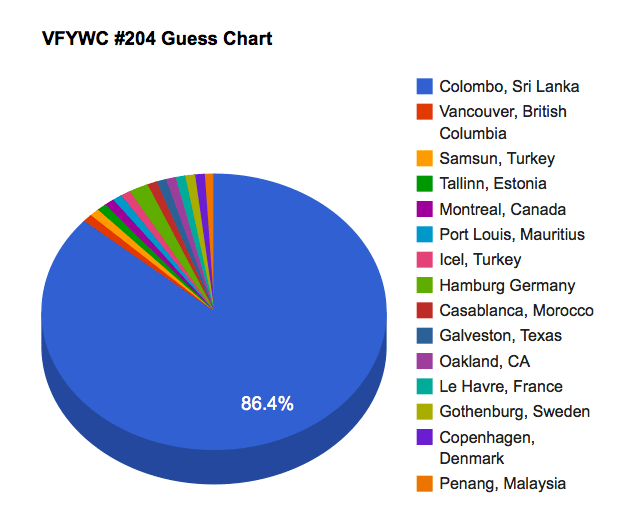
vfywc-204-piechart

Another Colombo guesser:

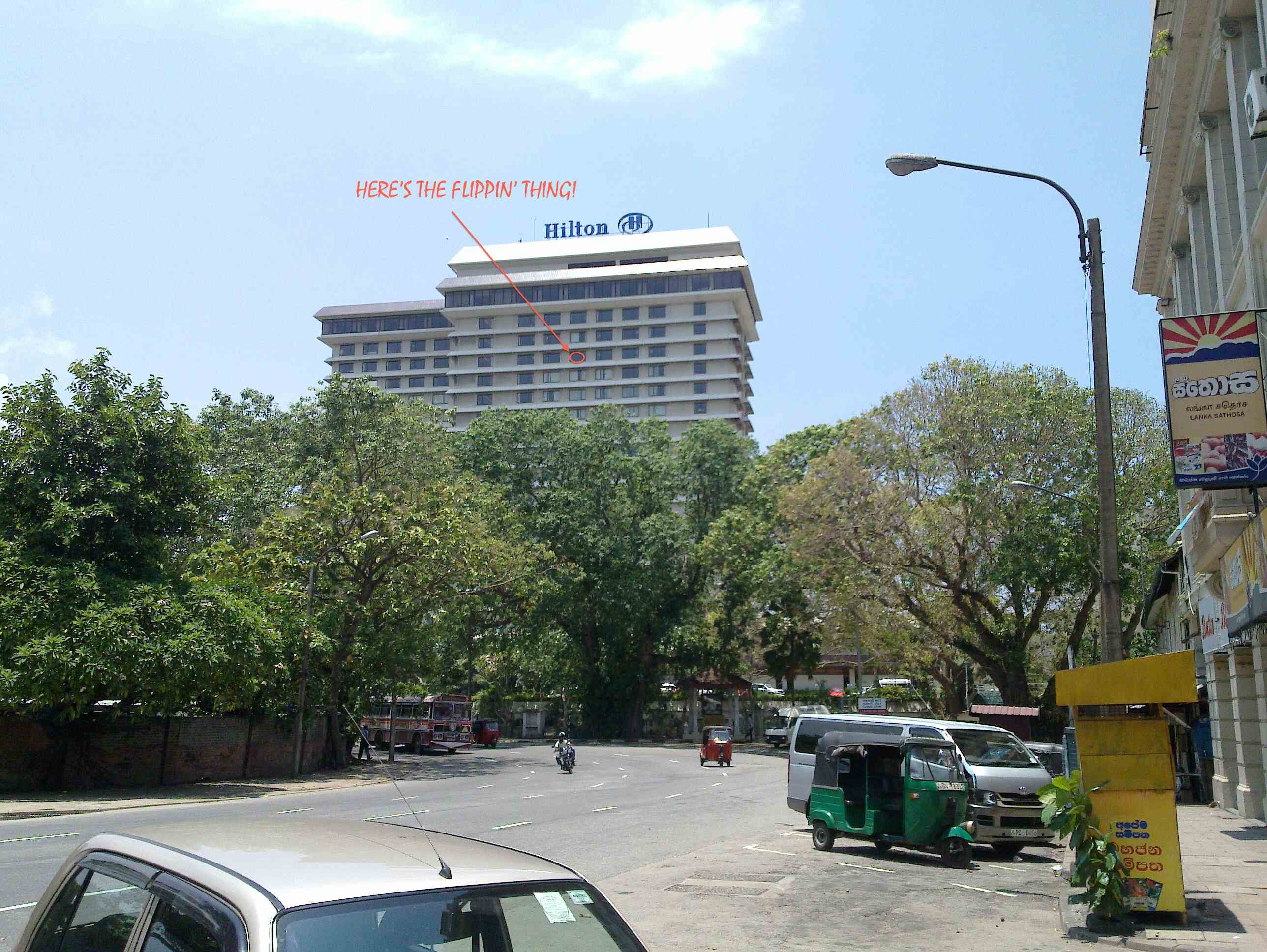
First time participant here. The photo seems to be taken from a high vantage point somewhere on York Street. Maybe the Hilton?

Indeed it is. A regular player takes everything in:

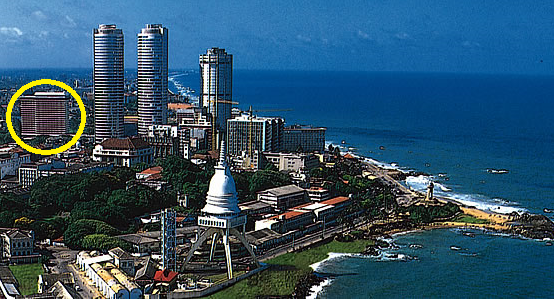
What did we have to go on, here? A large port, but not a megaport. A reasonably prosperous-looking city. A cruise ship. In the foreground, a mosque? That prominent white building? It looks like a Buddhist temple. Eventually, looking for “Buddhist temple port” we discover that this is a picture of Colombo, Sri Lanka. The Buddhist temple is the Sambodhi Chaithya Dagoba, known as a stupa. The temple straddles Chaithya Road and was built as a landmark for ships. The photo was taken from the north side of the Hilton Colombo. Here is a view from the port looking toward the hotel – notice the Sambodhi Chaithya Dagoba in the foreground:
sri lanka2

As to which window the photo was taken from … as always, I’ll guess. 18th floor, northwest corner.

Another uses TripAdvisor to help narrow down his guess:

One TripAdvisor contributor, who provided a view from his window, stayed on the same side of the hotel although on a slightly higher floor, and a good bit further east, so our view is from the west wing. Another Tripadvisor user’s photo from his 7th floor room, while not the same view, provides a similar angle over the trees and buildings, but I think your submitter was a bit higher. Hence, my guess of the 9th floor, far west room, looking north.

Another, like many others, focused on the cranes:

Really fun one this week. Immediately thought Denmark, but then realized it’s a little too run down. Next thought was Indonesia, but no ports checked out at first glance. I Googled “Indonesia port crane” looking for the red and white stripes, and by luck, a picture of that big pier in the middle appeared, with the white dome at left in the contest photo off to the right:
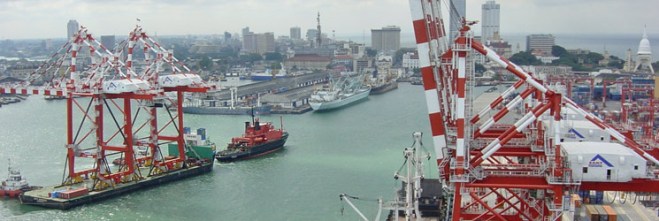
image-content-sri-lanka

The cranes themselves are from Indonesia, but the picture is in Sri Lanka, which was my next guess as Indonesia wasn’t working out. You can see the contest building in the back center of this photo, just to the left of the cranes: The Colombo Hilton hotel.

A rookie correct guesser:

I am so excited, this is my first VFYW entry ever, despite many weekends spent pouring over Google Earth and ending up with nothing. This is also the first contest that my husband has IMG_0181helped with, which I am sure contributed to my success. He has worked with shipping containers for a long time and is my expert consultant on port cities.
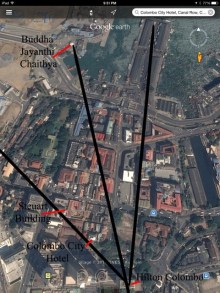
The area has changed a lot in a few years – here is a picture from 2010 from the same hotel (although I am thinking this shot is from the east side of the hotel, and the VFYW is from the west side or center because the Panoramio picture does not show the Colombo City Hotel).

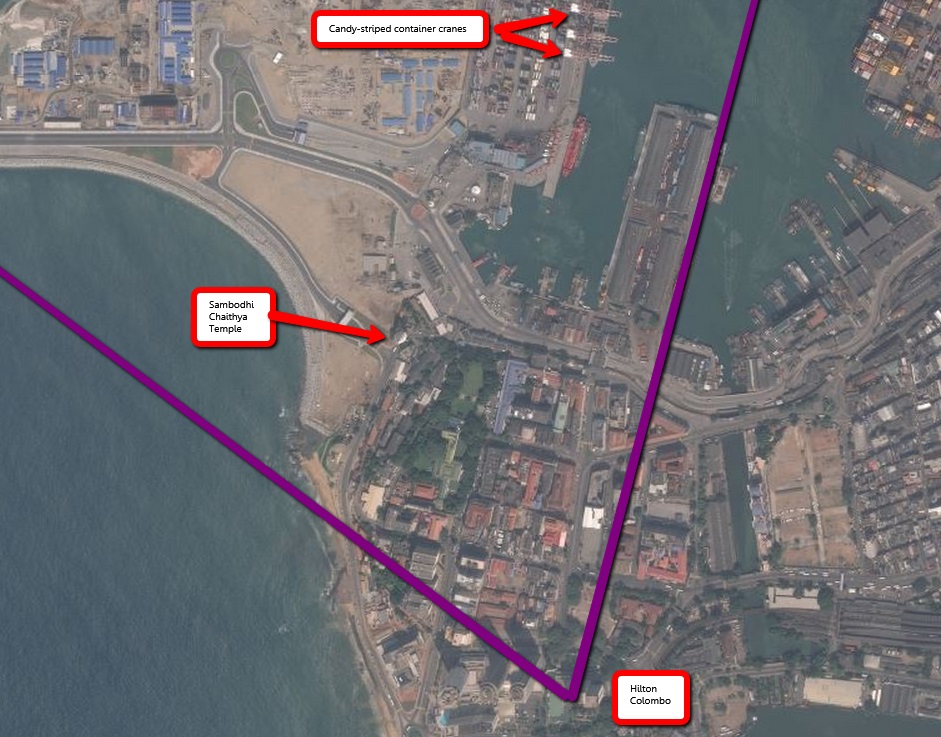
Attached is my attempt to explain: the black lines are the center and outer edges of the picture, with buildings labeled.

Another adds some historical context to the city:

At first glance, this image shows the diversity of South Asia.  A Buddhist temple, a mosque, an Islamic cultural center, colonial era buildings, commerce, and western culture (there’s TGI Fridays in the foreground) all mix together.

Yet the image is also about a rising China. Colombo’s significance as a port city took off under the Portuguese in the early 16th century and continued to be an important trading center through Dutch, British, and independent rule. Today, it is China’s turn to influence trade here. It has invested in a string of ports around the rim of the Indian ocean, including at Gwadar in Pakistan, Chittagong, Lamu in Kenya, and Kyaukpyu in Burma. The contest picture shows Colombo’s South Container Terminal on the left hand side that China invested $500 million to build.  And Colombo may soon be eclipsed by China’s reported $1 billion investment to build a new port on Sri Lanka’s south coast at Hambantota.

A former winner offers a tip for guessing windows:

Boy, you weren’t kidding when you said this week’s contest would be an easy one. Never before have I identified the correct city so quickly!

view-204

A note on methodology: As you can see, I have chosen a window in the middle. Why? Because proximity counts, and being in the middle gives me the highest probability of being close to the actual window in a case like this where I just have to guess. I’m always surprised when people choose windows on the edges, thereby minimizing their chance of being closest. Choosing the middle window this way won me contest #199 :) Thanks for another fun contest!

Many readers seemed to have had a great time this week:

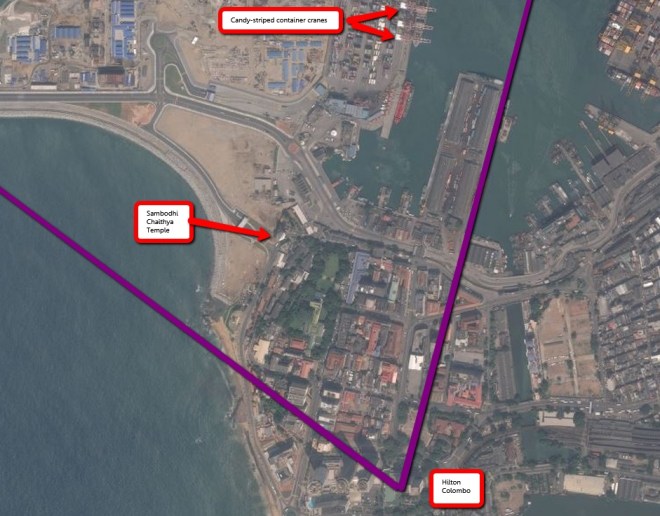
Just about the easiest one so far. It was the candy-striped container cranes in that busy port that gave the game away in just a moment or two spent consulting Google image search: Colombo, Sri Lanka. We’re in the district called Fort, looking north from a low floor in the Hilton Colombo.
Colombo_Sri_Lanka_map

Out of frame to the left might have been seen the twin towers of Sri Lanka’s own World Trade Center; in the background, that intriguing white bell of a temple would have appeared even more intriguing if our photographer’s room had been on a higher floor: it’s the Sambodhi Chaithya, Sambhodi_Chaithya_multia Buddhist temple built high over Chaithya Road, straddling it on arches that are unhinted at in this photo. Between the temple and the Hilton is the small dome of Fort Jumma Mosque. In the foreground to the left, the yellow building lit by all that early morning sun is the Colombo City Hotel, and next door to it, Ta Da! that’s a TGI Fridays in the two-story yellow building with the red-and-white awning … my god they’re everywhere.

A reader who’s been to Colombo:

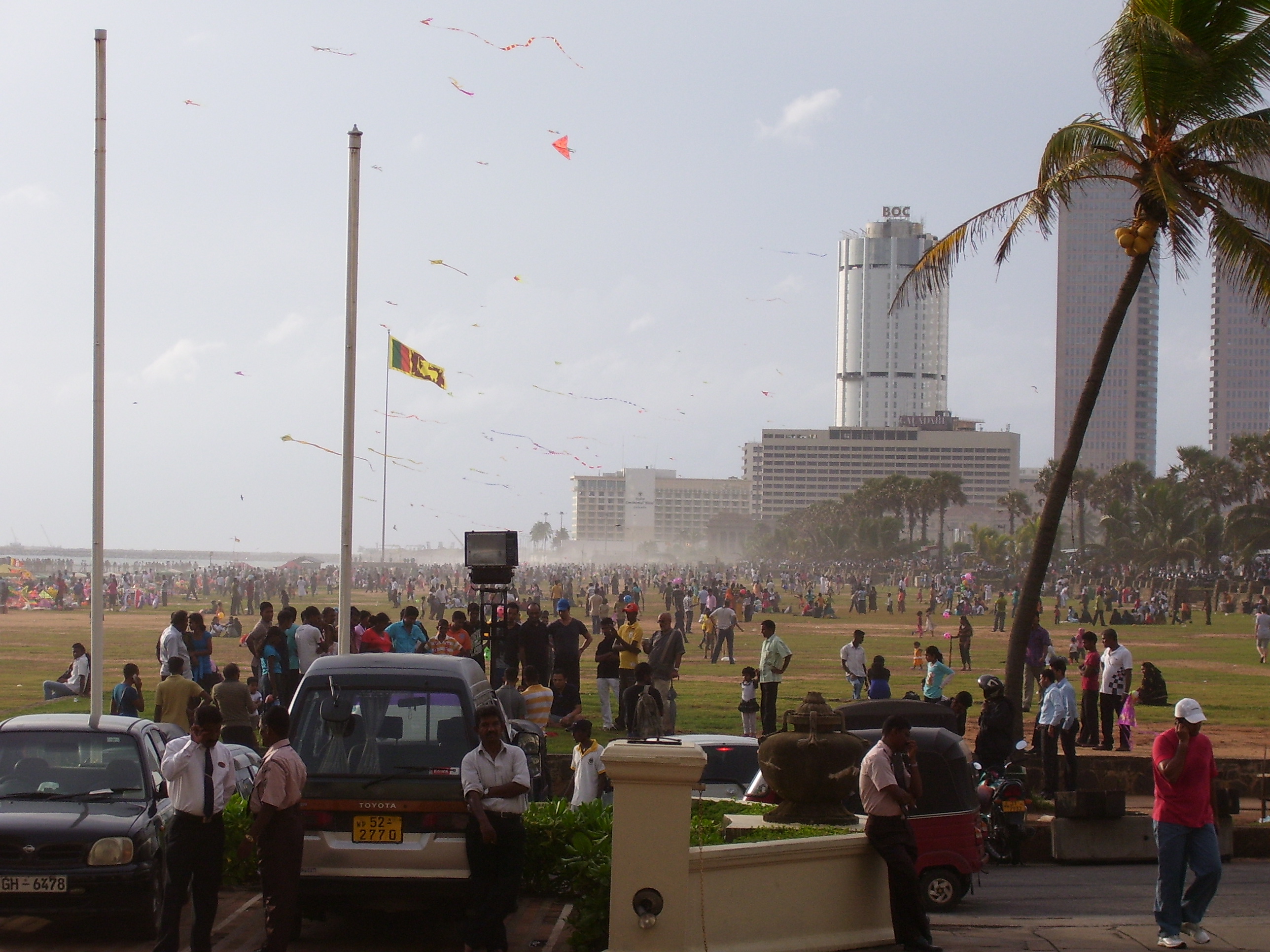
This picture was taken near the Pettah marketplace. The water is the Indian Ocean to the west of the city. The roadway in the middle of the picture goes past a colorful old department store and ends at the Grand Oriental Hotel. The Galle Face Green, a huge park along the shore, is just off the left edge of the picture:
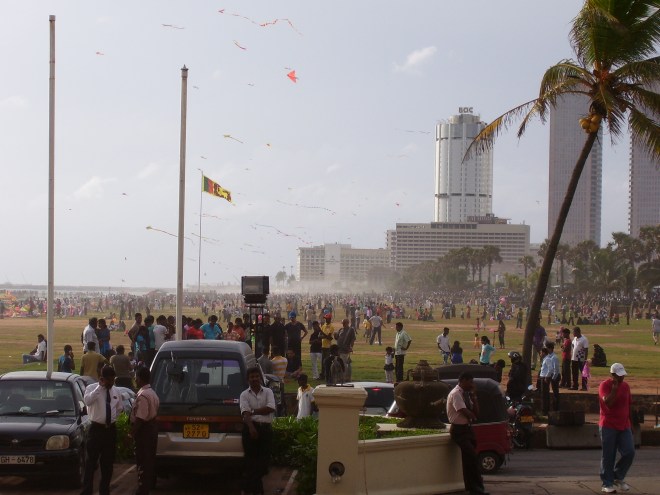
100_0668 Galle Face Green

I’ve been waiting for a long time to see if a picture from Sri Lanka would appear as the view from a reader’s window.

We actually featured Sri Lankan window views before – here, here and here. Another reader:

I’ve been lucky to visit Sri Lanka several times lately – I’m just winding up a three-year assignment in Bangalore, and Colombo is just over an hour’s flight away. It’s a beautiful and very chilled out place to visit, from the jungles, tea-covered mountains and temples inland to the beaches and historical colonial forts on the south coast. Colombo’s fun too, although last time we were there it was Sri Lankan New Year so no alcohol was available anywhere. We struggled through those three days, only to get back to Bangalore where no alcohol was available for another two days due to the Indian elections. In retrospect it was probably good for us.

A real-life contest got this reader a little sauced before playing this week:

Short entry this week as I took to the gin after my son’s little league team (which I coach) lost in extra innings in the playoffs. Father of the year. This week you’re all up in Columbo, Sri Lanka. Specifically at a Hilton on the Fuck That I Already Got My Book floor. Some weeks you just win by being awesome at Google, and I image searched candy-stripe shipping cranes against terms like Middle East and mosque and eventually, pow! Some dude’s travel blog.

Get your shirts ready already, Father’s Day is coming soon.

We are aiming to release merch by then. Last week’s victor swaggers in:

As reigning champ I probably field five queries a day about blurry auto-rickshaws. “Is it black and scarlet?” I’ve learned to interrupt, generally before the second “tuk” of “tuk tuk”. “Cause you know that means Sri Lanka, yeah?”

Guys we are, obviously, looking North-North-West from the Hilton hotel in Colombo, Sri Lanka. Guests at the Hilton can dine at any of a not-too-shabby nine (9) specialty restaurants, including the (Asian-themed?) Emperor’s Wok, then belt out some oldies in the Stella Karaoke lounge and repair tired-but-happy to their air-conditioned suite from which, if it’s Room 1714 – and I believe that is the case here – they can look out at what my research informs me is a body of water, some red cranes, and a weird white dome.

No, the only challenge here was getting a shot of the hotel’s rarely photographed north side, but thanks to my friends (and future sponsors??) at Travel-Images.com, I finally found one:

colomboVFYW

I shall see you again next week.

Wrong on the room and floor number though. Incredibly, even with more than 90 correct guesses this week, only one player got the right floor of the Hilton. Less incredible? It was Chini:

Last week’s view took ’til Monday night to track down; this one took fewer than ten minutes. So it was a weekend off. This week’s view comes from Colombo, Sri Lanka and looks north by northwest along a heading of 340.75 degrees. The picture was taken from a room on the 13th floor of the Colombo Hilton, at approximately 6:27 a.m. (local time) on the morning of April 7th, 2014:
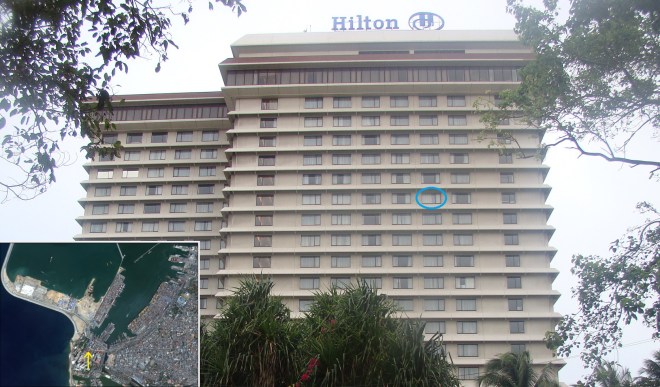
Chini-204-composite

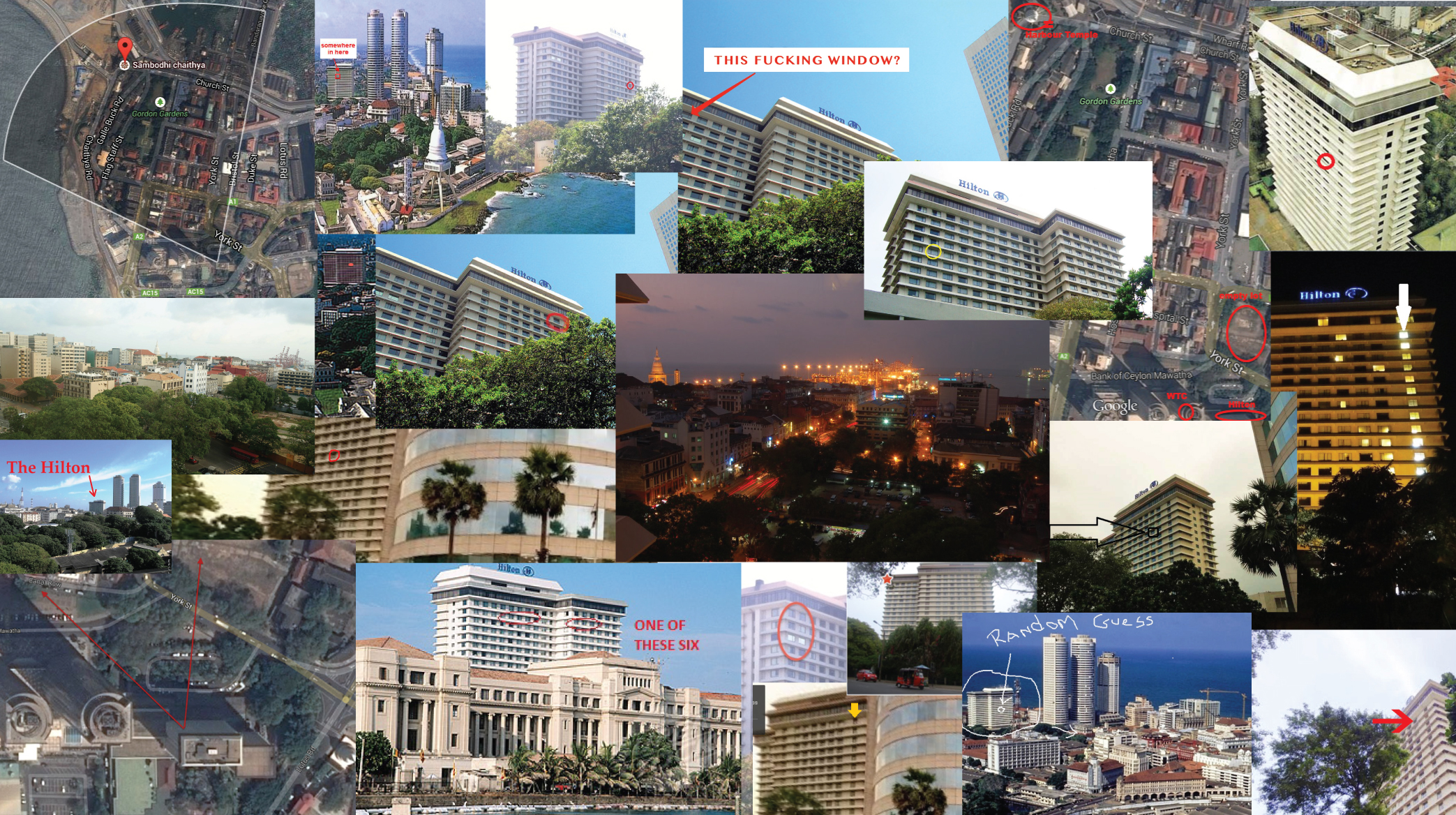
Per the view’s submitter, the actual room number was 1322. Here is a collage of many of this week’s guesses:
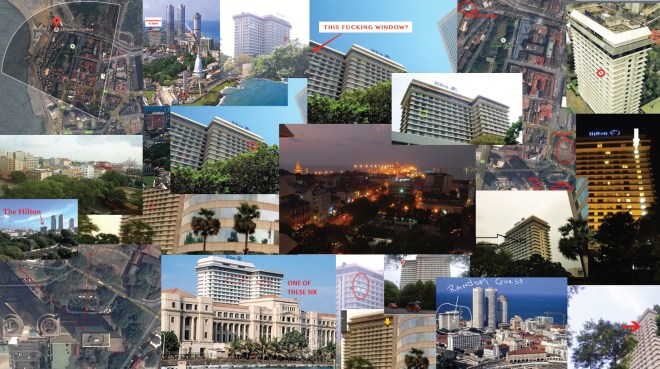
vfywc-guess-collage-204

Our winner this week is a longtime player with the best overall guessing record among the several readers who guessed either the 12th or 14th floor:

Wow… you sure un-dropped the hammer on this one. Googling “stupa port” for images returned four images of a guy wearing a yellow shirt selling something followed by this image [to the right]. Bingo!

This week’s view is of the Fort Colombo District and port of Fort Colombo, Sri Lanka. It was stupataken from the Hilton Colombo hotel, a tall rectangular blight on the otherwise stately Colombo skyline (otherwise, I’m sure the hotel is lovely). It was taken from the north side of the building, near the western end, and a bit more than halfway up. I’ll take a stab at a guess of the 12th floor.
(Archive: Text|Gallery)

The Know Nothing Party

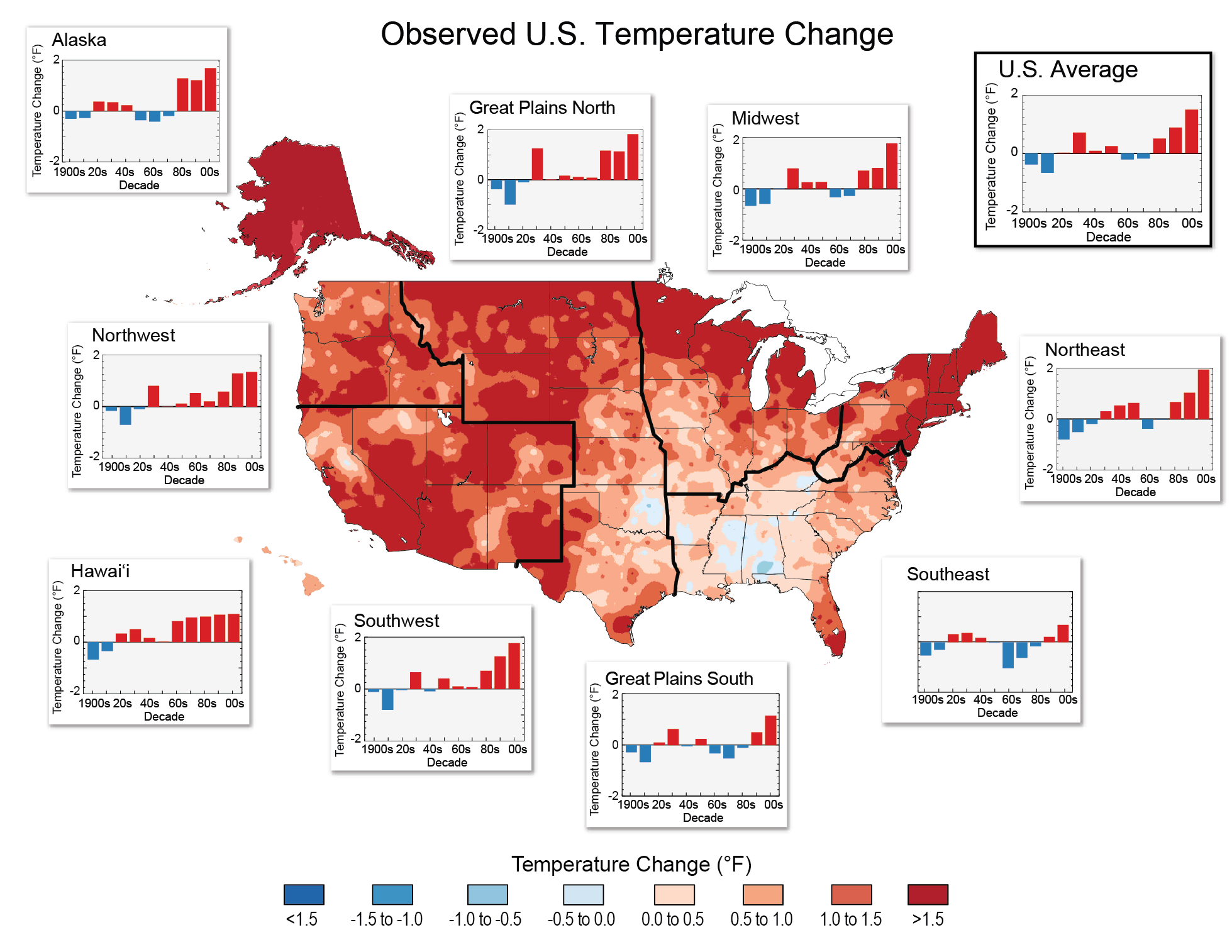
White House Climate Maps

It’s not just Rubio who rejects climate science. Waldman looks at where all the major Republican presidential contenders stand on global warming:

Last time around, almost all the 2012 candidates had embarrassing flirtations with climate realism in their pasts. Just a few years prior, the common Republican position had been that 1) climate change is occurring, and 2) the best way to deal with it is not through heavy-handed government regulation, but by harnessing the power of free markets in a “cap and trade” system, which worked so well to reduce acid rain. Mitt Romney, Newt Gingrich, Tim Pawlenty, and John Huntsman had all previously endorsed cap and trade.

But the current crop of potential nominees have purer records when it comes to climate denialism.

His bottom line is that only “one of the potential contenders (Chris Christie) seems willing to say that human activity is a significant cause of climate change.” MacGillis tackles Rubio for declining to “speak out against something that is not only threatening a home-state industry but the actual state itself“:

This would seem like something the voters of Florida might want to take note of when they encounter Rubio on the ballot in 2016—whether for reelection as a senator or as a presidential candidate. It’s hard for elected officials in Washington to show their regard for their constituents in this post-earmark era of ours, but one of the minimal requirements would seem to be making even rhetorical feints toward worrying about the permanent flooding of said constituents’ largest cities.

Good luck with that. Rubio needs to get the Christianist vote, and I’m not sure they’d be too upset if Miami Beach sank beneath the waves. Brian Merchant highlights places likely to get flooded:

99.5 percent of the population of Louisiana, as if they haven’t suffered enough, will again find themselves underwater when the seas rise 10 feet. Thirty percent of all of the homes in Florida will be submerged; that’s 5.6 million people. [Fort] Lauderdale, for one, will be nearly below the waves. Only 9 percent of New York City will have to relocate in the face of rising tides, but then, that means 700,000 people will have to find new homes—twice as many as New Orleans.

Even if you don’t live at or near sea level in one of those vulnerable areas, the crisis the rise will bring will impact you too; it will either cost heady sums to shore up the flood-walls and prepare the dikes, or chaos and misfortune will reign when a disaster—a hurricane, for instance—hits. Either way, rising seas are a hugely destabilizing force.

Like A Gay Sonic Boom, Ctd

A couple of thoughts: yes, the double standards are not subtle; but no, it isn’t crazy that some people reacted to the black-white gay smooch with a little discomfort or even recoil. Even Comrade Stern is able to distinguish between a member of the KKK and someone who just goes “eww” when seeing something he doesn’t usually see and that involves tongues and tonsils and dudes. Not everyone, it appears, who still has that Al-Tipper moment in our scarred subconscious is a raging bigot. For this staggering act of empathy for the otherwise hate-filled masses, we thank Mr Stern. And let me heartily endorse his basic advice: go kiss on the mountain, fellas.

Yes, you can overdo it. When I was flush with out-of-the-closet freshness in my early twenties, I’d occasionally take a date or fling down to the Washington Monument. There was usually a line to get in, full of regular folks, and it made for a perfect audience. So – and yes, I know it’s obnoxious in retrospect – but we’d hang out affectionately and occasionally make out. It wasn’t a kiss-in. But it was a very early 1990s fusion of politics and sex. Friends of mine told me I’d get beaten up – but I figured that wasn’t going to happen smack dab on the Mall. And anyway, fuck it. I’ve obviously long since moved on, but I wonder, looking back, if somebody’s glimpse of us in their peripheral vision may have shifted someone’s perspective on the world just a little. A little discretion goes a long way, but it seems to me vital we do not censor ourselves for fear of reaction or propriety. If people are going to understand us, they have to see us as we are. Even if, as Vito and Michael revealed, it is in a moment of unrestrained joy. Perhaps especially then.