The Best Of The Dish Today

Lexington 2

The story of how Mitt Romney helped Barack Obama is now no longer restricted to his terrible 2012 campaign and tone-deaf rhetoric. It also includes Romneycare – the state model for the federal ACA. And a new study on the impact of that reform on mortality is one that deserves to be taken seriously:

The study tallied deaths in Massachusetts from 2001 to 2010 and found that the mortality rate — the number of deaths per 100,000 people — fell by about 3 percent in the four years after the law went into effect. The decline was steepest in counties with the highest proportions of poor and previously uninsured people. In contrast, the mortality rate in a control group of counties similar to Massachusetts in other states was largely unchanged. A national 3 percent decline in mortality among adults under 65 would mean about 17,000 fewer deaths a year.

It’s not the most efficient way to reduce mortality. Harold Pollack argues that “some other interventions such as targeted prenatal care interventions to poor women or evidence-based therapies to help people quit smoking are probably more cost-effective.” But it’s real and suggests a bigger impact on the quality of people’s health than was suggested in the recent Oregon study (and one of the authors was involved in both). Jon Cohn writes it up here; Adrianna McIntyre here. Money quote from McIntyre:

If you think the study’s primary findings are impressive, consider their implications: “mortality amenable to health care” does not just magically decline. If fewer people are dying, that is almost certainly because diseases are being better treated, managed, or prevented—because of improved health. It’s hard to come by data on objective measures of health at the state level, but the “improved health” story is consistent with other findings in the paper: individuals had better self-reported health, were more likely to have a usual source of care, received more preventive services, and had fewer cost-related delays in care.

Since I spent part of today at the doctor’s and at a radiology center, and was using my Obamacare insurance, it was hard not to reflect on this. (I’m on the mend.) I don’t have an ideological position on healthcare – I can see the great benefits of the American private sector, but also its staggering inefficiencies – but I do hold as a pretty core belief that healthcare is not like other goods. It is the condition that allows us to enjoy all other President Obama Visits Boston To Talk About Health Caregoods. And we live in a golden age of medicine, in which my chronic HIV, a death sentence when I was diagnosed, can now be managed, my chronic asthma treated, and my apnea kept at bay. I seriously believe that a wealthy society that allows people to be sick and not have access to care is a disgrace to humanity. And so I believe that the ACA’s signal achievement already in reducing the numbers of the uninsured is a crucial step in the right direction.

Politically, this leads me to a simple conclusion. The GOP offers nothing that can achieve anything like this. They are content that working Americans have to suffer sickness on a regular basis, without care and with health problems metastasizing until they are both far more expensive and far more intractable. They have lied, distorted and confused millions with their propaganda on this. And it should sicken anyone. So, yes, at this point there is a moral difference here between the two parties – a glaring moral difference. And of all this president’s considerable achievements over the last six years, this one we will remember for decades to come. You want to call me an Obama sap for that? Make my fucking day.

Four posts worth revisiting: the rise of a new/old Russophile Germany; how to persuade creationists that global warming is real; a new paradigm in sponsored content (a documentary/advertisement – an adumentary?); and some dogs to make you happy!

The most popular post of the day was my latest takedown of Peggy Noonan’s mindless drivel, followed by the podcast with Hitch on Deep Dish (subscribe for full access!). I’ve been really moved by some of your reflections on that. One reader reaction:

This is me screaming like a prepubescent fagboy.

Another:

There are two voices in my head, vis–à–vis religion. One speaks through a manly beard, in tones decidedly not gay-sounding, but pleasantly transatlantic. The other is whisky-cured, and occasionally has a fire beneath it that would not, I sometimes think, sound out of place in the mouth of John the Baptist, or any of the old-school prophets (it’s funny Hitch railed so against tongues of flame, as he had one himself.)

One more:

There is a great hole in the universe where Hitch used to be and I’m very grateful for you and other intelligent, thoughtful, and talented souls (pardon the expression, Christopher) who continue to celebrate him.

I miss him as much as you do. Can you imagine him on Putin? I think he’d probably be in Donetsk as we speak, scribbling and drinking and finding new comrades through the night.

See you in the morning.

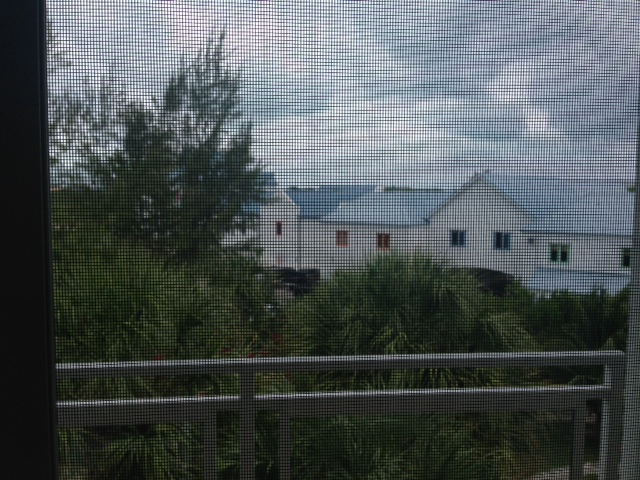
(Window view: Lexington, Massachusetts, 8.54 am.)
Women Like Manly Men. Period.

Amanda Hess flags new research debunking the idea that straight women’s preferences in male companions fluctuate with their menstrual cycles:

Last month, psychologists at the University of Southern California published a meta-analysis of 58 research experiments that tested whether a woman’s preferences for masculinity, dominance, symmetry, health, kindness, and testosterone levels in her male romantic partners actually fluctuate across her menstrual cycle. The answer: They do not.

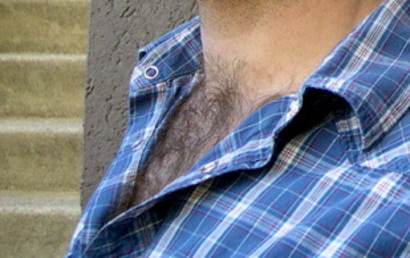
hairytriangle.jpgThe analysis, published in the appropriately titled journal Emotion Review, looked at studies that used a variety of sociological tools to examine women’s preferences for a host of masculine cues, such as a man’s gait, body hair, chin length, facial symmetry, or social interactivity, all through the prism of their menstrual cycles. They looked at studies that were focused on testing women’s preferences in short-term relationships (like one-night stands) and long-term commitments (like marriages), and at studies that didn’t specify a relationship type at all. They included experiments that charted a woman’s menstrual cycle and fertility using hormonal tests and self-reports, ones that included women on hormonal contraception, and those that did not. All in all, they found that both fertile and nonfertile women preferred men who were more masculine, dominant, symmetric, and healthy; that those preferences remained relatively constant across their menstrual cycles; and that they applied to women’s feelings about both short-term and long-term relationships. Meanwhile, women who were at the nonfertile stage of their cycles—where they experience similar hormones to pregnant women—didn’t suddenly prefer kinder, gentler men.

And people think the steroid craze will diminish. Not when there’s sex to be had and partners to be won.

Anticipating The End

Jenny Diski, age 66, pens a thoughtful essay about growing old:

[One] definitive non-sexual way of knowing you’re old is the moment when your doctor tells you that ‘you’ll have to learn to live with it,’ or that whatever ails or pains you is ‘the result of wear and tear’. You wait for the suggestion of a procedure, the next appointment, and then realise that you aren’t going to be considered for it. You see a virtual shrug that says you are no longer young enough for a resource-strapped institution to be overly concerned with getting you back to full health. There are higher priorities, and they are higher because the patients are younger.

It comes to you that whatever ailment you’ve got at this point is decay inflected by decay, in one form or another, and, to people who aren’t you, only to be expected. It is, to put it simply, which they won’t, a recognition of the beginnings of the approach of death. … None of the gung-ho books on ageing has more than a brief mention of the proximity of death as one of the symptoms of old age to be dealt with. ‘Acceptance’, they say, without much elaboration, and then move rapidly on. Even if it won’t kill you imminently, the degeneration of the body will alter and limit how you can live, whether you can get out, continue to work and travel. I can’t think of anything about the reality of ageing which improves a person’s life. The wisdom people speak of that is supposed to come to us in old age seems to be in much shorter supply than I imagined, and apart from that, it’s a matter of how self-deceptively, or stoically, you are able or prepared to put up with the depletions, dependency and indignities of getting old.

Whale Watching

Last week, Svati Kirsten Narula covered the Internet’s infatuation with a dead whale:

A dead blue whale washed up on the shore of a small fishing town in Newfoundland last week. A bloated, beached, blubbery bomb of a blue whale. As of 3:30 pm Eastern Time [April 30th], the carcass is still intact, but onlookers are worried that it might soon explode. Literally.

The concerned marine science communicators at Upwell and Southern Fried Science have created a website devoted to monitoring this situation:

HasTheWhaleExplodedYet.com. I kid you not.

Ian Crouch reviews the history of exploding whales:

The idea of spontaneous combustion is certainly compelling, but the truth of the matter is that history’s famous exploding whales had a little help from humans.

A whale blew up last year in the Faroe Islands, but only after a seam had been cut by a researcher, who just managed to dodge the gooey shrapnel. Another whale, which showered the streets of the Tawainese city of Tainan in a mess of innards in 2004, was being transported on the back of a truck when it burst. And the most famous exploding whale in history went sky-high thanks to some inventive, if ill-considered, meddling. In 1970, members of the Oregon Highway Division rigged up a dead beached whale with dynamite in an attempt to obliterate it. But it turned out that they were low on firepower, and so, rather than blasting the body into tiny bits of seagull food, they instead sprayed huge chunks of whale over a crowd of people across a wide radius. Thankfully, there was a television crew on hand to capture the full arc of the scene—from hopeful preparation to grim postmortem. Onlookers fled the dunes. An Oldsmobile was flattened. Nobody died.

The Whiteness Of Writing Workshops

Two decades ago, when Junot Diaz arrived at Cornell to pursue his MFA in creative writing, he confronted “the standard problem of MFA programs”: “That shit was too white.” He notes that, in his experience, not much has changed:

It’s been twenty years since my workshop days and yet from what I gather a lot of shit remains more or less the same. I’ve worked in two MFA programs and visited at least 30 others and the signs are all there. The lack of diversity of the faculty. Many of the students’ lack of awareness of the lens of race, the vast silence on these matters in many workshop. I can’t tell you how often students of color seek me out during my visits or approach me after readings in order to share with me the racist nonsense they’re facing in their programs, from both their peers and their professors. In the last 17 years I must have had at least three hundred of these conversations, minimum. I remember one young MFA’r describing how a fellow writer (white) went through his story and erased all the ‘big’ words because, said the peer, that’s not the way ‘Spanish’ people talk. This white peer, of course, had never lived in Latin America or Spain or in any US Latino community—he just knew. The workshop professor never corrected or even questioned said peer either. Just let the idiocy ride.

Another young sister told me that in the entire two years of her workshop the only time people of color showed up in her white peer’s stories was when crime or drugs were somehow involved. And when she tried to bring up the issue in class, tried to suggest readings that might illuminate the madness, her peers shut her down, saying Our workshop is about writing, not political correctness. As always race was the student of color’s problem, not the white class’s. Many of the writers I’ve talked to often finish up by telling me they’re considering quitting their programs. Of course I tell them not to. If you can, please hang in there. We need your work. Desperately.

Eric Nelson sees a diversity deficit in publishing, too:

I have frequently presented books as an editor to a room full of only white people. And even from the sixteen books I’ve sold in the past twelve months, less than a third were by women, and only two were by non-white writers. The lack of diversity really is that bad.

But he also finds cause for hope:

[T]oday the market is already demanding a wider variety of books, and with the rise of electronic publishing, self-publishing, and so many websites that provide traffic and social media metrics, it’s harder than ever to ignore what the market is saying. … [I]t only makes sense for so long to promote exclusively books by and about white men, when clearly there is a huge appetite for a much wider range of material. My point, ultimately, is that—in publishing, at least—the camp for diversity and the market are now pulling in the same direction.

And what will be the argument when, sans gate-keepers, the diversity problem remains? Another definition of racism?

Benjamin Franklin, Poet

Ben Franklin

Daniel Bosch unearths an epitaph Benjamin Franklin wrote for himself when he was 22 years old:

The Body of B. Franklin,
Printer;
Like the Cover of an old Book,
Its Contents torn out,
And Stript of its Lettering and Gilding,
Lies here, Food for Worms.
But the Work shall not be wholly lost:
For it will, as he believ’d, appear once more,
In a new & more perfect Edition,
Corrected and Amended
By the Author.
He was born Jan. 6. 1706.
Died 17

Bosch goes on to comment:

An epitaph typically reinforces values we look for in strong poems: gravity, brevity, levity, and the authority of the speaker’s experience, granted in epitaph’s special case by his death. Franklin is ahead of himself in his rock-solid grasp of these conventions. …

Franklin’s handling of his epitaph, which is of no use till God knows when, gives us a sharper likeness of him than the hundred-dollar bill. He offers us a concrete figure for his Christian faith, a book; yet he conveys a sense that his firmest faith is vested not in what the Good Book says, but what his forthcoming Autobiography will tell us. Whatever rewriting his soul will suffer, Franklin anticipates that he will be revised—corrected, and amended, and even gilded—on this side of the grave, while there is still time for him to enjoy his being issued in a second edition.

(Photo by Jason Langheine)

An Encomium For The Sesquipedalian

Seth Stevenson stands up for using words we don’t quite know the meanings of or how to pronounce:

We’ve all experienced moments in which we brush up against the ceilings of our personal lexicons. I call it “bubble vocabulary.” Words on the edge of your ken, whose definitions or pronunciations turn out to be just out of grasp as you reach for them. The words you basically know but, hmmm, on second thought, maybe haven’t yet mastered? …

Excessive abashment when our vocab goes wrong is, in my view, counterproductive. It has a chilling effect. We become reluctant to reach for the verbal brass ring the next time an opportunity comes along. And that is a loss to us all. Juicy vocabulary words are a hoot. They are one of the great pleasures of conversation. They are to be applauded and savored. We shouldn’t hesitate to draw them from our quivers, even if we may occasionally miss our targets.

I remember all too-vividly a moment from my tender youth when I used the word “spurious” to mean something that would make me spew. I’m not sure I’ve yet recovered from the experience. And I’m not sure whether that wasn’t a good thing.

Only A Fraction Of College Men Are Rapists, Ctd

A reader writes:

Your reader’s shock about the study that found 6 percent of college men had attempted or successfully raped might be lessened if he looked at the study’s methodology. The study defines a man as a rapist if he answers yes to one of four questions:

1) Have you ever been in a situation where you tried but for various reasons did not succeed in having sexual intercourse with an adult by using or threatening to use physical force (twisting their arm, holding them down, etc.) if they did not cooperate?

2) Have you ever had sexual intercourse with someone, even though they did not want to, because they were too intoxicated (on alcohol or drugs) to resist your sexual advances (e.g., removing their clothes)?

3) Have you ever had sexual intercourse with an adult when they didn’t want to because you used or threatened to use physical force (twisting their arm, holding them down, etc.) if they did not cooperate?

4) Have you ever had oral sex with an adult when they didn’t want to because you used or threatened to use physical force (twisting their arm, holding them down, etc.) if they did not cooperate?

The first, third, and fourth options would be probably be considered rape or attempted rape by most people, but the second is much less clear. Obviously, having sex with someone who is drunk to the point of unconsciousness is rape, but the phrasing of the second option casts a much broader net.

It seems that a drunken hookup where one participant expressed regret after the fact would qualify even if he or she appeared to be consent at the time. I’m not trying to blame the victims of rape; I am simply pointing out that determining consent in the presence of intoxication is difficult, and broadly defining sex while intoxicated as rape would likely over count substantially given how linked sex and alcohol tend to be in a college environment.

The paper shows that question two is where the vast majority of the tallied rapes come from: 80.8 percent of the 120 who answered “yes” to any of the four questions answered “yes” to question two, compared with only 17.5 percent for question one, 9.2 percent for question three, and 10 percent for question four. If you exclude question two, you end up with somewhere between 1 and 1.5 percent of respondents being rapists. This is still a high number, to be sure, but nowhere near the 6 percent your reader was so concerned about.

Lots of readers were concerned that the study “broadly defined sex while intoxicated as rape,” which might be the case if question two didn’t specify that the intoxicated person did not want to have sex. Still, it’s worth noting violent rape, at least, is relatively rare. Another writes that “Marcotte’s piece was actually more brave than you give it credit for”:

In the past few years, there’s been a consistent, concerted effort to reorient the discussion about sexual assault towards blaming the perpetrators (which, in many cases, are “men” as a class) and not the victims (“women”).

A good portion of this is because, per feminist theory, “men” are the oppressor class and “women” are the oppressed class. Therefore, because most rapists are men and too many women get raped, we can safely use “men” as a shorthand for “the rapey class of people.” From my angle, I’ve long believed that making “men” and “rapists” semi-coterminous is seriously bad for young men’s mental health, especially as they’re coming to discover what “man” and “masculinity” are in high school and college. It reinforces all the worst, most negative, most damaging stereotypes about how they should see themselves: they’re violent, scary, and unambiguously threatening.

Marcotte may seem to be stating the obvious when she says that “men” don’t rape, but look at what happened when RAINN, among other mild statements, suggested that the over-focus on men as perpetrators “has led to an inclination to focus on particular segments of the student population (e.g., athletes), particular aspects of campus culture (e.g., the Greek system), or traits that are common in many millions of law-abiding Americans (e.g., “masculinity”), rather than on the subpopulation at fault: those who choose to commit rape.” They got massacred by the gendersphere.

So unfortunately, even though (as RAINN’s report states) only 3 percent of college men are responsible for more than 90 percent of rapes, any discussion about rape is almost universally framed as “men vs women” instead of “normal people vs the minority of sociopathic people who commit rape.”

Amanda Marcotte – as popular a feminist blogger as any – is quite familiar with all this background, and she chose to poke holes in the conversation anyway. That takes guts.

Recent Dish on campus rape here, here, and here.