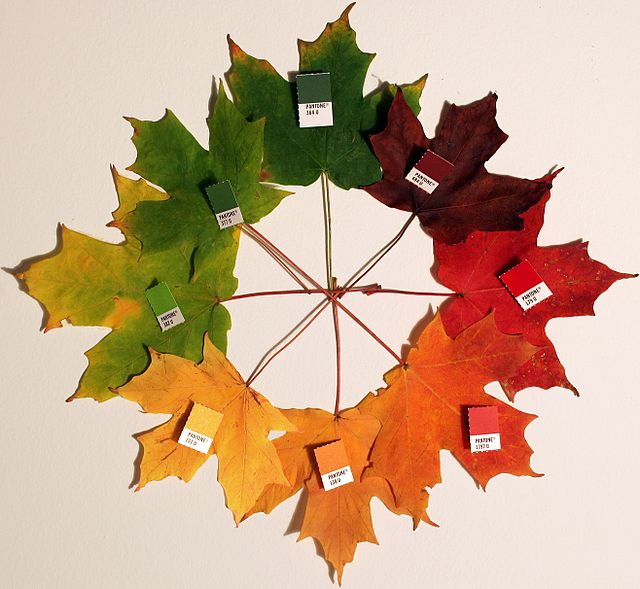
Daniel Lewis, author of a biography of the Smithsonian’s first curator of birds, considers the importance of color dictionaries in the history of science:
Shy, retiring, and nerdy in the extreme, [ornithologist Robert Ridgway] was an astonishingly talented identifier and user of colors. This gift was key in a field where distinguishing among subspecies of birds with slight color variations was essential to understanding the mechanisms of evolution, speciation, and other scientific aspects of the natural world.
Ridgway wrote a short color dictionary in 1886, just as he finished work on a groundbreaking set of rules and guidelines for naming birds. He worked quietly on his color project for decades, until 1912, when he self-published a work with 1,115 named colors: Color Standards and Color Nomenclature. The book is filled with color swatches with names like Dragon’s-blood Red, which makes me think of blood dripping from a sword; or Light Paris Green, which seems like a holiday. …
These color dictionaries have a deep, personal, and complicated history – even though they emerged from a strong desire to quantify the world, as taxonomic publications tried to do in the 19th and early 20th centuries. Colors are slippery, and they say something about the personal prejudices and interests of the namers, at least as much as they speak to the qualities of colors themselves. We don’t use them anymore because in book form they would be impossibly unwieldy: There are now more named colors than you can shake a dragon at – far more than would fit into a single volume. But Ridgway’s legacy lives on – his book evolved into the Pantone color chart relied upon by graphic designers, house paint creators, interior designers, fashion mavens, flag makers, and anyone looking to identify colors.
(Image: “Pantone Autumn” by Chris Glass)
 The Dish