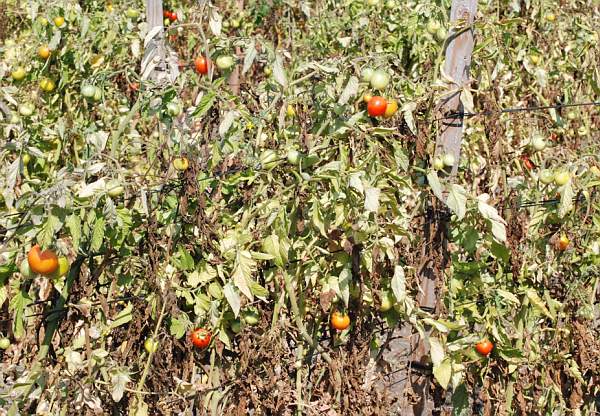
Eric Holthaus observes that “dry farming” is coming back into fashion in California:
The dry-farming method has long been practiced successfully in Mediterranean climates with a long dry season like California’s – basically, dry farmers forgo the extra fertilizer, water, and other inputs that maximize yields. Advocates say its water starvation diet produces sweeter and more flavorful tomatoes, apples, and other fruit. Some of the best wines ever produced in Napa Valley were dry farmed.
But there’s a significant downside. Though his heirloom apples make a cider that “brings to mind Lambic beer,” according to the San Francisco Chronicle, [dry farmer Stan] Devoto says “people have to be willing to pay a little bit more for them.” Dry farmers like Devoto are trading quantity for quality.
Devoto concedes that’s one of many reasons dry farming won’t have the potential to overthrow conventional agriculture. The lower water usage means there’s a significant yield tradeoff: His dry-farmed apples average 12 to 14 tons per acre, less than half the 20 to 40 tons per acre irrigated apple crops typically get.
(Photo: Dry-farmed tomatoes at California’s Dirty Girl Farm. By Flickr users CUESA)
 The Dish