As summer-camp season approaches, Alyson Krueger reports from Eden Village, a Jewish organic farming program that has a “no-body-talk” rule for kids:
“The specific rule is while at camp, we take a break from mentioning physical appearance, including clothing,” said Vivian Stadlin, who founded the camp six years ago with her husband, Yoni Stadlin. “And it’s about myself or others, be it negative, neutral or even positive.”
On Friday afternoon, when the campers, girls and boys from 8 to 17, are dressed in white and especially polished for the Sabbath, they refrain from complimenting one another’s appearances. Rather, they say, “Your soul shines” or “I feel so happy to be around you” or “Your smile lights up the world,” Ms. Stadlin said. Signs posted on the mirrors in the bathroom read, “Don’t check your appearance, check your soul.”
Marcotte is wary:
It sounds wonderful on paper to live in “this wonderful, utopian kind of place where you’re not judged on anything except your spirit,” as one parent described Eden Village. But in the real world, there are plenty of legitimate reasons to include the body as part of your overall judgment of a person, such as when you are picking people to be on your tug-of-war team or auditioning potential sex partners. Doing things like covering up mirrors, which one camp does, treads a little too far in the direction of treating the body like it’s a source of shame instead of helping campers embrace their bodies for what they are and what they can do for them.
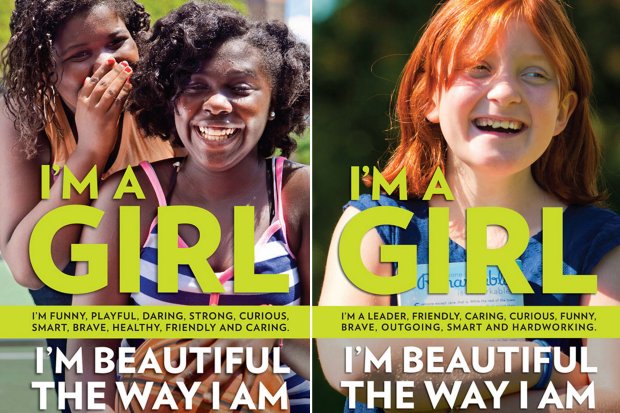
She offered similar criticism of a New York City ad campaign last year featuring the slogan “I’m a girl; I’m beautiful the way I am”:
No doubt it satisfies adults to pat little girls on the head and tell them they’re perfect and beautiful just the way they are, but kids often have better BS detectors than adults give them credit for. A handful of slogans on local ads will not change the fact that, in the real world, girls and women do suffer relentless judgment about their looks and are, whether they like it or not, frequently treated as if how they look matters more than anything else about them. For kids already picking up on this grim reality, having adults tell them that they’re perfect just the way they are has a strong chance of being read like yet another bit of adult wishful thinking.
Katy Waldman also criticized the campaign:
[W]hat’s with the slogan? As Kat Stoeffel at the Cut notes, “There’s something slightly contradictory about the NYC Girls Project message—‘Don’t worry about how you look. You look beautiful!’ ” Isn’t the point of the program to encourage girls to disassociate their sense of worth from their physical appearance? Why couldn’t the slogan simply be, “I’m Awesome the Way I Am?”
 The Dish