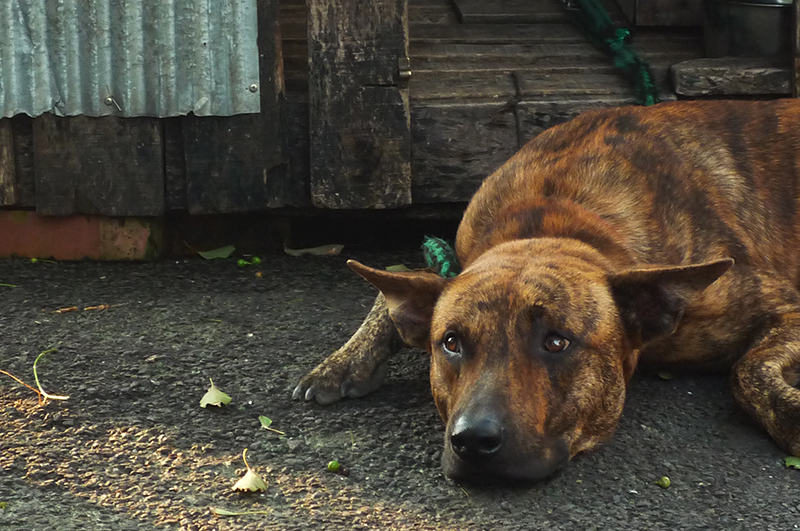
In a moving essay about her dog Oliver, who suffered from extreme anxiety and exhibited a number of strange, almost neurotic behaviors, Laurel Braitman considers the question of whether animals, like humans, can suffer from mental illness. One adherent to that view was William Lauder Lindsay, a 19th century Scottish physician and natural historian:
Lindsay is intriguing because, despite working as the medical officer at another British insane asylum, he didn’t limit his studies to crazy humans acting like animals. He also refused to see animals themselves as dumb beasts. Instead Lindsay believed that animals themselves could go insane. He was even convinced that some human lunatics were more mentally degenerate than sane dogs or horses.
In Mind in Disease, a sort of Victorian mental illness field guide, Lindsay posited many forms of animal insanity, from dementia and nymphomania to delusions and melancholia. Lindsay was also convinced that animals exhibited what he called “wounded feelings” of many kinds, and he tells story after story on the subject. There was a mother stork who “let herself” be burned alive rather than desert her young and a Newfoundland dog who was so sad after being scolded, then ceremoniously beaten with a handkerchief, and finally having a door shut in his face when about to leave the room with the nurse and the family children (his usual companions) that he “tried twice to drown himself in a ditch but survived … only to stop eating.” He died soon thereafter.
(Photo by Ink Hong)
 The Dish