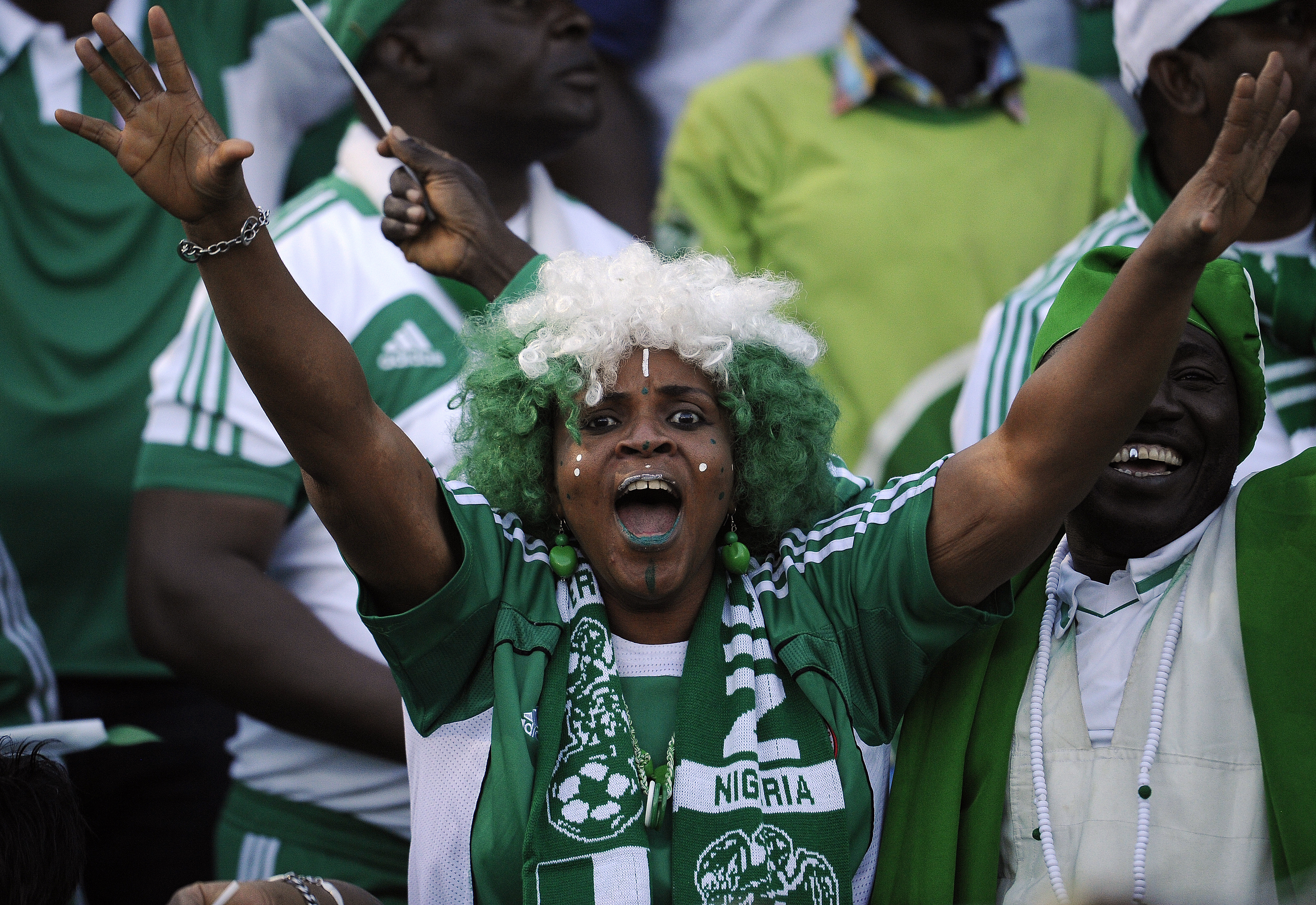
… to win the World Cup. Dean Karlan offers a logical reason why you should too:
The basic principle is simple, drawn from utilitarian principles: Root for the outcome that will produce the largest aggregate increase in happiness. So I came up with a simple index, calculated by a country’s passion for soccer multiplied by its average level of poverty multiplied by its population. It’s perhaps a bit crude, simply to multiply these factors by each other, but the exercise highlights some important truths about the world. …
So which country comes out on top of our utilitarian ranking? Nigeria, which advanced out of group play Wednesday. Nigeria finishes fourth in our passion ranking, and is one of the poorest countries in the tournament. Separating it from the rest of the African countries in the World Cup is its huge population — 174 million people. Simply put, the Nigerians have a lot of very passionate, low-income people who are ready to celebrate Nigerian success. Nigeria finishes with a far higher score than any other country.
Another reason to stand in solidarity with Nigerian soccer fans is the threat of terrorism they face when they get together to watch a match:
The World Cup opened in Brazil on Thursday, June 12; on June 17, a suicide bomber set off an explosion in Nigeria’s northern Yobe state capital Damaturu. At least twenty-one people who had gathered around a public screen to watch the Brazil vs. Mexico match died. The bomber is suspected to be a Boko Haram member, though no one has yet claimed responsibility. Public viewing centers, which are popular venues to watch soccer, are currently banned in Yobe state precisely because of the potential for such an attack. There are conflicting accounts about whether those killed were at a clandestine viewing center or if they had simply gathered around a communal screen.
Still, even Boko Haram can’t scare the fans away:
A fan, Tijjani Dauda, said he prefers viewing centers to watch soccer games because being with other fans brings drama to the exercise. “Football is a spectator sport,” he told Quartz. “It is not a family sport to be watched by husband, wife and their children. If we are far from the field of play, viewing centers are adequate replacements. That is why we call them ‘local stadia.’ People bring color to the games and spontaneous analysts are a delight at the centers.”
That is perhaps why Boko Haram’s campaign of terror has not stopped the Nigerians flocking to the centers. If the group decided to attack another centre, it would have a wealth to choose from. But this is one campaign terrorists are unlikely to win because of the deep seated love Nigerians hold for soccer. “The attack has not affected the following of the World Cup in Nigeria,” Ibrahim said, although he concedes that “it will, maybe, have some effect in the states where governments have banned TV viewing centers due to fears over Boko Haram attack.” But the Nigerian soccer fan is too involved to be held back by this.
(Photo: A Nigerian fan celebrates her team’s victory over Ethiopia after a 2014 World Cup qualifying match in Addis Ababa on on October 13, 2013. By Simon Maina/AFP/Getty Images)
 The Dish