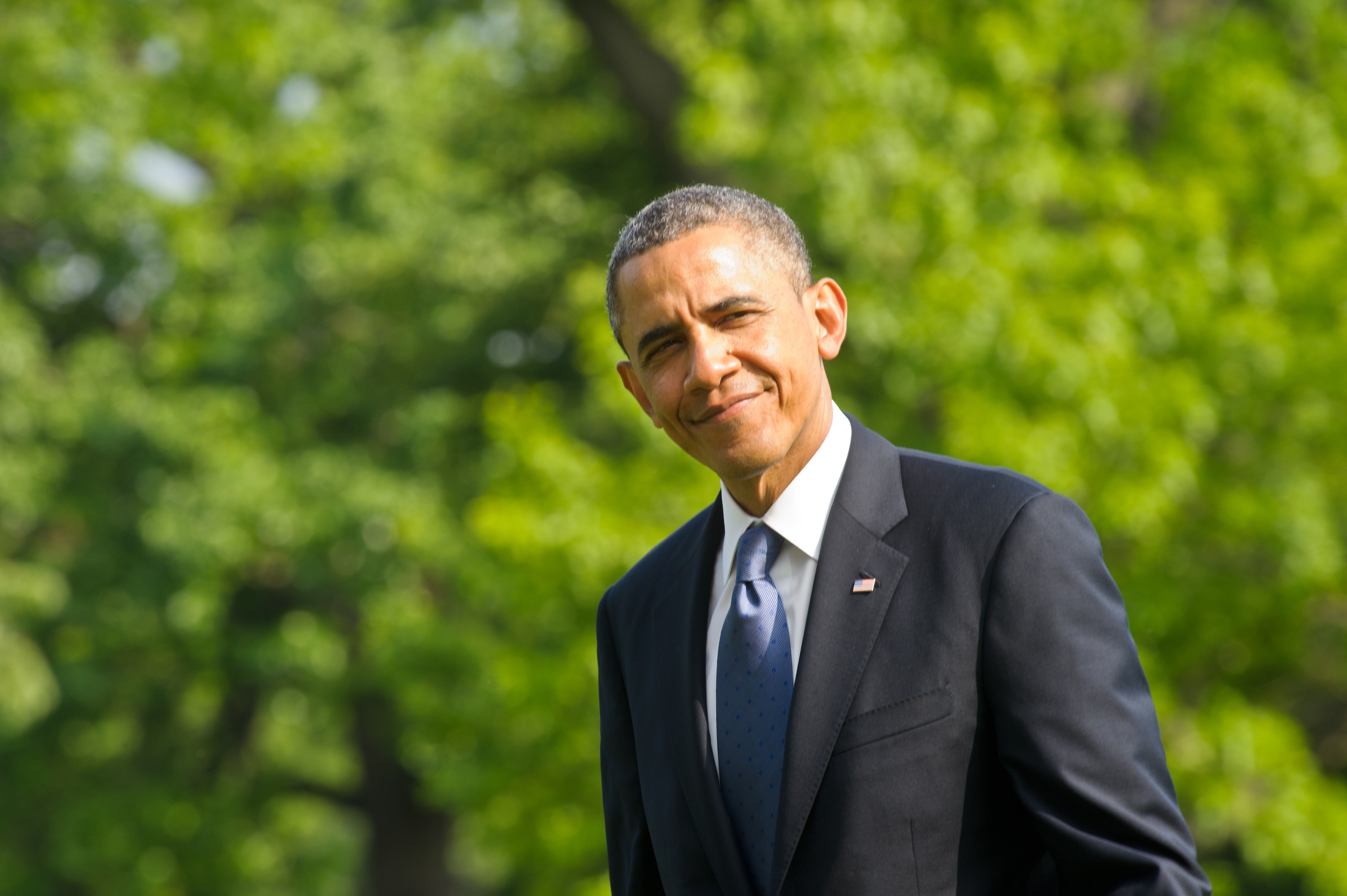
David Bromwich, no right-wing hack, indicts Obama for seeming “far from the scene” during crisis after crisis, from the roll-out of his health care plan to the VA scandal to the turmoil in the Ukraine. Bromwich finds his response to the Newtown shooting emblematic of the problems that would beset Obama as he entered his second term:
After the mass killing of schoolchildren in Newtown, Connecticut in December 2012, he vowed to pass a stringent new measure to strengthen gun control. For anyone who has been watching him, it was the most deeply felt moment of his presidency, and the largest risk he had taken on any issue. The time to publicise the outlines of such a bill was during those December days when the grief of the parents overwhelmed the country. Obama’s solution was characteristic. He announced that Joe Biden would explore the legislative possibilities and report back in a month. As the weeks passed, various weapons bans were drawn up and canvassed in public, but the National Rifle Association had been given time to rally and the moment passed. Much the same happened with the pledge in January 2009 to close Guantánamo. Obama left the room and asked his advisers to call him when they had solved it. A prudential pause was lengthened and became so clearly a sign of unconcern that the issue lost all urgency.
Obama is adept at conveying benevolent feelings that his listeners want to share, feelings that could lead to benevolent actions.
He has seemed in his element in the several grief-counselling speeches given in the wake of mass killings, not only in Newtown but in Aurora, at Fort Hood, in Tucson, in Boston after the marathon bombing; and in his meetings with bereft homeowners and local officials who were granted disaster funds in the aftermath of recent hurricanes. This president delivers compassion with a kind face and from a decorous and understated height. And that seems to be the role he prefers to play in the world too. It was doubtless the posture from which he would have liked to address the Arab Spring, and for that matter the civil war in Syria, if only Assad had obeyed when Obama said he must go. Obama has a larger-spirited wish to help people than any of his predecessors since Jimmy Carter; though caution bordering on timidity has kept him from speaking with Carter even once in the last five years. Obama roots for the good cause but often ends up endorsing the acceptable evil on which the political class or the satisfied classes in society have agreed. He watches the world as its most important spectator.
I have to say that I don’t find this as big of a problem as Bromwich does. From the very beginning, Obama has been a presider rather than a decider. His modus operandi is to marshal existing political forces toward a particular, prgmatic set of goals. When those forces have been ascendant – as with the stimulus, healthcare, marijuana prohibition, ending the Iraq War, and gay rights – he has achieved some profound and truly durable changes in American society and policy. When the actual forces he is trying to use are not as strong as the opposition – and, please, the NRA’s clout is no surprise – he’ll cut his losses after a while. As any politician would.
Yes, he’s as compassionate as Carter; but he has always had a cold, realist streak in him – which is what attracted me to his candidacy. He has a dry conservative view of government even as he wants to use it to advance the general welfare. And the only way to properly judge this, I’d say, is by results. So, to take gay rights, I was venting along Bronwich lines for quite a while – just check out the archive along the theme of “The Fierce Urgency Of Whenever“. But the results have been more spectacular than anything I could have hoped for in 2008.
Or on healthcare reform, where he let the Congressional game play out far longer than it might have – and nearly lost it all at several points. But the law that has resulted – again more successful than many thought possible even a year ago – is road-tested, SCOTUS-approved, and slowly seeping into the core administrative structure of the US. On torture and GTMO, you can fault Obama all you want – but he cannot overrule Congress, and they are still acting like scaredy cats. But the Senate Intelligence report is imminent; torture has ended; and we may see the beginning of a process of truth and accountability. Has he been maddeningly passive at times? Sure. But the direction we’re headed in – as long as pro-torture Republican does not become president in 2017 – is clear. Ditto marijuana prohibition. He has quietly taken the feds off the field in countering state innovations, the support has waxed, and the federal classification may soon change.
If you long for a man on a white horse to lead us on various crusades, Obama is not your man. But that’s not why Obama was elected, or re-elected. And, in my view, it’s not what this country – or the world – needs right now. And I have a feeling that looking back, we’ll be more than a little impressed by how much he still managed to get accomplished. And how durable those accomplishments will be.
(Photo: Nicholas Kamm/AFP/Getty)
 The Dish