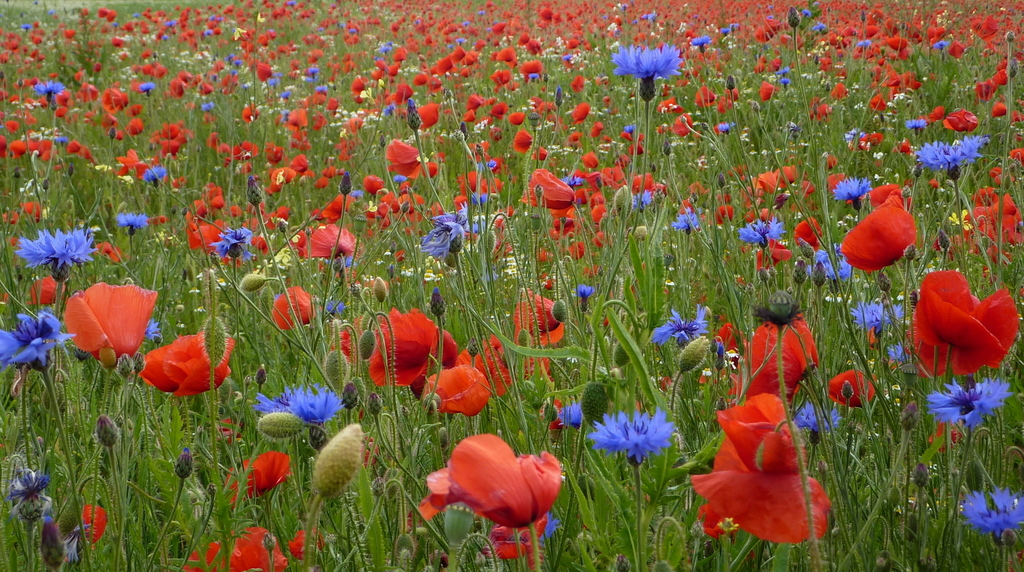
Dish poetry editor Alice Quinn writes:
Last week we posted a beautiful poem by John Clare, born in 1793 in Helpston, England, which he described as “a gloomy village in Northamptonshire, on the brink of the Lincolnshire fens.” Clare was schooled locally in his village but often forced to abandon school when times were hard to work as a child thresher, a ploughboy, or a potboy at a local inn. In 1820, he fell in love with James Thomson’s poem The Seasons and set about writing poetry himself. His Poems, Descriptive of Rural Life and Scenery, published when he was 26, brought him fame, patronage, and the acquaintance of London literary figures such as Charles Lamb and William Hazlitt. In the 20th century, poets as various as Robert Graves, John Ashbery, and Seamus Heaney wrote sweetly of their love for his poems.
Clare married and fathered six children, five of whom died before him. He suffered his first episode of major depression from 1823-25 and another from 1830-32. Five years after that, his condition complicated by hallucinations and aberrant behavior, he was certified insane and confined until his death in 1864 in various institutions although free to roam about during the day in the woods he found so entrancing. (From “Memories of Childhood”: “Ah what a paradise begins with life & what a wilderness the knowledge of the world discloses. . .”)
Today and in the days ahead, we’ll post poems written while Clare was an inmate at the places that sheltered him. At the last, the Northampton General Lunatic Asylum, one of the stewards, William Knight, transcribed and preserved many of the more than three and a half thousand poems of his. Jonathan Bate’s biography, John Clare, is superb. He is also the editor of the most recent edition of Clare’s Selected Poetry.
“How Can I Forget” by John Clare (1793-1864) :
That farewell voice of love is never heard again,
Yet I remember it and think on it with pain:
I see the place she spoke when passing by,
The flowers were blooming as her form drew nigh,
That voice is gone, with every pleasing tone—
Loved but one moment and the next alone.
“Farewell” the winds repeated as she went
Walking in silence through the grassy bent;
The wild flowers—they ne’er looked so sweet before—
Bowed in farewells to her they’ll see no more.
In this same spot the wild flowers bloom the same
In scent and hue and shape, ay, even name.
’Twas here she said farewell and no one yet
Has so sweet spoken—How can I forget?
(From “I Am”: The Selected Poetry of John Clare, edited by Jonathan Bate © 2003 by Jonathan Bate. Reprinted by permission of Farrar, Straus & Giroux. Photo by Andrew Hill)
 The Dish