Annie Lomax, madre di Terry Richardson. pic.twitter.com/RPZ5CNqLtY
— Laura Berlinette (@LauraBerlinette) March 2, 2013
A reader brings some firsthand perspective to a recent post on the notorious photographer:
I knew Terry Richardson in high school, when he was an angry young punk. It has been fascinating watching his transformation into superstar and cultural lightning rod. Here is some context I don’t ever see in the press:
His mom, Annie, a successful rock ‘n roll photographer in her own right with lots of very famous and creative friends, suffered a brain injury when he was a kid, resulting in unpredictable anger, short-term memory loss, and colorful, loud, often inappropriate, over-the-top behavior. She was a town character, riding around with wild hair on her adult tricycle. When we were hanging out at his house, her raspy voice would screech out from the other room, “Terrrrrrry!” – often calling him to do some chore that he’d already done.
In this context, nothing I read about him really surprises me. The perviness, the megalomania – it all just seems a natural outgrowth of the bizarre childhood he had.
Not that it would matter if he were wagging his boner in my face! But it is an interesting case study into what turns a guy into a talented raging asshole.
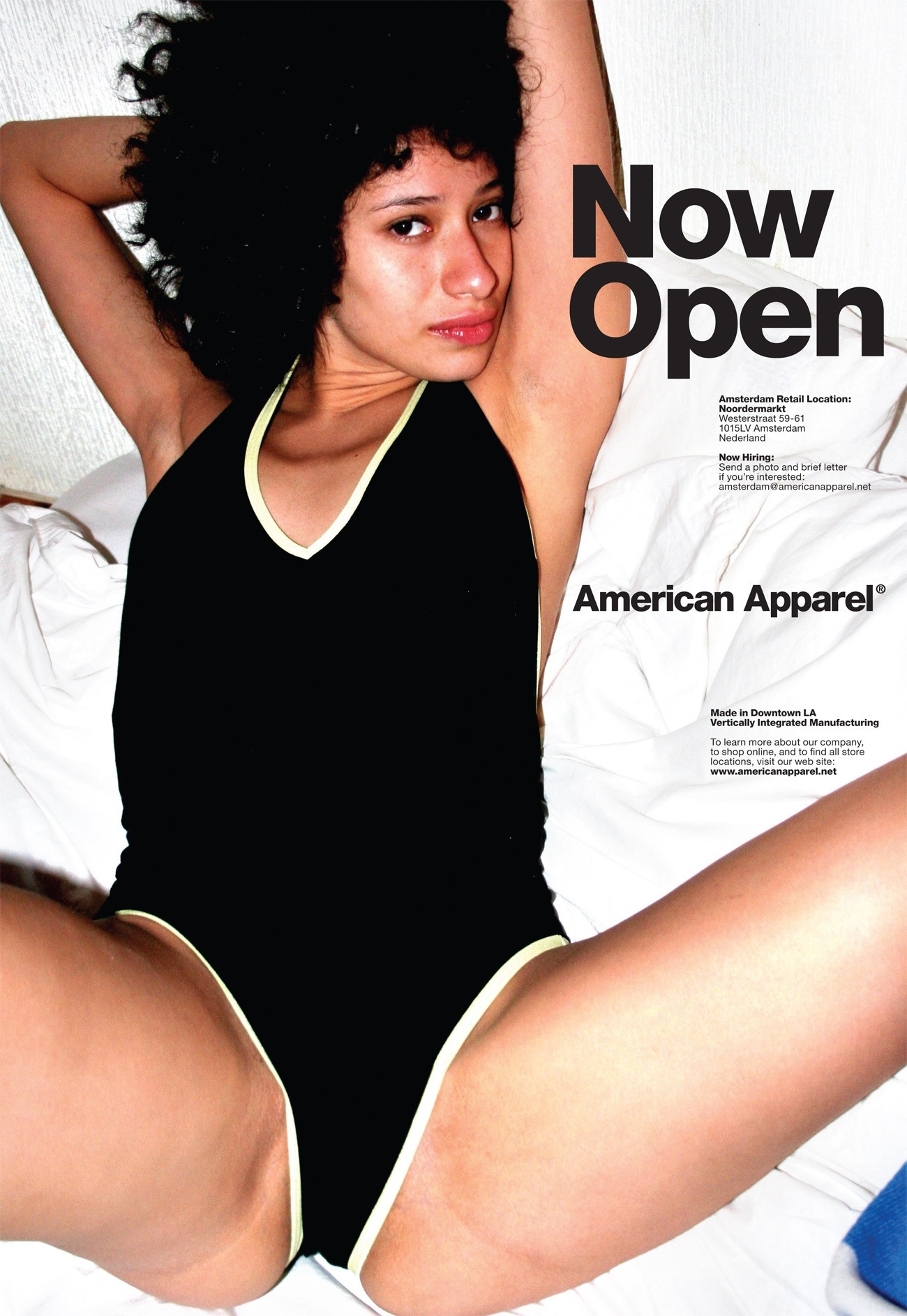
Meanwhile, Eleanor Margolis compares Richardson to Dov Charney, the recently ousted CEO of American Apparel who had been battling sexual harassment suits and an overall seedy reputation:
Charney and Richardson represent an uncomfortable truth about our current conception of coolness.
The two men are emblematic of a hipster veneer that’s so often used to cover up the mistreatment of women. In the name of cool, we so often make allowances for men like these. With their 70s porn star aesthetic seems to come this notion that they’re only subjugating women ironically: we’ll carry on buying clothes from people who look like the result of Ron Jeremy humping a copy of Vice. Misogyny is OK, as long as it pastiches a bygone era of kitsch female subjugation; as long as it’s retro. These bizarre double standards are only serving to blur the lines (sorry…) between sexism and chicness.
A more detailed look at Charney’s persona:
Charney appears in several of the ads, including one with two women, all three of them fully
clothed, titled “In bed with the boss.” He is known for walking around in his underwear in front of his employees. His messianic, provocative persona has been a large part of American Apparel’s image; with his often extravagant facial hair and retro clothing, he resembles a character in “American Hustle.” …
The reporter Claudine Ko, who recorded Charney repeatedly masturbating in front of her in an article for Jane magazine in 2004, rejected the idea that she was a victim of his behavior. “Who was really exploited?” she writes in a follow-up article. “We both were—American Apparel got press, I got one hell of a story. And that’s it.” But Charney didn’t control Ko’s salary; he couldn’t fire her.

Veronique Hyland thinks American Apparel should “build on the goodwill from the Charney firing and completely re-brand itself’:
American Apparel truly has some bona fides to emphasize in this area: It makes its clothing in the U.S., and pays its employees well
above minimum wage (and offers them an array of benefits). The company has spearheaded goodwill-generating campaigns in favor of immigration reform (Legalize LA) and LGBT rights (Legalize Gay). It has fabric re-use initiatives and sustainable lines. It has worked with charities like GLAAD, donated shirts to the victims of the Haitian earthquake, and held a sale to benefit homeless youth. (It has even been endorsed as an exemplar by the author of Ethical Chic!)
The curse of American Apparel’s original branding is that it worked too well — and now we can’t get it out of our heads. The key for whoever takes over from Charney will be to make a completely new message stick.
 The Dish