The Enemy Of My Enemy Is My Frenemy? Ctd

Daniel Berman doubts the US can cooperate with Iran on Iraq. Not only does Rouhani lack the clout to do a deal with the Great Satan, he says, our interests there are not really aligned – a fact Iran hasn’t forgotten, even if we have:

Iran, is not … unduly concerned about the breakdown of the Iraqi state. While Tehran does not desire a Sunni Islamist Iraq, it doesn’t particularly want a multicultural or even strong Shia led Iraq either. Such a state, especially if it remains democratic, would IRAN-IRAQ-US-UNREST-ROUHANIpose a serious threat to the legitimacy of the Iranian regime, especially given the relatively “liberal” outlook of Iraq’s Shia clergy compared to Iran’s. Many senior Iraqi clerics showed sympathy for the Green Movement in 2009 and Iran is not interested in a repeat.

The best shot Iran has at preventing one is for Iraq to be dominated by a weak Shia regime in the south and center dependent on Iranian military support. Such a government would be unable to seriously oppose Iranian policies, or to allow its senior leaders to criticize Iran’s internal arrangements. It would also allow Iran to effectively exclude the United States from the country, something that would be harder in a state with substantial Kurdish and Sunni influence. Iran therefore has an interest in supporting Maliki to the extent that the fall of Baghdad is prevented, but has no real reason to want to win his war for him. This is also why the United States should not raise its expectations too high regarding cooperation with Iran. The goals of the Iranian and American governments in Iraq are still far too great.
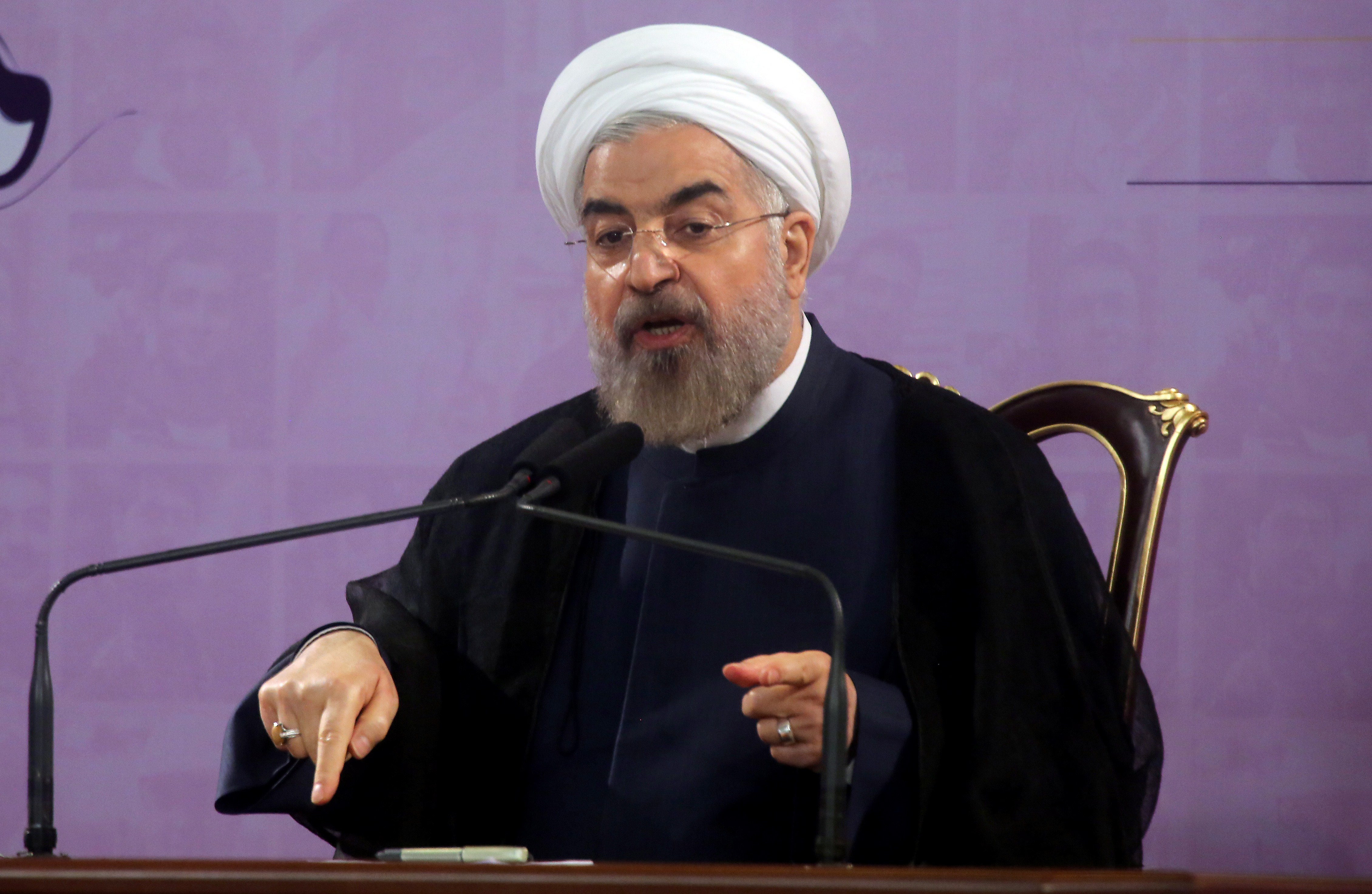
A cautious Frum asks why we should protect Maliki when he’s really Tehran’s guy, not ours:

Now, the most extreme and brutal of the anti-regime forces inside Syria has turned against Maliki. He is seeking American help, and Maliki’s patrons in Tehran appear content to see the United States rescue their client. According to some reports, the Iranians view U.S. aid to Maliki as a strategic partnership that could smooth the way to a nuclear deal more favorable to them. Is this situation not utterly upside down? It’s Iran that has a vital interest in the survival of Maliki, not the United States. It’s Iran that should be entreating the U.S. for assistance to Maliki—and Iran that should be expected to pay the strategic price for whatever support Maliki gets.

Abbas Milani sees cooperation between Iran and the US as a heavy lift:

Both in Iran and the U.S., as well as the Middle East region, there are powerful forces and countries that feel threatened by any Iran-American rapprochement. Iran wants to keep Iraq together, keep Shiites if not Maliki in power, and keep the IRGC’s extensive network of militia and economic presence in Iraq intact. The U.S. clearly has no love lost for Maliki and his sectarian politics, is gingerly moving toward favoring a loosely federated Iraq, and certainly does not want to encourage, or enable, Iran’s increased power in Iraq. Moreover, the two countries find themselves on opposing sides of the war in Syria. While Rouhani took four daysonly after much cudgeling by conservativesto congratulate Assad on his “election” victory, radical conservatives keep insisting that keeping Assad in power is a key strategic goal of the Islamic regime. In spite of these tensions, the specter of ISIS haunting the Levant is strong enough to bring the old foes together, if only briefly, to try to put the genie of Salafi extremism back in the bottle.

In Tom Ricks’ view, Iran is playing a long game here, and winning:

I don’t think that Iran has a failed state on its hands. What it had for several years after 2001 was the threat of American-dominated states on both its western and eastern borders. Now it faces no such threat, and is consolidating its hold on the Shiite rump in Iraq, from Baghdad to Basra. That’s a big piece of important territory that represents extension of Persian control to the Euphrates, and because that area includes Basra, tighter control of much of the Persian Gulf. And after Iran finishes there, I think eventually it will turn its attention to the Kurds and get some of the oil up there. But no hurry.

But the Bloomberg editors argue that we need to hold our noses and work with Iran in order to prevent complete chaos in Iraq:

The bigger question isn’t whether the U.S. should try to work with Iran, but whether it can. Events are moving so quickly that the chance for a political settlement may soon pass. ISIL is boasting of executing 1,700 Shiite soldiers in a transparent attempt to provoke the Shiite retaliation that would inflame moderate Sunnis and ignite a Syria-style civil war. Hard-liners in Tehran may also prefer to replicate their success in propping up Assad in Syria, pouring gasoline on the fire rather than work with the Great Satan in Iraq.

McCain’s usual partner in foreign-policy adventurism, Senator Lindsey Graham of South Carolina, has it right. Working with Iran to stabilize Iraq, he said, is akin to the Allies working with Stalin to defeat Hitler in World War II. Then, as now, the U.S. had to prioritize threats and try to work with any willing partner to counter them — even when that partner was an enemy.

I remain ambivalent, but inclined to live with Iran’s attempts to prevent any ISIS inroads in Baghdad. As for any US military intervention, I think Tom Friedman has been on a roll lately:

It feels both too late and too early to stop the disintegration — too late because whatever trust there was between communities is gone, and Maliki is not trying to rebuild it, and too early because it looks as if Iraqis are going to have to live apart, and see how crazy and impoverishing that is, before the different sects can coexist peacefully.

It is a delusion to believe the US can play any meaningful role in that sad process of learning. In fact, the more we intervene, the more we postpone Iraqis reckoning with their own actual options. Previous Dish on the potential for US-Iranian cooperation here and here.

Is It Time To Abolish Iraq?

IRAQ-UNREST-VOLUNTEERS

Steven Cook glumly predicts that the country as we know it is finished:

Had Maliki been inclusive—something that was impossible given the constraints and incentives of Iraqi politics—he likely would have still confronted resistance from areas of the country that chafe at the centralizing propensities of those in the capital.  And herein lies the fundamental problem of Iraq:  The country’s political physics create pressure to pull it apart.  To the extent that people in Anbar and neighboring areas, no less the Kurds and many in the south, do not want to be ruled from Baghdad, it only gives impetus for rulers there to accumulate power in an effort to ensure that the country remains intact.  Yet this only fuels yet more resistance to the capital. It seems that only Saddam-like brutality could keep the country together. Once American forces smashed that system of fear, the process of dissolution was set in motion.

Rosie Gray collects told-you-sos from Bush-era advocates of partitioning Iraq into Sunni Arab, Shiite Arab, and Kurdish states:

“Clearly it would have been better 10 years ago to accept the reality because then Sunnistan would not be an ISIS state, it would be something that was more tolerable,” [Peter] Galbraith said. Still, he said, “It’s really a matter of time and not very much time before they go to full independence.” As for Biden, the highest-profile supporter of such a plan at the time, [Les] Gelb said the vice president still supports a potential federal system in Iraq. “He still agrees with it, still wants to try,” Gelb said. “He’s realistic and understands that it’s a long shot.” Gelb said that other than Biden, he doubted there was much support inside the administration for such a plan.

Clive Irving looks back at British spy Gertrude Bell’s role in the invention of Iraq:

In reality, the Iraqi borders had been arbitrarily drawn and disregarded 2,000 years of tribal, sectarian, and nomadic occupation. The Persian frontier was the only firmly delineated border, asserted by mountains. Beyond Baghdad the line drawn between Syria, now the property of France, and Iraq was more cartography than anthropology. Nothing had cooled the innate hostilities of the Shia, in the south, who (in a reversal of the current travesty in Baghdad) were virtually unrepresented in Bell’s new assembly, and the Sunnis to the north, as well as the Kurds, the Armenians and the Turks, each with their own turf. [T.E.] Lawrence, in fact, had protested that the inclusion of the Kurds was a mistake. And the desert border in the south was, in Bell’s own words, “as yet undefined.”

The reason for this was Ibn Saud. Bell wrote in a letter to her father, “I’ve been laying out on the map what I think should be our desert boundaries.” Eventually that line was settled by the Saudis, whose Wahhabi warriors were the most formidable force in the desert and who foresaw what many other Arabs at the time did: Iraq was a Western construct that defied thousands of years of history, with an alien, puppet king who would not long survive and internal forces that were centrifugal rather than coherent.

But Debora MacKenzie argues that Iraq’s borders are not the problem, and warns that partition could actually make things worse:

Commentators have been quick to blame Sykes-Picot for the current unrest, but experts disagree. “The violence in Syria is not some messy centrifugal separation of an artificial state into its primordial ethnic or sectarian ingredients,” says Elias Muhanna of Brown University in Providence, Rhode Island. The idea that humans are naturally divided into clear “nations”, each with its own political territory, has failed to stand up to anthropological investigation. John Breuilly of the London School of Economics, says former colonial empires were carved into multi-ethnic states partly because people were intermixed and ethnic groups ill-defined, and partly to avoid conflict by privileging particular groups.

With prosperity and even-handed government, multi-ethnic states from Belgium to Malaysia are viable. … Countries with diverse populations can be stable if their governments are capable of guaranteeing security to everyone, in some cases perhaps by creating large, semi-autonomous enclaves like the Kurds in Iraq. The alternative is reshuffling the region’s population into ethnically or religiously defined states, such as the one ISIS wants. However, the migration and “ethnic cleansing” that follow is likely to be considerable – and violent.

And Robin Wright focuses on political reconciliation:

Any plan for stability—whether Iraq remains a single state or breaks into three—has to begin with the underlying political problem. Last week, President Obama called for a multiethnic governing council in Baghdad but, with insurgents less than fifty miles from the capital, that option is now too little, too late.

Iraqis must become invested in their own political order and risk putting their lives on the line to secure it. Unfortunately, Maliki may not be willing to either cede the powers required for a just resolution or to step aside. His intransigence has sabotaged Iraqi nationalism—though others share in the blame—and simply propping him up could eventually be costly. On Tuesday, Maliki defied international appeals for political outreach. Instead, he declared a boycott of a Sunni political bloc and put the blame for Iraq’s disintegration on Saudi Arabia. “We hold them responsible for supporting these groups financially and morally, and for the outcome of that—which includes crimes that may qualify as genocide: the spilling of Iraqi blood, the destruction of Iraqi state institutions and historic and religious sites,” his government said in a statement. So Washington will have to be bold and blunt with him—and even consider withdrawing support. Leaving the political work undone a third time around only risks yet another failure—and who knows how many more.

(Photo: Iraqi Shiite tribesmen brandish their weapons as they gather to show their willingness to join Iraqi security forces in the fight against Jihadist militants who have taken over several northern Iraqi cities, on June 17 2014, in the southern Shiite Muslim shrine city of Najaf. By Haidar Hamdani/AFP/Getty Images)

Obama’s Second Term Green Revolution

Screen_Shot_2014-06-17_at_1.33.11_PM

The executive energy on the environment may be one of the biggest silver linings of the gridlock in Congress. Yesterday, Obama announced plans to to ban commercial fishing and drilling in an vast area of the Pacific, a move that would double the amount of the world’s protected ocean:

The area covered by the proposal would bring the Pacific Remote Islands Marine National Monument to a total 782,000 square miles. It is currently about 87,000 square miles, surrounding seven islands in the Central Pacific that are controlled by the United States. Enric Sala, a National Geographic explorer-in-residence, tells the Washington Post this area is “the closest thing I’ve seen to the pristine ocean.”

The administration expects to face off with commercial fishermen over the proposal. The area is used by tuna fishermen, accounting for 3 percent of their total tuna catch in the Western and Central Pacific each year. In order to combat the opposition, the Commerce and Interiors Department will study and hear from the public in regards to fishing in this area over the summer.

Allie Wilkinson describes the location:

The reserve is home to a rich array of wildlife, including large predatory fishes such as commercially valuable tuna, swordfish and marlin, five species of sea turtles, 22 species of protected marine mammals, and several million seabirds of 19 species. The reefs surrounding two of the islands – Kingman and Palmyra – are believed to contain the greatest known biomass of fish, and representation of apex predators, of any studied coral reef system on earth, according to Pew. …

The region is also home to countless species that scientists have yet to discover and describe. With the expansion of the monument, an estimated 241 seamounts—submerged mountain peaks – are expected to be under protection. Each one typically harbors many new species that are new to science.

Amelia Urry is cautiously optimistic:

It’s a little early to declare victory – this announcement is merely a proposal, to be followed by a public comment period that will end later this year, hopefully with the official expansion of the reserve. But [yesterday’s] announcement – coming on the tails of Capitol Hill Ocean Week and John Kerry’s “Our Ocean” conference in D.C. and the announcement of a new public nomination process for marine sanctuaries and a crackdown on seafood fraud – might signal a turning of the tides. (What, you thought you’d get out of this without seaing a pun?)

Or you could look at it another way: Small island nations like Palau and Kiribati have set aside their own swaths of sea as marine sanctuaries, and the U.K. is considering doing the same to the area around the Pitcairn Islands in the South Pacific. We may have taken our time about it, but it looks like we’re finally embracing the healthy spirit of competition to massively outdo all of them.

Predictably, some conservatives are up in arms:

Republicans claim Obama is abusing his executive powers. “It’s another example of this imperial presidency,” House Natural Resources Committee Chairman Doc Hastings told the Washington Post’s Juliet Eilperin. “If there are marine sanctuaries that should be put in place, that should go through Congress.” However, the Antiquities Act of 1906 lets the president protect marine monuments without congressional approval. Bush used that authority on four occasions during his administration, including the creation of the Pacific Remote Islands Marine National Monument.

Juliet Eilperin points to more precedent:

Both Republican and Democratic presidents have used their executive authority to safeguard parts of the Pacific Ocean for more than a century. Theodore Roosevelt started it when he placed Midway Island under the protection of the Navy to stop the killing of seabirds there for their eggs and feathers, and then he helped usher through the Antiquities Act of 1906 to ensure his successors would also have the power to provide heightened protections for federal land and waters without congressional approval.  Later presidents, starting with Franklin D. Roosevelt, imposed additional restrictions. George W. Bush established the national monument Obama now intends to expand.

Meanwhile, Back In Ukraine

The country’s recently elected president, Petro Poroshenko, is trying to cobble together a deal to end the conflict with separatist rebels in the restive east:

In a meeting with the Ukraine’s National Security and Defense Council on Monday, the newly elected president said that he will offer a ceasefire to separatists in the east “as early as this week,” but only on the condition that Ukrainian forces are first able to fully secure the Ukraine-Russia border. The thinking is that once the border is secured, separatists will be cut off from Russian resources and more likely to negotiate on the government’s terms. It will also afford Ukrainian troops some much-needed relief from the aggressive anti-terrorist operation, which killed 49 troops over the weekend when separatists shot down a Ukrainian plane near Luhansk.

Linda Kinstler goes on to give her assessment:

It’s not a bad plan, and it’s certainly a shrewd political move for Poroshenko, who is hoping that the peace plan’s emphasis on decentralization will drum up support for his government among eastern Ukrainians. But there are also a few serious problems that could compromise the entire effort, the first of which is that it is nearly impossible for Ukraine to secure the border at current capacity. …

Even if the border is adequately secured in the near future, it’s unlikely that the separatists will agree to a ceasefire. “That too is an aspirational goal, frankly, because there appear to be many factions, many actors who don’t seem to be reporting to one single controlling authority,” says [the Carnegie Endowment’s Eugene] Rumer. “A ceasefire accepted by one faction doesn’t mean that other factions will accept it.” The separatists already refused to cooperate with the creation of civilian corridors for the evacuation of civilians, despite the fact that both Russia and Ukraine endorsed the effort. There’s no reason to think they’ll agree this time aroundunless, as the Ukrainian government hopes, they are forced to.

Peace can’t come soon enough, as the rebels are getting more and more deeply entrenched. Alec Luhn profiles the “emerging warlords” of eastern Ukraine, whose ultimate loyalties remain unclear:

When pro-Russian protesters first occupied the Donetsk regional administration building in April, different rebel groups and units staked out each of the 11 floors. Since then, these motley bands have been eclipsed by three powerful, armed factions: the Russian Orthodox Army, the Vostok Battalion, and Oplot. Each is built around an influential commander who spends his time not only waging the ongoing guerrilla war against Kiev’s forces, but also dispensing harsh justice and detaining civilians, sometimes for prisoner exchanges. Each group has several hundred men, including Russian volunteers, and heavy armaments. (During a recent visit to Vostok’s base, I saw four fighting vehicles, two anti-aircraft guns, numerous rocket-propelled grenades, and surface-to-air missiles.)

Are these commanders the backbone of an emerging independent East Ukraine, or are they burgeoning warlords staking out their turf for whatever comes next?

Dissent Of The Day

A reader, like many from the in-tray this week, sticks up for Hillary:

Like you, I’ve been kind of flabbergasted by the media’s (and most Democrats’) eternallyHillary Clinton Awarded The 2013 Lantos Human Rights Prize short memories on how awful the Clintons were on LGBT rights in the ’90s. Even as a kid (I was 16 when Bill left office), I thought the way these supposed liberals treated gays and lesbians was abominable – and I wasn’t even on the front lines the way you were.

But honestly, while I know you’re just reporting what’s going on, what’s being said about Hillary, I’d like a clarification: why do you hold the Clintons to so different a standard on this issue than any other politician – including President Obama?

I ask this not because I’m a big fan of Mrs. Clinton’s; in fact, I neither support her for the Democratic nomination nor for president, and it’s going to take a LOT for her to earn my vote. But Clinton’s reversal on marriage equality, while equally calculated, has been pretty much the same as Obama’s shift on the same. In fact, whereas I think that Clinton actually DID have to evolve on the marriage question, I think Obama’s reluctance to embrace it publicly was nothing short of political calculation. Having known the man and worked for him during his run for the Senate in 2004, I have a very hard time believing that he ever even needed to “evolve” on the issue, considering not only his personality but where his (former) denomination, the United Church of Christ, has long stood on gay marriage.

I mean, I get it: you don’t like the Clintons.

I don’t like them either. Well, I kind of like Bill, who could sell you rotten piss as liquid gold. But Hillary has always rubbed me the wrong way – something about her being too fake, too robotic, too Park Ridge (you have to grow up in the near northwest suburbs of Chicago to get that one). Even her soothing words of kindness often seem less than genuine (a characteristic she shares with Mitt Romney). There’s just something about her that makes me not want her to be president.

But as far as her alliance with the marriage equality movement, she may be sincere, or, as with most things Clintonian, she may be politically calculating. But why does it matter? Ken Mehlman used his political calculation of being “for traditional marriage” to take him all the way to the top post in the Republican Party – yet he was embraced when he finally came out. It took Senator Rob Portman having a gay son for him to understand how gays and lesbians feel when they’re denied the right to marry whomever they love – yet he was championed when he announced his support. And at each of these times, you have reiterated that the marriage equality movement should embrace converts, not shun them or try to pick apart whether their support is calculated or genuine.

But it seems to me that you’re talking (er, writing) out of both sides of your mouth. On the one hand, yeah, you’ve said the same thing about Clinton in the past. But I also don’t see others who have come around to supporting marriage equality grilled the way Clinton is about whether or not her support is genuine. Think about those who voted for DOMA, including Vice President Biden, Senate Majority Leader Reid, Senate Majority Whip Durbin, and House Minority Whip Hoyer – four of the six most powerful Democrats in Washington, all of whom now “supposedly” back marriage equality. In fact, so far as current Democratic Party leaders go, Nancy Pelosi alone had the balls to vote against DOMA, when all her colleagues were lining up to enshrine inequality into law.

Clinton, on the other hand, was a non-voting First Lady when DOMA was enacted in 1996 and was never in a position to repeal it. It’s really unfair to hold a grudge against her for something she has come out in support of just because her husband made things so much harder for you two decades ago. It’s logically inconsistent, and it undermines any good reasons you might ultimately have for not supporting her candidacy.

I’m not holding a grudge; I’m completely happy to move on, as I am with most pols, including Obama. Check out my Ask Anything on the subject. But I gave Obama hell for dilly-dallying in his first term on gay issues, and agree with my reader that he was not “evolving” so much as strategically bullshitting on marriage equality. But his bullshitting was at least calculated to increase the chances of our success, by getting out of the way, whereas the Clintons most definitely got in the way in the 1990s and did all they could to discredit and destroy the campaign for marriage equality. No Democratic politicians have that record or such ultimate responsibility for it. And yes, it is hard for me to believe that the people who signed both the HIV Travel Ban and DOMA are civil rights heroes or pioneers. They were not our allies. They were not even bystanders. They were the enemies of our civil rights when they held power.

But does this really matter now with respect to gay equality? Not much. Do I think Hillary will back gay equality in office? Yes. Do I think her influence on the Supreme Court if she gets to replace a Justice or two will be good? Yes. Does this issue offer a reason not to vote for her? Not any more. I just believe that her record illuminates her conniving, cynical political character. And that remains a perfectly legitimate worry.

Maliki Doubles Down On Sectarianism

Forty-four Sunni prisoners were killed in Baquba yesterday, quite possibly by Shiite militias fighting on behalf of the Baghdad government:

Iraq’s military spokesman, Lieutenant General Qassim al-Moussawi, told reporters that the men were killed when the police station where they were being held was shelled by the Sunni militants. However, three local policemen told the Associated Press that Shiite militiamen shot the detainees, who were suspected of having ties to ISIS, as the militants tried to free them. Meanwhile, a “police source” from Baquba told the New York Times that the prisoners were executed by the police when ISIS attacked. “Those people were detainees who were arrested in accordance with Article 4 terrorism offenses,” he said. “They were killed inside the jail by the policemen before they withdrew from the station last night.” Officials from the morgue in Baquba told both the Times and the AP that most of the dead prisoners had bullet wounds in their heads and chests.

This wouldn’t be surprising, considering that Maliki appears to show little interest in making nice with Sunnis or Kurds, despite warnings from both Washington and Tehran that he’d better do so and quickly (NYT):

President Obama has made it clear that the United States will not provide military support unless Mr. Maliki engineers a drastic change in policy, reaching out to Sunnis and Kurds in a show of national unity against the Sunni militants, whose shock troops are the extremist Islamic State in Iraq and Syria. Without that, analysts say, the country is at risk of a renewed sectarian war in which Baghdad could lose control over nearly a third of the country for the foreseeable future. But Mr. Maliki is showing few signs of changing his ways.

Just as he did in a similar, though not nearly as threatening, crisis in 2008 in Basra, he is pinning his hopes on the military option. He is determined to use the Shiite fighters he trusts to stabilize the country and, he hopes, rout the Sunni insurgents and reimpose the government’s control over its territory.

Mataconis comments that this is the “worst way possible” of responding to the crisis:

The way forward from here is unclear. Even if al-Maliki did enact the reforms that Obama and others are suggesting, it’s not clear that it would be enough to make up for years of what Sunnis and Kurds view as repression. It’s going to take a lot more than just appointing a few Sunnis to the Cabinet to make up for what has happened in the past, for example. At the moment, though, it doesn’t seem as though al-Maliki is at all interested in political reform in Iraq. Reports are indicating that he and his advisers have taken to wearing military uniforms and rallying the Shiites against what is seen as impending attack on Baghdad. This morning on MSNBC, Richard Engel suggested that al-Maliki may end up responding to the uprising in Iraq in a manner similar to the way that Bashar Assad responded to the uprising in Syria in 2011. If that happens, then we’d be facing the possibility of an Iraq headed into ethnic civil war on a scope that would make Syria look like a picnic. At that point, we may have no choice but to respond.

Frederic Wehrey argues that fanning sectarianism only helps ISIS remain cohesive, when by rights it ought to collapse under the weight of its own extremism:

Already, fissures are developing over its uncompromising vision and imposition of sharia law. For every Tweet of trash collection, vaccinations, and children’s toy drives, there are corresponding images of mass executions, crucifixions, and beheadings. Add to this is its longstanding policy of extortion. And its recent killings of captured Iraqi soldiers countermands injunctions by its Sunni tribal allies, such as the emir of the Dulaym, to spare the security forces for their “brave decision” to surrender. A leader of one of its Baathist allies in Mosul recently accused it of being made up of “barbarians.” Tensions could also develop between its Syrian cohort and its overstretched Iraqi branch, which has swelled in the recent campaign, about goals and priorities.

But one thing is sure to make ISIS consolidate and flourish: a slide to sectarian war, spurred by a heavy-handed response by al-Maliki’s army and its allied Shiite militias. The tribes, ex-Saddamists, and other aggrieved Sunnis will endure its draconian mores if they see in it a useful umbrella in an existential fight for their people’s survival. Like Zarqawi, this is precisely what ISIS is aiming for by killing Shiites.

Previous Dish on the sectarian dimension of the Iraq crisis here.

The Psychology Of Clickbait

Derek Thompson explains why readers tend to prefer light fare to hard news:

The culprit isn’t Millennials, or Facebook, or analytics software like Chartbeat. The problem is our brains. The more attention-starved we feel, the more we thirst for stimuli that are familiar. We like ice cream when we’re sad, old songs when we’re tired, and easy listicles when we’re busy and ego-depleted. The Internet shorthand for this fact is “cat pictures.” Psychologists prefer the term fluency. Fluency isn’t how we think: It’s how we feel while Screen Shot 2014-06-18 at 11.28.15 AMwe’re thinking. We prefer thoughts that come easily: Faces that are symmetrical, colors that are clear, and sentences with parallelisms. In this light, there are two problems with hard news: It’s hard and it’s new. (Parallelism!) Fluency also explains one of the truisms of political news: That most liberals prefer to read and watch liberals (because it feels easy), while conservatives prefer to read and watch conservatives (because it feels easy).

Maybe the Dish is an anomaly: Of yesterday’s five most-read posts, three were about Iraq and two were about Hillary Clinton. In the last month, the top posts were about transgender politics, the right’s response to Bowe Bergdahl’s capture, and increasing polarization. And judging by the inbox response, we’re not massaging anyone’s biases.

Why do we buck the trend? One reason may be that in the last year and a half, we are not trawling for pageviews as our core metric of success. Our subscription-based model both helps us avoid dumb clickbait tricks and to cultivate a readership that actually does want an oasis of some seriousness online. Not that we don’t beard-blog and beagle-blog and host a weekly contest. It’s just that the many mental health breaks we provide don’t drive our traffic – or undergird our financial stability.

(Insert: from Clickhole)

No Airstrikes, For Now

This is a relief:

Obama has opted not to conduct airstrikes in the immediate future partly because ISIS targets are difficult to identify, and it’s unclear if they would significantly alter the situation on the ground. U.S. military action has not been ruled out entirely, and in addition to the roughly 275 U.S. troops sent to Iraq to secure the American embassy, special forces soldiers may be deployed to assist the Iraqi army.

The New York Times reports that one option still under consideration is a “targeted, highly selective campaign of airstrikes” against ISIS, probably using drones. The campaign probably wouldn’t be launched for days or longer, and would depend on whether the U.S. can find a suitable target.

Zack updates us on possible US plans:

What the American response to the crisis in Iraq will look like still isn’t clear. The leading option appears to involve three planks. First, the deployment of US special forces to gather intelligence, provide battlefield guidance to Iraqi combat units, and possibly train Iraqi soldiers. Second, securing commitment to political reform from the Iraqi government, whose favoring of the Shia majority over the Sunni minority has exacerbated the conflict. Third, look for some avenue to cooperate with other countries in the region to support the anti-ISIS campaign (how that would be accomplished isn’t specified).

That said, airstrikes aren’t permanently ruled out. “U.S. strikes are still actively under discussion,” the Journal reports, “but [senior administration] officials cautioned Tuesday that they don’t expect Mr. Obama to put military action back on the table quickly.”

Robert Farley is against an aerial campaign:

Thinking of air power as a tool to simplify war and avoid its difficult complications is, tragically, a characteristic of the American strategic set, but there’s no reason we should continue to indulge it.

Wolfowitz’s Noble Lies

This embed is invalid


I tend not to hold the somewhat conspiratorial view that followers of Leo Strauss, the guru of the neocon intelligentsia, actively believe in deceiving the American people in the pursuit of statecraft. Strauss argued that many critical texts in Western civilization were written with an esoteric teaching for the intelligent few, while presenting a less radical and palatable public doctrine for the masses. Hence the Straussian penchant for a noble lie – one that is good for the people to believe but which the elite knows is bullshit. Perhaps the classic example of this is the Straussian support for public religion, while the bulk of them are atheists. For them, religious faith is entirely instrumental – a way to lie your way to social order and cohesion.

In the case of the Iraq war, several untruths were told. Among them: there is no sectarianism in Iraq; it will cost next to nothing; it will be over in months; there are WMDs everywhere; Saddam and al Qaeda are joined at the hip. It’s hard to tell which of these untruths were sincerely believed by men like Wolfowitz and Kristol, longtime Straussians both, and which were a function of them not knowing anything about the country that was to be their text-book case of “creating reality”. But when a disgraced architect of that war goes on television to argue that the public needs to be told now that ISIS is al Qaeda, even though he knows that they are separate organizations with separate ambitions, I tend to withdraw whatever benefit of the doubt I give these men with the blood of hundreds of thousands on their hands.

Here’s the money quote from Wolfowitz:

We should say al Qaeda. ISIS sounds like some obscure thing; it’s even more obscure when you say Shia and Sunni … It means nothing to Americans whereas al Qaeda means everything to Americans … My point is that these are the same people, they are affiliated with the same people, who attacked the United States on 9/11 and still have an intention of attacking the United States and attacking Europe …

This is a rare moment in which a Straussian actually comes out and says: yes, we’re deliberately lying by conflating all sorts of different things in the Middle East – the Sunni-Shia divide; the hostility between ISIS and al Qaeda – in order to concoct a simple and terrifying message to the American people that will enable us to get into another war in order to advance our goals in the Middle East.

Yes, we know this is a lie – just as our insinuation that Saddam and al Qaeda were in cahoots before 2003 was also a lie. But it’s a noble one, and that’s all that counts. That Wolfowitz was revealed as grotesquely incompetent in getting his war to achieve anything for the United States or Iraq but catastrophe is not something this smug propagandist has to worry about. We should not go into recriminations about the past, see. All of that is wiped from the ledger, and anything that went awry was always someone else’s responsibility.

It’s not just that these people refuse to be held accountable for their incompetence, war crimes and catastrophic foreign policy. It is that they are still prepared to go on television and brazenly lie to the American people and to use fear to whip up another war in the Middle East. They are trying to do this again. It’s not just that they are shameless; they are actively dangerous in their ability to manipulate and lie this country into another disastrous war.

Yglesias Award Nominee

“In spite of the things I felt at the time when we went into war, liberals said: We shouldn’t get involved. We shouldn’t nation-build. And there was no indication the people of Iraq had the will to be free. I thought that was insulting at the time. Everybody wants to be free. They said we couldn’t force freedom on people. Let me lead with my mistakes. You are right. Liberals, you were right. We shouldn’t have,” – Glenn Beck.