The Enemy Of My Enemy Is My Frenemy? Ctd

The US and Iran got to talking about the crisis in Iraq yesterday. The Guardian notes was “the first time the two nations have collaborated over a common security interest in more than a decade”:

John Kerry, the US secretary of state, pointedly declined to rule out military cooperation in an interview with Yahoo News, but US and Iranian officials later stressed that there was no prospect of military cooperation, and none was discussed in Vienna, where the talks were described as short and inconclusive.

“We are open to engaging the Iranians,” said a senior State Department official, who characterised the discussions as brief. “These engagements will not include military coordination or strategic determinations about Iraq’s future over the heads of the Iraqi people,” the US official said, on condition of anonymity. The Iranians confirmed that military cooperation was not on the cards. “The disastrous situation in Iraq was discussed today. No specific outcome was achieved,” a senior Iranian official told Reuters.

The UK, meanwhile, is reopening its embassy in Tehran. Calling Iran “the most stable country in the Middle East right now,” Trita Parsi scrutinizes why cooperation with the US is a good move for the Islamic Republic:

Iran … will pay a price if it clings to an outdated understanding of the regional and global strategic landscape. Contradictory messages have come out of Tehran, with officials telling Reuters that they are open to collaboration with the United States against ISIS, and then having their Foreign Ministry spokesperson strongly oppose U.S. military intervention. Similarly, the U.S. position seems to be shifting, from first denying any plans for talking to Iran about Iraq to signaling a desire to sit down with Tehran.

Iran’s key objective is to be recognized as a stabilizing force. But that is a role it ultimately cannot play if it simultaneously wishes to challenge the United States. Unlike in Afghanistan, any cooperation in Iraq will likely be more public. If Iran plays a constructive role, the world will notice. But changing old patterns require courage, strength, and political will. It remains to be seen if the leadership in Tehran can deliver those — or if Washington will be receptive.

My own preference would be for very light coordination with the Iranians if they are really the only force capable of halting ISIS’s advance on Baghdad, and no US troops anywhere, but for defending key US assets like the embassy.

The neocons will howl as their botched war further empowers their arch-enemy in Tehran – see this classic know-nothing-learn-nothing piece from the Greater Israel fanatic, Elliot Abrams – but I tend to agree with Allahpundit. A shrewd strategy

to “blunt Iran’s rise in the region” would be to force them to fight a two-front war against ISIS in Syria and Iraq without western help, not to start bombing their enemies while sternly warning them not to capitalize once we’re gone.

Then there’s how all of this impacts the delicate negotiations over Iran’s nuclear program – now significantly weakened undr the provisions of the interim agreement. Could mild cooperation in Iraq facilitate a resolution? Again, the neocons are quick to state the opposite. Jonathan Tobin claims that Iran’s negotiating power over the US and Europe at the P5+1  just increased exponentially:

The administration’s zeal for a deal that would end the confrontation over Iran’s nuclear ambitions has been no secret since it concluded an interim pact last November that tacitly recognized Iran’s “right” to enrich uranium and started the unraveling of the economic sanctions that had taken years to enact and enforce. The Iraqi crisis not only strengthens Tehran’s already strong bargaining position in the continuing P5+1 talks; it also gives President Obama one more reason to seek to appease Iran rather than pressure it to make concessions on outstanding issues such as its ballistic missile program or its nuclear military research.

The talks, I presume, will stick to their original agenda, and not include the entire neocon wish-list (which is really a poison pill for any rapprochement). A good omen – and Jennifer Rubin is hyperventilating:

It seems the president will do anything to avoid using U.S. power in the region, even if it means accelerating Iran’s influence in Iraq. Imagine the reaction of our allies in Egypt, Sunni Gulf states and Israel when we let on that we are going to be assisting Iran’s hegemonic vision and thereby bolstering the state sponsor of groups including Hamas and the Muslim Brotherhood. In lieu of strengthening U.S. influence in the Middle East, Obama seems ready to bolster Iran’s. And if he is bent on this course, surely he’ll not challenge Iran and its puppet in Syria. Why, that might “upset” Iran and either wreck a nuclear deal or force Obama to handle Iraq on his own.

But Paul Pillar sticks up for cooperation, calling the ISIS surge “one of the most salient and clearest examples in which U.S. and Iranian interests are congruent”:

There is right now an excellent opportunity for useful coordination between Washington and Steve Bell 17.06.2014Tehran regarding messages to be sent to, and pressure to be exerted on, Prime Minister Maliki. If both the United States and Iran—the two foreign states on which Maliki’s future most depends—tell him the same thing about the need to move beyond his destructively narrow ways of governing, such pressure might begin to have a beneficial effect. Although the Iranians have been happy to see the Shia majority in Iraq finally get out from under Sunni political domination, they also are smart enough to realize that Maliki’s performance is more a prescription for unending instability and Sunni radicalism, which neither the Iranians nor we want.

The United States and Iran have wisely been concentrating over the past year on the nuclear issue, so as not to complicate the negotiations with a premature broadening of the bilateral agenda. The ISIS offensive may be a reason to move up the broadening a bit.

But maybe we’re not the ones who ought to be talking to Iran. “The real fault,” Bilal Y. Saab writes, “should be assigned to those actors who, despite having tremendous influence and real leverage over the majority of the Iraqi antagonists, have so far decided not to intervene politically. That’s Iran and Saudi Arabia”:

A dialogue between the Iranians and the Saudis is desperately needed not just to stop Iraq’s bleeding and prevent another full-blown civil war, but to extinguish at least the major Sunni-Shi’ite fires throughout the Middle East that are fueling this violence and chaos.

This is not a naive call for putting an end to an old and fierce rivalry between Saudi Arabia and Iran and to an historic feud between the two biggest branches of Islam. That’s just not going to happen. Instead, this is a realistic invitation for two regional heavyweights who, for better or worse, speak for the majority of Sunnis and Shi’ites in the Middle East, to negotiate a path out of this catastrophic situation. Call it arms control, dialogue, or cooperation. The bottom line is that they need to sit down and talk about ways to manage or stabilize their regional competition by agreeing to hard rules that would benefit both, otherwise Arab League chief Amr Moussa’s nightmare scenario of the gates of hell opening in the Middle East will turn into a reality.

Previous Dish on the potential for US-Iran cooperation here, and on Iran’s intervention in Iraq here and here.

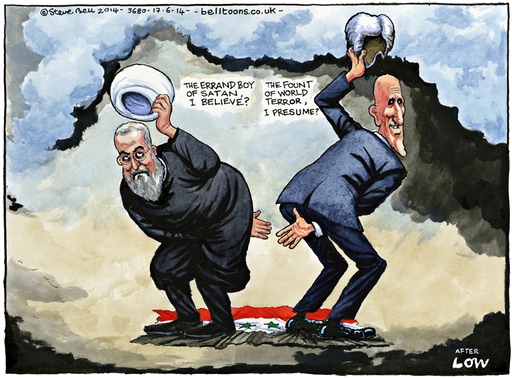
(Cartoon by Steve Bell. The analogy is to David Low’s classic cartoon on the Hitler-Stalin pact. Yes, Bell appears to see the US as the equivalent of Stalin’s totalitarian state.)

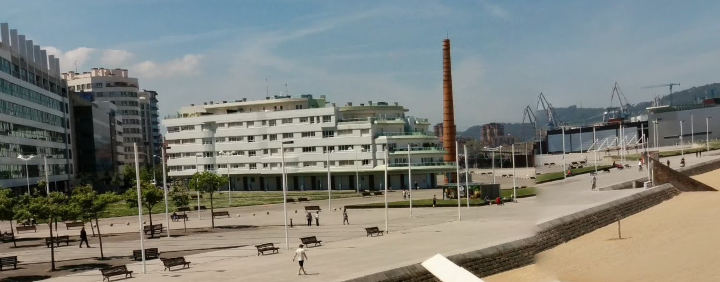
The View From Your Window Contest: Winner #209

VFYWC_209

A reader writes:

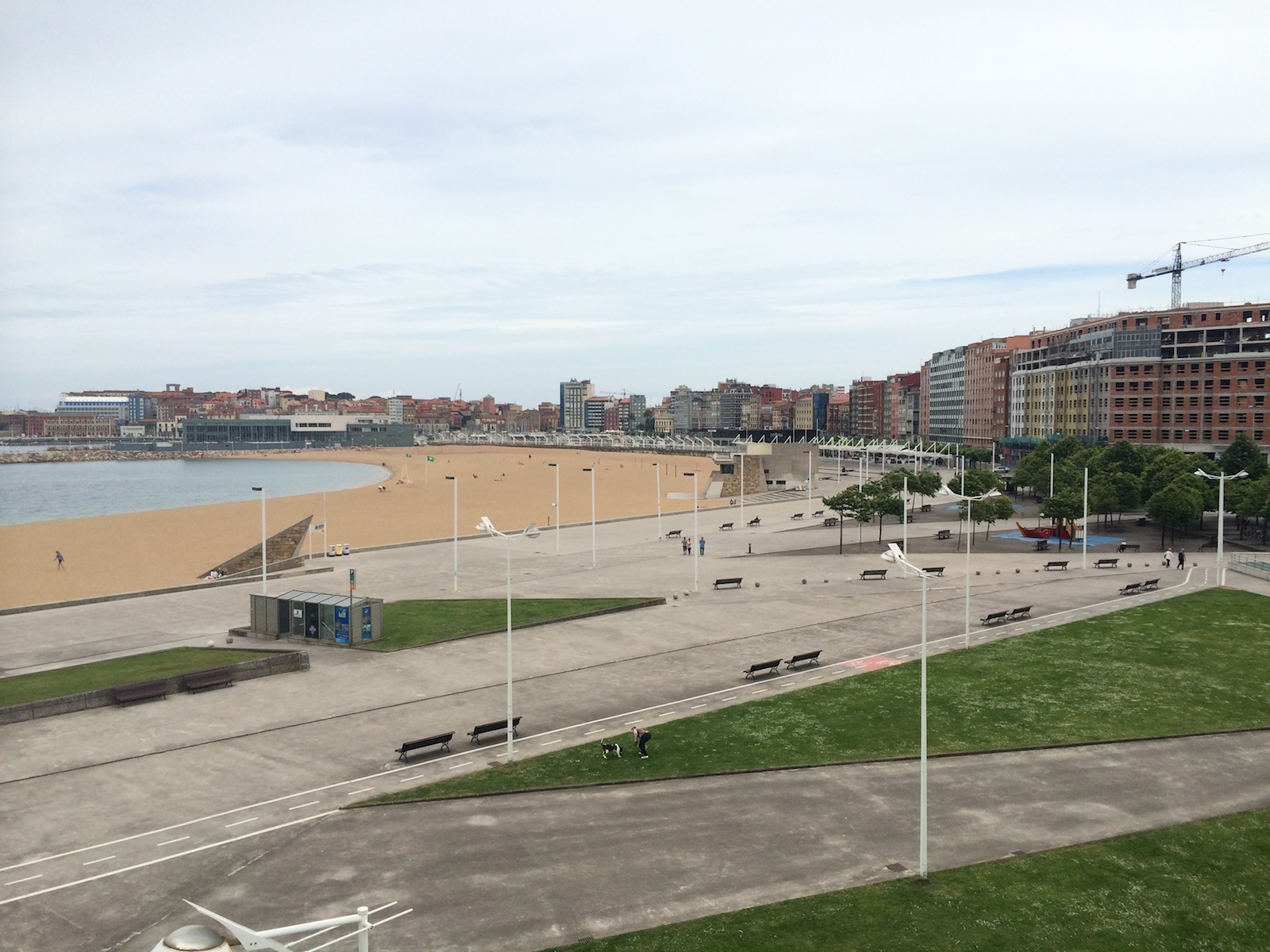
At first glance, I thought I was looking at an airport. The wide concrete slabs and numerous arrows triggered that impression in my brain. Of course when it registered that there were benches lining the edges, I realized how wrong I was!

The wide man-made beach leading to what looks like a very unfriendly lagoon is clearly not South American, although it does conjure up the vision of a curiously deserted section of Ipanema. Most interesting are what looks like windmills on the upper left corner. The top of the hill has what looks like some sort of ruin, but probably isn’t. I’m not sure what makes me think Scandinavian, except that it is an unusually pristine beach and surroundings. However, I couldn’t find a pic resembling this image online. Again, this feels like a sad little place, the overcast skies darkening the lagoon water, with rather stark architecture. Somewhere in Scandinavia, Norway or Sweden, Copenhagen.

Another reader senses “a very Russian feeling” from the view. Another gets topical:

I do not have the time to follow through on my immediate instincts, which are “World Cup,” and “Brazil.” When I start looking at beaches in Brazil, I find some that have very similar light fixtures, so I think I am in the right country. But there are a lot of beaches! I’m taking a guess to say it is a beach in the vicinity of Recife, Brazil.

Another is clearly looking forward to summer:

Congratulations. Wherever this is, they have created the perfect beach experience for people who hate both sand and water.

Another hits the States:

This week’s view is really a puzzler. At first glance I thought there were plenty of clues to go on: the beach next to a densely-packed urban landscape, the concrete promenade, the bike path. There are odd buildings along the shore, and … is that a set of stairs going down to a parking garage? I can’t tell. There aren’t any palm trees, which suggests a temperate climate. I’ve been chasing up all these clues obsessively and haven’t found anything that seems remotely close. I’m certain it’s not Chicago, but I’m going with that anyway. So frustrating!

Even a correct guesser notes:

Wow, this one was hard.

Indeed. There were only 20 readers who even hazarded a guess this week. One of them frowns:

I would waste the day investigating this location but I am disqualifying it because it shows no part of the window frame and contains an animal (dog). I can do something productive instead.

True, we never post frameless views for our daily VFYW feature, but due to the lack of good candidates for the contest, we occasionally use them here.  And animals are only disqualifying when they are the central focus of the view, not incidental background. The closest incorrect entry:

Nice beach. No one swimming, not even a dog, despite the green flags. Must be the North Sea. I say it’s Dunkirk, France.

Another nails the right country and city:

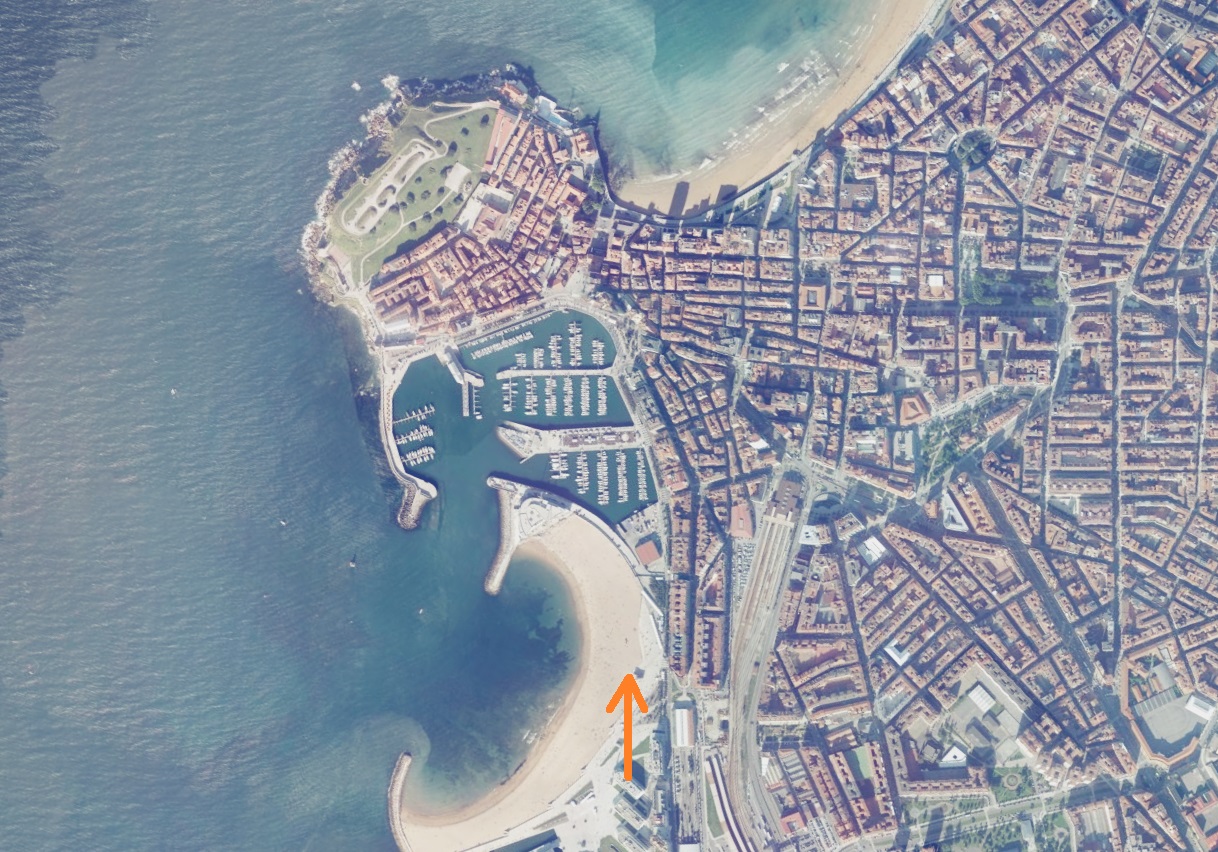
My guess for this week is a city on the northern coast of Spain, specifically Gijon, Spain. The dense city, the streetlight fixtures, and the beautiful beach were my clues. There are a number of half-moon beaches in the area, and I suspect this photo was taken from the aquarium or some restaurant in the area looking east.

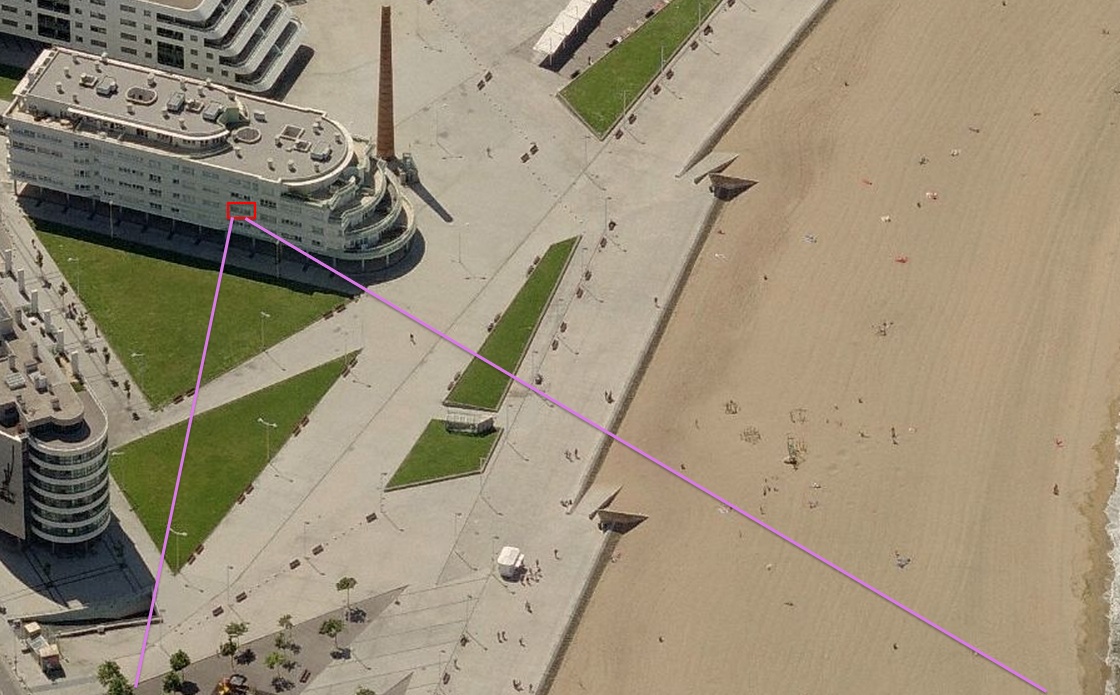
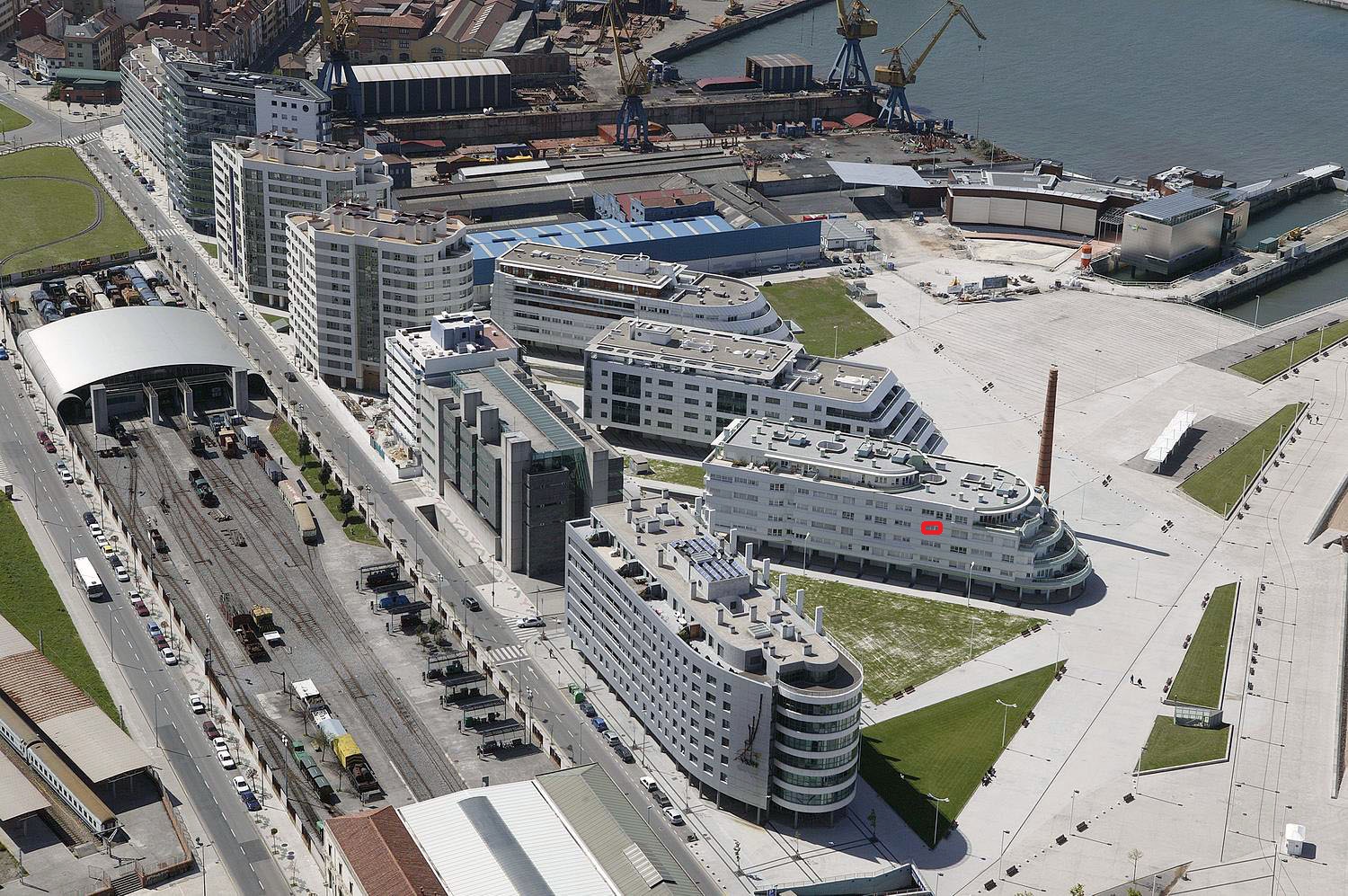
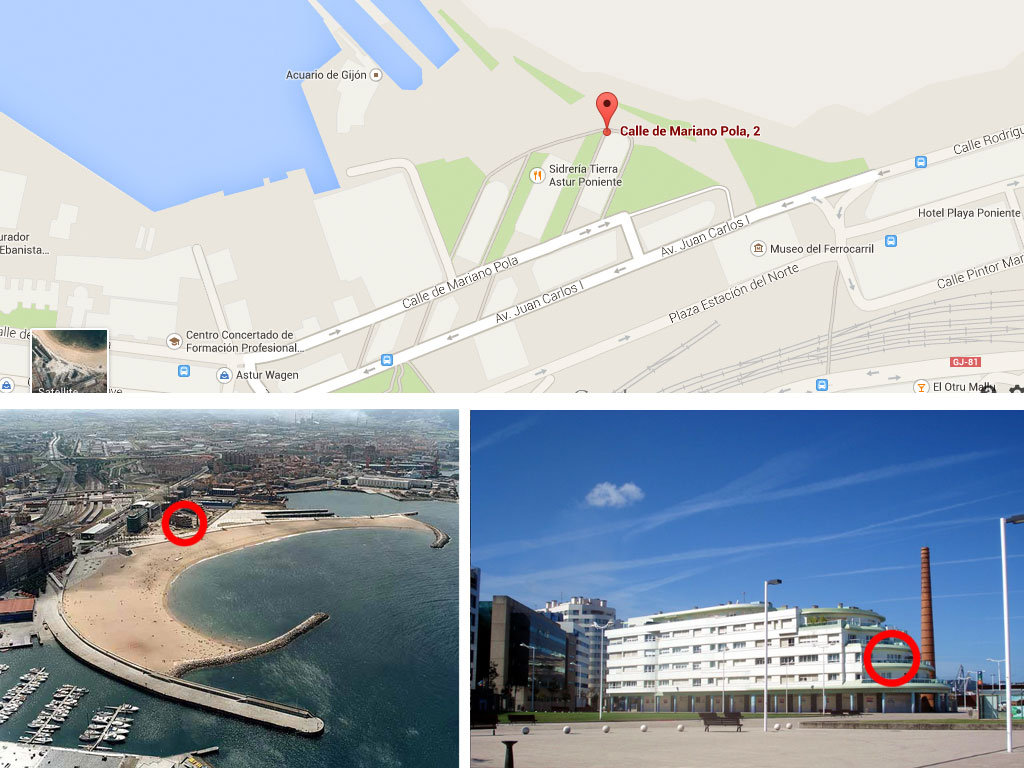
A previous winner nails the building too. Here’s his breakdown:
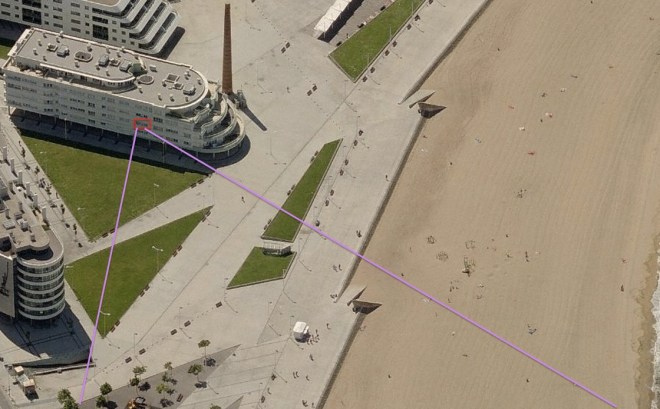
Screen Shot with window highlighted

It took a while to figure this contest out because the items in the photo pulled me in different directions. The buildings and grey concrete sidewalks next to a beach with calm waters made me think it is an Eastern European location, perhaps on the Black Sea. The Kompan pirate playground, the wind, and the people dressed in long sleeved clothing made me think western or northern Europe. But the palm trees are too tall for northern Europe.

To confuse things further, I initially thought the statute on the hill opposite was a Greek ruin. After realizing the object was too large for that to be true, I started to try random bits of the European coastline. Then after stumbling across similar looking lamp posts in San Sebastián and Biarritz in North Spain, I realized the contest window must be nearby.

Soon enough, I discovered that Gijón, Spain had the same lamp posts as in the picture and I arrived at Calle Mariano Pola, 2, 33212 Gijón, Asturias, Spain. Based on this photo, I think the contest picture was taken from this two-bedroom vacation apartment for rent. For the exact window within the apartment, I highlighted it in the attached screenshot. The sculpture in the distance turns out to be Eulogy to the Horizon by Eduardo Chillida.

Below is a visual glimpse of all of the entries (zoom in by double-clicking an area of interest, or drag your cursor up and down the slide):

This embed is invalid

From a reader in country:

Well, no special story or anything other than I have walked along that waterfront, as it’s fairly well known here in Spain. Only once have I been up to Gijón (pronounced in English as “hee-hone”), but I instantly recognized it, so I imagine you will have quite a few correct guesses this week. Let me recommend Asturias and the northern parts of Spain in general to so many of the readers who may have an image of the country that completely forgets the very verdant North. It’s a completely different style that is absolutely lovely.

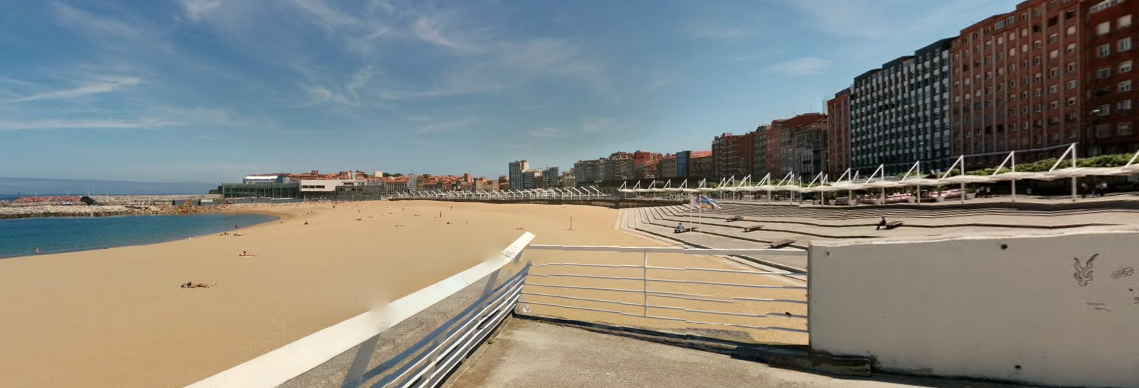
Anyway, after knowing where it was from memory, I just used Google Maps to confirm it was the same place I was thinking of and found a nice street view photo sphere of the area:
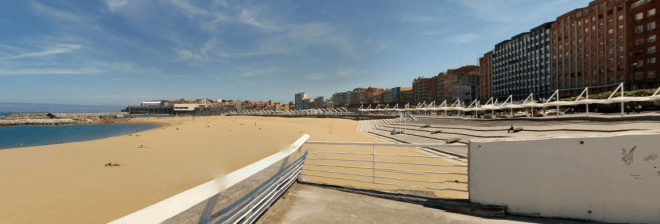
ii_hwg6cejw1_1469ef1191b182f8

And looking around I found a pleasant piece of architecture that I’m pretty sure is the building in question:

ii_hwg6as4w0_1469eeff1a593319

​Now that I noticed that the rules were bent a bit this week to not show the actual window, I’m going to guess that the photo is from the top balcony of the building at Calle de Mariano Pola, number 2.

A veteran player:

I got lucky looking at beaches with roof structures. I found a TripAdvisor shot, showing that striking wall design at the beach steps. That led to Google Map view, excerpted below, at a sunnier and more populated moment:
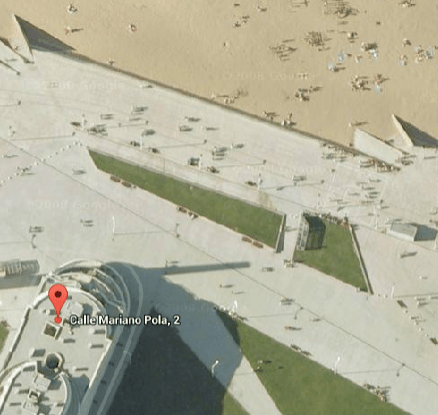
86913D91-32C6-477F-965C-1C4E0E0710D7

Below is a photo from an apartment for rent, described as Calle Mariano Pola, 2, 3:
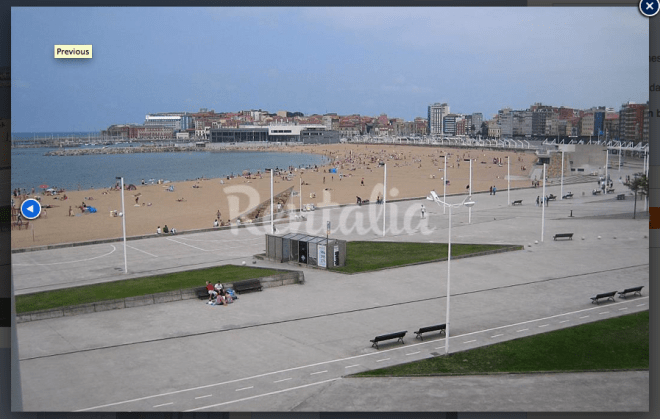
6FE37C0D-CA0E-4981-A129-76A276D64315

I am not sure if this is the very apartment, but it seems awfully close! Perhaps the VFYW was taken early in the day; beach looks very empty, and with its lack of shadows, can’t tell what time it was. But I am thrilled to have found it, anyhow!

Another reader:

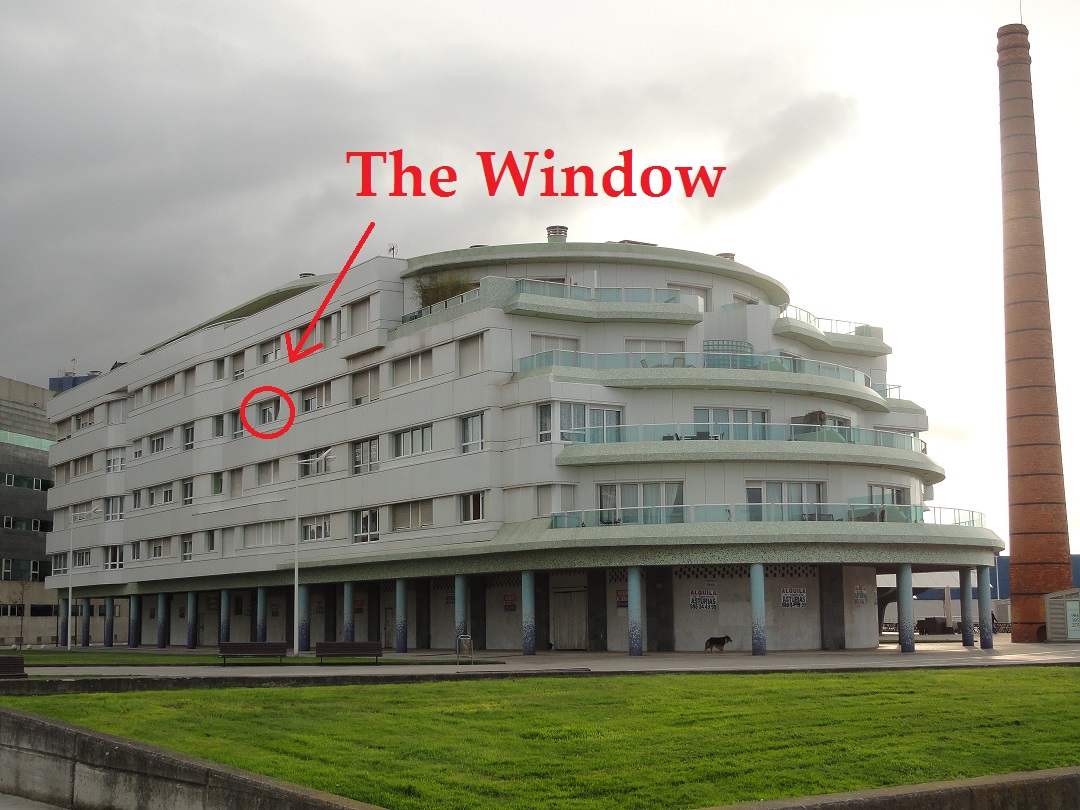
Playa de Poniente, white building shaped like a ship (there are three in a row; it’s the one nearest an old chimney), fourth floor. For the window, see the attached image:

Gijon

This one was really hard. I came close to giving up, then my sister told me: “looks like Spain” (I was sure it was a northern country somewhere in Europe). So I googled “playa artificial” (it is definitely an artificial beach), and after a hundred photos of Japanese beaches-under-a-dome there it was.

Another:

Six in a row!  A new record for my wife and me.  And hard-earned, too, as this was easily the contest I’ve had to spend the most time on over the last month and a half.

But why, when there’s so much to look at?  I really thought a European beach would give itself up rather quickly, but this tiny beach near the Gijon marina hid itself as well as any place can on the internet these days.  Our first instinct was actually Scandinavia, and the lack of wave activity had us thinking it was perhaps a lake beach.  So a lot of wrong roads turned down this week, and had it not been for our streak I may have given up.  Eventually some combination of search terms yielded a travel site about Spanish beaches, and while Gijon wasn’t featured there were certain similarities in the plazas and access ramps that made me think Spain was the way to go.  That also made me aware that all those dark-haired people in the picture probably aren’t milling about a beach in Scandinavia.

And so I did what I’ve done before on obvious coastline scenes — just follow the damn coast of spain, stopping at every spot where sandy beaches intersected with a densely-populated area.  Plenty of false positives, but with so much detail in the view I was able to move on from each rather quickly.

There are three parallel ugly apartment buildings (I presume) lining that plaza, and the view is taken from the far-right one that sorta looks like a cruise ship.  3rd floor, let’s say.

Another:

The view is from Calle de Mariano Pola, 2, Gijón, Spain. Third floor balcony, at the northeastern corner. This is a private building, one of three condo buildings that are shaped like a ship, so I can’t even venture a guess as to the exact address. Attached I can’t believe I found this, but I’ve circled what I think is the window.

Calle-de-Mariano-Pola-2

I’m never right on my first guess with these, but I looked at the photo and said, wait, I’ve been there. It’s Gijón! I had a summer of fun debauchery as an exchange student in a small town in northwestern Spain, almost 15 years ago. My host brother and I took the bus up to Gijón for a couple of days on the beach. Lovely. That’s the Playa de Poniente, one of Gijón’s several beautiful crescent beaches.

Yes, I questioned myself for a few minutes, because it could’ve also been San Sebastián with its famous crescent-shaped Playa de la Concha, and I haven’t been to either in 15 years and maybe I was wrong. The tip-off was the big gray building, when I re-reviewed the photo. It had to be the Talaso Poniente.

I assume you’ll get lots of submissions because it’s a rather unique building. Takes all the fun out of things that the crazy savants can always turn these out easily. Oh, well.

Our favorite spousal team rocks their 11th contest in a row:

Our guess is that the contest photograph was taken in Gijón, Spain. The view is of Poniente Beach and the surrounding area, and was taken facing northeast from the building and fourth-floor window shown in the photograph below:
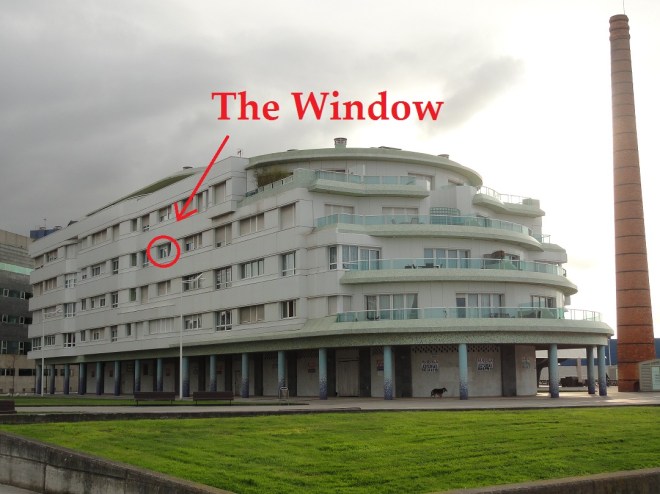
tie_8D157FB6D5FBF8B_1D0C_713B

We were out of town this weekend and did not expect we would be able to get to the VFYW contest, but we did a whirlwind search this evening (Monday) and got it done. Once our toddler was in bed my wife hopped on Google and called out possibilities while I was on Google Earth checking out her suggestions. Narrowing this one down was difficult, but my wife (correctly) suspected northern Spain. The contest photo featured several construction cranes, so when she spied a New York Times article that mentioned new construction in Gijón she sent me there to check.

Not that Chini is feeling the heat:
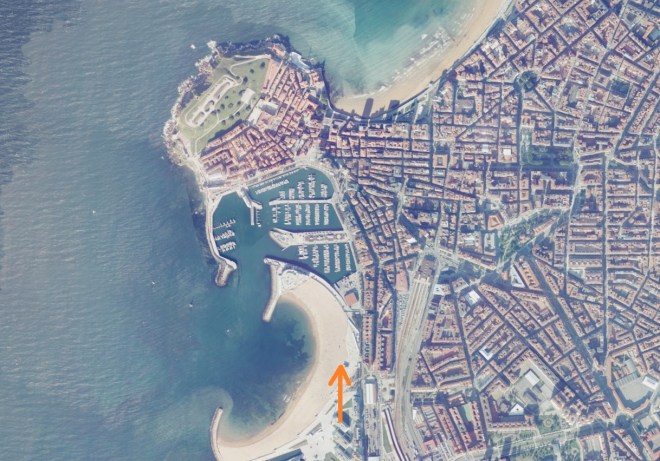
VFYW Gijon Overhead Marked - Copy

Unlike the memories that last week’s visit to the Musee Rodin brought back for me, this week … oh who am I kidding #distractedbyworldcup. The basics then: This week’s view comes from Gijon, Spain and looks east-north-east along a heading of 70.12 degrees from a 3rd floor window in the Linea Rural apartments located at 2 Calle de Mariano Pola.

VFYW Gijon Actual Window Marked - Copy

This week’s winner was the longest-playing veteran with a near-miss guess (by one floor):

A third floor apartment in this block, which looks like the rear end of a liner, on Calle de Mariano Pola in Gijon, in northern Spain.

VFYW 140614

It was the bike path that made me think Spain, the calm water that made me think bay, and the crane at rest suggested a northern facing coast.

Congrats! From the view’s submitter:

The photo was taken from the second (European) floor of the building at Poniente Gijón, Spain this week. The name means “where the sun sets.”

(Archive: Text|Gallery)

Clinton’s Latest Drivel

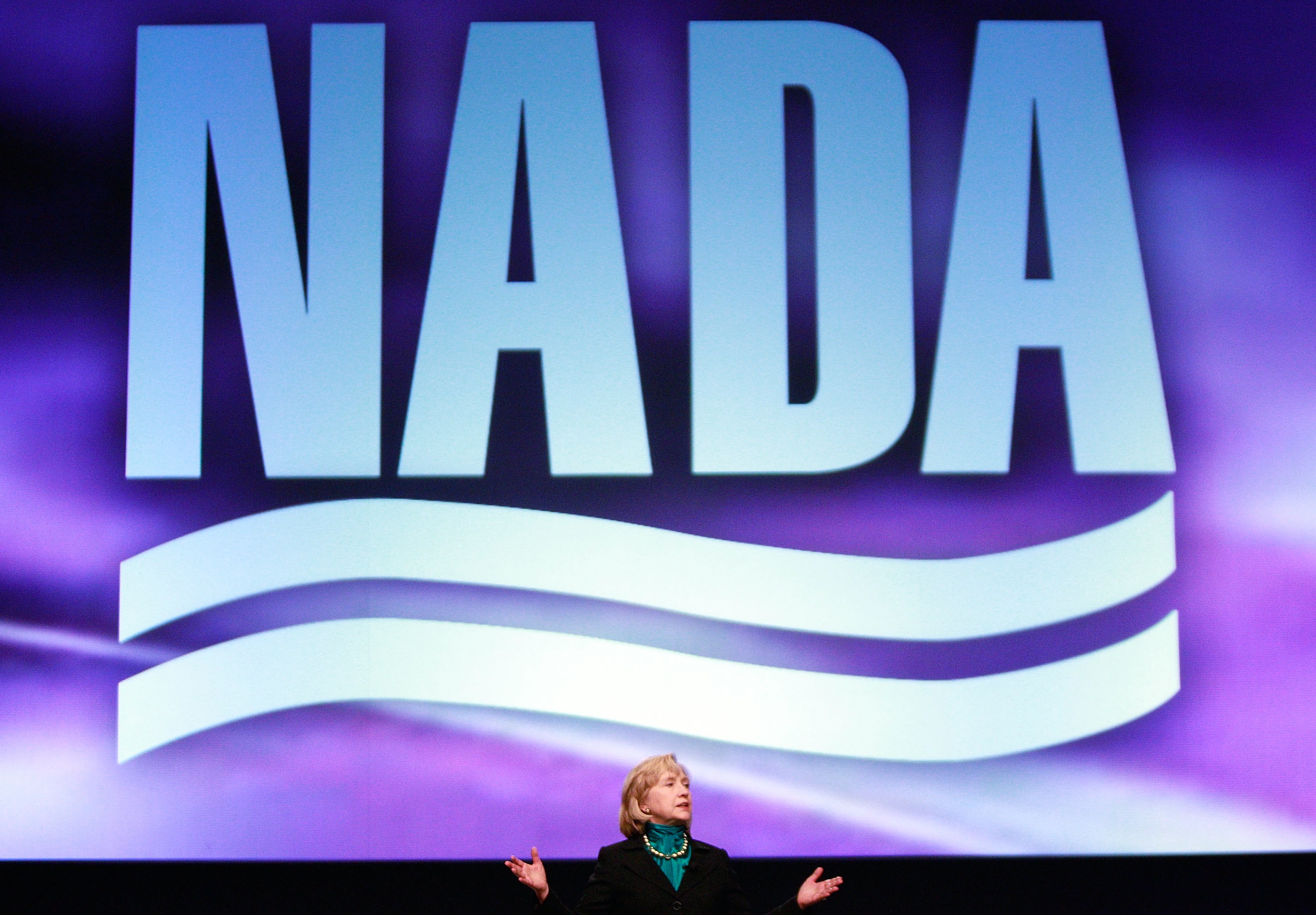
Hillary Clinton Addresses National Automobile Dealers Association Convention

Behold her explanation for why she refused for such an endless time to concede she had been wrong on Iraq:

I knew some of the young people who were there and I was very close to one Marine lieutenant who lead a mixed platoon of Americans and Iraqis in the first battle for Fallujah. So I felt like I couldn’t break faith with them. Maybe that doesn’t make sense to anybody else but me, but that’s how I felt about it. So I kept temporizing and I kept avoiding saying it because I didn’t want there to be any feeling that I was backing off or undercutting my support for this very difficult mission in Iraq.

She was supporting the troops by backing an impossible mission – and then refusing to reconsider! If that sounds like a neocon, you’re not wrong. She’s also going out on a limb naming her favorite book: the Bible. If that sounds like George W Bush, you’re not wrong. I’m with Damon:

Despite sharing her husband’s poll-driven risk aversion, Hillary Clinton has never played the game on his level, and her vulnerability to backlash against gratuitous displays of patent insincerity is already becoming glaringly apparent. Twice within the last week, she’s made a fool of herself by presenting a carefully crafted, overly fastidious, and utterly unconvincing version of her opinions. This kind of thing is going to get old very fast if it continues over the (God help us) nearly 29 months between now and November 2016.

Her political skills are legendarily poor. And yet our only hope for keeping the lunatic party out of the White House is a charm-challenged political amateur.

(Photo: Sean Gardner/Getty.)

No, ISIS Is Not Al-Qaeda

Evan Perkoski and Alec Worsnop clear up an important misconception:

[C]ontrary to many media reports, ISIS is not a splinter group of AQ. ISIS wasn’t founded by or ever directly a part of AQ; rather, they were affiliates, two groups with close bonds, with one pledging loyalty to the other though at all times maintaining autonomy. This is an important distinction since labeling ISIS a splinter implies AQ factionalism that in reality never existed. Instead, ISIS’s links with AQ, rather than signaling weakness or factionalism, have played a major role in their development by providing access to resources, strategic and tactical guidance, recruits, and an ideology that helped socialize and bind together individuals from disparate backgrounds.

Benjamin H. Friedman also rejects the comparison in terms of the threat ISIS poses (or rather doesn’t pose) to the US:

The idea that we need to fight ISIS because of its potential to use terrorism against the United States suffers similar flaws [to the logic of the Iraq War]. During the Iraq War, hawks constantly warned that leaving Iraq would allow terrorist havens to form there. Their mental model was 1990s Afghanistan. They ignored the fact that al Qaeda (the original group that attacked Americans) came from particular conflicts, rather than being some kind of plant that grew in failed states. And even in Afghanistan, the problem was more that the government — the Taliban — allied with al Qaeda, rather than the absence of government. And hawks forgot that U.S. gains in drones and surveillance technology since the 1990s had destroyed havens—now those were easy targets.

Today, we are repeatedly told that ISIS is more brutal than al Qaeda and thus a bigger danger to Americans. But that logic confuses an insurgency with a group focused on attacking Americans. ISIS is a nasty organization fond of terrorist violence, radical Islam, and Islamic caliphates, but not an obvious threat to Americans. Conflating morally noxious Islamists with those bent on killing Americans is one of the errors keeping us at endless war.

In fact, Barak Mendelsohn considers ISIS’s ascendency evidence of al-Qaeda’s decline:

[B]eyond raising ISIS’ profile, the terrorist group’s march through Iraq also diminishes al Qaeda’s. Al Qaeda’s greatest achievement was the 9/11 attacks, but that was 13 years ago. Many of today’s jihadis were young children at that time. Moreover, the attack on the United States was only supposed to be a means to an end: the establishment of an Islamic caliphate in the heart of the Middle East. Al Qaeda franchises did manage to gain (and then lose) some territory in Yemen, Somalia, and northern Mali. But these territories are smaller in size and significance than what al Qaeda wanted — and what ISIS controls today. Although al Qaeda may have started the march toward the reestablishment of the Caliphate, it is ISIS that seems to be realizing it. …

Al Qaeda’s appeal relative to ISIS’ is greater when questions of how to run a territory populated by Sunni Muslims who do not subscribe to the Salafi-jihadi radical interpretation of Islam take center stage. When the front stabilizes and the intensity of the fight subsides, such questions will return and the inherent weakness of ISIS will resurface. ISIS is an extremely capable force, but its battle achievements do not make it any more appealing as a government.

The question is whether we can muster the patience and restraint to see it blow itself out.

Their Poor, Huddled, Underage Masses, Ctd

Bishops Hold Mass And Procession On US Border In Support Of Immigration Reform

Many outlets have identified gang activity in Latin America as the main cause of the increasing number of child migrants crossing the border. But Byron York thinks the Fox News right, which instead blames Obama’s immigration policies, has a solid case:

Border Patrol agents in the most heavily-trafficked area of the surge, the Rio Grande Valley sector of Texas, recently questioned 230 illegal immigrants about why they came. The results showed overwhelmingly that the immigrants, including those classified as UACs, or unaccompanied children, were motivated by the belief that they would be allowed to stay in the United States — and not by conditions in their homelands. From a report written by the agents, quoting from the interviews:

The main reason the subjects chose this particular time to migrate to the United States was to take advantage of the “new” U.S. “law” that grants a “free pass” or permit (referred to as “permisos”) being issued by the U.S. government to female adult OTMs traveling with minors and to UACs. (Comments: The “permisos” are the Notice to Appear documents issued to undocumented aliens, when they are released on their own recognizance pending a hearing before an immigration judge.) The information is apparently common knowledge in Central America and is spread by word of mouth, and international and local media. A high percentage of the subjects interviewed stated their family members in the U.S. urged them to travel immediately, because the United States government was only issuing immigration “permisos” until the end of June 2014…The issue of “permisos” was the main reason provided by 95% of the interviewed subjects.

But Dara Lind lists “13 things you need to know to get a handle on what is actually going on along the border right now.” Among them:

[Homeland Security Secretary Jeh] Johnson has said that immigrant children coming in now aren’t eligible for “an earned path to citizenship” — which could be interpreted to mean that they aren’t eligible for any legal status whatsoever. But under existing immigration law, if they meet standards for humanitarian status because they were persecuted in their home countries, they are eligible to receive it. And experts say that immigration judges aren’t supposed to take comments like Sec. Johnson’s into consideration when considering a child’s case.

A recent report from the Office of the UN High Commissioner for Refugees says that about 60 percent of children coming over from Central America might be eligible for some kind of humanitarian protection. And a Vera Institute of Justice report from 2012 identified 40 percent of immigrant children as eligible for some sort of legal protection under US immigration law.

I’d say it’s obviously a combination of the two: brutal insecurity in their lands of origin, plus the knowledge that overwhelmed humanitarian resources on the border have no choice but to let immigrant children find temporary (but practically permanent) refuge in the U.S.

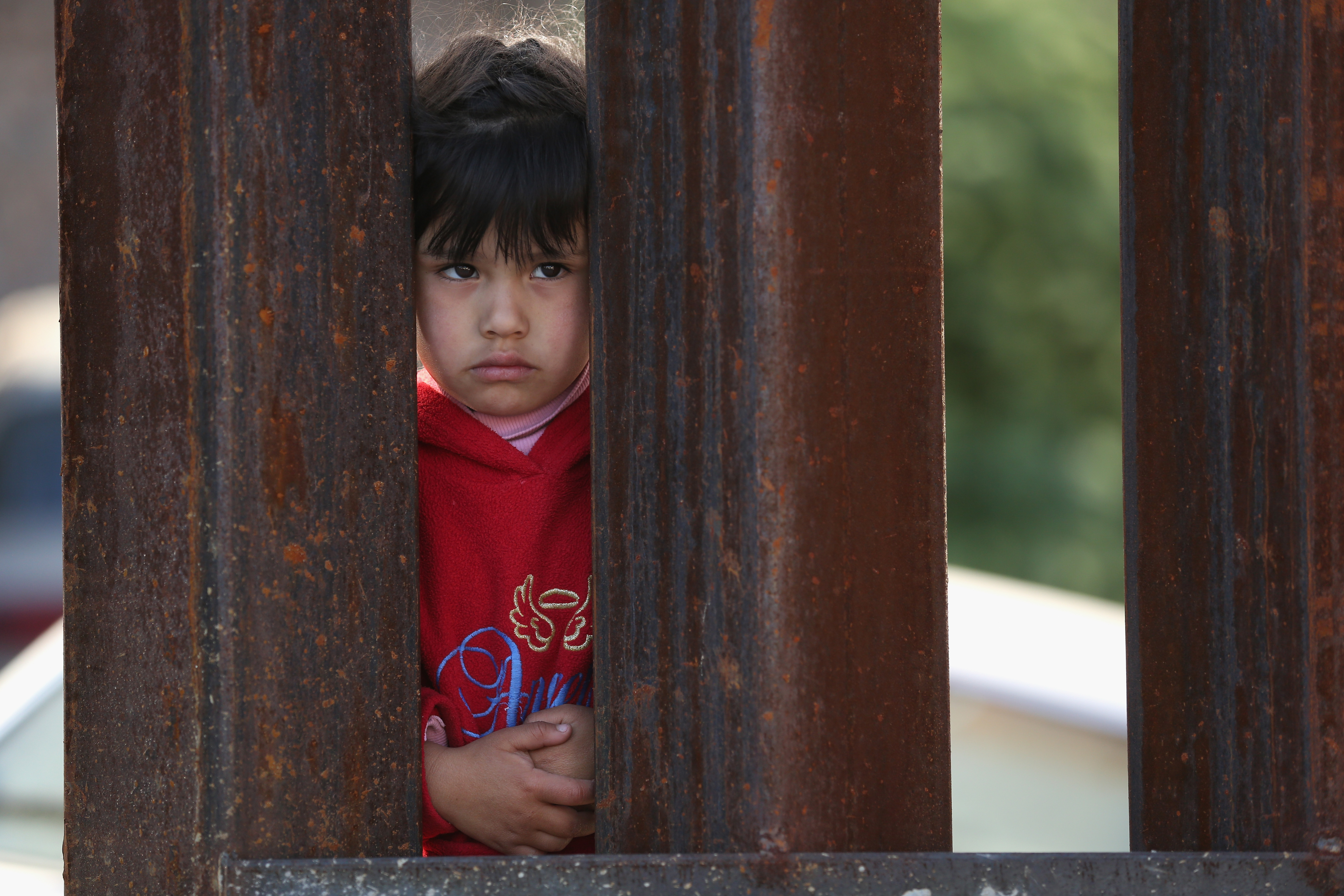
(Photo: A child on the Mexican side of the U.S.-Mexico border fence looks into Arizona during a special ‘Mass on the Border’ on April 1, 2014 in Nogales, Arizona. By John Moore/Getty Images.)

Mosul Under The Fanatics

Andrew Slater tries to get a sense of what daily life is like there now:

Residents in Mosul seemed very worried about the city being bombed by the Iraqi Air Force and the return of the Iraqi Army from the south, but most did not see this prospect as imminent. But many sounded untroubled by the fearsome reputation of life under ISIS after observing them for a few days as even the foreign fighters appeared to be leaving the people of Mosul alone. New announcements are being broadcast throughout the city from the speakers of mosques, but these primarily concerned people returning to work.

Most said they had not observed or heard of the new ISIS authorities enforcing their announced bans on smoking cigarettes or water pipes, immoderate dress, and public gatherings, but most residents said they have been very careful to comply with the new rules.  A few women had returned to work wearing the hijab, but most are staying home, uncertain of how they would be treated by the ISIS fighters in public. Even low-level government employees who were forced to swear oaths against the government in Baghdad were reportedly allowed to return to work unmolested.

Just wait a while … and the beheadings will surely begin. Meanwhile, Fehim Taştekin talks to Mosul’s governor Atheel Nujaifi, now taking refuge in Kurdistan, about his plans to try and retake the city:

It appears almost impossible for Iraqi actors to develop a joint plan for action against the chaos generated by ISIS. The governor said he is now relying on his own resources and the KRG administration. He is coordinating with Erbil and believes some groups controlling parts of Mosul are ready to fight ISIS. Even if ISIS is ousted from Mosul, however, it will not bring about resolutions to the grievances of the Sunni majority there. It is not enough to treat the matter solely as an issue of terror. Nujaifi had earlier proposed a federalism model for the region, but it was not accepted.

So what is the the real solution to ISIS? Nujaifi offered, “Another course of action is needed to combat ISIS. This issue has to be resolved not by Maliki, but as a Sunni project. We have to struggle against ISIS with our Sunni way. It is not a fight for Shiites or Maliki’s supporters. Maliki cannot fight ISIS. Sunnis can do it because that will prevent ISIS from exploiting sectarian arguments.”

Who Are These ISIS Chappies, Anyway? Ctd

Keating pens a thorough explainer on ISIS leader Abu Bakr al-Baghdadi, tracking his rise from low-level militant to head of his own rogue proto-state:

Baghdadi fought in some capacity with Sunni militant groups after the U.S. invasion of Iraq but was arrested in 2005 and interred by U.S. forces at Camp Bucca, the main U.S. detention facility after the closing of Abu Ghraib. He wasn’t considered much of a threat and was released in 2009. The former commanding officer of Camp Bucca recently told the Daily Beast that when Baghdadi was released, he told his captors, “I’ll see you guys in New York.” (The guards at the prison were from a Long Island-based military police unit.) The commander, Col. Kenneth King, says Baghdadi “was a bad dude, but he wasn’t the worst of the worst” and is surprised he rose to such prominence.

It seems as if Baghdadi became far more hqdefaultinvolved with al-Qaida in Iraq while imprisoned than he had been before, to the point that he took over the group after the deaths of [Abu Ayyub] Masri and the other [Abu Omar] Baghdadi a year later. In 2011 he was designated as a global terrorist by the U.S. State Department with a $10 million bounty. Things really picked up in 2012, when, sensing an opportunity, Baghdadi dispatched some foot soldiers to join the fighting against Bashar al-Assad’s government in Syria. In 2013 he announced that the group was merging with Jabhat al-Nusra, the other al-Qaida affiliate in Syria, to form a new group called the Islamic State in Iraq and al-Sham.

That new group has turned out to be more formidable than anyone expected, in no small part due to its impeccable organization. Martin Chulov passes along what CIA and Iraqi analysts have learned from a massive trove of ISIS intelligence acquired on the eve of the group’s blitzkrieg on Mosul:

Laid bare were a series of staggering numbers that would be the pride of any major enterprise, let alone an organisation that was a startup three years ago.

The group’s leaders had been meticulously chosen. Many of those who reported to the top tier – all battle-hardened veterans of the insurgency against US forces nearly a decade ago – did not know the names of their colleagues. The strategic acumen of ISIS was impressive – so too its attention to detail. “They had itemised everything,” the source said. “Down to the smallest detail.”

Over the past year, foreign intelligence officials had learned that ISIS secured massive cashflows from the oilfields of eastern Syria, which it had commandeered in late 2012, and some of which it had sold back to the Syrian regime. It was also known to have reaped windfalls from smuggling all manner of raw materials pillaged from the crumbling state, as well as priceless antiquities from archaeological digs. But here before them in extraordinary detail were accounts that would have breezed past forensic accountants, giving a full reckoning of a war effort. It soon became clear that in less than three years, Isis had grown from a ragtag band of extremists to perhaps the most cash-rich and capable terror group in the world.

Yochi Dreazen outlines the “mafia tactics” ISIS is using to become financially independent of its benefactors in the Gulf:

The exact amount of money in ISIS’s possession is the subject of intense debate among Western intelligence officials. At the high end, some analysts estimate that the group may have access to at least $500 million in cash drawn from bank robberies, oil smuggling, and old-fashioned extortion and protection rackets. Other analysts believe the number is far lower, with one official putting it at between $100 million and $200 million. Those numbers are moving higher as the group conquers more cities on its seemingly inexorable drive toward Baghdad and is able to loot the local private and government banks. On Monday, ISIS fighters took the strategically important town of Tal Afar, adding to the territory under its direct control. …

ISIS’s success at funding its own operations is indicative of a broader trend. Extremist groups throughout much of the world, particularly Africa, are beginning to reduce their dependence on outside donors.

More background on ISIS here and here.

Why Is Paul Wolfowitz On Television?

A reminder (from David Corn) of the man’s fathomless ignorance about Iraq (as well as the blood of well over 100,000 on his hands). Here’s the intellectual’s assessment of the possibility of sectarian warfare once Iraq had been invaded:

There’s been none of the record in Iraq of ethnic militias fighting one another that produced so much bloodshed and permanent scars in Bosnia along with the requirement for large policing forces to separate those militias. And the horrors of Iraq are very different from the horrific ethnic cleansing of Kosovars by Serbs that took place in Kosovo and left scars that continue to require peacekeeping forces today in Kosovo. The slaughter in Iraq—and it’s been substantial—has unfortunately been the slaughter of people of all ethnic and religious groups by the regime. It is equal opportunity terror.

The tape is here. It’s reminiscent of Bill Kristol’s conviction that sectarianism was a fantasy:

We talk here about Shiites and Sunnis as if they’ve never lived together. Most Arab countries have Shiites and Sunnis, and a lot of them live perfectly well together.

I wish I could feel calm contempt for these people. But it is interwoven with rage.

Soccer: An Immigrant’s Game

Charles Kenny adds soccer to the list of reasons to support a more open immigration policy, pointing to the aftereffects of a 1995 European Court of Justice ruling that made it easier for players from outside the EU to play for European clubs:

Unsurprisingly, leagues that saw a higher influx of talented players improved: Clubs in the South Africa Child Football Teamsleague won more Europewide competitions. Meanwhile, talented players migrated to teams in strong leagues based in countries that were richer, closer to their home country, and shared colonial ties. That meant the better leagues, like the English Premier League or Spain’s Primera Division, extended their lead over other European leagues in countries such as Denmark and Romania. In this case, talented migration into Europe created greater productivity but also increased inequality. Everyone was better off, but it is true the best leagues benefited the most.

There was unvarnished good news for the countries that the talented migrants left behind. First, national teams in origin countries did better in international matchups the more their emigrants played in the top leagues in Europe. [Researcher Chrysovalantis] Vasiliakis estimates that the impact of greater global mobility of players lifted Uruguay, Paraguay, and Chile 25 places or more in the 2010 FIFA rankings of national teams.

But those effects only seem to extend so far. Mallé Fofana asks why West African countries don’t field World Cup-winning teams even though they produce lots of great players for European clubs:

Talent alone cannot win games. Talent must be molded and refined in a system that can nurture and sustain it.  European and South American football teams have perfected this system — a well-oiled and well-financed system of coaches, trainers, nutritionists, and sports psychologists that not only have helped to develop the system but also sustain it today.  This system offers part of the access that a country like Cameroon lacks, in soccer as in the rest of its economy.

The other part comes from the lucrative financial incentives for performance. When the potential for income is taken away, so is the incentive to perform.  This in turn impacts morale, motivation, and results, and once again the matter circles back to the issue of access.

Brandon Valeriano notices that the US national team is short on Latino players:

Club soccer dominates in the U.S., and this is an expensive and almost impossible barrier for Latinos due to the costs and suburban nature of the programs.  Moving up a level, participation in high school or college teams assumes the participant has the freedom to actually play sports after school, an option not many of us had as working became a priority once we were of legal age.  College soccer is an even tougher prospect, since the costs or barrier of an inadequate school system make this path a huge obstacle for the Latino population.  The pipeline of talent to the World Cup team is broken for Latinos, but it’s also broken in the higher education system and in the political system.  The lack of development of Latino players is a symptom of the deeper problems in American society.

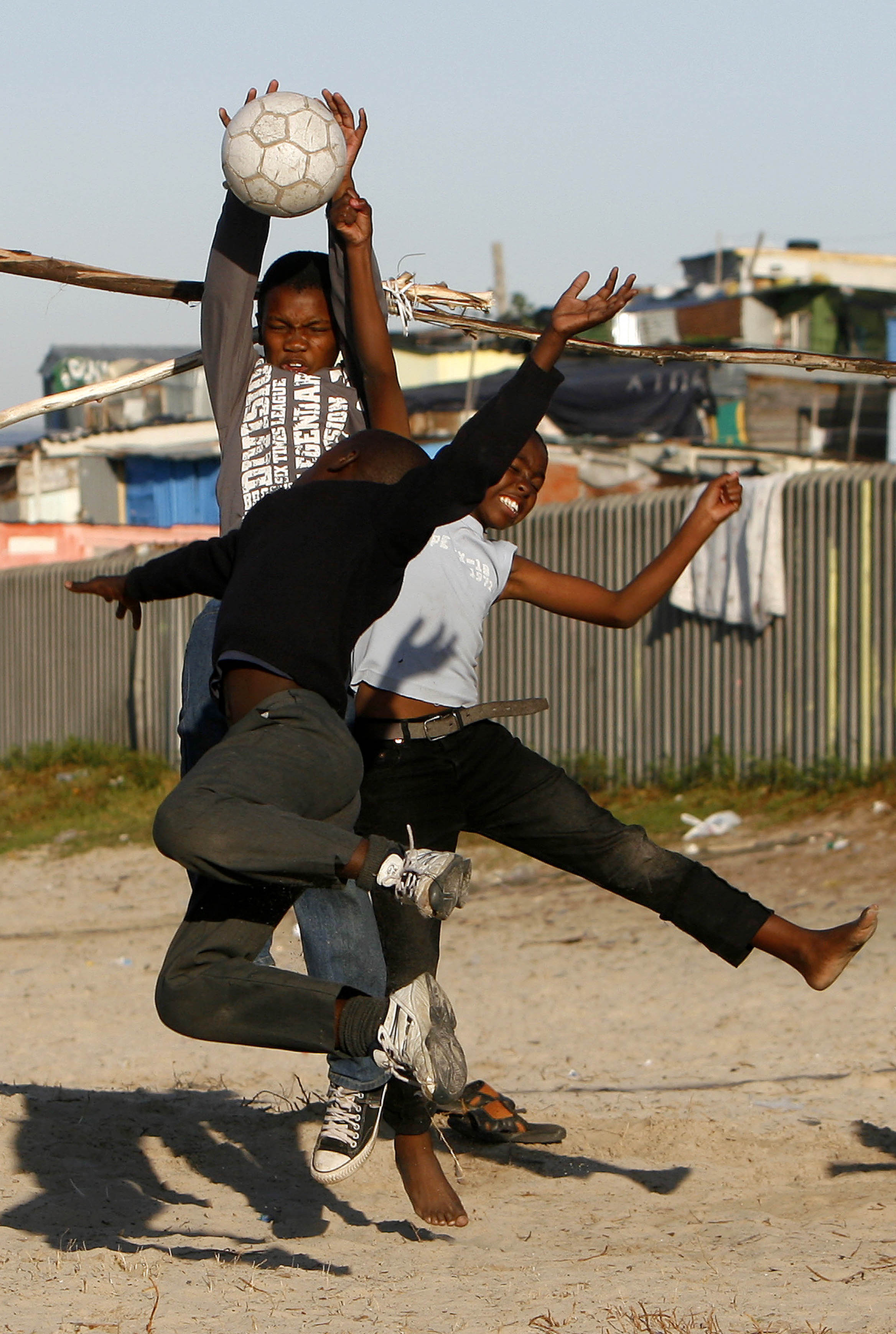
(Photo: Local children from the ‘Seven Stars’ Football Team practice and play football on their field next to the N2 Highway that runs past Gugulethu Township near Cape Town, Western Cape, South Africa on May 20, 2010. By Mark Wessels / Barcroft Media / Getty Images)