
Colorado Springs, Colorado, 7.15 am
Colorado Springs, Colorado, 7.15 am
Tim Fernholz discusses Daniel Drezner’s new book, The System Worked: How the World Stopped Another Depression. In it, Drezner posits that the global system of economic governance was to thank for preventing a major catastrophe in 2008. Fernholz:
But wait—wages, growth and jobs are still lagging in the United States and the European Union. That has a lot of those countries’ citizens blaming globalization and the institutions that support it, such as the International Monetary Fund. Don’t blame globalization, Drezner says: Blame your governments.
In the recovery stage of a financial crisis, growth is expected to be slow—clearing debt off balance sheets takes longer than responding to other kinds of shocks. Hastening growth requires policies that were not fully adopted in either the US or Europe, as austerity dominated policy debates. (It’s worth noting that the IMF was long a critic of US fiscal policy, calling for more near-term stimulus and longer-term efforts to deal with debt.) And the EU, with its mixed record of addressing its own debt crisis and recession—Drezner calls it “an unmitigated disaster”—is more of an actor in global governance than an example of it. …
There are good signs that global governance will get stronger. For one, institutions are adapting: the IMF has relaxed some of its traditionally neoliberal arguments and is a more broad-based institution; the G20 provides a platform for the BRICs and the G7 nations to coordinate; Basel III has put a floor on bank regulation. For another, countries are recommitting to the global system with a flurry of bilateral and regional trade deals under discussion, even if Edward Snowden’s revelations have clearly chilled US talks with Europe.
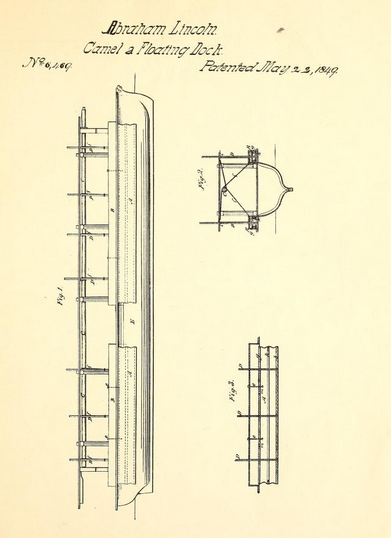
Abraham Lincoln was the only president with a patent:
It should not be too surprising that young Abe Lincoln shares more in common with Doc
Brown than Van Helsing, but it has little to do with science fiction and everything to do with the US Patent Office. Specifically, US Patent No. 6,469: a device for “buoying vessels over shoals” according to its inventor, a 40-year-old Abraham Lincoln. Apparently, this self-taught prairie lawyer also taught himself how to buoy vessels in his early 20s, when a flatboat he worked on ran aground on a milldam in New Salem, Illinois. As retold by his friend and bodyguard Ward Hill Lamon: “the boat stuck for one night and the better part of a day … in momentary danger of breaking in two, or sinking outright.” Fortunately, the 23-year-old Lincoln was able to engineer his way out of the predicament with a “singular experiment” that everyone in New Salem apparently came to watch. Despite reading like a mix between a folk tale and a 19th-century episode of MacGyver, such is the fascinating history behind the device currently on display in the Smithsonian as the first and only patented invention attributed to a US president.
(Image via the Lincoln Financial Foundation Collection, Lincoln Library/Internet Archive)
Aaron Renn contends that over-regulation and generous government benefits have hampered the state’s economy:
Depending on the month, Rhode Island has either the worst or second-worst unemployment rate in the nation: 9.3 percent, according to the latest Bureau of Labor Statistics figures. Since 2000, the state has lost 2.5 percent of its jobs, and what jobs it has created are mostly low-paying. The job situation is so dire that entire local economies have become dominated by the benefits-payment cycle. In Woonsocket, for example, one-third of residents are on food stamps.
Rhode Island boosters cite its per-capita income of $45,877—4.9 percent above the national average and 14th-best in the country—as evidence of the state’s economic strength. But this number is misleading. It’s driven in part by high levels of government-transfer payments: everything from retirement and disability insurance to workers’ compensation and unemployment, veterans’ benefits, and the whole panoply of federal grants (Medicaid, food stamps, SSDI). Rhode Island ranks third in the country in such transfers per capita. Incomes have also been stagnant for decades. As late as the 1930s, Rhode Island’s per-capita income was nearly 50 percent greater than the national average. By the mid-1940s, though, it had declined to just a tick above the U.S. average, where it remains.
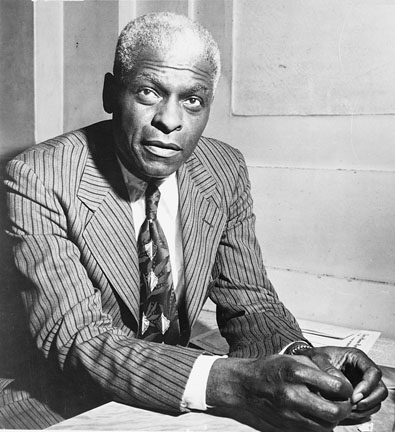
In an interview, Randal Jelks discusses his biography, Benjamin Elijah Mays: Schoolmaster of the Movement, about the Morehouse College president whom MLK Jr. considered his spiritual and intellectual father. How Mays laid the theological groundwork for the civil right movement:
He went to India and met and interviewed Gandhi in 1936 and came back and wrote about
his encounter. He talked with Gandhi about what a nonviolent social movement looks like and how it should take place.
Martin King was 15 when he came to Morehouse. The war was beginning to affect enrollment, and Mays, at an all-men’s college, used early admissions to find talented teenagers to enroll. King and other students were often invited to Mays’ house to sit at table when dignitaries were visiting. The students had to learn about the visitor beforehand and were expected by Dr. and Mrs. Mays to ask questions. The great civil rights activist Dorothy Height remembers meeting Martin King at 15 sitting at the Mayses’ dining room table. This was not peculiar to King. Many other students tell you the same.
If Jelks’ biography discusses what came before Dr. King, Matthew J. Cressler argues that the religious dimension of debates about racial justice didn’t end with his death, but extended to what came after it – including the Black Power movement:
Journalists were quick to contrast what they took to be the irrational rage of urban youth shouting “Black Power!” with caricatures of a more palatable southern Christian nonviolence – needless to say, neither of these characterizations approximated the reality of either.
The first generation of post-civil rights scholarship reproduced this juxtaposition between secular anger and religious love, black violence and Christian nonviolence. Even as more recent scholars have challenged many of the classic binaries separating Black Power from civil rights, the secular/religious divide usually persists since it serves as a convenient category for marking the elusive shift from one style of social justice struggle to another. (The convenience of this argument depends on presuppositions about the inherent peacefulness of “real” or “proper” religion that are built into the modern study of religion itself, but that is a conversation for another time.)
Convenience notwithstanding, Black Power was actually taken up by a number of black religious communities almost immediately after its first iteration. On July 31, 1966, not long after Carmichael’s famous statement, the National Committee of Negro Churchmen published their own statement expressing deep disturbance over the manufactured controversy surrounding “Black power” and what they called the media’s “historic distortions of important human realities.” They argued that “what we see shining through the variety of rhetoric is not anything new but the same old problem of power and race which has faced our beloved country since 1619.” They identified the hypocrisy of “the assumption that white people are justified in getting what they want through the use of power, but that Negro Americans must, either by nature or by circumstance, make their appeal only through conscience.” Two years later this same committee, now named the National Committee of Black Churchmen, officially affirmed emergent Black Theology as a “theology of black liberation.”
Even the Black Panthers – often presented as the paradigmatic foil for (the popular, sanitized version of) the Christian nonviolence of Martin Luther King – met in churches and collaborated with religious people and communities from the get-go.
(Photo of Mays via Wikipedia)
An expert writes in (with a few updates below):
As a geologist, I’m surprised that the discussion of extensive mountain-flattening in China has so far ignored the most scary potential consequence: widespread earthquake damage. The danger doesn’t come from removing the mountains; it comes from filling in the valleys. In brief, soils that are being placed for future building construction need to be deposited in thin “lifts” a few feet thick and compacted carefully before the next layer is placed. Soils that are just dumped into valleys, in layers tens of meters thick, can not be properly compacted. They are very likely to turn into Jello when shaken, especially if they’re wet when the shaking occurs.
If you want to see a marvelous example of this, look at the damage to the Mission District in San Francisco during the Loma Prieta quake. Buildings constructed on thick layers of poorly compacted fill were far more heavily damaged than those a few blocks away, which were built on native soils.
The scale of what the Chinese are doing dwarfs any comparison with San Francisco.
Some of these cities could double in area, with nearly all of the additional construction space consisting of poorly compacted soil. Even if the new buildings stay up for a few years, the soils at depth will remain uncompacted and may liquefy during the next earthquake. And central China, where this work is being conducted, is subject to frequent massive earthquakes, at least as frequent and as intense as anything California has to offer.
Update from a reader:
Mine is a small correction: it’s the Marina District that was built on landfill, not the Mission, and the damage from the ’89 earthquake was worst in the Marina. I was living on Telegraph Hill at the time. My home was shaken, a few books and records knocked out of their cabinets, but there was no real damage to my house or to those of anyone around me on the hill. We lived on rock. Most of the Mission, if not all of it, is solidly on land.
But the Marina and much of the Embarcadero are on landfill. (There’s a fine poem by Robert Hass about how some of this came about, called “The Harbor at Seattle“.) Currently our home is at the beach, built on sand, and everyone knows what that means, or thinks they do. But it’s survived two temblors with just one crack, a minor one, in the basement walk way. Liquefaction is a potential problem.
But the “give” of sand, in an earthquake, might be advantageous. It’s the tsunamis we have to watch for. There are signs everywhere out here instructing you where to run. (“To the hills!”)
Another:
Your first update was correct, in part: It was the Marina, not the Mission, that the first reader probably meant to reference. But the Mission did have soil failures in 1906, and we have liquefiable soil around the entire Bay edge and along old Mission creek.
But while we’re correcting earthquake references in the 25th anniversary year of Loma Prieta, may I just note, as a structural engineer in San Francisco, how often I have to shake my head when clients say “My building is on rock” or worse, point out how little damage they sustained in 1989 – from a short earthquake centered 50 miles away! When our earthquake comes, rock sites are going to shake plenty too, and a lot harder than they did in ’89. Soil can explain why a distant site still feels strong shaking, but the real culprit is a weak or ill-conceived structure above the ground. (San Francisco has a new mandatory retrofit program addressing the worst of these. Come here in the summer of 2018, and you won’t be able to walk to the nearest google bus stop without seeing a dozen retrofits in progress. Meanwhile, both the A’s and the Giants are currently in first place …)
As for the uncompacted fill (the first reader’s point about China), the earthquake issue there is not just amplified shaking, but settlement. Shake all that loose soil, and if it slumps or settles just a few inches, that’s enough to crack foundations, roads, runways, buried pipelines, etc. It doesn’t kill as many people as structural collapses, but it can really mess with your local and regional economy.
The above message is definitely NSFW. But contains a more eloquent statement of the truth than I was capable of earlier today. Words are just words: as powerful as our minds want them to be and no less. No, I don’t favor deliberately giving offense, or being ill-mannered, or callous or cruel. But in a classroom or in the public arena, I do favor minimal sensitivity when debating core issues. Why? Well a reader summed it up well:
The poet William Stafford had a habit of occasionally issuing an invitation – around the dinner table, or in the classroom – that went like this: “Let’s talk recklessly!” As his son Kim Stafford recalls: “This meant tiptoeing in polite banter was done. We were to dig deep, gossip freely about our uncertainties and strange beliefs, and lean forward and tumble into the liveliest possible interchange. I always felt this kind of verve matched his habit as a writer: to speak boldly through fear, reticence, or even the need to be strong or eloquent. ‘I must be willingly fallible,” he said once, “in order to deserve a place in the realm where miracles happen.’ And part of such necessary fallibility required trying out wild things in language, and speaking with the tang of zest and adventure.”
When people are afraid to talk about anything in a classroom, the potential of a university is diminished. I’m not talking about deliberate demonizing of others or threats of violence; I’m not talking about prejudice or bigotry. I’m talking about being able to say words freely in order to think more freely. That’s the animating spirit of this blog – and it allows us to discuss subjects like compassion for virtuous pedophiles, as we did today. Or the link between testosterone, men and violence. Or the latest inflammatory evidence throwing doubt on the idea that three simultaneous deaths in Gitmo were all suicides, undetected for two full hours. No one should be afraid of honest, open attempts to figure out the truth. Period. Including about those formerly affectionately known by many as “trannies.” (By the way, it’s a word barely ever used on the Dish, and never without irony or affection. Check out the archives yourself.)
Today, I also felt better about airplane turbulence and worse about our robot future. I gave some unsolicited advice to Hillary – run as a “tough old broad” – and despaired of the American refusal to disown and destroy the Gitmo torture and detention camp.
The most popular post of the day was Engaging The T, Ctd, followed by my take on the latest bombshell in the Gitmo “suicides” case.
Many of today’s posts were updated with your emails – read them all here. You can always leave your unfiltered comments at our Facebook page and @sullydish. 14 more readers became subscribers today, and you can join them here.
See you in the morning.
A reader emailed prior to Maria’s intro today:
Afternoon! I am finding On Looking fascinating in so many ways! Two of my children were
diagnosed with sensory processing disorder (along with Aspergers) and it is difficult for them not to notice everything. Hypersensitive to noise means they hear things that most of us have learned to filter out – same goes for light, touch, smell and taste. Like most people with SPD, their diagnosis came after years of extremely picky eating, complaints about scratchy clothing seams and tags and silky linings in coats, refusing to see movies at the theater and, in our case, having one of them bolt and get lost at an amusement park when he sensed the fireworks were about to start (even though we were on our way out of the park).
Living with my boys means that the rest of us are forced to take note of what we hadn’t. Often we realize just how much we are missing with our so-called properly functioning sensory system. True, they often find themselves with what can only be described as a traffic jam of sensory input in their brains (and that often leads to scenes that are not pretty), but they also notice first when the spring peeper frogs are awake, that the water system needs salt, that Daddy is home (in a Prius), and that the night-light bulbs are about to burn out.
We prefer the word “challenge” rather than “disorder” when talking about their Aspergers and sensory issues because while it can be overwhelming at times and even debilitating, it is who they are. And we kid that they can use their powers for good rather than evil! Their powers of sensory observation sometimes astound and add layers to the ordinary that would otherwise have been totally missed. Coupled with what I have read so far in On Looking, I can’t see any journey being ordinary again.
The Dish has covered sensory processing disorders before – here and here. By the way, a reminder of Maria’s appeal to readers earlier today:
Perhaps the greatest gift of a book club is that we get to share our private realities around a common point of interest – the book – and in the process enrich the collective experience. With that in mind, what is one facet of your day or aspect of your usual daily routine – your apartment, your commute, your dog walk route – that On Looking helped you see with new eyes?
Email your personal observations – and photos when relevant – to bookclub@andrewsullivan.com and we’ll pick the most interesting ones to post. And we’ll be discussing On Looking for up to the whole month of June, so you still have plenty of time to buy the book and join the conversation.
I haven’t seen The Case Against 8 yet, because they won’t send me a screener, but this review is a beaut. Two passages stand out:
Chad Griffin, founder of AFER and since 2012 the president of the Human Rights Campaign, wonders—when the group faces initial opposition from other campaigning groups who think in 2010 it is “too early” to pick marriage as the central gay rights fight to have—why gay groups spend more time fighting each other than “right-wing nut jobs.”
One hopes this is just a misunderstanding. Marriage had been the central gay rights fight since president George W. Bush announced support for the Federal Marriage Amendment in 2004. No one ever disputed that. The only question at issue by 2010 was whether it was worth trying to get the Supreme Court to issue a federal ruling on the entire matter at that juncture. Griffin, Boies and Olson bet on that – and lost, when their case was dismissed on the minor ground of standing. Which brings one to the following paragraph from the review as well:
The directors told me the most difficult scene to film was the last. The couples had just won their 2013 ruling in the Supreme Court, which struck down the Defense of Marriage Act and rejected Proposition 8, and now they wanted to get married—the women in San Francisco and the men in Los Angeles.
But the couples in Perry did not succeed in striking down DOMA; and one hopes the Beast will run a correction. The review tells us that there is no account of the other side in the case, there is no criticism of the Prop 8 team – “We are not only on the side of the good guys, but we are only ever on the good side of the good guys”, and that there is nothing actually revealing on the couples involved. In other words, it appears to be exactly the propaganda Griffin tried to peddle through Becker.
Well, I guess they’ll let me see the film at some point, won’t they?
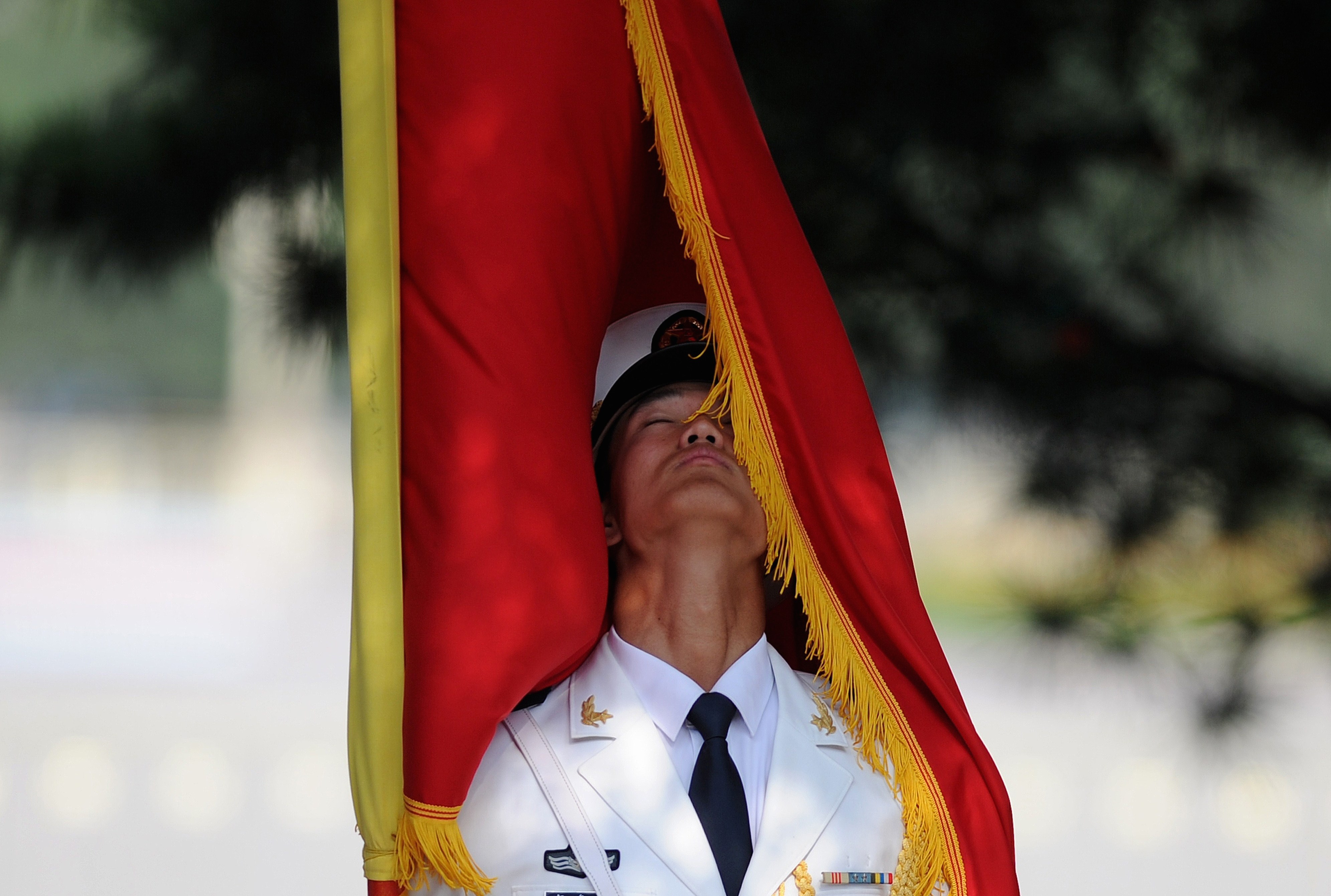
A Chinese honor guard prepares for the arrival of Bangladesh Prime Minister Sheikh Hasina and Chinese Premier Li Keqiang during a welcome ceremony outside the Great Hall of the People in Beijing on June 9, 2014. By Wang Zhao/AFP/Getty Images.


 The Dish