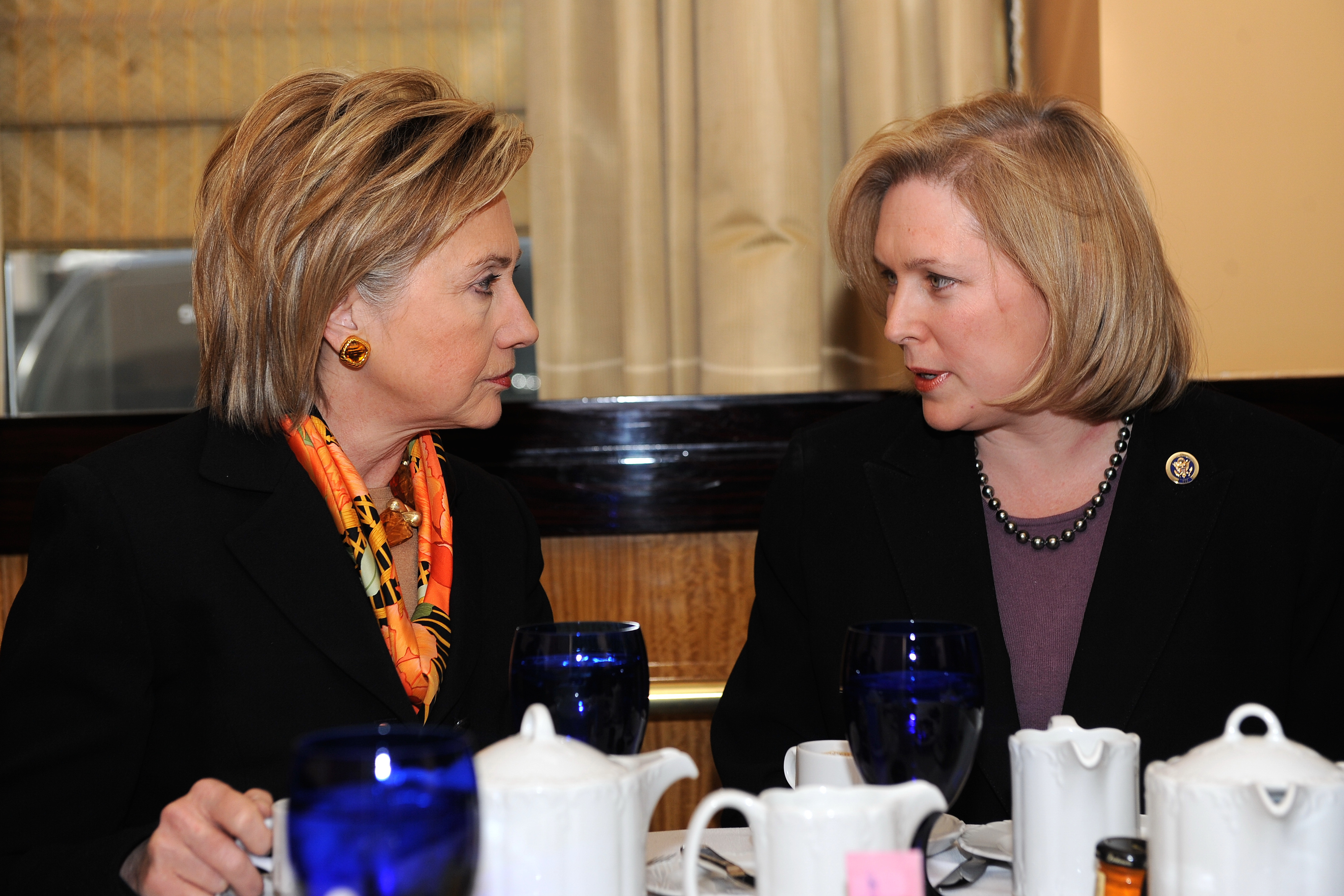
Rebecca Traister makes a compelling case:
The last thing any woman in politics needs is the appearance of having won only because her would-be opponents gave her a pass. This perhaps goes double for Clinton, whose years in the spotlight have demonstrated again and again that she is at her most appealing when she is fighting and scrappy, and at her most loathed when she is self-assuredly coasting. Clinton and her party require arresting, attention-drawing competition. She needs to be duking it out, and not just with a bunch of white guys. How many people are salivating at the thought of a Martin O’Malley candidacy? 19? 20?
A predictable primary is a boring primary, and a boring primary leads to a disinterested Democratic Party—a major hindrance going into a general election.
Part of what hooked voters in the mesmerizing 2008 race was the thrum of newness, the frisson of history-making every time a woman and a black man stood on a debate stage together. And while we could reproduce that thrill in a variety of ways—there is, after all, a shameful abundance of racial, ethnic, religious, and gendered history to be made before presidential politics become remotely inclusive—one of the most realistic, ready-to-roll scenarios of 2016 is the one in which multiple women show up to debate each other.
But there’s more at stake here than the health of the party in one presidential election. Viewing women as adversaries—ideologically and also within their own parties—is an urgent next step in helping the nation adjust to the idea that female politicians are just like, you know, regular politicians. That means we have to swiftly abandon the processional model, in which one diligent woman takes her hard-earned turn, while the next waits patiently in the wings. …
When a single avatar stands in for womankind, womankind projects onto that avatar its own varied ideas and priorities and standards. Clinton suffered from this last time, metaphysically unable to satisfy a million divergent hopes. She couldn’t be progressive enough, authentic enough, strong enough, stoic enough, or well-dressed enough for everyone. That’s part of why it’s dangerous for one woman to mean so much to so many.
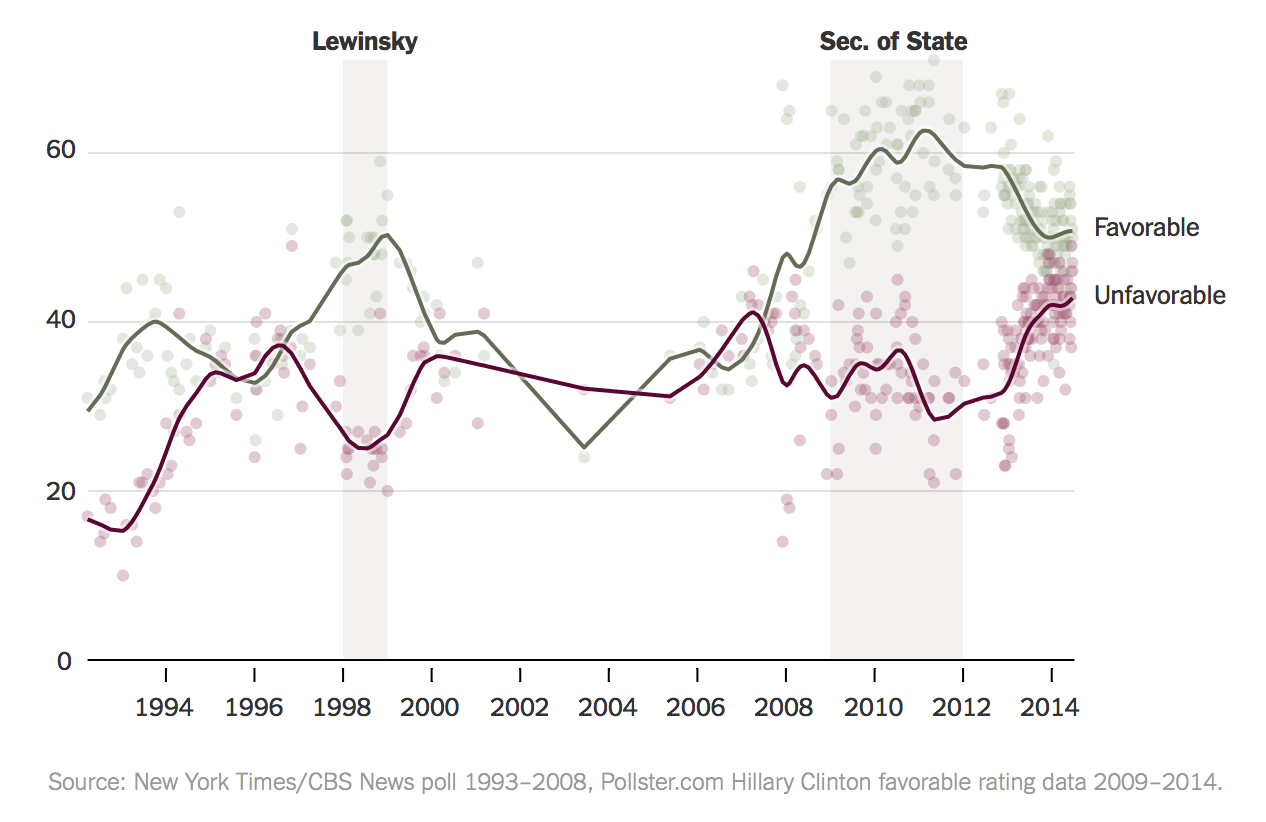
Meanwhile, Nyhan checks in on Clinton’s approval numbers:
[Her] artificially inflated poll numbers have made her seem like an especially strong presidential candidate, but the Clinton bubble is quickly coming to an end. …
[W]e tend to overrate the importance of candidate image, which is largely a function of the flow of partisan messages. When opposition elites withhold criticism during, say, a presidential honeymoon or a foreign policy crisis, politicians can seem unstoppable, but when normal politics resume, their images — and their poll numbers — quickly return to earth. The same will be true for Ms. Clinton.
(Photo: Secretary of State Hillary Clinton has lunch with her replacement in the Senate, Kirsten Gillibrand, at Oscars Restaurant in New York City on January 25, 2009. By Enid Alvarez/NY Daily News Archive via Getty Images)
 The Dish