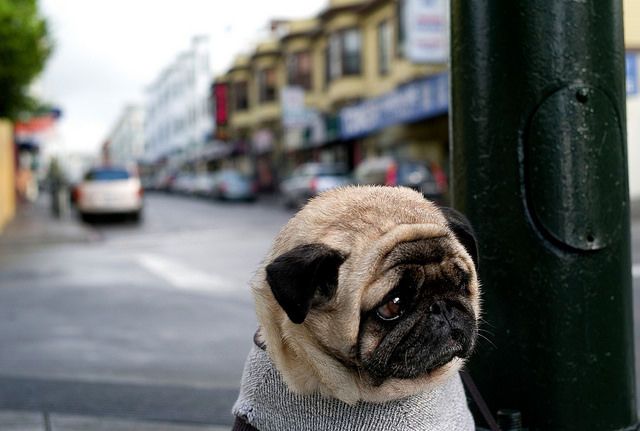
In a review of Laurel Braitman’s Animal Madness, Joshua Rothman considers how human habits affect the minds of our pets:
When it comes to animals like [the “mad” elephant] Tip, “Animal Madness” has a straightforward message: Braitman will convince you that exotic animals shouldn’t be kept in zoos. … But what about pets? For them, it’s our busyness that’s the cage. Dogs and cats enjoy being around people—they’ve been bred to like us—but we’re spending less and less time at home. “Most urban and suburban dogs are only encouraged to be themselves for a small fraction of the day,” Braitman writes. Come sunset, “they flood the sidewalks around my house with their pent-up frustrations, pissing and smelling and dragging their people along behind them like water-skiers,” enjoying the human company that they crave. All is well, but then, after perhaps half an hour, “it’s back to the house for dinner, some petting, maybe some television with the humans, and then bed.”
Maybe, Braitman concludes, we should “stop leading the sorts of lives that cause large numbers of our pets to end up on psychopharmaceuticals.” We should spend less time on the Web and at work, and more time outside or at play with our animals. There is, in other words, a self-interested reason to care about their mental lives. In them, we can see “our own unhealthy habits reflected back at us.”
Previous Dish on the subject here and here.
(Photo by Christopher Michel)
 The Dish