Animal Kingdom Kink

Eastern Spadefoot frogs dig getting down in the rain:

To avoid predators such as fish, they evolved to consummate their vows in temporary ponds created by heavy rainstorms. “It’s one night of a massive frog orgy,” says [herpetology professor Steve] Johnson. When the downpour starts, male toads emerge from the ground making “vomiting-like” mating calls. The females respond, and the orgy runs through the night, after which the females lay thousands of fertilized eggs in the ponds. Most other toads spend a long time looking for mates, Johnson says, so this behavior is quite unique.

Within a few days, tadpoles hatch in such high numbers that the ponds resemble “boiling water” or a “super-organism that’s moving,” Johnson says. The ponds grow algae the tadpoles feed on. Two weeks after the rainy night, tadpoles become toads, hop away from their birthplaces, and burrow into the ground where they await their turn to party. Johnson says the toads are patient and can wait for the perfect mating conditions for months or years.

Reign Of Terroir

Dwight Furror assesses the war between “terroirists” and “anti-terroirists”:

Few terms in the wine world are more controversial than “terroir”, the French word meaning “of the soil”.  “Terroir” refers to the influence of soil and climate on the wine in your glass. But the meaning of “terroir” is not restricted to a technical discussion of soil structure or the influence of climate. Part of the romance of wine is that it (allegedly) expresses the particular character of a region and perhaps its people as well.

According to some “terroirists”, when we drink wine that expresses terroir, we feel connected to a particular plot of land and its unique characteristics, and by extension, its inhabitants, their struggles, achievements, and sensibility. Can’t you just feel their spirit coursing through your veins on a wild alcohol ride? The most extreme terroirists claim that the influence of soil and climate can be quite literally tasted in the wine. If this strikes you as a bit of, well, the digested plant food of bovines to put it politely, you are not alone. Many in the wine business are skeptical about the existence of terroir claiming that winemakers should make the best wine they can without trying to preserve some mystical connection with the soil. But the issue is an important one because the reputation of entire wine regions rests on the alleged unique characteristics of their terroir, not to mention the fact that the skill and discernment of wine tasters often involves recognizing these characteristics.

Rolling With Vollmann

In a profile of William T. Vollmann, Tom Bissell paints a vivid picture of an author whose interests range from war reporting to sex work to government surveillance (he was once suspected of being the Unabomber). He quotes Vollmann pondering mortality:

Vollmann stressed that in writing Last Stories, he really wanted to face up to death’s psychological challenges. Death, he said, “is nothing, and therefore the only way we can engage with nothing is to personify it … to invent.” For Vollmann, facing up to the inevitability of death involves remembering the orange he ate in his Bosnian rental while his friends sat dead in the front seats. “It was a hot day,” he said. “I was really thirsty. I ducked down and I was peeling one of these oranges and thought, ‘This is probably the last thing I’m ever going to eat.’ ” Twenty years later, when he gets upset about something, he wills himself to remember that orange and the strange reassurance it offered. Any type of permanent consciousness in the afterlife would, he believes, inevitably devolve into torture, and there would be no parting orange to leaven it. Consciousness is to our mortality what beer is to Homer Simpson: the cause of, and solution to, all our problems.

“Where does consciousness come from?” Vollmann asked, and it took me a moment to recognize he really was asking. I told him I didn’t have the faintest idea. Neither did Vollmann. “It makes no sense to me. None of it makes sense. It’s all preposterous, no matter how I look at it.” I reminded him that his first novel, You Bright and Risen Angels, seems to suggest that the collectivist social intelligence of insects might be preferable to the disquieting solitude of human intelligence—and it was possible that Vollmann spent more time alone in his head than any other living American writer. “Maybe,” he said, “it’s not so bad to be a social insect.”

A Short Story For Saturday

Today’s short story, Ann Beattie’s “Eric Clapton’s Lover,” first appeared in the Summer 1976 issue of the Virginia Quarterly Review. How it begins:

Franklin Fisher and his wife, Beth, were born on the same day of March, two years apart. Franklin was 39 years old, and Beth was 41. Beth liked chiles relenos, Bass ale, gazpacho; Franklin liked mild foods: soufflés, quiche, pea soup. How could she drink Bass ale? And it was beginning to show on her figure. It wasn’t just beginning to show—it was showing in more places, bulging actually, so that now she had big, fat hips and strongman arms. Her disposition had changed, too; as she got larger, she got more vehement, less willing to compromise. Now she cooked two dinners and ate spicy lamb shish-kebob, smacking her lips, shaking on more salt, while Franklin, across from her, lifted a forkful of unseasoned spinach soufflé.

Things got worse between Franklin and Beth after Franklin Junior (“Linny” to his mother) got married and moved to San Bernardino. Their son’s bride was “learning to drive a rig.” She demonstrated how to turn a truck wheel coming down an incline by leaning forward on their sofa, spreading her legs, and moving her arms in what seemed to be two separate circles. Neither Franklin nor Beth knew what to talk to her about. Franklin Junior said, “Yes, sir!” as his bride-to-be simulated steering the truck, She talked about her rig, drank a shot of scotch, declining water or an ice cube, and left after half an hour.

Read the rest here. For more, check out here Park City: New and Selected Stories. Previous SSFSs here.

The Promise Of Twitterature

https://twitter.com/TheTweetOfGod/statuses/444458510617567233

https://twitter.com/TheTweetOfGod/statuses/444458991192899584

https://twitter.com/TheTweetOfGod/statuses/444459514373615616

Reviewing David Mitchell’s recent Twitter experiment, which the Dish featured last weekend, Ian Crouch forecasts the future of literary Twitter:

There’s potential on Twitter for wild formal invention. Rather than just fiction tweeted, writers could find narrative in retweets, faves, blocks, and unfollows, and write in not just words but images, GIFs, emoji, and hyperlinks. Characters might exist as different Twitter handles, put in conversation, or else many characters subtly inhabiting a single account. It would wade into the messiness of parody accounts, anonymous mystery accounts, brand accounts, fake brand accounts, bots, and real people posing as bots. There are examples of this kind of writing, and its real emotional and intellectual possibilities, in the archive of work created for the Twitter Fiction Festival, which was held this past March: God tweets out a new book of the Bible about Justin Bieber; a cast of characters tweet about being trapped in a fictional airport during the polar vortex; Henry David Thoreau gets a smart phone at Walden Pond. Twitter is often funny, and so is Twitter fiction, but there are stories, too, of lost love, loneliness, and despair.

Writers may decide that Twitter is too narrow a space—too ephemeral, too rude or self-serving, too muddied by advertising and promotion—to both inspire and host meaningful fiction. Maybe everyone writing there is really still just gunning for a book deal. But I like to think that there is another kind of fiction to be written, the truest expression of the form, which embraces the quotidian nature of Twitter and its movements in real time. The project couldn’t be pre-written or announced; it would be spontaneous, changeable, full of odd tangents and breaking news and animal videos and sad, unfaved tweets. It would feature our first true @ narrator, writing in a voice that only seemed like unvarnished nonfiction opinion at the time. There may be someone out there already hard at work on the Great American Twitter Novel, tweeting and retweeting and subtweeting it one day at a time.

Poetry And Power All The Way

NYT’s Room for Debate recently rounded up writers’ thoughts on why poetry matters. Sandra Beasley’s response (NYT):

“Does poetry matter?” Yes. No one watching a competitive slam by students would doubt it. Every elegy drafted for President Lincoln “mattered,” even the trite or amateurish ones. Elegies by Walt Whitman, Gwendolyn Brooks, Langston Hughes and Stanley Kunitz mattered then, and have since endured.

What’s at question is poetry’s vaunted status above other artistic disciplines. “It’s poetry and power all the way!,” President Kennedy wrote to Robert Frost, after Frost spoke at his inauguration. He didn’t write “It’s ballet and power all the way!” and it’s probably for the same reason we do not have a Sculptor Laureate.

But Jonathan Farmer found some of the odes to poetics a tad overwrought:

David Biespel’s piece isn’t crappy. In fact, much of it is lovely. But he … gets a little carried away:

“Because poets have the highest faith that every word in a poem has value and implication and suggestion, a poem orients us in both our inner and outer existence.” Maybe I’m not a real poet (I’ve often entertained the possibility), but I have no such faith, high or otherwise. Sometimes, reading an individual poem, I’m able to gather enough conviction to start the generative chain of association that makes it so. I depend on poems to help me generate enough faith to find meaning, however provisionally. Most of the time, it doesn’t work, but I’d still like to be welcome in the church of poetry, even if I usually just stand at the back.

And yes, it does get pretty churchy in there. A little cultish sometimes, too. When [William] Logan writes, “We wouldn’t give people jobs as chemists or nuclear physicists without a decade of training, or make them pilots before they’d spent countless hours in a flight simulator,” I can’t help wondering whether he’s missed the obvious distinction or just become a little over-literal in his profession of the creed: poetry is a matter of life or death. After all, as William Carlos Williams wrote (and as poets love to quote) “men die miserably every day / for lack / or what is found there.” Even Williams, though, didn’t suggest that they literally die for lack of poetry (he was, after all, well acquainted with the actual causes of death).
The View From Your Window Contest

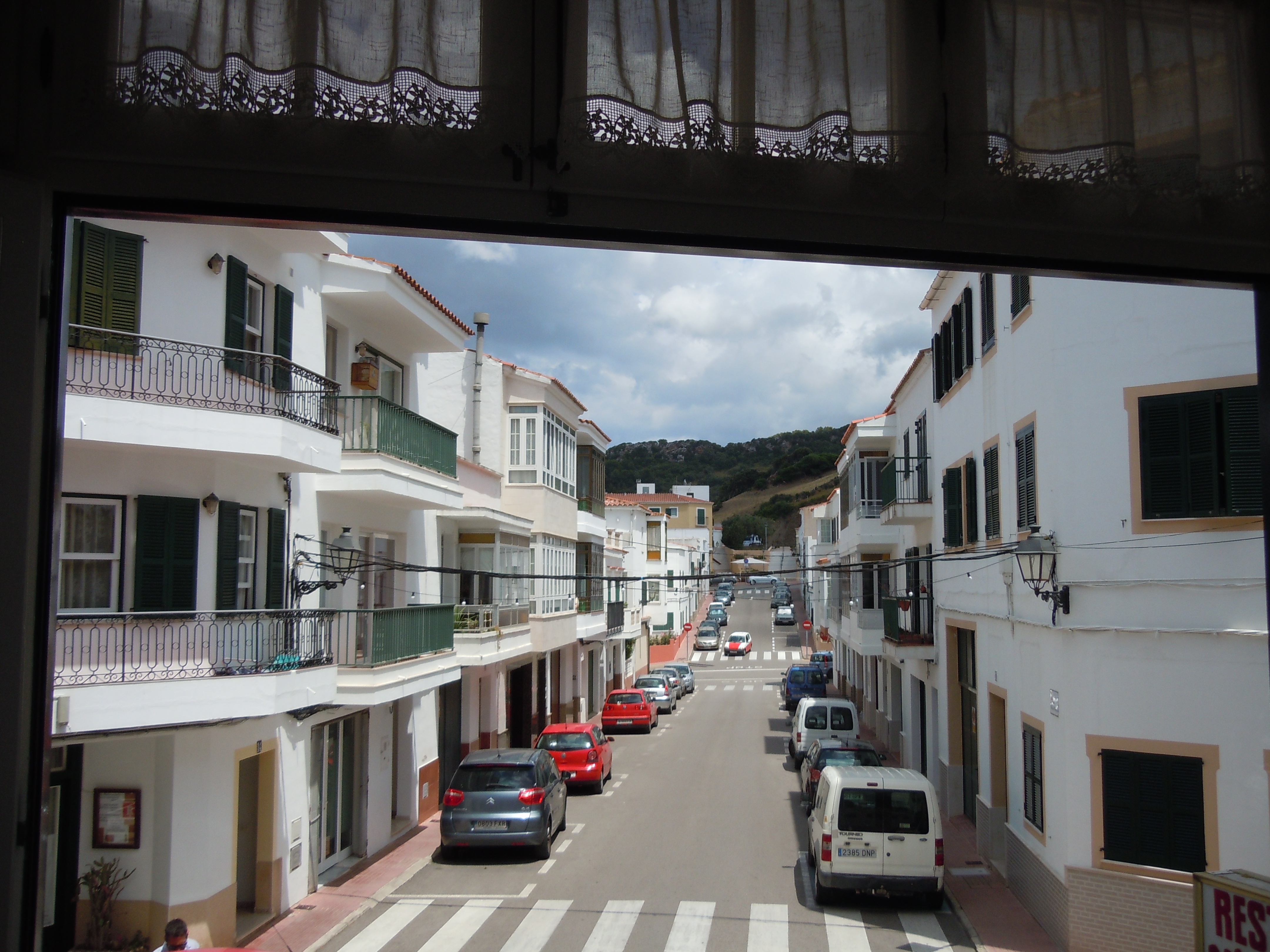
VFYWC-215

You have until noon on Tuesday to guess it. City and/or state first, then country. Please put the location in the subject heading, along with any description within the email. If no one guesses the exact location, proximity counts.  Be sure to email entries to contest@andrewsullivan.com. Winner gets a free The View From Your Window book or two free gift subscriptions to the Dish. Have at it.