One Way It’s Cheaper To Be Poor In America

Here’s an interesting tidbit: A bachelor’s degree from a public university costs 40 percent more in the US than in Canada, but American financial aid policies mean that poor US students wind up paying a lower net tuition than their counterparts north of the border. Christopher Flavelle wonders why, given that fact, low-income Canadians are still more likely to attend college than low-income Americans are:

[Economist Lance] Lochner offered a few possible explanations. One is price transparency: The gap between the sticker price and what you’ll actually pay to attend most US. colleges is enormous and hard to quantify, and that may be more of a disincentive to low-income families than to those for whom money is less of a concern. A more troubling explanation, and one that’s far harder to fix, is that people are less likely to come into contact with those from other income groups in the US.

“In the US, people are much more segregated in where they live,” Lochner said. “It could be, because of that, you have more segregation of knowledge.” In Canada, by contrast, “you’re more likely to go to a school where everybody hears about” the advantages of going to college, and where somebody can help you figure out what steps to take to get there. If that’s true, it means that income inequality hasn’t just increased the economic value of going to college, by increasing the earnings premium associated with a degree. It has also made going to college harder, by reducing the odds that young people from poor families will be told that a college degree is something they can attain, or should even try to attempt.

David Leonhardt emphasizes how Americans generally pay less than the sticker price for their degrees:

I know what you’re thinking at this point: Wait a minute – college really is expensive and has gotten a lot more so. It’s certainly true that public colleges have become more expensive in recent years, partly because of state budget cuts. These rising costs have created financial struggles for many students and, most worrisome of all, have kept some from graduating or even applying in the first place. By almost any economic calculation, the country would be better off if college were more affordable for middle- and low-income families.

At the same time, it’s worth remembering that the perception of college costs comes in large part from the high list price of private colleges. The next time you hear somebody describe college as costing $60,000 a year, know that the truth is: It costs $60,000 for affluent students who don’t qualify for financial aid to attend one of the elite colleges that a tiny share of Americans attend (and the figures includes housing and food). Taking into account financial aid – some of which comes from the colleges themselves, some of which comes from the government – the average tuition and fees were $12,460 at private colleges last year and$3,120 for in-state students at public four-year colleges, according to the College Board. At those prices, college is an investment with an excellent return for the vast majority of students who graduate.

Reihan pushes back:

The problem with the passage above is that ”price” and “cost” are not actually the same thing. The price is what a consumer is charged. The cost reflects the resources required to produce a given product or service. The cost of educating a student at (say) a residential four-year college might actually be higher than even the full tuition charged an affluent student; the difference could be made up by, for example, income from an endowment, or some other infusion of funds.

If we embrace Leonhardt’s analysis, we might conclude that the only problem with higher education is that net prices, i.e., prices after financial-aid grants, are too high. He’s not alone in focusing on the net price of higher education and discounting the importance of the gap between the net price and the underlying cost, which is borne by some combination of private philanthropy (usually fairly minor) and taxpayer contributions (major). I believe that taxpayers ought to subsidize higher education to some degree. Yet I’m skeptical that taxpayers should utterly ignore the underlying cost of providing higher education services, not least because ignoring these costs, and the sources of the escalation of these costs, contributes to a lack of spending discipline.


Propaganda Is A Powerful Thing

The latest poll from Russia is proof:

A poll released by the independent Russian pollster Levada on Wednesday has found that a large number of Russians believe that Ukraine shot down Malaysia Airlines Flight 17, with 46 percent saying they think it was brought down by a Ukrainian army antiaircraft missile and 36 percent saying a Ukrainian military plane shot it down (multiple answers were allowed, meaning the percentages do not add up to a hundred and people may have chosen more than one answer). … Almost no one in Russia is buying the story that the rest of the world accepts. Just 3 percent believe pro-Russian separatists in Ukraine might have shot down the plane.

Sarah Palin, Democratic Fundraiser

Impeachment

All that impeachment chatter in the fever swamps is a gift to Democrats, Cillizza argues:

You can be sure that Boehner is making it abundantly clear to members of his conference not to mention the word “impeachment” in public and, if asked about it, to insist that it is absolutely not an option.  But, whether they listen is another thing entirely. Some may genuinely believe that Obama has committed acts that warrant impeachment, others may see the possibility of personal political gain out of being on Team Impeachment.

Meanwhile, any and all talk of impeachment may well be the secret ingredient Democrats have been desperately searching for to energize their base in advance of the midterms. (Eighty six percent of Democrats oppose impeaching President Obama.) If Democrats can make their base voters believe that the results of this election could mean the difference between impeaching Obama and not, that’s a major win for them. And, yes, impeachment talk will further stoke passion among some within the conservative base. But, between the IRS, Benghazi and Obamacare do those voters really need a whole lot more motivation to turn out and vote against Obama?

But also more literally, a gift, as in cash money:

It’s a great rallying point for the party’s voter and fundraising base. The Democrats’ House Campaign Committee says that in a single day, in response to the supposed threat of impeachment and reality of a lawsuit against the president, it hauled in 50,000 contributions, 60 percent from women, totaling $1 million.

Perhaps that’s why left-leaning media outlets are talking it up, by Nate Silver’s count, far more than their counterparts on the right:

[F]or every mention of impeachment on Fox News in July, there have been five on liberal-leaning MSNBC. This data comes from a Lexis-Nexis search of transcripts on each network. It counts each mention of the words “impeach” or “impeachment.” The terms were used 32 times in a single episode of MSNBC’s “The Ed Show” on Monday. (Ordinarily, I’d adjust for the overall volume of words spoken on each network, but I know from my previous research that MSNBC and Fox News have about the same number of words recorded in Lexis-Nexis.) The scoreboard so far in July: Fox News has 95 mentions of impeachment, and MSNBC 448. That works out to about 2.7 mentions per hour of original programming on MSNBC, or once every 22 minutes.

And perhaps that’s why Paul Ryan has come out against it:

“This does not rise to the high crimes and misdemeanor level,” Ryan told reporters Wednesday morning at a breakfast hosted by the Christian Science Monitor. The impeachment talk has been a steady theme among the GOP’s Tea Party wing and has been embraced in recent days by Democrats as a potent fundraising tool. “I see this as sort of a ridiculous gambit by the President and his political team to try and change the narrative, raise money and turn out their base for an upcoming election that they feel is not going to go their way,” Ryan said Wednesday, echoing House Speaker John Boehner’s comments Tuesday that the White House’s impeachment talk is a “scam.”

Ryan’s reasonability on this issue makes Aaron Blake so happy:

Ignore the first part; that’s just him echoing the talking point that other top Republicans have used. The second part is the operative part. It’s where he offers a pretty novel thought: that Obama has not committed an impeachable offense. … [I]t’s getting to the point where Republican leaders need to do a little more to nip this thing in the bud before it becomes bigger than they can handle. And what better way than to make an argument using the very thing that the tea party loves to cite: the Constitution. These leaders could, as Ryan does, acknowledge concerns about what Obama is doing while also noting that “high crimes and misdemeanors” is generally thought to be a very high threshold.

The Ukrainian Military’s Losses

They’ve been heavy:

As Simon Saradzhyan, a Russia expert at Harvard’s Belfer Center, notes, if Ukraine continues to suffer troop casualties at its current rate, it would “surpass 1,560 per year. That would be more than what the Russian army acknowledged losing in the deadliest year of the second Chechen war.” In view of the increasing casualties on the horizon, Ukraine’s parliament has just approved a call-up of a further 50,000 reservists and men under the age of 50, just 45 days after its last mobilization. But just how long Ukraine’s cobbled-together military will be able to sustain increasing casualties is questionable at best — especially if they suddenly find themselves up against more qualified Russian soldiers.

Throughout the conflict in eastern Ukraine, Russian troops have watched from just over the border, implicitly threatening intervention. Since the beginning of the rebellionRussian troops have been conducting maneuvers and setting up the logistics network that would be needed for an incursion. Things have ramped up in recent days, with Russia conducting large-scale exercises with some of its most advanced helicopters. The threat hasn’t been lost on Kiev.

Janine Davidson worries Putin is preparing t0 invade. She wants to send arms to the Ukrainian government:

The U.S. and NATO have rightly expressed their support for Ukraine and have taken small steps to support their military.  Non-lethal aid, like body armor, medical supplies, food, and other equipment are critical.  But for Ukraine to present a viable deterrent to Putin’s ambitions, it needs funding to pay troops, advisers to help plan, intelligence support for targeting, training for new recruits, and yes, ammunition and defensive weapons.

All this can be provided without putting U.S. or NATO boots in the fight. Military aid is not the same as military intervention. Far from escalating the conflict or provoking Putin, bolstering Ukraine’s forces can actually deter further incursions by demonstrating to an ambitious aggressor the very real possibility that escalation will result in a messy and ultimately embarrassing demonstration of his military might.

But, in Jay Ulfelder’s judgement, the US and Europe are making the right calls on Ukraine:

I think that the Obama administration and its European allies have chosen the best line of action and, so far, made the most of it. To expect Russia quickly to reverse course by withdrawing from Crimea and stopping its rabble-rousing in eastern Ukraine without being compelled by force to do so is unrealistic. The steady, measured approach the U.S. and E.U. have adopted appears to be having the intended effects. Russia could still react to the rising structural pressures on it by lashing out, but NATO is taking careful steps to discourage that response and to prepare for it if it comes. Under such lousy circumstances, I think this is about as well as we could expect the Obama administration and its E.U. counterparts to do.

Who (Or What) To Blame For Libya?

Libyan Rebels Sieze Control Of Tripoli From Gaddafi Forces

Christopher Stephen paints a picture of a country where deeply entrenched corruption and factionalism have rendered good governance impossible and fueled the pseudo-civil war tearing the country apart today:

With the economy moribund, the only growth industry has been militias. In all some 168,000 members have registered at the government’s Warriors Affairs Commission, which was set up to take control of the various militia brigades—but that’s at least four times the number of militia members who actually fought in the civil war. Now they’re all getting state pay packets. “I don’t care about Islamism, but they pay me 1200 dinars [about $800] a month to guard the base twice a week,” said Hassan, a Benghazi teenager employed by the city’s Islamist Libya Shield brigade.

Today all those victorious militias are at war with each other. The militias from Misrata, a city 120 miles east of the capital, and Zintan, a mountain town 90 miles south west, did the hardest fighting of the revolution, surging into Tripoli together to liberate it in August 2011. Their units never left, and since then the Misratans and Zintanis have increasingly fallen out as claimants to the spoils. … In the confrontational atmosphere in congress, the political parties began funding militias that were sympathetic to them, rather than dissolving them as parliament was supposed to do. Misrata and Zintan, the two most powerful militia groupings, broke along the political divide — Misrata for the Islamists, Zintan for the nationalists.

Peter Dörrie names Khalifa Haftar, the former general with previous links to the CIA who now leads a coalition of Zintani fighters and other nationalist militias, as the primary instigator of the ongoing conflict:

Publicly, Haftar claims to fight against Islamist militias for a secular Libya, but his political ambitions are obvious.

It’s especially telling that his moves against the fledgling government of Libya occurred just as the new regime was trying to enforce a law banning functionaries from the Gaddafi era from public office. Haftar would be subject to this law, as would be many leaders of the armed groups he is allied with.

The fighting Haftar instigated meanwhile has spiraled out of control. Militias are battling for the international airport in Tripoli. An important fuel depot has caught fire after being hit by a rocket. Embassies in the city have evacuated. In Benghazi, Islamist and secular forces openly are fighting. Haftar largely is responsible. His ambitions already have inflicted great damage on the transitional process in Libya. What remains unclear is how close his connection remains to U.S. intelligence services. In interviews he says that he is in “indirect contact” with the U.S. government.

From Hisham Matar’s perspective, Qaddafi’s legacy still resonates loudly:

To understand today’s events, one must remember what life was like under Qaddafi. The state was designed around an individual and his family; it resembled more a Mafia than a political structure. And so ending the dictatorship meant ending the state. Without a fully functioning national army and police force, and other state institutions, building an accountable and democratic government is going to be immensely hard. Contributing to this is the legacy of Qaddafi’s oppression of dissent. Modern Libya is sixty-five years old, dating from 1951. For almost two-thirds of that time, it was ruled by one voice. In light of this history, creating a political atmosphere that permits and encourages difference and plurality will be difficult.

Meanwhile, Larison catches Max Boot spinning our intervention in Libya as another example of Obama’s “weak” foreign policy. In Boot’s revisionist retelling, the instability in Libya today is Obama’s fault for refusing to deploy a peacekeeping force on the ground or pour more resources into training Libyan security forces – in other words, because he didn’t do exactly what interventionists said we wouldn’t have to do:

Indeed, it was an essential part of the argument that American interventionists made at the start of the war: there would be no U.S. ground forces deployed to Libya to fight, nor would there be any deployed to a post-Gaddafi Libya. Interventionists don’t get to have the domestic political advantages of avoiding a prolonged occupation while disavowing the consequences of the regime change they supported. Libya is in chaos in large part because outside forces aided anti-regime rebels in destroying the existing government, and the governments that intervened are at least partly responsible for what they have wrought. It doesn’t follow from this that the solution for Libya was or is to increase the involvement of outside governments in misguided efforts to stabilize the country. Having seen what a “serious program” to train local forces produced in Iraq, it is far from obvious that a more concerted effort by the U.S. to train Libyan government forces would have changed much of anything for the better.

Recent Dish on Libya’s crisis here.

(Photo: A mosaic of Gaddafi is seen on the wall of a building, riddled with bullet holes, on August 29, 2011 in Tripoli, Libya. By Daniel Berehulak/Getty Images))

John Brennan’s Latest Lie

The torture-defender and CIA loyalist insisted earlier this year that the CIA never deliberately hacked the Senate Intelligence Committee to undermine its vital report on war crimes under Bush and Cheney. Here’s what he said:

When the facts come out on this, I think a lot of people who are claiming that there has been this tremendous sort of spying and monitoring and hacking will be proved wrong.

Really? So here are the facts on this:

An internal investigation by the Central Intelligence Agency has found that its officers improperly penetrated a computer network used by the Senate Intelligence Committee in preparing its report on the C.I.A.’s detention and interrogation program. In a statement issued Thursday morning, a C.I.A. spokesman said that agency’s inspector general had concluded that C.I.A. officers had acted inappropriately by gaining access to the computers. The statement said that John O. Brennan, the C.I.A. director, had apologized to the two senior members of the Senate Intelligence Committee and that he would set up an internal accountability board to review the matter.

Brennan apologized this week to Senators. I doubt he will ever apologize to the American people.

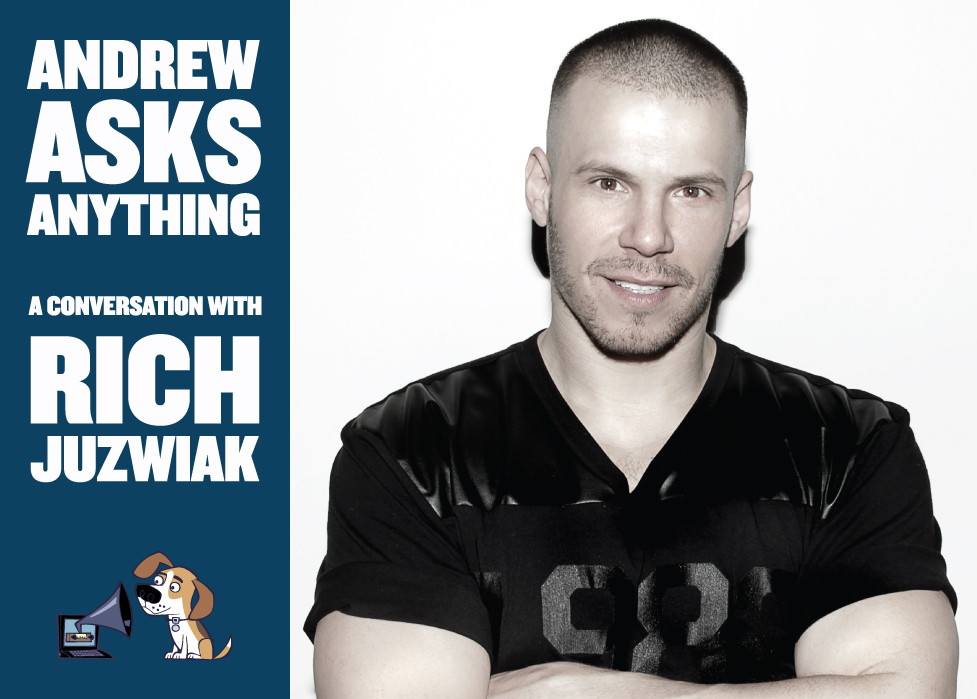
Andrew Asks Anything: Rich Juzwiak

juzwiak-banner

If you ever read Gawker, you know who Rich Juzwiak is. Yesterday he came out with a new piece revealing how he’s not just taking Truvada again; he thinks almost every gay man should be on it too:

In my first piece on Truvada, I said that I thought most sexually active gay men should at least consider going on it. That was not strong enough: All sexually active gay men who are negative should go on it, at least those who are in the highly populated gray area that I find myself in—guys who either have casual condomless sex from time to time or who are “always safe” but still burdened by the fear of HIV.

If you know that you don’t need Truvada, I trust your judgment. If there’s a shred of uncertainty, just take the fucking pill.

I try to be as nonjudgmental as possible when it comes to the behavior of other gay men (though I cannot refrain from judging those who judge). We are all in different places in life; we all enjoy different things. That variety is, in fact, what makes gay culture so vibrant. The choices at the disposal of those who are privileged enough to live in areas where gay is OK and where same-sex marriage is legal—these are part what make being gay so wonderful. But if you cannot deal with taking a single pill every day, you need to get a grip and reevaluate your life. After you do that, then just take the fucking pill.

Rich and I sat down a little while ago to talk about sex and love and gay men’s lives today. The resulting podcast can be a little racy and provocative at times. Hey, it was a real conversation. We actually talk about the sexual adventurism of gay men – a subculture where no women restrain sexual desire – as an often wonderful thing, regardless of the judgment that so many, including gay men, have made about it. There may be a measure of mutual respect, friendship, democracy and brotherhood in a sexually liberated gay male world – that is perhaps unavailable to heterosexuals:


The whole conversation is up on Deep Dish now for subscribers only. Check it out. If you haven’t subscribed yet, do so here – you only need to spend $1.99 to download the whole thing. And you’ll also get access to my unfiltered conversations with Dan Savage and Hitchens, among many others.

The Shifting Israel Debate, Ctd.

Joe Scarborough – a former Republican member of Congress who has “always been a 100 percent supporter of Israel” – turns sharply against Netanyahu’s government:

Like Chait and many other American Jews on the left, Ezra Klein, who cares about Israel “personally, rather than abstractly”, has become more pessimistic about the Jewish state:

There’s an … argument that’s made by Israel’s supporters: that people like me, who write about our disappointment with Israeli policy, are “blaming Israel first.” But it’s not about blame. If interest in geopolitics was driven by outrage and horror Israel and Palestine would spend less time on the front page. The suffering there is immense, but the death toll is dwarfed by the slaughter in the Democratic Republic of Congo or Syria. I pay unusual attention to what Israel does because, for family and cultural reasons, I am unusually invested in Israel. Focusing on Israeli policy is a byproduct of focusing on Israel itself.

For these reasons, I used to write about Israel often. It felt, even a few years ago, that peace was a live possibility, that Israel had choices — and that some of them might even turn out well. But Israel seems to have made its choice, at least for now, and the results are painful to watch. I haven’t become less pro-Israel. But I’ve become much more pessimistic about its prospects, and more confused and occasionally horrified by its policies. My sense is that’s happened to Chait, too. I notice he writes about Israel less these days, also. My sense is it’s happened to a lot of us.

I’m sorry but I find this position pretty lame. What Ezra is suggesting is that when Israel does things you cannot really countenance, the correct response is silence or avoidance, because it just gets too personal, when you have family etc. But that’s been the whole problem with the American discourse about this for a while, what Peter Beinart called “an epidemic of not watching.” American Jewish liberals have been intimidated or censored themselves into silence, which has only made matters worse. The reason is the need to somehow credentialize yourself as “pro-Israel”, and any criticism is immediately interpreted as being “anti-Israel”. That’s essentially a loyalty test that impedes reasonable debate – and is designed to. Waldman rightly encourages everyone to step out of this credentializing and posturing:

Once you stop worrying about whether you’re pro-Israel or anti-Israel, you can judge the Israeli government’s decisions, developments within Israeli society, and other questions related to the country each on their own terms.

You can also make judgments about the conflict that are freed from the necessity so many feel to continually compare the Israeli government’s actions to Hamas’ actions, or the opinions of the Israeli public to the opinions of the Palestinian public, with the only important question being which side comes out ahead. Those comparisons end up dulling your moral senses, because they encourage you to only think in relative terms.

If you’re still stuck being pro-Israel or anti-Israel, you end up asking questions like, “Which is worse: for Hamas to put rockets in a school in the hopes that Israel will bomb it and kill a bunch of kids, therefore granting Hamas a momentary PR victory; or for Israel to bomb the school anyway, knowing they’re going to kill a bunch of kids?” If you’re pro-Israel, you’ll answer that Hamas’ action is worse, while if you’re anti-Israel, you’ll answer that Israel’s action is worse. But if you’re neither, then you’ll give the only moral answer, which is: who the hell cares which is worse? They’re both wrong. Questions like that end up only being used to excuse one side’s indefensible decisions.

Which is an apt description of some of the themes in Sam Harris’ recent post. Max Fisher also despairs of such comparisons, particularly when they fuel the desire to pin blame for civilian deaths exclusively on one party to the conflict:

The argument over moral responsibility for civilian Palestinians often makes a fundamental mistake by assuming that culpability is zero-sum: that either Israel is responsible because it uses unnecessarily overwhelming force in civilian areas or Hamas is responsible because it attacks Israel from within civilian communities. This fundamentally misses the point; both sides independently bear responsibility for the degree to which their tactics lead to civilian deaths. If one side abdicates that responsibility then this does not absolve the other. Both sides, by treating moral responsibility as zero-sum, are giving themselves permission to overlook their own role in driving up the civilian casualty rate, and thus continuing the killing.

Amen. Israel is responsible for these civilian deaths, but Hamas is deeply complicit. Noah Efron considers Israel a victim, as it were, of “moral bad luck”:

The very notion of moral luck seems paradoxical, because we are used to thinking that we are only morally accountable for things that we control. But that is not quite true. Like well-meaning American whites who never questioned segregation, sometimes we end up culpable for choices we never made.

Hamas is a factory of moral bad luck. Its leaders aim to trap Israel in situations from which only bad can come, either dead Israelis or dead Palestinians or both. They began their barrage of rockets on Israel because they knew Israel would respond, killing innocent Gazans, including kids, along the way. They unleashed their evil because they knew that Israel would, in response, unleash evil of its own. …

[W]e can conclude that there is no place for righteousness in the conflict. When we fight this war, as I think we have to, we must do so with grim knowledge that every violence done to civilians, and their homes and schools, is a tragedy in which we have a hand. Equally, those who piously condemn Israel should know that, were they in our position, they could scarcely act differently than we do.

I disagree with that, for reasons I’ve articulated for quite some time on the blog. And besides, Israel and Hamas are not sold separately. As Ishaan Tharoor reminds us, before it became a security threat, Israel helped the Islamist group grow:

To a certain degree, the Islamist organization whose militant wing has rained rockets on Israel the past few weeks has the Jewish state to thank for its existence. Hamas launched in 1988 in Gaza at the time of the first intifada, or uprising, with a charter now infamous for its anti-Semitism and its refusal to accept the existence of the Israeli state. But for more than a decade prior, Israeli authorities actively enabled its rise.

At the time, Israel’s main enemy was the late Yasser Arafat’s Fatah party, which formed the heart of the Palestinian Liberation Organization (PLO). Fatah was secular and cast in the mold of other revolutionary, leftist guerrilla movements waging insurgencies elsewhere in the world during the Cold War. The PLO carried out assassinations and kidnappings and, although recognized by neighboring Arab states, was considered a terrorist organization by Israel; PLO operatives in the occupied territories faced brutal repression at the hands of the Israeli security state. Meanwhile, the activities of Islamists affiliated with Egypt’s banned Muslim Brotherhood were allowed in the open in Gaza — a radical departure from when the Strip was administered by the secular-nationalist Egyptian government of Gamal Abdel Nasser.

And the beat goes on …