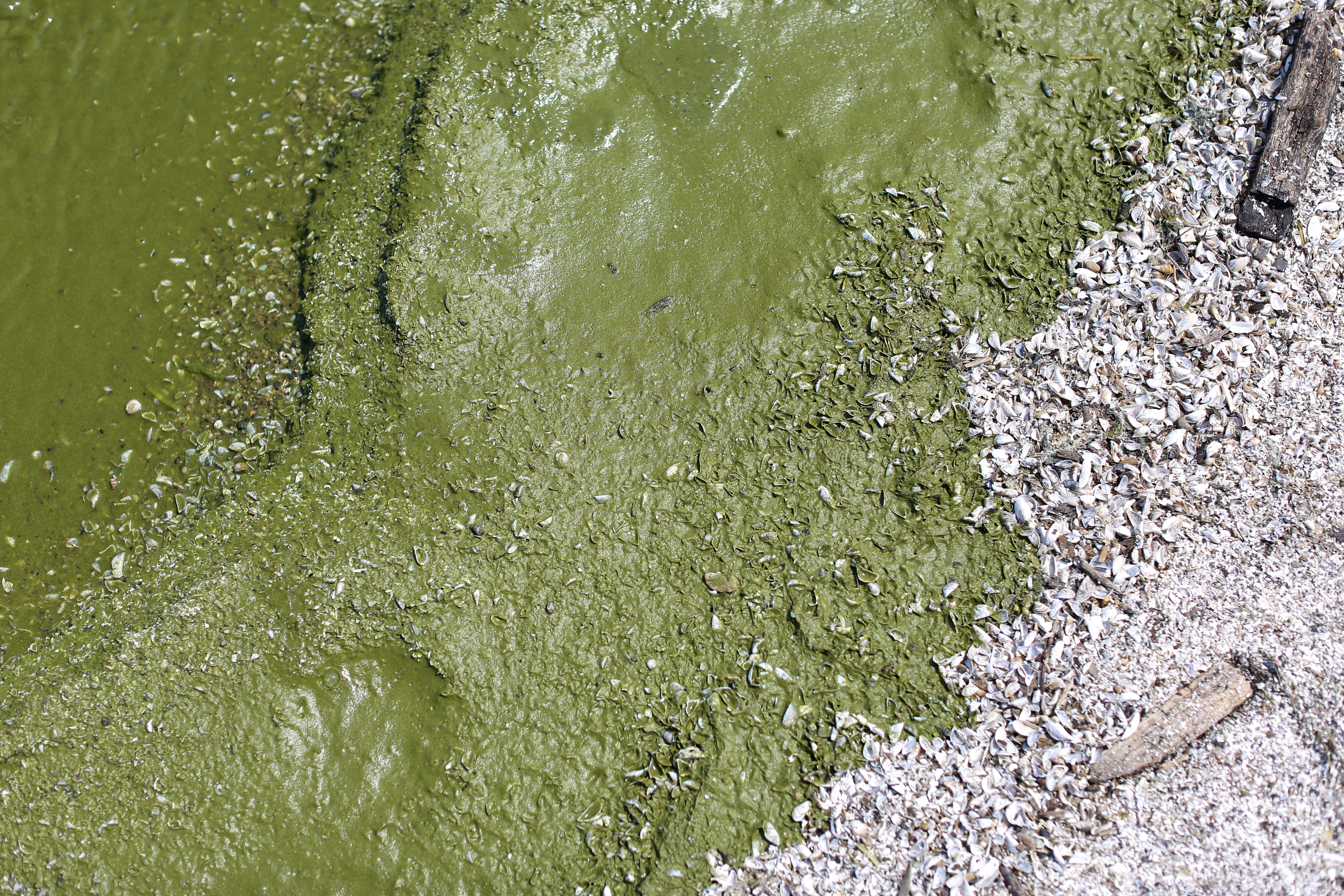
Life in northwest Ohio is returning to normal after the mayor of Toledo lifted a drinking-water ban that affected some half a million metro-area residents. Ben Richmond offers a recap of the past days’ events:
On Saturday, Toledo officials issued a warning not to drink the water after they discovered high levels of the toxin microcystin in the water, coming from a huge bloom of the cyanobacteria (or “blue-green algae”) microcystis in Lake Erie’s Maumee Bay, where the city of 284,000 draws its drinking water. Boiling tap water only concentrates the toxins further, so residents were left emptying store shelves of bottled water and lining up at water distribution centers, as their water supply turned a sickly shade of Satanic vomit-green.
According to the Environmental Protection Agency, “the presence of high levels of cyanotoxins in recreational water and drinking water may cause a wide range of symptoms in humans including fever, headaches, muscle and joint pain, blisters, stomach cramps, diarrhea, vomiting, mouth ulcers, and allergic reactions.” It gets worse: Microsystin has also been linked to liver inflammation and hemorrhage, kidney damage, and “potential tumor growth,” the EPA adds.
The restrictions were lifted Monday, although the long-term outlook for the area’s water system remains uncertain. Agricultural pollution appears to have be the culprit, Richmond notes:
Nature might provide the sunshine and warm weather that allows the cyanobacteria to flourish, but its farms and towns near waterways that give the blue-green algae their super-food: phosphorus. High use of phosphorus-based fertilizers and the presence of livestock near water supplies, combined with waste-water and run-off from towns and cities near the waterways has raised the levels of phosphorus in the lake, leading to record-breaking blooms in 2011, and above average blooms since.
Brad Plumer adds that climate change may bear some blame:
The number of heavy rain events in the Midwest has increased some 37 percent since the 1950s. That’s significant, since it’s the really heavy storms that wash away the most phosphorus from farm soil and cities into the watershed. … One 2013 study in the Proceedings of the National Academies of Sciences predicted that algae blooms in Lake Erie were likely to increase in the years ahead — even if farming practices stay the same. That’s because, as the planet warms, the atmosphere will be able to hold more moisture and heavier rainfall events in the Midwest will become more and more common.
Meanwhile, Gwynn Guilford registers the national scale of the problem:
Lake Erie is notorious for its algal blooms. But it’s hardly the only body of water in the US that sees these ecological catastrophes in the summer of 2013 alone. For instance, Oregon had to commute its Midsummer Triathalon down to a biathalon in Aug. 2013 due to toxic slime clogging Blue Lake. Kentucky reported its first toxic algae problems in the state’s history only in 2013, after visitors to four lakes complained of rashes and stomach pain; the blooms are back again this year. In Florida, toxic algae in Indian River Lagoon killed more than 120 manatees in 2013, say some scientists.
Mark Berman zooms out:
The water issue in the US pales in comparison to the clean water shortages in other parts of the globe. There are 783 million people without access to clean water around the world, according to the United Nations. But the Toledo ban still speaks to the sensitivity of water systems in the US, which are relied upon by hundreds of millions of people and can be severely affected by natural occurrences or outside contaminants.
Meanwhile, Rebecca Leber observes that there’s little in the way of regulatory oversight when it comes to such issues:
Testing for microcystin isn’t federally mandated, nor is it required in the state of Ohio. As a result, many towns don’t have emergency response plans in place and vary in how often they test water samples for the toxin. The Toledo Blade reported that water treatment officials across Ohio have asked the EPA for additional guidance on testing for microcystin. That lack of guidance can result in confusion, even risk to the public’s safety: State officials had assured Toledo residents that the water plant had enough sophisticated “safeguards in place to neutralize the toxin and remove it before it can get into the water supply.” The tap-water ban was announced eight days later.
The Bloomberg editors concur:
Lake Erie, which was known as “North America’s Dead Sea” in the late 1960s, was saved mainly by the Clean Water Act of 1972, which required sewage-treatment plants and industry to limit how much pollution they discharged into US streams and rivers. It was an enormous undertaking, with the federal government spending more than $60 billion nationwide to improve treatment facilities. … What’s clear is that today’s regulations aren’t up to the job of safeguarding the US’s drinking-water supply. Rules that mandate stricter rules for fertilizer application should be adopted. Lawmakers also should tie the availability of federal subsidies to farms, such as crop insurance, to farm-management practices that reduce runoff. In the meantime, cities like Toledo will be stuck paying the bill as they spend more money to monitor, test and filter water.
(Photo: Algae from Lake Erie washes ashore at Maumee Bay State Park in Oregon, Ohio, on August 4. By Aaron P. Bernstein/Getty Images)
 The Dish