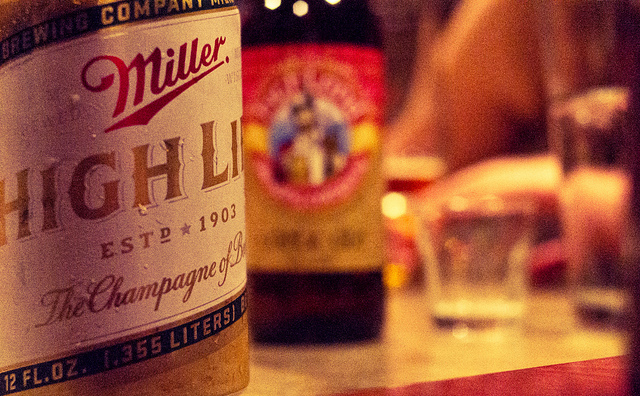
In a review of Adam Rogers’ Proof: The Science of Booze, Matthew Braga sticks up for the makers of “so-called mass-market swill”:
“Just because Jack Daniel’s comes from a chemical plant,” Rogers writes, “doesn’t mean it isn’t a damn-fine-tasting chemical.” Quality means a lot of things, and to create a mass-market beverage that consistently tastes the same, year after year, you can’t—scientifically speaking—fuck around. …
Be it $12 eggs or some top-shelf bourbon, the supposed authenticity of something handmade is how some of us define quality, for better or for worse. When we pay good money for something, suggests Rogers—a fancy wine or a bottle of scotch, say—we want to know it was worth the price. As a result, many of us have lowered our expectations of what a cheap, mass-market drink can be. Surely not quality, the patio pals with which you’re splitting a pitcher might say. And definitely not as flavourful or interesting as a good craft brew, I’ll give you that. But no less of a challenge to produce on such a mass-market scale. It takes skill to make something taste exactly the same, again and again, no matter when or where or how you have it, and just because the result is cheap doesn’t make it bad, per se. If you’ve never ordered a Labatt 50 while everyone around you is drinking expensive wine, it’s an experience worth having at least once. Even if you don’t like the drink, you can savour the dirty looks.
(Photo by Scott Akerman)
 The Dish