“[Hamas] are monsters. But the population of Gaza are not monsters and the Palestinian people are not monsters; and I will confess that I have found myself unable to be satisfied, in the analysis of responsibility in this war, by the assertion, which is incontrovertible, that the 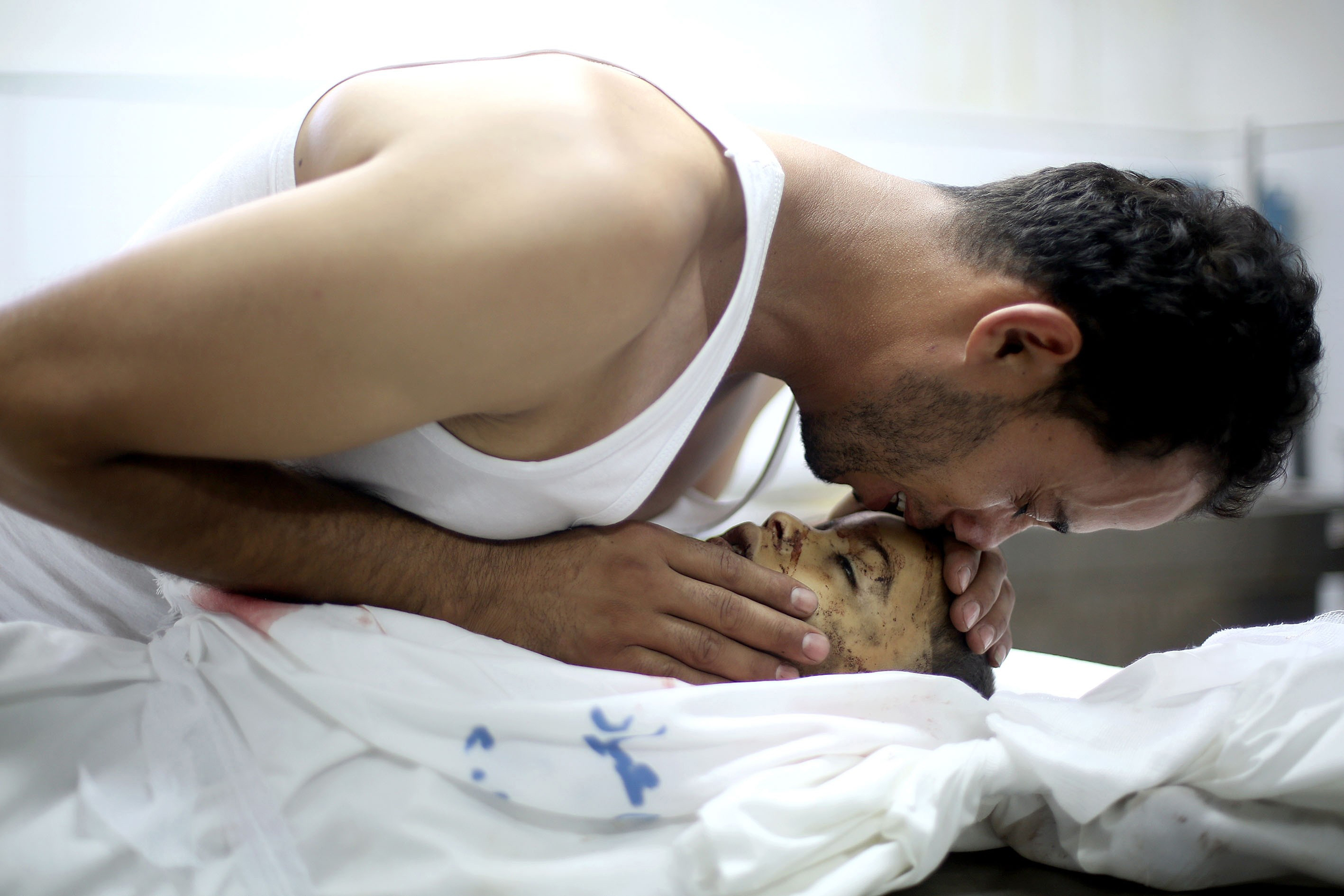 killing of non-combatant Palestinians by Israel in Gaza is one of Hamas’s war aims, and so Israel is completely absolved if it obliges. A provocation does not relieve one of accountability for how one responds to it. For this reason, the war has filled me with disquiet, which my sympathetic understanding of Israel’s position has failed to stifle …
There is another reason for insisting on a more humane attitude toward the Palestinians, a political reason. It is that the Palestinians are not Hamas. One of Hamas’s objectives in this war has been to salvage its fortunes by creating the impression that it is representative of its people, and in this it has met with a measure of success. American diplomatic mistakes, along with the coarseness and the virulence of the opposition to Israel in Europe, have obscured an accurate understanding of the relation of Hamas to the Palestinians. Before the war Hamas was unpopular among Palestinians even, or especially, in Gaza: The miseries of Gaza can hardly be attributed only to Israeli policy. Now the Gazan tunnels and the Gazan arsenals have been gutted, but the old problem remains. Israel has a strategy for war, but it does not have a strategy for peace. In the aftermath of Operation Protective Edge, the notion, recently in fashion, that there is no need for a peace process is absurd. The destruction of Hamas is one of the interests that Israel and the Palestinians have in common, but the only way to destroy Hamas is to make peace with Abu Mazen,” – Leon Wieseltier.
“Every civilian casualty is a tragedy, a tragedy of Hamas’s own making,” – Benjamin Netanyahu, denying any responsibility for the deaths of civilians in Gaza.
(Photo: A relative mourns over the dead body of a child killed in an Israeli attack at Al-Shifa Hospital’s morgue in Gaza City, on July 20, 2014. By Mustafa Hassona/Anadolu Agency/Getty Images)
 The Dish