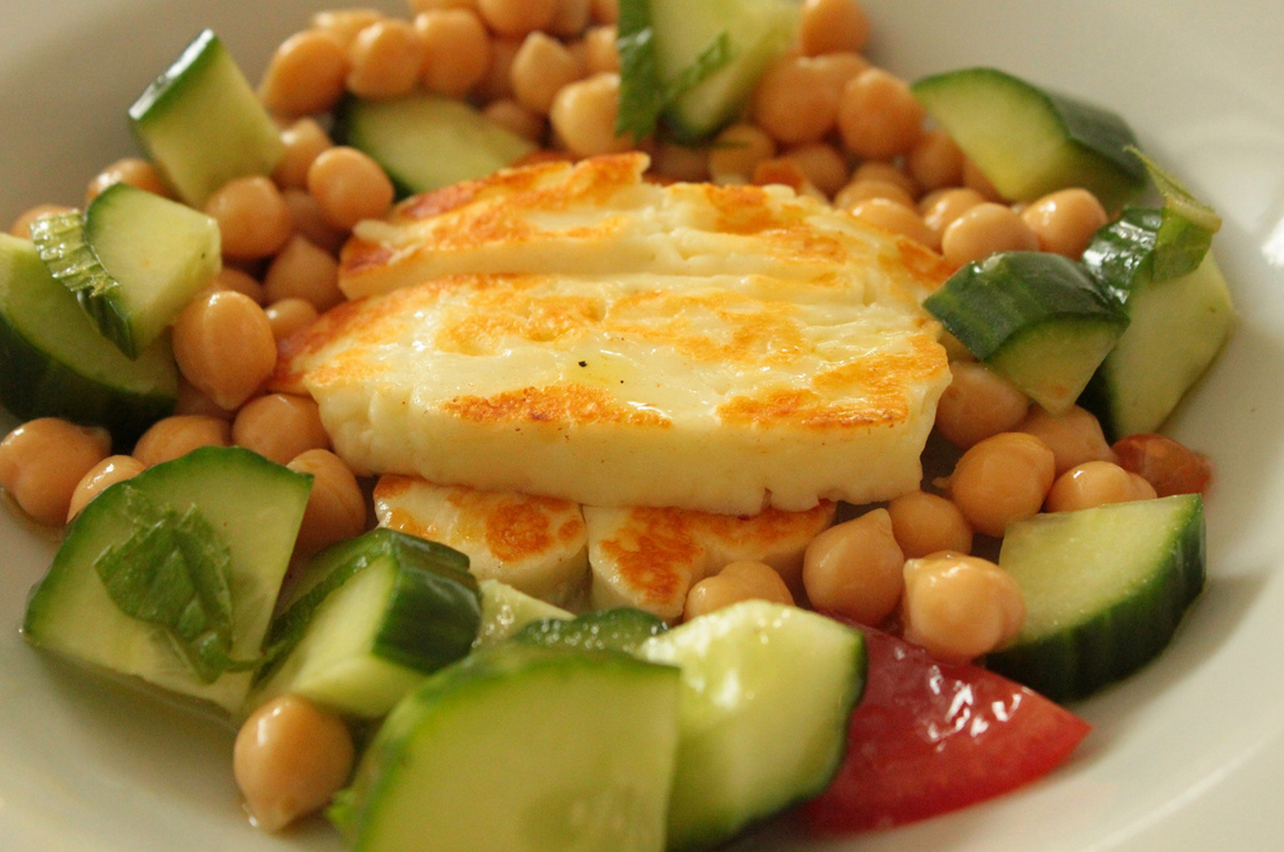
Rebecca Smithers flags new findings about the salt levels in various cheeses:
Halloumi and imported blue cheese such as Roquefort contained the most salt – more than sea water – while cottage cheese contained the least, according to a major new research study carried out by Cash (Consensus Action on Salt & Health) and published in the British Medical Journal…. [The study] is based on an extensive survey of 612 British and imported cheese products sold in UK supermarkets in 2012, using data on the labels to analyse the salt content (g/100g). It looked at the salt reduction targets for ten popular cheeses set by the Food Standards Agency watchdog and implemented by the Department of Health, to be achieved by 2012. While 85% (333 of the 394) of cheeses have already met their targets, 81% (318 of 394) would still get a red (which means ‘high’) colour rating under the so-called ‘traffic light’ labelling scheme.
A Daily Mail headline reminds that the saltiest cheeses are “foreign” in origin. Meanwhile, James Ramsden stands up for the high-sodium dairy products:
This latest study, which brings little new information to the table, reckons salt content to be considerably lower in supermarket own-brand cheddar and “cheddar-style” cheeses than in their branded equivalents. This, they inform us with the sort of dreary lack of appetite you’d expect from a group such as Cash, “demonstrates that it is technically possible to produce cheese with less salt in it”.
Sure. Just as it’s technically possible to make decaffeinated coffee, alcohol-free beer and vegan sausages. But that’s kind of missing the point. And cheese needs salt. Sarah Hampton, who makes goat’s cheese at Brock Hall farm in Shropshire, says: “The effect of salt in cheesemaking performs an essential function in the casein matrix, creates texture and flavour, and affects protein hydration in the cheese body.”
Should more cheeses be made with less salt? “I personally like to be quite sparing with salt quantities,” Hampton says. “For the kinds of semi-soft and semi-hard cheeses I make, too much salt can foreshorten the flavour. But some cheeses need that saltiness. Feta, for example, is more salty than a fresh goat’s cheese, but that level of salinity constitutes the character of the cheese. An unsalted feta would be horrendous.”
(Photo of Halloumi salad by Judith Doyle)
 The Dish