by Dish Staff

Warwick Camp, Bermuda, 10 am
Reactions to the Obama administration’s latest move to promote contraceptive accessibility keep coming. Jonathan Cohn elaborates on why free birth control is worth fighting over:
Late last week, lots of people were talking about a story by Sarah Kliff, of Vox, on why teen pregnancy has been declining in just the last few years. It’s a great article, well worth your time, but the part that jumped out at me was the much bigger decline in teen births that occurred many decades ago—in the 1960s, when the teen pregnancy rate fell by about 25 percent. What changed? The big factor, as social scientists (and friends of QED) Harold Pollack and Luke Shaefer reminded me over the weekend, was birth control. The Food and Drug Administration first approved the pill in 1960.
It wasn’t just teenagers on whom the introduction of cheap, highly effective medical contraception had profound effects. It was also older women, including married women, who gained the ability to control the timing of pregnancy and child rearing.
James C. Capretta, meanwhile, says the HHS “non-accomodation” isn’t a real solution:
In a moral sense, the supposed “accommodation” is meaningless. If an employer with religious objections to the HHS mandate offers insurance to its workers, that coverage will, by definition, always include the objectionable services and products. There’s no way around it. The objecting employers therefore know, in advance of making the decision to offer coverage, that if they do offer coverage, the insurance plan they sponsor will provide full coverage for these products and services that they find morally objectionable.
The real solution is of course a full exemption, not this convoluted non-accommodation. Employers with religious objections to the HHS mandate should be allowed to offer insurance in conformance with their consciences. It’s that simple. This would likely affect a very small percentage of the American workforce.
And S.M. examines the “complicity” of Obamacare objectors:
By sending HHS a letter requesting an exemption from the birth-control mandate, the objecting groups claim they are prompting a process that will implant murderous IUDs in the uteri of their workers.
This claim is a stretch. An employer does not buy a weapon when his employee takes his paycheck to a gun show. Nor does he buy a morning-after pill if a female employee uses a benefit paid for by the federal government but provided through his insurer to secure a prescription for ella. If requesting an exemption from the birth-control mandate can plausibly be thought to represent complicity in the provision of birth control, then anyone can claim to be complicit in just about any act. But (even religious) pacifist taxpayers cannot sue the government for using their tax dollars to send troops to the Middle East. Nor can Catholics opposing the death penalty deduct the share of their tax bill going toward executions in states with capital punishment. Political society cannot operate this way.

This afternoon a draft of the next report from the world’s climate scientists to the world’s political leaders leaked to a few reporters. In the words of Justin Gillis at the NYT, it showed those scientists using even “blunter, more forceful” language than ever before to warn that
Runaway growth in the emission of greenhouse gases is swamping all political efforts to deal with the problem, raising the risk of “severe, pervasive and irreversible impacts” over the coming decades,
and that
Global warming is already cutting grain production by several percentage points, the report found, and that could grow much worse if emissions continue unchecked. Higher seas, devastating heat waves, torrential rain and other climate extremes are also being felt around the world as a result of human emissions…The world may already be nearing a temperature at which the loss of the vast ice sheet covering Greenland would become inevitable, the report said.
Short of actually engaging in self-immolation (with resulting carbon emissions), it’s hard to imagine what more scientists can do at this point to warn us. The report apparently lays out the math of climate in just the terms I described in this morning’s post about the fossil fuel divestment campaign:
The report found that companies and governments had identified reserves of these fuels at least four times larger than could safely be burned if global warming is to be kept to a tolerable level.
That means if society wants to limit the risks to future generations, it must find the discipline to leave the vast majority of these valuable fuels in the ground, the report said.
Did I mention that there is a large-ish march being planned for New York on Sept. 21? There is. In a rational world, a lot of people would show up to demand that political leaders actually pay attention to this kind of warning.
(Photo: Boaters launch their boats hundreds of yards away from designated boat ramps at Folsom Lake on August 19, 2014 in Folsom, California. As the severe drought in California continues for a third straight year, water levels in the State’s lakes and reservoirs is reaching historic lows. Folsom Lake is currently at 40 percent of its total capacity of 977,000 acre feet. By Justin Sullivan/Getty Images)
Noah Millman jumps in on Elizabeth’s sex-workers-as-daughters discussion:
You could call [Elizabeth’s take] a “moral libertarian” version of Rawls’s veil of ignorance. We don’t know what our daughter might decide to do when she is of age. She might decide to have sex for money. Therefore, we should examine our political (and moral) attitudes with a view to who would be most harmed by them – and the person most harmed by a morally condemnatory attitude is the daughter who decides to have sex for money, and would be condemned for it.
As with Rawls’s own perspective, this makes perfect sense if you take the existing distribution is a given – in Rawls’s case, of wealth; in Nolan Brown’s, of life choices. If you don’t assume that – if you assume instead that redistribution of wealth will lead to less production of wealth overall, or that a permissive moral attitude will lead to an increase in objectively poorer life choices – then you can’t blithely say that the only thing that matters is harm reduction for those who make those choices. You have to weigh the costs on all sides of the equation. This much should be obvious.
But I still think Nolan Brown’s critique has teeth, because she’s drawing a distinction between the daughter as thought experiment and the daughter in reality.
And Elizabeth responds:
I’m guessing not many people take forklift-driving positions because they just adore the work. People take jobs as forklift drivers for the same reason people take jobs in porn—to make a living—and we don’t hear complaints that this situation exploits forklift drivers because they are under economic pressure to accept dangerous work. Yet according to the Occupational Safety and Health Administration, there are about 85 deaths and 34,900 serious injuries related to forklifts each year, with 42 percent of these involving the forklift operator being crushed by a tipping vehicle. How many people are killed each year by porn?
In contrast to the brutal murder of James Foley, another American journalist held captive in Syria since 2012 was released over the weekend by al-Qaeda’s Syrian affiliate Jabhat al-Nusra:
Peter Theo Curtis was handed over to UN peacekeepers in the village of al-Rafid, Quneitra, on Sunday. He has since been turned over to representatives from the US government after undergoing medical check-up, the UN said. Curtis’ family thanked both the governments of the US and Qatar, as well as others who helped negotiate his release. According to a statement from his family, Curtis was captured in October 2012 and was reportedly held by the al-Nusra Front or by splinter groups allied with the al-Qaeda-affiliated group.
Elias Groll takes a closer look at Qatar’s role in securing Curtis’s release, which he calls part of the Gulf kingdom’s “double game”:
The beheading of Foley marked an ugly turn in the Syrian civil war, one that has already been marked by awful brutality on all sides of the conflict. Qatar has played a role in fueling that violence, by funneling arms and weapons to Islamist groups. Some of those weapons have ended up in the hands of hard-line radicals. Qatar also provides a home for a handful of influential Islamist leaders, including the leader of Hamas, Khaled Meshaal, and Abdul Rahman Omeir al-Naimi, an al Qaeda financier. At the same time, Qatar continues to serve as a vital ally of America in the region, playing host to key U.S. military installations and reveling in its role as a power broker.
Events like Foley’s execution inevitably upset the balance between Qatar’s competing impulses and force its leaders to compensate in one direction or another. Specifically, the gruesome beheading of Foley put intense pressure on the White House to answer for its efforts to secure his release — pressure that Qatar has now slightly relieved. Curtis’s sudden release provides Barack Obama’s administration with a piece of good news — and tangible evidence that Americans can be freed without Washington doling out ransoms.
Keating compares the treatment of Curtis and Foley to illustrate the longstanding, fundamental disagreement over tactics between al-Qaeda central and even more extreme rogue groups like ISIS:
The details of the deal have not been made public. According to the New York Times, Curtis’ family was told by Qatari mediators that no ransom was paid, though it seems likely the group received some concession for his release. Al-Qaida and its affiliates have turned the ransoming of Western hostages into quite a tidy business, taking in more than $125 million in revenue since 2008, mostly from European governments that are more willing than the U.S. or Britain to pay ransoms. Intercepted documents from al-Qaida leaders show how central this revenue has become to the network’s operations. [Jabhat al-]Nusra’s more pragmatic approach, a few days after an ISIS video that seemed deliberately evocative of Zarqawi-era beheadings, shows that the old disagreement over tactics still persists, and has only gotten more public since al-Qaida and ISIS formally severed ties earlier this year.

Over the past few years we’ve read debate after debate about the value of a college degree, about the value of studying the humanities, about the value–not!–of an Ivy League education. We’ve learned that it still pays to go to college since college grads earn more than those who without a degree. We’ve learned that English majors do better than promoters of STEM education might have us believe. We’ve learned that this bit of information has not been shared with some university administrators and legislators, who would like to eliminate such “useless” degree programs. We’ve learned that there aren’t as many STEM jobs as we’ve been lead to think there are, but we’ve also learned that math and computer science graduates make more money than, say, psych majors. We’ve learned from a former Yale professor (though we’ve heard it before) that his colleagues at big, fancy research institutions don’t really value interacting with students. We’ve learned, from students and alumnae at some of those places, that that’s not always the case. (As I learned yesterday from a video posted on this site, “the plural of anecdote is not data.”)
But what may be the most pertinent piece of information has emerged this summer comes from a pair of government studies, reported yesterday in The New York Times, that show that despite all efforts at “diversity,” American colleges and universities have made essentially no gains in opening their doors to the poor and less-well-off. And this despite the fact that the number of high achieving students from poor families has substantially increased.
Another study, of the most selective colleges in the country, found that
from 2001 to 2009, a period of major increases in financial aid at those schools, enrollment of students from the bottom 40 percent of family incomes increased from just 10 percent to 11 percent.
Education experts offer numerous explanations for this flat line: these are students without role models and without parents who have attended college so they do not know what is possible; these are families who look at the sticker price–now over $60,000 in some cases–and don’t know that financial aid might knock that down to something reasonable; these are schools that don’t do a great job of seeking out the best-and-the brightest from low income backgrounds. According to Cappy Hill, the president of Vassar, a school that has made an effort to enroll these students, and has succeeded, “There has to be a commitment to go out and find them.”
It may be, though, that it is precisely commitment that is lacking:
“A lot of it is just about money, because each additional low-income student you enroll costs you a lot in financial aid,” said Michael N. Bastedo, director of the Center for the Study of Higher and Postsecondary Education at the University of Michigan. “No one is going to talk openly and say, ‘Oh, we’re not making low-income students a priority.’ But enrollment management is so sophisticated that they know pretty clearly how much each student would cost.”
Colleges generally spend 4 percent to 5 percent of their endowments per year on financial aid, prompting some administrators to cite this rough math: Sustaining one poor student who needs $45,000 a year in aid requires $1 million in endowment devoted to that purpose; 100 of them require $100 million. Only the wealthiest schools can do that, and build new laboratories, renovate dining halls, provide small classes and bid for top professors.
The rankings published by U.S. News and World Report, and others, also play a major role. The rankings reward spending on facilities and faculty, but most pay little or no attention to financial aid and diversity.
Here’s a plan: Next time you hear a college with which you are affiliated touting its diversity statistics, dig deeper. Critical Inquiry: the true value of the liberal arts.
(Photo by Christopher Furlong/Getty Images)
The NYT reports that Israel and Hamas have agreed to an open-ended ceasefire proposed by Egypt:
People familiar with the agreement said it would ease but not lift Israeli restrictions on travel and trade, largely reviving the terms of a 2012 cease-fire agreement that ended an eight-day air war. It also will allow construction materials and humanitarian aid to enter Gaza in large quantities for a major rebuilding effort, with a monitoring mechanism to ensure that concrete and cement would go only to civilian purposes. “We’re not interested in allowing Hamas to rebuild its military machine,” the senior Israeli official said. Other issues — including Hamas’s demand for a Gaza seaport and airport, Israel’s demand for Gaza’s demilitarization, and the return of Israeli soldiers’ remains believed to be in Hamas’s hands — were to be addressed after a month if the truce holds, people familiar with the agreement said.
In an interview with David Rothkopf, Martin Indyk offers his view on how the Gaza war has altered the dynamics of the peace process:
I think it’s made it a lot more difficult — as if it wasn’t difficult enough already — because it has deepened the antipathy between the two sides.
The Israelis look at Gaza and what’s happened there and understandably say, “We cannot allow such a thing to happen in the West Bank.” And therefore, today there’s a lot more credibility to the argument that the Israel Defense Forces (IDF) have to stay in the West Bank, otherwise Israelis fear there will be tunnels into Tel Aviv and there will be rockets on Ben Gurion Airport, and Hamas will take over and they’ll face a disaster in the “belly” of Israel.
There are security answers to all of that, but I just think the Israeli public attitude is going to be far more concerned about any kind of Israeli military withdrawal from the West Bank. At the same time, the Palestinian attitude will be even stronger that there has to be an end to the occupation, which means a complete Israeli military withdrawal from the West Bank. And the process of negotiating peace does not have any credibility with them unless they have a date certain for when the occupation is going to end, and basically the Israeli attitude will likely be that the occupation is not going to end if that means a complete withdrawal of the IDF. So beyond all of the antagonism that conflict generates this Gaza war may have put another nail in the coffin of the two-state solution.
Rami Khouri suggests that the best way to a permanent peace is through the UN Security Council:
Pressure from the Security Council — where both sides enjoy significant support — would help Israeli and Palestinian leaders to sell their followers on otherwise difficult concessions. For example, assuming military attacks on both sides do stop, Israel could delay its demand to demilitarize Gaza. The Palestinians could similarly suspend their demand for an operational port and airport. Working through the UN could also ensure that any cease-fire holds better than previous ones did. The draft resolution proposed by France, Britain and Germany reportedly envisions an international monitoring presence in Gaza, to minimize violations by either party. This missing element was a major reason why previous cease-fires collapsed. If Hamas expects Israel to lift border restrictions on travel and imports, and if Israel expects Hamas to forswear attempts to rearm, U.N. observers trusted by both sides will have to be in place to ensure compliance.
One can’t help but think of our View From Your Window Contest when reading this news:
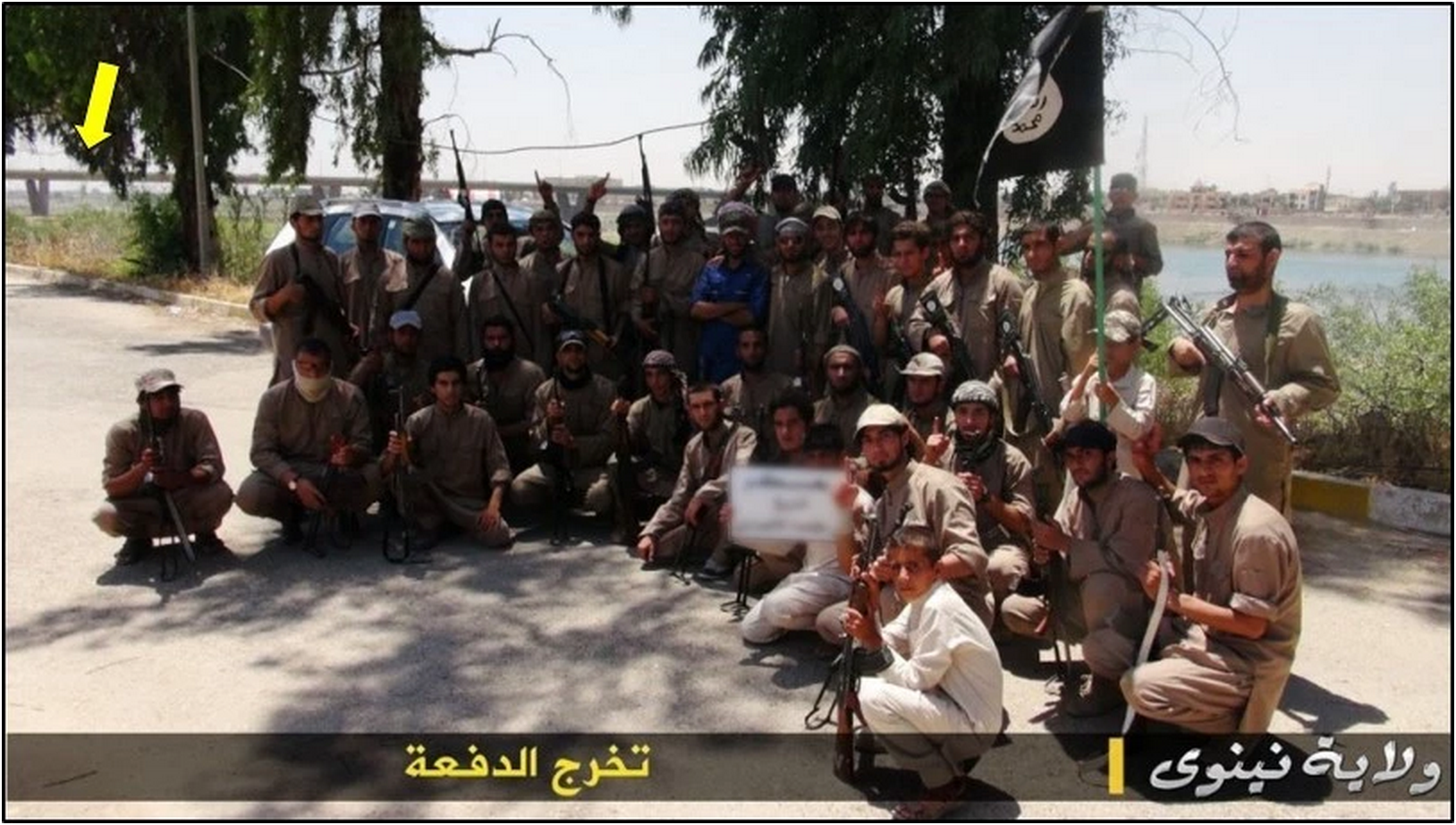
Last week, Eliot Higgins (who was the subject of a glowing profile in the New Yorker) raised £50,891 on Kickstarter to fund a new open source news project, Bellingcat, which would equip citizen journalists with the training and tools to carry out online investigations responsibly. Over the weekend, Bellingcat (which is the spiritual successor to Brown Moses, Higgins’s Blogspot that found that Syria had chemical weapons in its arsenal) has already had its first major scoop: It looks like it located an ISIS training camp.
Bellingcat used many of the same techniques as VFYWC contestants:
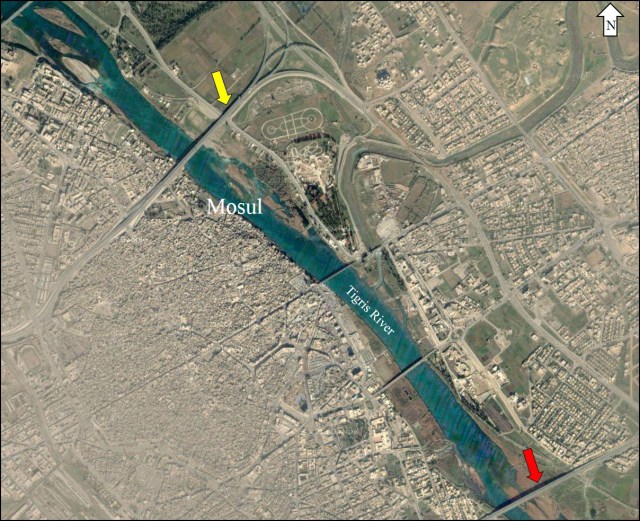
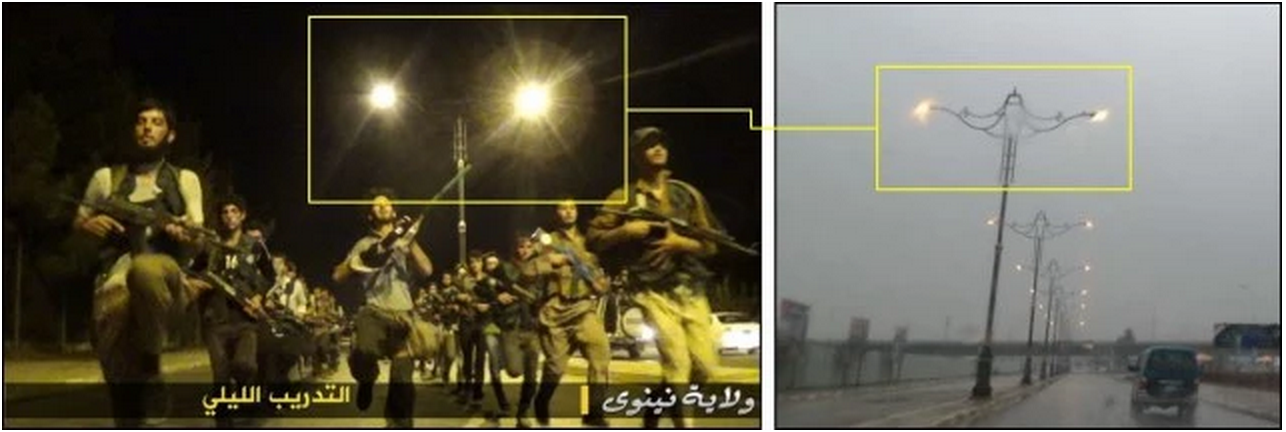
Higgins and his coworkers examined photos posted on July 21 by a Twitter account associated with Islamic State militants which show the ‘class of 2014 martial arts lesson.’ “It was possible to establish the time and direction the camera was facing using the shadows that are visible which narrowed down the location,” says Higgins. Other landmarks were widely visible constructions such as the bridge on this photo:
Higgins and his colleagues were able to find a bridge which looked similar in Google Earth.
To be more precise, Higgins used the tool Panoramio which relies on Google Maps to Geo-tag photos. That way, the pictures of tourists can become extremely valuable. By analyzing street lamps and Arabic letters Higgins verified the location of the bridge.
Kabir Chibber chimes in:
The whole process to pinpoint the training camp is impressive—and what is more impressive is that you can do it too. Bellingcat has a series of guides on how to geolocate photos and images. As Higgins explains his mission on Kickstarter:
The practice of journalism is continuing to expand and broaden. We don’t need to exclusively rely on traditional news media to do the digging and reporting for us. We—you—can do it on our own.
That’s absolutely correct, and the more people that realize it, the better. Having myself spent several years trying to make sense of the world’s amateur war and protest images, it’s simply amazing to see efforts like Higgins’ take flight. It used to be a lonely endeavor, cross-referencing cell-phone photos and YouTube videos with timestamps and foreign-language tweets to triangulate facts as best and fast as you could. But that being said, as all our window contest players know, sometimes there’s nothing more fun than a good puzzle, especially when the result of solving that puzzle is a clearer picture of an important world event – or maybe just the truth, for the sake of knowing what that is. I can hardly imagine the satisfaction of using those skills to catch war criminals and locate murdering jihadists, like Higgins and Bellingcat have done. This is the welcome next generation of citizen journalism, and I’m grateful it’s getting the attention and respect it deserves. Hopefully the Chini’s of the world will lend a hand.
Bellingcat’s full explanation for how they found ISIS’s camp is here.
New York State officials are gathering in a remote part of my beloved Adirondacks this splendid August day to dedicate a new hiking trail up a mountain with a new name: Goodman Mountain, in honor of Andrew Goodman, one of the three civil rights volunteers killed fifty years ago in Philadelphia Mississippi in what some have called the “Pearl Harbor of the civil rights movement.”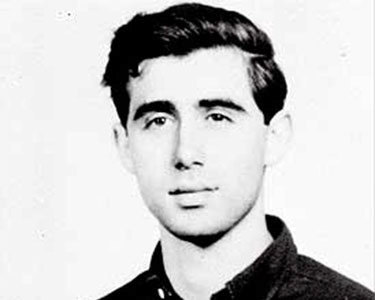
Goodman was 20, son of a prominent family who vacationed every summer in the Adirondack hamlet of Tupper Lake. One of his two colleagues, Michael Schwerner, 24, spent his summers not far to the south on Great Sacandaga Lake. They were paired with James Chaney, a 21-year-old black Mississippi native, and almost immediately after their arrival in the South they were abducted and murdered by local whites.
The hunt for the men became a cause celebre, with involvement right up to the White House, and to many civil rights activists that became proof that white lives mattered more than black ones–Schwerner’s widow, herself an organizer for the Congress on Racial Equality, told reporters that if Chaney alone had been murdered it would have gone unnoticed. It doubtless was a valid complaint–this, as we learned again in Ferguson this month, is a nation with a deep ability to overlook the victimization of African Americans.
But none of that lessens Goodman’s nobility, nor the fact that his disappearance helped bring home the reality of the movement struggles to a very different and distant place. North Country Public Radio, in a remarkable piece earlier this summer, quoted from a 50-year-old edition of the local paper:
The civil rights struggle waged with increasing bitterness in recent months, and observed with detached interest by most of us as something largely outside our experience took on reality earlier this week with a disappearance under apparently tragic circumstances of a volunteer in that cause who spent much of his young life here in Tupper Lake.
Andrew Goodman, 20, one of three civil right workers who disappeared Sunday, is the son of Mr. and Mrs. Robert Goodman and the grandson of the late Charles Goodman who erected the palatial Shelter Cove Camp a short distance from Bog River Falls on Big Tupper Lake in 1933.
Every Adirondack peak is majestic in its own way, but I’m eager to climb this one soon–it stands a little taller than its USGS marker would indicate, I think.
 The Dish