After asking readers about the novels, poems, and short stories that have meant the most to them, the response has been so affirming – at a time when we all wonder about the future of reading, writing, and publishing, it’s good to be reminded of why those questions matter at all. Many more of you have been in touch with us since Monday, for which I’m grateful. One reader writes:
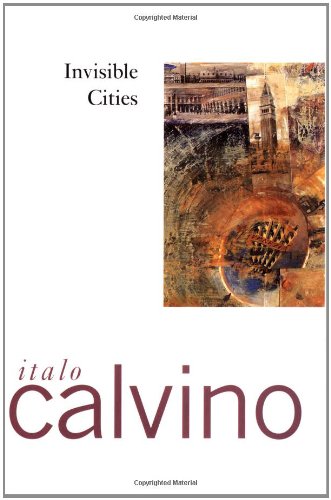
For me, Italo Calvino’s Invisible Cities has been that understanding, consoling companion you wrote of. I came across it fresh out of high school, and I remember feeling like these little prose poems were systematically presenting all my own faults and shitty tendencies to me – but so beautifully and carefully articulated that I couldn’t help feeling proud of identifying with them. It followed me through university, across a couple continents, and it’s rare now that I go more than a month without opening the copy beside my bed, seeking comfort in its perfectly precise bittersweetness. The book opens (sort of) by evoking, then puncturing, the same nostalgic feeling I now often try to get out of rereading it: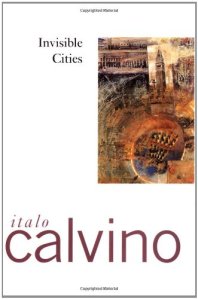
The special quality of this city for the man who arrives there on a September evening, when days are growing shorter and the multicolored lamps are lighted all at once at the doors of the food stalls and from a terrace a woman’s voice cries ooh!, is that he feels envy toward those who now believe they have once before lived an evening identical to this and who think they were happy, that time.
And it ends with what still probably amounts to the full extent of my theology:
The inferno of the living is not something that will be; if there is one, it is what is already here, the inferno where we live every day, that we form by being together. There are two ways to escape suffering it. The first is easy for many: accept the inferno and become such a part of it that you can no longer see it. The second is risky and demands constant vigilance and apprehension: seek and learn to recognize who and what, in the midst of inferno, are not inferno, then make them endure, give them space.
Thanks for giving the good stuff space!
Another writes:
I love the idea of sharing favorite passages and poems. While I think the notion of consolation, that finding previously unknown common ground in the world with a person you have never met is an element of the encounter with literature, I have long been suspect of the healthiness of such experiences, whether they are “good for a person.” We often hear that reading literature is “good for you,” that it produces all sorts of desirable qualities, but this has never resonated with me. Indeed, I find it specious.
Literature is dangerous. I don’t consider it consolation but rather a deeply destabilizing experience in which my lens through which I interpret the world is disrupted, in which the safe world of understanding that I have constructed is broken into by another soul, intruded upon violently and the protective conceptual and interpretative structures I have fashioned fall away and I am left bare with nothing but the words of another beating throughout my head. I don’t think connecting with Hamlet has been “good for me.” It ripped my life apart and torched my understandings of the world. Far from leading to consolation, it made me distraught and vulnerable. This is what good literature does. This is what the communion you spoke of does.
But anyway, enough of me. On to my passage. This is a passage from Swann’s Way, Vol. 1 of In Search of Lost Time. Very few works help one “see the world with fresh eyes” quite like Proust’s masterpiece. It sets the world aflame. There are countless passages I could choose from this work – the episode of the madeleine and the description of the hawthorns stand out immediately – however, I’m going to go for Swann’s experience of hearing the “little phrase” of the (fictional) composer Vinteuil’s music.
Even when he was not thinking of the little phrase, it existed latent in his mind on the same footing as certain other notions without material equivalent, such as our notions of light, of sound, of perspective, of physical 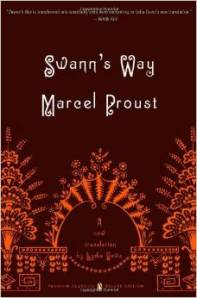 pleasures, the rich possessions wherewith our inner temple is diversified and adorned. Perhaps we shall lose them, perhaps they will be obliterated, if we return to nothingness. But so long as we are alive, we can no more bring ourselves to a state in which we shall not have known them than we can with regard to any material object, than we can, for example, doubt the luminosity of a lamp that has just been lit, in view of the changed aspect of everything in the room, from which even the memory of the darkness has vanished. In that way Vinteuil’s phrase, like some theme, say, in Tristan, which represents to us also a certain emotional accretion, had espoused our mortal state, had endued a vesture of humanity that was peculiarly affection. Its destiny was linked to the future, to the reality of the human soul, of which it was one of the most special and distinctive ornaments, Perhaps it is not-being that is the true state, and all our dream of life is inexistent; but if so, we feel that these phrases of music, these conceptions which exist in relation to our dream, must be nothing either. We shall perish, but we have as hostages these divine captives who will follow and share our fate. And death in their company is somehow less bitter, less inglorious, perhaps even less probable.”
This isn’t some adolescent form of death denial, of trying to make palatable the reality of the tragic circumstances of human life, nor some Malraux-esque artistic existentialism. I find in it one of the most beautiful evocations of the richness of man’s interior life and how it corresponds with the exterior, the dreams and hopes and imaginings of Swann intertwined irrevocably with a flutter of music. This is Proust at his best and what puts him up there with Homer, Dante, and Shakespeare.
I should add that I wasn’t trying to contribute to the trope that literature is “good for you,” and I’m glad for this pushback about what kind of “communion” a reader can have with an author or text. Another reader:
Thanks for asking about favorite passages. This is from Vladimir Nabokov’s memoir Speak, Memory (which is better than most novels):
Whenever in my dreams I see the dead, they always appear silent, bothered, strangely depressed, quite unlike 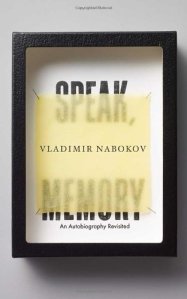 their dear, bright selves. I am aware of them, without any astonishment, in surroundings they never visited during their earthly existence, in the house of some friend of mine they never knew. They sit apart, frowning at the floor, as if death were a dark taint, a shameful family secret. It is certainly not then—not in dreams—but when one is wide awake, at moments of robust joy and achievement, on the highest terrace of consciousness, that mortality has a chance to peer beyond its own limits, from the mast, from the past and its castle tower. And although nothing much can be seen through the mist, there is somehow the blissful feeling that one is looking in the right direction.
This reader revisits a favorite poem:
I too retreat into books when the world is depressing. And the world is depressing quite a bit of the time, so I am reading constantly. Recently, while working through a collection of poetry by Gerard Manley Hopkins, I discovered this gem:
“Heaven-Haven”
(A nun takes the veil)
I have desired to go
Where springs not fail,
To fields where flies no sharp and sided hail,
And a few lilies blow.
And I have asked to be
Where no storms come,
Where the green swell is in the havens dumb,
And out of the swing of the sea.
The peace in this poem is palpable. Yes, I have desired to go there as well.
Another shares this story:
My wife died at the age of 49 three years ago, after a long illness. I chose this poem by Pablo Neruda to be read at her funeral. We loved Neruda, and I had read to her Neruda poems when we first dated in the early 1980s. It seemed fitting to close out our relationship with Neruda. Every few months I find myself rereading it, and it brings back the moment she died with me next to her, as she softly stopped breathing, her pain and suffering finally released. The poem has no title.
And now you’re mine. Rest with your dream in my dream.
Love and pain and work should all sleep now.
The night turns on its invisible wheels, and you are pure beside me as a sleeping amber.
No one else, Love, will sleep in my dreams. You will go, we will go together, over the waters of time.
No one else will travel through the shadows with me, only you, evergreen, ever sun, ever moon.
Your hands have already opened their delicate fists and let their soft drifting signs drop away; Your eyes closed like two gray wings, and I move
After, following the folding water you carry, that carries me away. The night, the world, the wind spin out their destiny.
Without you, I am your dream, only that, and that is all.
Here’s our first Orwell reference:
The following passage from 1984 has stayed with me, always. A reminder that there is hope in dystopian times:
Years ago – how long was it? Seven years it must be – he had dreamed that he was walking through a pitch-dark room. And someone sitting to one side of him had said as he passed: ‘We shall meet in the place where there is no darkness.’ It was said very quietly, almost casually – a statement, not a command. He had walked on without pausing. What was curious was that at the time, in the dream, the words had not made much impression on him. It was only later and by degrees that they had seemed to take on significance. He could not now remember whether it was before or after having the dream that he had seen O’Brien for the first time, nor could he remember when he had first identified the voice as O’Brien’s. But at any rate the identification existed. It was O’Brien who had spoken to him out of the dark.
Winston had never been able to feel sure – even after this morning’s flash of the eyes it was still impossible to be sure whether O’Brien was a friend or an enemy. Nor did it even seem to matter greatly. There was a link of understanding between them, more important than affection or partisanship. ‘We shall meet in the place where there is no darkness,’ he had said. Winston did not know what it meant, only that in some way or another it would come true.
Another reader writes:
The book I return to again and again is Wallace Stegner’s Crossing to Safety. Reasons: Wallace Stegner. The opening sentence. Friendship. Madison. Battell Pond. Sally’s polio. Growing old. When I’m blue, this book just makes me feel better about life.
But there is one passage that is perhaps my most favorite, one that I return to over and over. At the end of chapter 4 in Part II, Larry and Sally are talking at the end of a day spent in the Italian countryside that featured a difficult encounter with an injured laborer.
“When you remember today, what will you remember best, the spring countryside, the company of friends, or Piero’s Christ and that workman with the mangled hand?”
She thought a minute. “All of it,” she said. “It wouldn’t be complete or real if you left out any part of it, would it?”
“Go to the head of the class,” I said.
It reminds me of Buechner’s line about how “in the last analysis, all moments are key moments.”
I was waiting for someone to mention the following story:
Joyce’s “The Dead,” and particularly that sublime final paragraph. Enough has been written about it, and I’ve no desire to earn a Poseur Alert. But I’ve always felt that our existence – its bleakness and its possibility – is perfectly captured in this word-painting’s layers of textured feeling.
A few light taps upon the pane made him turn to the window. It had begun to snow again. He watched  sleepily the flakes, silver and dark, falling obliquely against the lamplight. The time had come for him to set out on his journey westward. Yes, the newspapers were right: snow was general all over Ireland. It was falling on every part of the dark central plain, on the treeless hills, falling softly upon the Bog of Allen and, farther westward, softly falling into the dark mutinous Shannon waves. It was falling, too, upon every part of the lonely churchyard on the hill where Michael Furey lay buried. It lay thickly drifted on the crooked crosses and headstones, on the spears of the little gate, on the barren thorns. His soul swooned slowly as he heard the snow falling faintly through the universe and faintly falling, like the descent of their last end, upon all the living and the dead.
That Joyce paints with adverbs (softly, thickly, slowly, faintly) and adjectives (dark, mutinous, lonely, crooked, little, barren, last), which contemporary writers are instructed to avoid, is all he more remarkable and humbling. The “way it feels to be” that Joyce is evoking is nearly conjured by that list of words alone.
Another poetry selection:
It may be cliche, but the last stanza of “Dover Beach” by Matthew Arnold always calms me (I know it by heart):
Ah, love, let us be true
To one another!
for the world, which seems
To lie before us like a land of dreams,
So various, so beautiful, so new,
Hath really neither joy, nor love, nor light,
Nor certitude, nor peace, nor help for pain;
And we are here as on a darkling plain
Swept with confused alarms of struggle and flight,
Where ignorant armies clash by night.
Sometimes cliches exist for a reason – that Arnold poem is oft-quoted for a reason, I think. This reader offers a selection from James Baldwin:
I could have chosen from any number of novels, poems, and short stories, but today I’ll go with James Baldwin’s “Sunny’s Blues.” Though a short story, its levels and layers of story and meaning are novelistic and stand up to – in fact, demand – multiple readings. This is one of my favorite passages:
“Then Creole stepped forward to remind them that what they were playing was the blues. He hit something in all of them, he hit something in me, myself, and the music tightened and deepened, apprehension began to beat the air. Creole began to tell us what the blues were all about. They were not about anything very new. He and his boys up there were keeping it new, at the risk of ruin, destruction, madness, and death, in order to find new ways to make us listen. For, while the tale of how we suffer, and how we are delighted, and how we may triumph is never new, it always must be heard. There isn’t any other tale to tell, it’s the only light we’ve got in all this darkness.”
That passage hits me every time.
Here’s a nod to George Eliot:
This passage at the conclusion of Middlemarch repeatedly pops into my mind and each time it does, I am moved, inspired, comforted, and convicted once again:
Her finely touched spirit had still its fine issues, though they were not widely visible. Her full nature, like that river of which Cyrus broke the strength, spent itself in channels which had no great name on the earth. But the effect of her being on those around her was incalculably diffusive: for the growing good of the world is partly dependent on unhistoric acts; and that things are not so ill with you and me as they might have been, is half owing to the number who lived faithfully a hidden life, and rest in unvisited tombs.
I was waiting for a Dune reference, too:
I have many favorite passages from many different books, but the following passage from Frank Herbert’s Dune has followed me since I first read the novel as a kid some 40 years ago. It has gotten me through more than one sticky situation:
I must not fear. Fear is the mind-killer. Fear is the little-death that brings total obliteration. I will face my fear. I will permit it to pass over me and through me. And when it has gone past I will turn the inner eye to see its path. Where the fear has gone there will be nothing. Only I will remain.
This reader is the first to mention a play, and also points to a fitting poem with which to conclude:
These lines at the very end of the play “My Dinner With Andre” have intrigued me for 30-some years now, a reminder of how easy one can miss the person – with all his or her mystery and sacredness – by getting caught up instead with that person’s label:
[P]eople hang on to these images of father, mother, husband, wife … because they seem to provide some firm ground. But there’s no wife there. What does that mean? A wife. A husband. A son. A baby holds your hands, and then suddenly there’s this huge man lifting you off the ground, and then he’s gone. Where’s that son?
Also, this poem by Wendell Berry, for its soulful, anarchic in-your-facedness. These days I lean on the line “Be joyful though you have considered all the facts” like a crutch:
“Manifesto: The Mad Farmer Liberation Front”
Love the quick profit, the annual raise,
vacation with pay. Want more
of everything ready-made. Be afraid
to know your neighbors and to die.
And you will have a window in your head.
Not even your future will be a mystery
any more. Your mind will be punched in a card
and shut away in a little drawer.
When they want you to buy something
they will call you. When they want you
to die for profit they will let you know.
So, friends, every day do something
that won’t compute. Love the Lord.
Love the world. Work for nothing.
Take all that you have and be poor.
Love someone who does not deserve it.
Denounce the government and embrace
the flag. Hope to live in that free
republic for which it stands.
Give your approval to all you cannot
understand. Praise ignorance, for what man
has not encountered he has not destroyed.
Ask the questions that have no answers.
Invest in the millenium. Plant sequoias.
Say that your main crop is the forest
that you did not plant,
that you will not live to harvest.
Say that the leaves are harvested
when they have rotted into the mold.
Call that profit. Prophesy such returns.
Put your faith in the two inches of humus
that will build under the trees
every thousand years.
Listen to carrion — put your ear
close, and hear the faint chattering
of the songs that are to come.
Expect the end of the world. Laugh.
Laughter is immeasurable. Be joyful
though you have considered all the facts.
So long as women do not go cheap
for power, please women more than men.
Ask yourself: Will this satisfy
a woman satisfied to bear a child?
Will this disturb the sleep
of a woman near to giving birth?
Go with your love to the fields.
Lie down in the shade. Rest your head
in her lap. Swear allegiance
to what is nighest your thoughts.
As soon as the generals and the politicos
can predict the motions of your mind,
lose it. Leave it as a sign
to mark the false trail, the way
you didn’t go.
Be like the fox
who makes more tracks than necessary,
some in the wrong direction.
Practice resurrection.
More of your selections will be posted in the days ahead. Keep them coming to dish@andrewsullivan.com.
must have been of huge importance to him. There are only faint but significant clues as to how he felt. In his diary on 27 January, the night before he leaves, he admits that he has had a “long and sad day”. Then we find this cryptic entry: “Aie-aie-aie – growing after tears. Mosquito net, fizzling lamp, high step between rooms. Then return and comfort a little.”




 The Dish