Steroids For Your Brain?

Marek Kohn suggests that’s the wrong way to think about “smart drugs” such as Adderall and Ritalin:

“I think people think about smart drugs the way they think about steroids in athletics,” [professor Amy] Arnsten says, “but it’s not a proper analogy, because with steroids you’re creating more muscle. With smart drugs, all you’re doing is taking the brain that you have and putting it in its optimal chemical state. You’re not taking Homer Simpson and making him into Einstein.”

Smart drugs have provoked anxiety about whether students who take drugs to enhance performance are cheating, and whether they will put pressure on their peers to do likewise to avoid being at a competitive disadvantage.

Yet some researchers point out these drugs may not be enhancing cognition directly, but simply improving the user’s state of mind – making work more pleasurable and enhancing focus. “I’m just not seeing the evidence that indicates these are clear cognition enhancers,” says Martin Sarter, a professor at the University of Michigan, who thinks they may be achieving their effects by relieving tiredness and boredom. “What most of these are actually doing is enabling the person who’s taking them to focus,” says Steven Rose, emeritus professor of life sciences at the Open University. “It’s peripheral to the learning process itself.”

Previous Dish on Adderall here, here, and here.

A Crisis In Clowning

5481402478_3a517c38e9_z

Reporting from an industry convention in Chicago, Leigh Cowart notes that the future for red noses doesn’t look so rosy:

[One] seminar, called “Posing for Pictures and Working with the Media,” is for the most part a simmering rally for strategy and solidarity in the face of the current clown PR crisis. Of course, there’s the usual scary-clown trope to deal with, like the recent separate attempts by filmmakers to drum up some publicity by donning clown garb and standing ominously along roadsides and construction sites, last year in Northampton, U.K., and more recently in Staten Island.

But there’s an additional tension this year: Just weeks prior, the New York Daily News reported that America might be facing a clown shortage. Citing decreased membership rates in the country’s largest trade organizations– Clowns of America International (CAI) and the World Clown Association (WCA) – the article painted clowning as the loser in a war of attrition, but nonetheless steadily committed to the fight. CAI President Glen Kohlberger claimed membership numbers are dropping because “[t]he older clowns are passing away.” Compounding this, the reasoning goes, is that interest in clowning is waning: Kids just aren’t joining up like they used to.

(Photo by Flickr user downing.amanda)

Madison’s Mysterious Malady

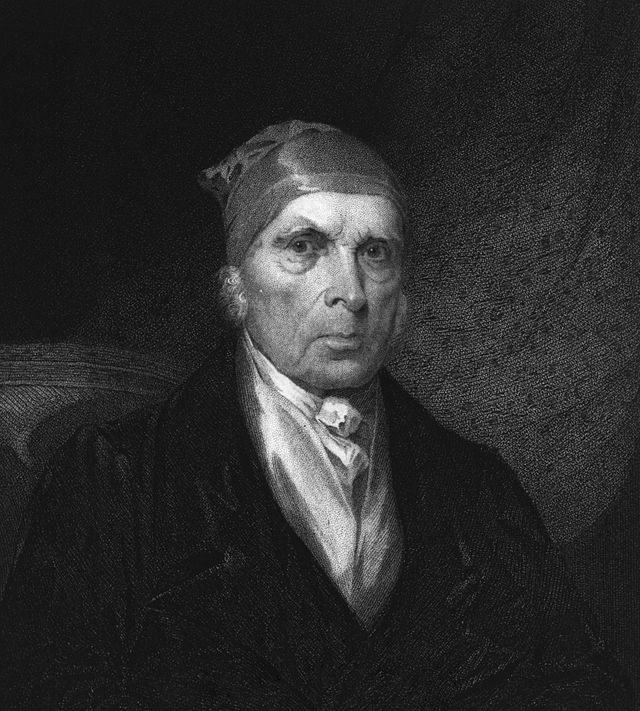
While noting that Lynne Cheney’s new biography, James Madison: A Life Reconsidered, is the hagiographic treatment of his life and thought you’d expect from her, Kevin R.C. Gutzman acknowledges that Cheney does convince him on one disputed point of scholarship – she “goes far toward proving that he suffered epilepsy itself,” a diagnosis previously left in vaguer terms. Gutzman also finds the illness might have played a role in the evolution of Madison’s religious life:

She has consulted leading experts, perused the relevant portions of medical texts purchased by 640px-James_madison-Age82-Edit1Madison’s parents early in his life and read by Madison himself, and carefully compared the accounts of his recurrent bouts with the problem, and she leaves me persuaded. She also ingeniously relates Madison’s illness to the apparent change of heart he experienced at Princeton as a youth, when he seems to have abandoned Anglican Christianity. Faced with Western Christianity’s tradition of calling epilepsy demonic, Cheney avers, Madison rejected basic elements of Virginia’s traditional religion. Alas, there is no evidence directly on point, but her cogitations are valuable. They will need to be borne in mind by future scholars.

Cheney’s attention to her hero’s health as he climbs to the very highest offices in American government likely owes to her own life story. After all, her husband, Vice President Richard Cheney, not only served two terms as an influential vice president at the culmination of a career that found him in various other important leadership positions, but also suffers from a severe heart ailment. We do not know the private details of his suffering, but there is a special poignancy in Lynne Cheney’s sympathetic descriptions of Dolley Madison’s ministrations to James. One supposes, too, that Cheney family travails recently much in the news may have prompted the author to think about the relationship between traditional Christian descriptions of urges and afflictions as “demonic” and the evident waning, or at least metamorphosis, of whatever faith young man James Madison once had.

(Image: Portrait of Madison at age 82 via Wikimedia Commons)

All Trees Are The Tree Of Life

dish_trees

James Hamblin explains:

It is becoming increasingly clear that trees help people live longer, healthier, happier lives—to the tune of $6.8 billion in averted health costs annually in the U.S., according to research published this week. And we’re only beginning to understand the nature and magnitude of their tree-benevolence. In the current journal Environmental Pollution, forester Dave Nowak and colleagues found that trees prevented 850 human deaths and 670,000 cases of acute respiratory symptoms in 2010 alone. That was related to 17 tonnes of air pollution removed by trees and forests, which physically intercept particulate matter and absorb gasses through their leave.

(Photo by Flickr user Ian Sane)

A Cooler Iced Coffee

Alexis Madrigal buzzes about Blue Bottle New Orleans Iced Coffee, a brand “legendary in the Bay Area” which is now expanding east. He finds Blue Bottle “not aggressively artisan like so many Portlandia products,” but rather “a delicious, not financially ruinous luxury”:

Brewed with chicory, cut with whole milk, sweetened with cane sugar, it’s a cold coffee beverage that is at once sophisticated and unpretentious. It’s not an austere challenge to the Starbucks-trained palate like so much of high-brow coffee culture. It just tastes good in an interesting way. … This drink might let Blue Bottle challenge Starbucks, which controls the vast majority of the ready-to-drink market. It would be the latte of the 2010s….

He goes on to compare Starbucks founder Howard Schultz with Blue Bottle’s founder and CEO, James Freeman. Whereas Schultz started as primarily a salesman, says Madrigal, Freeman operates from a richer coffee philosophy:

It is impossible to read Freeman’s ode to the art of roasting coffee, included in the book he wrote with his wife Caitlin, and not believe that he cares about coffee. … “For me, no matter when I got to bed, I always felt a sense of dread when the alarm went off at 4 a.m.,” Freeman wrote of roasting. “Classic Kierkegaard, straight out of The Concept of Anxiety: animals are slaves to their instincts and hence feel no responsibility, but humans are free and therefore constantly aware of their failure to live up to their responsibilities to God—or to Coffee.”

The only thing that staves off the dread is to get up and make the coffee. … “That first decision to get up in the morning is a mirror of all the hard and lonely decisions that must be made for the rest of the roasting day.” … Freeman believes coffee makes us the people we want to be. “I am actually able to change the brain chemistry of my customers,” he has written. And his personal obsession has been perfecting the art of constructing coffee, not growing it. Making coffee is “a performance that lasts 90 seconds,” and that alters the people who experience it.

The Best Of The Dish This Weekend

dish_kidpics

Nina Arrazello captions a wonderful little art series called Kiddie Arts:

like many children, Dutch artist Telmo Pieper drew imaginative, colorful, creative and not-always-so-anatomically correct creatures and characters when he was 4-years-old. For ‘kiddie arts’, Pieper has reincarnated the drawn works from his childhood as digital paintings, materializing them as realistic figures in intricate detail, vibrant hues and with computerized graphics. The result illustrates the quirky line scribbles as lifelike underwater animals, insects and architecture, each a bit awry in their structural and biological precision.

Love that whale.

I found myself tossing and turning all weekend from the horrible news of the last week. Today, another UN school was shelled in Gaza, killing ten, wounding many more, traumatizing countless others. These civilian deaths even in a place designated as a safe haven simply beggar belief. It is impossible to feel sympathy for either Israel or Hamas at this point. Hamas is daring Israel to kill more innocents; and Israel is eagerly obliging them. How many more children have to die to feed these zero-sum ambitions?

And it is in the wake of last week that I read Michael Oren’s piece on Zionism. As over 200 Arab children lie dead, Oren can’t contain his enthusiasm for the staggering success of the Jewish state. No reflection; no circumspection; just a long celebration until you get to this: “And there is the issue of Judea and Samaria—what most of the world calls the West Bank—an area twice used to launch wars of national destruction against Israel but which, since its capture in 1967, has proved painfully divisive.”

He means painfully divisive for Israelis. The views of the occupied do not merit any attention. And notice the reflexive victimology. This is not an area where the original inhabitants are ghettoized behind barbed wire and checkpoints, where Jim Crow exists alongside new and aggressively anti-Arab settlers, where millions of Israel’s inhabitants have no vote, and where a Russian emigré right off the plane has more rights than someone whose family has lived their for aeons. It is and always will be a existential threat that justifies permanent occupation and settlement, in direct contravention of the Geneva Conventions. This victimology is why when, in a war zone, a soldier is killed, the first word we hear from the Israelis is that he may have been “kidnapped”. Kidnapped? He was killed in battle. But even if Hamas had seized him, he would be captured in battle, not kidnapped. But that would require some sort of understanding that the enemy is also human, some kind of equal. And that seems to happen less and less. What you see in Gaza is Cheneyism fully realized.

Some relief from the Dish’s weekend: a church sign for the ages; Martin Amis’ plea for agnosticism for his friend Christopher Hitchens; why we hate the dentist; the evolution of dick crit; and the collapse of Catholic religious marriages.

The most popular post of the weekend was Why Sam Harris Won’t Criticize Israel; followed by Church Sign Of the Day.

Many of today’s posts were updated with your emails – read them all here.  You can always leave your unfiltered comments at our Facebook page and @sullydish. 23 more readers became subscribers this weekend – bringing us to 29,848. You can join them and get us to 30,000 subscribers here – and get access to all the readons and Deep Dish – for a little as $1.99 month. One writes:

Just upped my monthly to $4.20. Thanks again for all your hard work. The NYT and the Dish have been my go-to news sources for years. If you would only cut back on the Sunday god talk a bit, I would double my contribution. But that would be most un-Dish like, so keep doing what you do. It is appreciated.

See you in the morning.

We Tortured. It Was Wrong. Never Mind.

I’ve wondered for quite a while what Barack Obama thinks about torture. We now know a little more:

Even before I came into office I was very clear that in the immediate aftermath of 9/11 we did some things that were wrong.  We did a whole lot of things that were right, but we tortured some folks.  We did some things that were contrary to our values.

torturefoia_page3_full.gifI understand why it happened.  I think it’s important when we look back to recall how afraid people were after the Twin Towers fell and the Pentagon had been hit and the plane in Pennsylvania had fallen, and people did not know whether more attacks were imminent, and there was enormous pressure on our law enforcement and our national security teams to try to deal with this.  And it’s important for us not to feel too sanctimonious in retrospect about the tough job that those folks had.  And a lot of those folks were working hard under enormous pressure and are real patriots.

But having said all that, we did some things that were wrong.  And that’s what that report reflects.  And that’s the reason why, after I took office, one of the first things I did was to ban some of the extraordinary interrogation techniques that are the subject of that report.

And my hope is, is that this report reminds us once again that the character of our country has to be measured in part not by what we do when things are easy, but what we do when things are hard.  And when we engaged in some of these enhanced interrogation techniques, techniques that I believe and I think any fair-minded person would believe were torture, we crossed a line.  And that needs to be — that needs to be understood and accepted.  And we have to, as a country, take responsibility for that so that, hopefully, we don’t do it again in the future.

What to make of this?

I don’t think it’s that big a deal that he used the English language to describe what was done, in any fair-minded person’s judgment. He’s said that before now. And his general position hasn’t changed. Let me paraphrase: We tortured. It was wrong. Never mind. So he tells the most basic version of the truth – that the US government authorized and conducted war crimes – and hedges it with an important caveat: We must understand the terribly fearful circumstances in which this evil was authorized. But equally, he argues that the caveat does not excuse the crime: “the character of our country has to be measured in part not by what we do when things are easy, but what we do when things are hard.”

This latter point is integral to the laws against torture – but completely guts his first point. As I noted with the UN Convention, the prohibition is absolute:

No exceptional circumstances whatsoever, whether a state of war or a threat of war, internal political instability or any other public emergency, may be invoked as a justification of torture.

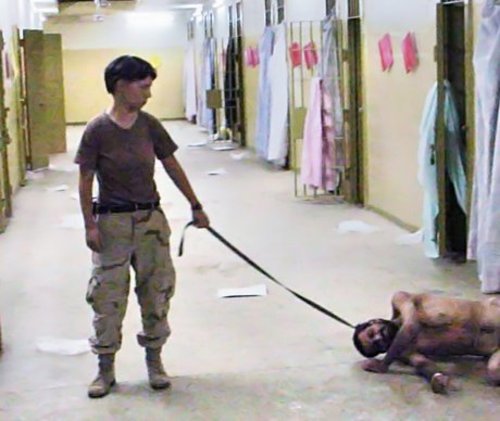
Cheney, Bush, Tenet, and Rumsfeld all knew this from the get-go. That’s why they got their supine OLC to provide specious justifications for the legally prohibited. That’s why they won’t use the word “torture,” instead inventing an Orwellian euphemism. And, of course, the president’s excuse for them – that “in the immediate aftermath of 9/11,” we did wrong things – is deeply misleading. This went on for years abughraibleash.jpgacross every theater of combat. What about what Abu Ghraib revealed about the scope of torture in the battlefield much later on? What about 2005 when they secretly re-booted the torture program? This was a carefully orchestrated criminal conspiracy at the heart of the government by people who knew full well they were breaking the law. It cannot be legally or morally excused by any contingency. It cannot be treated as if all we require is an apology they will never provide.
Yet that’s what the president’s acts – as opposed to his words – imply. And that’s what unsettles me. It is not as if the entire country has come to the conclusion that these war crimes must never happen again. The GOP ran a pro-torture candidate in 2012; they may well run a pro-torture candidate in 2016. This evil – which destroys the truth as surely as it destroys the human soul – is still with us. And all Obama recommends for trying to prevent it happening again is a wistful aspiration: “hopefully, we don’t do it again in the future.” Hopefully?

Then there’s the not-so-small matter of the rule of law.

Call me crazy but I do not believe that the executive branch can simply allow heinous crimes to go unpunished just because they were committed … by the executive branch. It seems to me, to paraphrase the president on agabuse.jpgFriday, that the rule of law “has to be measured in part not by what we do when things are easy, but what we do when things are hard.” How many times does the United States government preach about international law and Western values? On what conceivable grounds can we do so when our own government can commit torture on a grand and brutal scale for years on end – and get away with it completely?

Either the rule of law applies to the CIA or it doesn’t. And it’s now absolutely clear that it doesn’t. The agency can lie to the public; it can spy on the Senate; it can destroy the evidence of its war crimes; it can lie to its superiors about its torture techniques; it can lie about the results of those techniques. No one will ever be held to account. It is inconceivable that the United States would take this permissive position on torture with any other country or regime. Inconceivable. And so the giant and massive hypocrisy of this country on core human rights is now exposed for good and all. The Bush administration set the precedent for the authorization of torture. The Obama administration has set the precedent for its complete impunity.

America has killed the Geneva Conventions just as surely as America made them.

(Photo: a page on enhanced interrogation techniques via a FOIA request.)

Our Number One Ally Update

We discover that Israel was intercepting John Kerry’s phone calls during the Mideast peace negotiations – according to Der Spiegel. We also learn that prime minister Netanyahu’s responded to American pressure for an end to the mass killings of children thus:

In a phone call with US Ambassador to Israel Dan Shapiro about the breakdown of the short-lived UN- and US-brokered ceasefire between Israel and Hamas, Prime Minister Benjamin Netanyahu vented his anger, according to people familiar with the call. Netanyahu told Shapiro the Obama administration was “not to ever second-guess me again” and that Washington should trust his judgment on how to deal with Hamas, according to people familiar with the conversation. Netanyahu added that he now “expected” the US and other countries to fully support Israel’s offensive in Gaza, according to those familiar with the call.

Now give me that annual $3 billion, another $225 million for the Iron Dome, and shut the fuck up.


Faces Of The Day

dish_fotdsun3

Ellyn Ruddick-Sunstein captions:

In a riverside concrete amphitheater in Dhaka, Bangladesh, a community of young street children live with their beloved stray dogs. Separated from their parents or orphaned in the slums of Dhaka, the boys forge a close-knit family with their adopted animals. This is Robindra Shorbod, a park where the kids gather and sell recyclable plastic containers for food, which they unfailingly share with their ten devoted canine companions, Tiger, Romeo, Bullet, Kula, Moti, Michael, Tom, Jax, Lalu, and Bagha.

While visiting Bangladesh, photographer Sam Edmonds met the boys through Obhoyaronno, an NGO committed to changing the wide-spread and horrific killing of street dogs that persists across the region. Dedicated to humane treatment, Obhoyaronno saves lives by spaying, neutering, and vaccinating animals before returning them to the exact location in which they were found. Among these are the the ten dogs living with the boys in Robindra, each bearing a small tear in the ear to signify that they are uninfected with rabies.

See more of Edmonds’ work here and here.

When The Bride And Groom Forgo God

Annalise Fonza, a former United Methodist clergywoman who now identifies as an atheist, reveals the unexpected trouble she encountered after performing a wedding in Atlanta, Georgia, as a licensed humanist chaplain:

A few days after the wedding, the bride called to inform me that they were at the Fulton County Probate Courthouse where a clerk had a question about my credentials. After several minutes of troubling conversations with the clerk and her supervisor, I was told that Judge James Brock had refused to sign the certificate. “Who are you?” the clerk asked me in reference to the title “Humanist Celebrant,” which I was required to provide on the license. Obviously, the clerk and the rest of the Fulton County Probate Court had never heard the term, nor had they heard of the Humanist Society. After a few more phone calls, I was informed that it was Judge Brock’s final decision to deny the certificate and, hence, it was clear that the couple would have to be married again.

The couple decided to get married again that same day, this time in the Fulton County Probate Courthouse, but after a few weeks of wrangling the judge did confirm that Fonza was qualified to officiate weddings in Georgia. What she takes away from the episode:

The truth of the matter is that anyone who openly identifies as I do must expect public scrutiny and possible rejection. People in the United States still discriminate against atheists, even though more and more people are using the word “atheist” to self-identify. In other words, just because one uses the term openly and proudly, doesn’t mean he or she will be accepted without question or won’t face rejection. In addition, the religious bigotry and social entitlement here in the South is so pronounced—by people of every color and background. Many, including African Americans, openly discriminate against or exclude other black people from social and professional circles when they learn that those others are atheists. …

My first time navigating the courts in Atlanta, Georgia, as a humanist celebrant was far from loving, and it taught me the value of being good and godless in a world that is dominated by systems and people who put their faith in gods, but who don’t seem to have the slightest idea of what it means to be loving and accepting of anyone who doesn’t adhere to their religious beliefs.