The Economist reminds us of “how well America is assimilating a religious minority that has often struggled to feel at home in Europe”:
[America’s Muslims] are almost as likely as other Americans to report a household income of $100,000 or more. The same cannot be said of the Pakistanis who came to work in the now-defunct textile mills of northern England or the Turks who became guest workers in West Germany. Many American Muslims arrived in the 1970s to complete their higher education and ended up staying. Muzammil Siddiqi, chairman of the Fiqh Council of North America, which issues fatwas, or religious opinions, to guide the behaviour of the country’s Muslims, is typical: he was born in India and holds a Harvard PhD in comparative religion. There is a stark contrast between this group and some of the more recent immigrants from Somalia, who have fewer qualifications and lower wages (as do African-American Muslims, who make up about an eighth of the total). This divide, if anything, makes America’s Muslims look more like the nation as a whole.
On various measures of integration, Muslims score fairly well. A Pew study from 2011 found that 15% of Muslims who are married or living with someone have a spouse of a different faith. This may sound low, but it is higher than the intermarriage rate for American Jews at a comparable moment in their history, and above that of modern Mormons. According to the Pentagon, there were 3,600 Muslims on active duty in the armed forces in January 2012, the most recent date for which numbers are available.
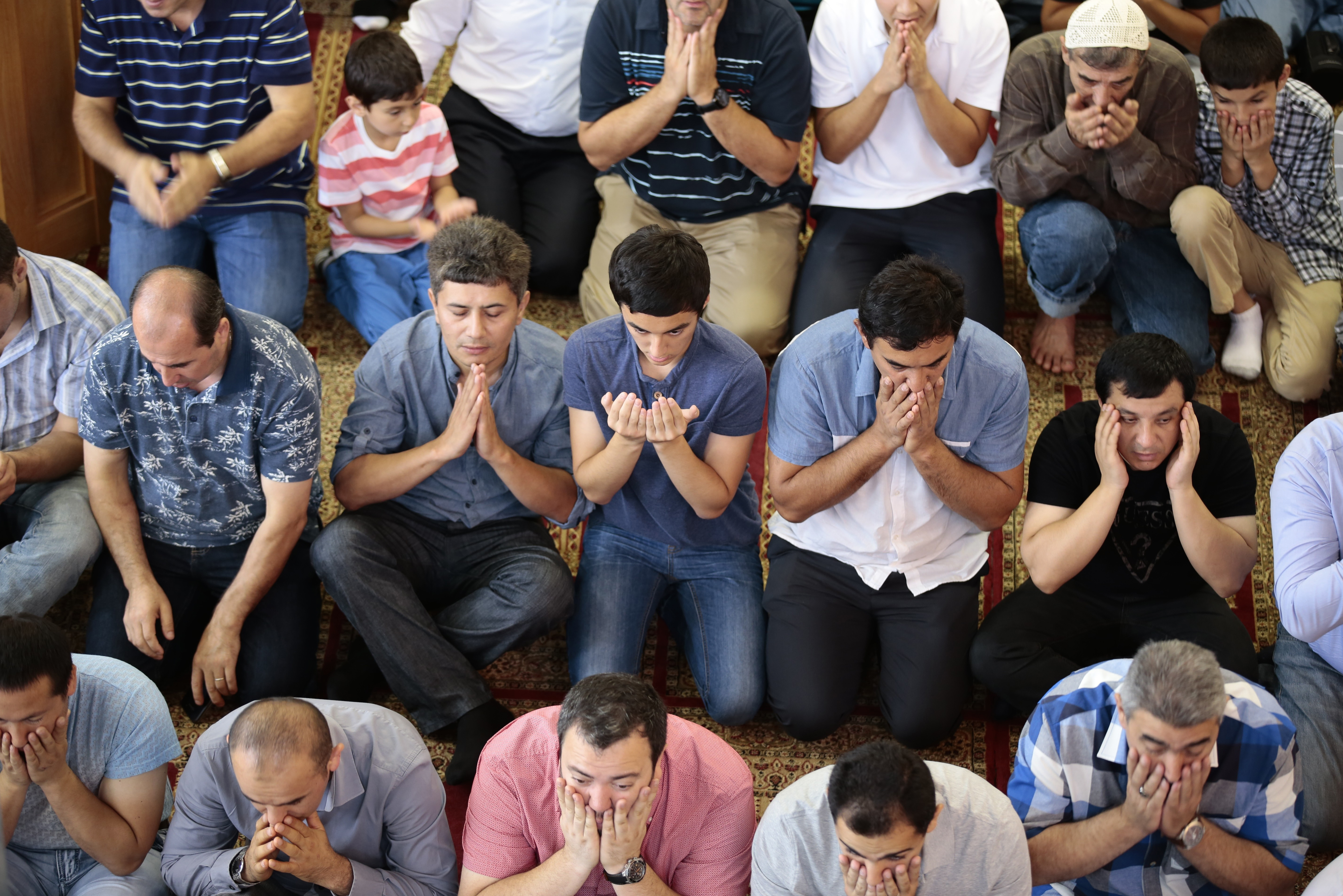
(Photo: Muslims living in New York City perform Eid al-Fitr prayer at Eyup Sultan Mosque on July 28, 2014. By Bilgin Sasmaz/Anadolu Agency/Getty Images)
 The Dish