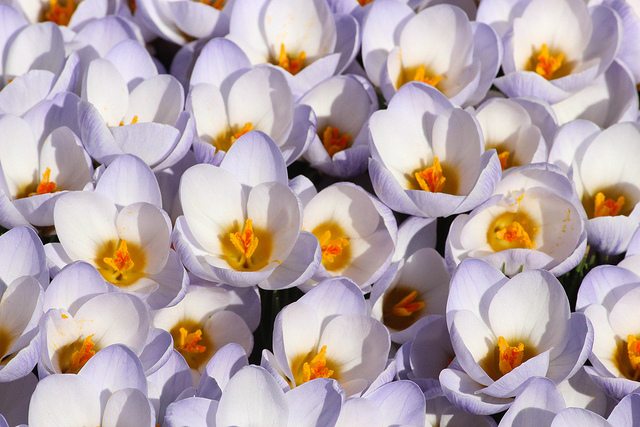
Robin Lane Fox surveys a history of plants in poetry:
Surprisingly, the poetry of flowers is often patchy and ill-informed. None of the ancient Greek poets mentions the brilliant wild tulips that run like red rivers through parts of the Greek landscape. Chinese poets focus on a narrow canon of flowers, soaked in symbolism and hidden meanings. They say nothing about the heavenly wild flora, the superb shrubs and mountain flowers that have transformed Western gardens since their collection and introduction by Europeans. John Milton’s poetry describes bunches of flowers that would never flower during one and the same season. No gardener, especially in Britain this year, would agree that April is “the cruellest month” and in no gardens or landscapes known to me does April breed “lilacs out of the dead land,” least of all on the American East Coast within range of the young T.S. Eliot.
The exceptions prove the rule. Sappho had an engagingly sharp eye for the flowers of her native Lesbos, including milk-white pansies. Theocritus’ poems, some three hundred years later, include particular flowers from his second home, Cos, and also from Sicily or southern Italy that he probably therefore visited. Shakespeare of course observed and included many flowers, and D.H. Lawrence was also unusually alert, not just to dark blue Bavarian gentians but to the dark trunks of almond trees, which he acutely observed during his time in Taormina and rendered in poetry there. William Cowper could garden well, but among living poets, only James Fenton has had a garden that challenged expert gardeners with its assemblages of snowdrops and highly unusual plants.
(Photo by Susanne Nilsson)
 The Dish